Category Archives: Microbiology Investigations

Australia – Salmonellosis in Australia 2020

Health Au

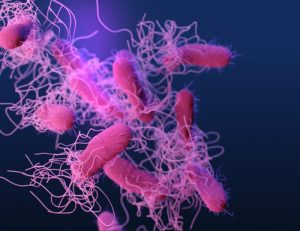
kswfoodworld salmonella

Abstract

Background

More than seventy per cent of salmonellosis in Australia is thought to be due to contaminated food. Rates of salmonellosis vary across the Australian states and territories, with the highest rates in the Northern Territory. In 2020, to control coronavirus disease 2019 (COVID-19), Australia implemented public health measures including border closures, physical distancing and hygiene advice. This study analyses salmonellosis notification rates in 2020 and considers possible impacts of COVID-19 measures.

Methods

Monthly and annual salmonellosis notifications per 100,000 population, for each of Australia’s eight states and territories for the years 2015 to 2020, were extracted from Australia’s publicly accessible National Notifiable Diseases Surveillance System. For each jurisdiction, the salmonellosis rate each month in 2020 was compared with the previous 5-year median rate for that calendar month. The possible impacts of COVID-19 public health measures on salmonellosis notifications in the respective states and territories were examined.

Results

The annual Australian salmonellosis notification rate was 27% lower in 2020 than the previous 5-year median. The reduction in salmonellosis rate varied throughout Australia. States and territories with more stringent, more frequent or longer COVID-19 public health measures had generally greater salmonellosis rate reductions. However, Tasmania had a 50% deeper reduction in salmonellosis rate than did the Northern Territory, despite similar restriction levels.

Conclusions

Salmonellosis notifications decreased in Australia during the global COVID-19 pandemic. The reduction in notifications corresponded with the implementation of public health measures. Persistence of high rates in the Northern Territory could indicate the overarching importance of demographic and environmental factors.

Research – Zoonoses and foodborne outbreaks guidance for reporting 2021 data

EFSA

This technical report of the European Food Safety Authority(EFSA)presents the guidance to reporting European Union(EU)Member States and nonMember States in data transmission using extensible markup language (XML)data transfer covering the reporting of prevalence data on zoonoses and microbiological agents and contaminants in food, foodborne outbreak data, animal population data and disease status data. For data collection purposes, EFSA has created the Data Collection Framework(DCF)application. The present report provides data dictionaries to guide the reporting of information deriving from 2021under the framework of Directive 2003/99/EC, Regulation (EU) 2017/625andCommission Implementing Regulation (EU) 2019/627.The objective is to explain in detail the individual data elements that are included in the EFSA data models to be used for XML data transmission through the DCF. In particular, the data elements to be reported are explained, including information about the data type, a reference to the list of allowed terms and any additional business rule or requirement that may apply.

Hong Kong – Poon Choi and Food Safety

CFS

Centre for Food Safety

Poon Choi , which is literally translated to “Chinese casserole in a basin”, composes an important part of the Walled village culture in the New Territories. Villagers feast on the cuisine whenever there are celebrations connected with rituals, weddings, festivals, ancestor worship and other local events as an expression of village dining culture. However, this traditional Chinese dish was first invented in the Song Dynasty. It contains critical cultural values to Hong Kong and has shifted into different shapes in our modern world.

“Poon Choi”, which comprises a great variety of food, involves a number of processing steps, which demands meticulous attention during preparation.

People should order their “Poon Choi” from reputable and licensed food suppliers. If they want to make their own, they should maintain good personal and food hygiene to prevent cross contamination.

To enjoy a delicious and healthy meal, people should pay particular attention to food safety.

Here are some safety tips for enjoying “Poon Choi”:

When purchasing “Poon Choi”:

  • Order from reputable licensed suppliers
  • Hot “Poon Choi” should be kept at 60℃ or above and chilled “Poon Choi” should be kept at 4℃ or below to prevent growth of bacteria
  • Ask for the reheating instruction for the “Poon Choi”. For example, does the “Poon Choi” have to be reheated before consumption and if so, how and for how long? And is it possible to reheat it in its original container?
  • Notify the supplier of the time you collect the “Poon Choi”. It is best to collect it half an hour to one hour before consumption
  • Return home immediately after collecting the “Poon Choi”. Avoid keeping it for a prolonged period of time at room temperature
  • Keep chilled “Poon Choi” at 4℃ or below to minimise its exposure to the temperature danger zone of 4 to 60℃

When preparing “Poon Choi” at home:

  • Buy ingredients from reputable retailers
  • Plan the work schedule ahead of time, with consideration to ingredients involved. Don’t start cooking too early
  • Defrost frozen food inside the chilled compartment of a refrigerator or under cool running water
  • Cook high risk food such as poached chicken and seafood like fresh oysters thoroughly
  • Raw and cooked food should be covered and stored separately to prevent cross contamination
  • If the ingredients need to be stored after cooking, they should either be kept chilled at 4℃ or below, or kept warm at 60℃ or over
  • Cover food properly to prevent cross contamination
  • Since lots of ingredients and cooking utensils are involved in the course of preparing “Poon Choi”, a well-organised work schedule can help prevent cross contamination
  • Before preparing “Poon Choi”, thoroughly clean and sterilize cutting boards, knives, containers and other cooking utensils
  • Maintain good personal hygiene. Wash hands with liquid soap before handling food and after using the toilet

When consuming “Poon Choi”:

  • Consume the “Poon Choi” as soon as possible after it is collected or cooked. Don’t keep it under room temperature for more than two hours
  • As “Poon Choi” is generally served in a large pot, a longer period of time is required to reheat it thoroughly
  • When eating “Poon Choi” in a restaurant, pay attention to its serving temperature. When in doubt, stop eating and inform the caterer in charge
  • Use communal chopsticks and spoons when consuming “Poon Choi”
  • Consume “Poon Choi” in one go

Research – Legionellosis: Diagnosis and Control in the Genomic Era

CDC

CDC legionella

Hundreds of books and textbook chapters, and thousands of journal review articles, have been published on Legionnaires’ disease and Legionella spp. bacteria over the past 45 years, making it important to decide whether this new and quite expensive compilation of reviews is worth acquiring (Figure). The field has become so specialized that even those who know one aspect of it may need a good review of other aspects to easily catch up on recent trends. The book contains chapters on the freshwater ecology of the bacterium; molecular and pathogenic aspects of virulence-associated bacterial secretion systems; very selected aspects of epidemiology; clinical aspects and treatment; laboratory diagnosis; and strain typing methods from serologic to whole-genome sequencing. Some chapters are more current than others. The most recent references for several chapters were published in 2016, and only 1 chapter cites references published in 2020. The book is lightly edited; some of the chapters contain overlapping material, but overall it has few typographical or spelling errors. Not all of the figures are properly labeled; for example, the figure legends in chapter 6 are reversed, and not all of the figure legends in chapter 3 fully explain the meanings of different colors and abbreviations.

I found that several of the chapters contained quite useful information that would be hard to find elsewhere, including a thorough review of L. pneumophila virulence secretory systems, as well as a review of the freshwater ecology of the bacterium, the clinical microbiology and clinical significance of Legionella spp. other than L. pneumophila, and regulatory and risk management strategies for control of the disease. Other readers, depending on their fields of interest and expertise, will find other chapters of particular interest. The chapter on non–whole-genome sequencing methods for strain typing for epidemiologic investigation is well done and could be of interest for those trying to dissect the older literature. Missing from the book, presumably by design, are a chapter reviewing in detail the ecology of the bacterium in the built environment, practical guidance on outbreak investigation, advanced techniques in epidemiologic source investigation, molecular and cellular pathogenesis other than secretion systems, and the molecular evolution of the bacterium, all of which can be found in other sources.

Is this book good value for money? Perhaps not for those who have a narrow interest in a specific field, because there are more up-to-date reviews on many of the topics in journal articles and some textbooks. For those who want to gain an overview of the topics covered in the book, some of which are more comprehensive than those found in textbooks or recent reviews, this may be a useful addition to their libraries.

Research – An Observational Study of the Impact of a Food Safety Intervention on Consumer Poultry Washing

Journal of Food Protection

Campylobacter kswfoodworld

This study tested the effectiveness of an educational intervention on consumer poultry washing using video observation of meal preparation with participants who self-reported washing poultry. Treatment group participants received three emails containing messages the U.S. Department of Agriculture has used on social media (video and infographics) related to poultry preparation, including advising against washing it. Participants were observed cooking chicken thighs (inoculated with traceable nonpathogenic Escherichia coli strain DH-5 alpha) and preparing a salad to determine whether they washed the chicken and the extent of cross-contamination to the salad and areas of the kitchen. After meal preparation, participants responded to an interview about food handling behaviors, including questions about the intervention for treatment group participants. Three hundred people participated in the study (158 control, 142 treatment). The intervention effectively encouraged participants not to wash chicken before cooking; 93% of treatment group participants did not wash the chicken compared to 39% of control group participants (P<0.0001). High levels of the tracer detected in the sink and on the salad lettuce suggest that microbes transferred to the sink from the chicken, packaging, or contaminated hands are a larger cause for concern than splashing contaminated chicken fluids onto the counter. Among chicken washers, lettuce from the prepared salad was contaminated at 26% for the control group and 30% for the treatment group. For nonwashers, lettuce was contaminated at 31% for the control group and 15% for the treatment group. Hand-facilitated cross-contamination is suspected to be a factor in explaining this cross-contamination. This study demonstrates the need to change the frame of “don’t wash your poultry” messaging to instead focus on preventing contamination of sinks and continuing to emphasize the importance of handwashing and cleaning and sanitizing surfaces.

Research – Novel Biocomposite Films Based on High Methoxyl Pectin Reinforced with Zeolite Y for Food Packaging Applications

MDPI

Pectin is a natural biopolymer with broad applications in the food industry and it is suitable to prepare edible films to prolong food shelf-life. However, the main limitation of pectin-based films is their poor mechanical and barrier properties. Zeolite Y is a hydrophobic clay that can be used as film reinforcement material to improve its physicochemical and mechanical properties. In this work, the influence of high methoxyl citrus and apple pectin on physicochemical properties of biopolymer films modified with zeolite Y (0.05–0.2 wt%) was investigated. The films were characterized by FTIR, TGA, WAXD, mechanical analysis, and water vapor permeability analysis, and a potential film application is presented. The WAXD and FTIR analysis demonstrated that the strongest interaction between pectin chains and zeolite Y occurred when citrus high methylated pectin was used. Adding 0.2 wt% of zeolite Y into citrus high methylated pectin matrix enhanced the tensile strength by 66%, thermal stability by 13%, and water vapor barrier by 54%. In addition, fruit shelf-life test was performed, where strawberries were sealed in film. It was shown that sealed strawberries maintained a better color and healthy appearance than the control treatment after 7 days at 10 °C. This study enabled the development of biocomposite films with improved properties for potential application in food packaging. View Full-Text

Research – Coliform and Escherichia coli contamination on external and internal surfaces of beef carcasses with and without tissue adhesion excision

Journal of Food Protection

Following removal of hides and viscera during beef processing, carcasses are inspected for tissue adhesions that can affect meat quality or harbor bacteria. Carcasses with pleural or abdominal adhesions may be diverted from the production line for manual excision, then returned to the line. No published data indicate whether adhesion excision is associated with bacterial contamination. Therefore, our objective was to determine the presence and concentration of generic Escherichia coli and non- E. coli coliforms from the internal and external surfaces of carcasses that were, or were not, diverted for adhesion excision. During nine processing days over a four-month period in a large commercial beef processing facility, 1,738 carcass sponge samples from 2,730 cm2 areas on both the internal and external surfaces of carcasses with and without tissue adhesions were collected. Coliforms and E. coli were cultured and enumerated using PetrifilmTM procedures, and data were analyzed with mixed models. Coliforms were present at higher concentrations than E. coli, and prevalence and mean log concentrations of both coliforms and E. coli were significantly higher for samples from the external than from the internal surfaces of carcasses.  However, differences in prevalence and concentration of coliforms between external and internal surfaces varied significantly based on whether carcasses did or did not have adhesions excised. The difference was greatest for coliforms present on the external (2.06 log CFU/100 cm2) versus the internal (0.93 log CFU/100 cm2) carcass surfaces without adhesions, while the difference in concentrations from the external (1.80 log CFU/100 cm2) and internal (1.31 log CFU/100 cm2) surfaces of carcasses with adhesions was not as large.  These results indicate that surveillance of carcass bacteria may be impacted by whether the external versus internal surfaces are sampled, and also on whether carcasses are diverted for excision of adhesions.

Research – Wild Boars as Reservoir of Highly Virulent Clone of Hybrid Shiga Toxigenic and Enterotoxigenic Escherichia coli Responsible for Edema Disease, France

CDC

Edema disease is an often fatal enterotoxemia caused by specific strains of Shiga toxin–producing Escherichia coli (STEC) that affect primarily healthy, rapidly growing nursery pigs. Recently, outbreaks of edema disease have also emerged in France in wild boars. Analysis of STEC strains isolated from wild boars during 2013–2019 showed that they belonged to the serotype O139:H1 and were positive for both Stx2e and F18 fimbriae. However, in contrast to classical STEC O139:H1 strains circulating in pigs, they also possessed enterotoxin genes sta1 and stb, typical of enterotoxigenic E. coli. In addition, the strains contained a unique accessory genome composition and did not harbor antimicrobial-resistance genes, in contrast to domestic pig isolates. These data thus reveal that the emergence of edema disease in wild boars was caused by atypical hybrid of STEC and enterotoxigenic E. coli O139:H1, which so far has been restricted to the wildlife environment.

Research – The 7 Worst Food Recalls of All Time

Eat This

Food safety issues occur more frequently than you might think, especially in recent times, with an increase of 125% in grocery recalls in recent years. And while the risks may be fairly benign (think: a gluten-free product that may have come into contact with wheat during manufacturing) some contaminants can have devastating—even deadly—consequences for consumers. The Center for Disease Control and Prevention (CDC) estimates that foodborne illness from infectious pathogens or harmful chemicals causes 48 million people to get sick each year, with 148,000 hospitalizations and 3,000 deaths on average.

The Food and Drug Administration (FDA) categorizes product recalls based on the potential severity of effects. The least serious is a Class III recall, with minimal risk for adverse health consequences. Class II means that the effects of exposure or use can lead to temporary or reversible health consequences. Class I is the most severe, marked when “there is a reasonable probability that the use of, or exposure to, a violative product will cause serious adverse health consequences or death.”

The upside is that these incidents have called companies to higher scrutiny of their production processes, has led to stricter rules and regulations, such as granting the FDA the ability to authorize mandatory recalls in 2018, and fueled a larger effort to educate the public on how to practice safer food preparation.

But tragically, there have been dozens of Class I product recalls in the past decades that caused hundreds of illnesses and some deaths to consumers. These are seven of the most catastrophic food recalls in grocery history.

Australia – Western Australia records alarming spike in gastro cases – Norovirus – Rotavirus

news.com

Western Australia has recorded an alarming surge in gastro cases over the summer, with the spread of rotavirus “spiking dramatically” in the latter half of 2021.

544 cases of rotavirus were detected in the Perth metro area, compared to 175 the year before. Group chair of the WA branch of the Australian Medical Association, Simon Torvaldson, says the outbreak could have spread much further than case numbers suggest.

A total of 163 rotavirus cases were recorded in November alone, dwarfing the 18 detected cases for the same month in 2020.

Norovirus was the most common cause of viral gastroenteritis, with symptoms including a quick onset of nausea, vomiting and diarrhoea that lasts 2-3 days.

Other symptoms include fever, abdominal pain, headaches and muscle aches.

“A lot of people with milder gastro will simply tough it out without seeing a doctor,” he told ABC Radio.

“And to be honest, other than helping you with the symptoms and making sure you stay as hydrated as possible, there is little that doctors can do.”

The new data came after another noted spike in viral gastroenteritis cases in Victorian childcare centres in late 2021.

Cases surged over the eight-month period leading up to October, with the number of outbreaks climbing to more than three times higher than the average for the same period in past years.

Data obtained by NCA NewsWire shows there have been 554 outbreaks in childcare centres from January 1 this year up until August 23.