Category Archives: Microbiology Investigations

Research – Death by duck paste: Centenary of the Loch Maree botulism tragedy

Press and Journal

kswfoodworld

There were 13 fishermen, two wives, 17 ghillies and three mountain climbers in the party, and they set out that morning with packed lunches prepared by the hotel staff.

The picnic included duck paste sandwiches, the paste coming from the firm of Lazenby & Sons of London.

Little did the diners know that they were carrying a ticking time bomb between slices of bread in their hampers, and that eight of their number would be dead within days.

Read the story at the Link Above

Research – Binational outbreak of Guillain–Barré syndrome associated with Campylobacter jejuni infection, Mexico and USA, 2011

Cambridge Org

In June 2011, a cluster of suspected cases of Guillain–Barré syndrome (GBS), which can follow Campylobacter jejuni infection, was identified in San Luis Río Colorado (SLRC), Sonora, Mexico and Yuma County, Arizona, USA. An outbreak investigation identified 26 patients (18 from Sonora, eight from Arizona) with onset of GBS 4 May–21 July 2011, exceeding the expected number of cases (n = 1–2). Twenty-one (81%) patients reported antecedent diarrhoea, and 61% of 18 patients tested were seropositive for C. jejuni IgM antibodies. In a case-control study matched on age group, sex, ethnicity, and neighbourhood of residence, all Arizona GBS patients travelled to SLRC during the exposure period vs. 45% of matched controls (matched odds ratio 8·1, 95% confidence interval 1·5–∞). Exposure information and an environmental assessment suggested that GBS cases resulted from a large outbreak of C. jejuni infection from inadequately disinfected tap water in SLRC. Binational collaboration was essential in investigating this cross-border GBS outbreak, the first in mainland North America since 1976.

Taiwan – South Taiwan restaurant patrons report food poisoning from LNY take-out meals

Taiwan News

TAIPEI (Taiwan News) — After a family ordered a take-out Lunar New Year (LNY) meal from a Yunlin County restaurant on Wednesday (Feb. 2), 15 out of 30 people suffered from food poisoning, triggering an inspection by the Public Health Bureau.

A man surnamed Wang (王) told CNA that 30 people in his family had gathered to celebrate LNY together, and ordered food including lobster, fish, and soup from a restaurant in Huwei Township. As the restaurant offered take-out only, some dishes had to be re-heated.

Later that night, a few family members began to suffer from stomachaches and diarrhea, and by Friday (Feb. 4), 15 people had had to visit a hospital or clinic to get treated; three were hospitalized. Wang lamented that his family’s LNY holiday was “ruined” by the incident.

According to the Yunlin County Public Health Bureau, as the Wang family had ordered food from other restaurants on Wednesday, and inspectors were unable to get a sample for testing, the exact reason behind the incident remains to be determined. The bureau has not yet issued penalties to the restaurant and will conduct inspections first.

When the restaurant posted about the incident on Facebook, patrons who ordered food on the same day responded with reports of more cases of vomiting and diarrhea, CNA reported. The restaurant apologized, said it had contacted the public health bureau about the issue and promised to cooperate with the public health bureau for inspection as well as to actively investigate the source of food poisoning.

Quebec – Do not consume pieces of salmon in oil made by the National Herring Company

MAPAQ

WARNING TO THE POPULATION

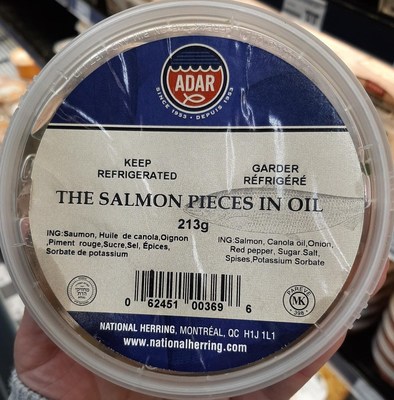
QUEBEC CITY, Feb. 28, 2022 /CNW Telbec/ – The Ministry of Agriculture, Fisheries and Food (MAPAQ), in collaboration with the Food Inspection Division of the City of Montreal and National Herring, located in Montreal , warns the population not to consume the product indicated in the table below, because it has not been packaged in such a way as to ensure its harmlessness.

Product name

Format

Affected lot

“THE SALMON PIECES IN OIL”

213g

Units sold until February 4, 2022

The product that is the subject of this warning was offered for sale until February 4, 2022 in several establishments in the province of Quebec. The product was packaged in plastic jars and sold chilled. The product label includes, in addition to its name, the mention “ADAR – National Herring”.

The operator is voluntarily recalling the product in question. It has agreed with MAPAQ and the Food Inspection Division of the City of Montreal to distribute this warning as a precautionary measure. In addition, people who have this product in their possession are advised not to consume it. They must return it to the establishment where they bought it or throw it away. Even if the affected product shows no signs of tampering or suspicious odors, its consumption may represent a health risk. It should be noted that no case of illness associated with the consumption of this food has been reported to MAPAQ to date.

Additional information

The Ministry publishes various information documents concerning food safety. Interested persons can consult them in the “Food Consumption” section of the MAPAQ website: www.mapaq.gouv.qc.ca/consommation . They also have the possibility of registering online by visiting www.mapaq.gouv.qc.ca/rappelsfoods to receive, by e-mail, the food recall press releases published by the Ministry. Finally, it is possible to follow “MAPAQfoods” on Twitter at the following address: www.twitter.com/MAPAQfoods .

The salmon pieces in oil (CNW Group/Ministry of Agriculture, Fisheries and Food) This link will open in a new window.

Hazard Classification:  Class 1
Reference Number:  4492

Source:
Media relations
Direction des communications
Ministry of Agriculture, Fisheries
and Food
Tel. : 418 380-2100, extension 3512
www.mapaq.gouv.qc.ca

France – HAND PICKED EXTRA FINE GREEN BEANS 180G – Microbial Contamination

Gov france

Identification information of the recalled product

  • Product category Food
  • Product subcategory Fruits and vegetables
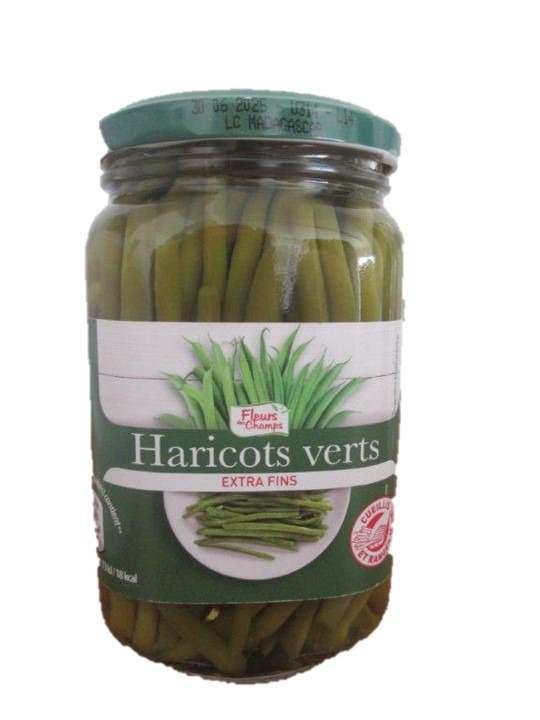
  • Product brand name WILDFLOWERS
  • Model names or references HAND PICKED EXTRA FINE GREEN BEANS 180G
  • Identification of products
    GTIN Lot Dated
    26044132 U117 L02; U140 L02; U155 L02 Date of minimum durability 31/12/2024
  • Marketing start/end date From 06/15/2021 to 02/04/2022
  • Storage temperature Product to be stored at room temperature
  • Geographic area of ​​sale Whole France
  • Distributors ALDI

Practical information regarding the recall

  • Reason for recall Potential microbiological problem
  • Risks incurred by the consumer Manufacturing defect, sealing defect (eg: micro leaks, defective heat sealing) or packaging anomalies

Research – Efficacy of a Mixed Peroxyorganic Acid Antimicrobial Wash Solution against Salmonella, Escherichia coli O157:H7 or Listeria monocytogenes on Cherry Tomatoes

Journal of Food Protection

A study was conducted to evaluate a new organic produce wash composed of a combination of organic acids and hydrogen peroxide, in the form of a mixed peroxyacid solution, against foodborne pathogens.  The mixed peroxyacid, composed of lactic acid, hydrogen peroxide and one or more fruit acids, was challenged against Salmonella enterica, E. coli O157:H7, or Listeria monocytogenes in suspension or on the surface of dip-inoculated cherry tomatoes.  Cherry tomatoes were also treated with 8 ppm of free chlorine added in the form of sodium hypochlorite (NaOCL).  When tested against planktonic cells in pure culture for 120 s, Salmonella, and E. coli O157:H7 were reduced by 7.5 and 7.1 log cycles with 0.40% of the peroxyacid solution, respectively, while L. monocytogenes decreased by 5.0 log by treatment with a 0.80% solution.  When cherry tomatoes were dip-inoculated and treated with 8 ppm free chlorine, Salmonella and E. coli O157:H7 populations decreased by 2.5 and 2.6 log, respectively, which were not significantly different than reductions incurred by sterile water rinses.  A 1.0% solution of peroxyacid solution, however, reduced the same microorganisms by 3.8 and 3.4 log per tomato, respectively, which was significantly greater ( P < 0.05) than reductions achieved by the 2 min sterile water rinse.  When dip-inoculated with L. monocytogenes, and treated, populations were reduced by 3.5 log per tomato with 1.0% peroxyacid solution which was greater ( P < 0.05) than reductions achieved by 8 ppm free Cl (2.6 log) or sterile water (1.7 log).  Results demonstrate that this peroxyacid combination antimicrobial wash may be an effective organic produce wash for preventing cross-contamination during the washing of cherry tomatoes, as well as being capable of inactivating up to 3.8, 3.4, and 3.5 log  per tomato of S. enterica, E. coli O157:H7 and L. monocytogenes , respectively.

Research – Antibacterial Effect of Oregano Essential Oil against Vibrio vulnificus and Its Mechanism

MDPI

Oregano essential oil (OEO) is an effective natural antibacterial agent, but its antibacterial activity against Vibrio vulnificus has not been widely studied. The aim of this study was to investigate the inhibitory effect and germicidal activity of OEO on V. vulnificus and its possible inhibition mechanism. The minimum inhibitory concentrations (MICs) and minimum bactericidal concentrations (MBCs) of OEO against four V. vulnificus strains (ATCC 27562 and three isolates from seafoods) were from 0.06 to 0.15 μL/mL. Compared with untreated bacteria, OEO reduced the concentration of intracellular adenosine triphosphate (ATP), hyperpolarized the cell membrane, increased the level of reactive oxygen species (ROS), and increased the concentration of intracellular malondialdehyde (MDA), but there was no obvious DNA damage at the OEO test concentration. It was indicated that OEO inactivated V. vulnificus by generating ROS which caused lipid peroxidation of cell membranes, thereby reducing the permeability and integrity of cell membranes and causing morphological changes to cells, but there was no obvious damage to DNA. In addition, OEO could effectively kill V. vulnificus in oysters at 25 °C, and the number of bacteria decreased by 48.2% after 0.09% OEO treatment for 10 h. The good inhibitory effect and bactericidal activity of OEO showed in this study, and the economy and security of OEO make it possible to apply OEO to control V. vulnificus contamination in oysters and other seafoods. View Full-Text

Research – Effect of Anolyte on S. Typhimurium and L. monocytogenes Growth in Minced Pork and Beef Cuts

MDPI

In this paper, anolyte is considered as a possible disinfectant for inhibiting the growth of bacteria in meat (beef cuts and minced pork). Meat cuts were contaminated with two concentrations of L. monocytogenes and S. Typhimurium, as these are the most common meat pathogens that are closely regulated by the EU, and treated with two different concentrations of anolyte: 20% for beef cuts and 18% for minced pork. Then, the total viable count (TVC), L. monocytogenes count and S. Typhimurium count were determined. In meat cuts and minced pork, anolyte was able to reduce TVC, S. Typhimurium and L. monocytogenes counts effectively, significantly decreasing L. monocytogenes and S. Typhimurium counts after spraying and throughout 29 days of incubation at 0–4 °C. TVC was reduced after spraying and for 10 days of incubation but later increased to be the same as before spraying with anolyte. Anolyte was effective when spraying beef cuts with a 20% solution for 60 s against pathogenic bacteria L. monocytogenes and Salmonella spp. and also when using it at a concentration of 18% from the minced meat mass. Initially, anolyte significantly decreased TVC, however during the storage period (10–29 days) TVC increased but remained significantly lower compared to control. Anolyte was effective in reducing L. monocytogenes and S. Typhimurium counts throughout the study, and after 29 days of incubation, these bacteria could not be detected in the samples treated with anolyte. View Full-Text

Research – Antifungal Preservation of Food by Lactic Acid Bacteria

MDPI

Aflatoxin

Image CDC

Fungal growth and consequent mycotoxin release in food and feed threatens human health, which might even, in acute cases, lead to death. Control and prevention of foodborne poisoning is a major task of public health that will be faced in the 21st century. Nowadays, consumers increasingly demand healthier and more natural food with minimal use of chemical preservatives, whose negative effects on human health are well known. Biopreservation is among the safest and most reliable methods for inhibiting fungi in food. Lactic acid bacteria (LAB) are of great interest as biological additives in food owing to their Generally Recognized as Safe (GRAS) classification and probiotic properties. LAB produce bioactive compounds such as reuterin, cyclic peptides, fatty acids, etc., with antifungal properties. This review highlights the great potential of LAB as biopreservatives by summarizing various reported antifungal activities/metabolites of LAB against fungal growth into foods. In the end, it provides profound insight into the possibilities and different factors to be considered in the application of LAB in different foods as well as enhancing their efficiency in biodetoxification and biopreservative activities. View Full-Text

Research – Phytic Acid against Clostridium perfringens Type A: A Food Matrix Study

MDPI

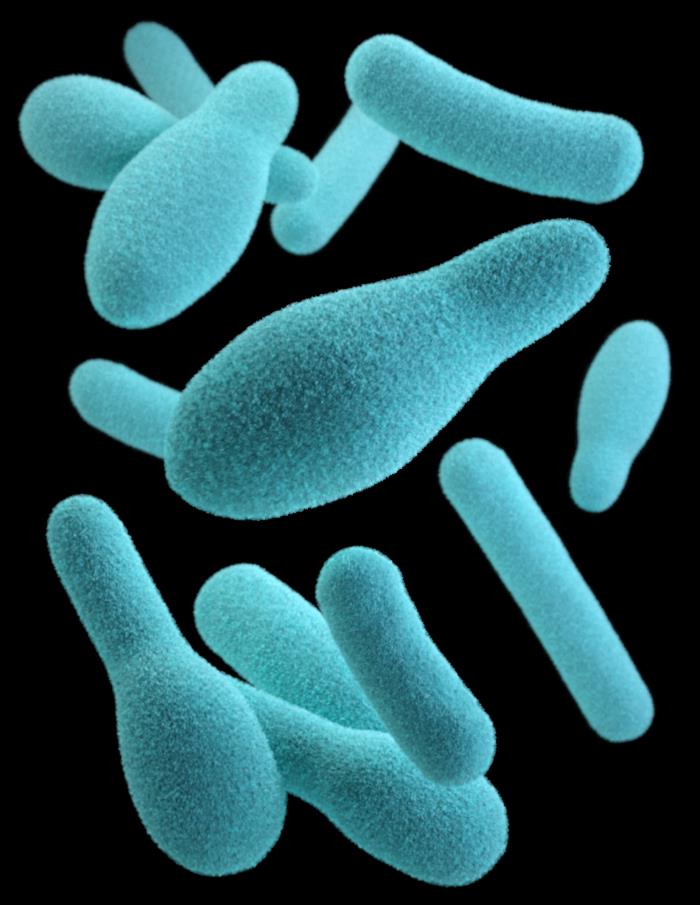
CDC Clost perf

This study evaluated the inhibitory effect of phytic acid (PA) on the spore germination and vegetative cells growth of Clostridium perfringens type A, as well as its effect in combination with maltodextrin (MD) in cooked sausages. The addition of 1% PA showed a satisfactory inhibition of spores’ germination and vegetative cells growth of C. perfringens in BHI media. The inhibitory effect of 1% PA on vegetative cells was similar to the additive sodium sorbate (SS) at 10%. Subsequently, a mixture of PA-MD (1:1; w/w) was evaluated for the inhibition of C. perfringens spores in cooked sausages. The PA-MD 1.5% and 2.5% had a similar performance to SS 10% and a similar or higher performance than 0.015% NO2 (p < 0.05). In an unprecedented way, the present study demonstrated that PA inhibited spore germination and vegetative cells growth of C. perfringens, highlighting its potential use as an alternative and natural preservative for the meat industry. View Full-Text