Category Archives: Microbiology Investigations

Research – Scientists identify environmental cue linked to illness caused by Salmonella

Science Daily

To survive in hostile environments, bacteria attach to one another, forming a supportive framework known as a biofilm. In biofilms of Salmonella — a major cause of food-borne diarrheal illness — a key component of this framework is curli amyloid protein.

Now, in new research, scientists at the Lewis Katz School of Medicine at Temple University show that the repression of curli by an environmental factor in the intestine plays a critical role in freeing Salmonella bacteria of strain S. Typhimurium from their biofilms, enabling them to cause active infection. The environmental cue is nitrate, which both represses curli and modulates levels of an intracellular molecule known as cyclic-di-GMP. These events ultimately lead to the activation of S. Typhimurium flagella, which in humans is a critical step in allowing individual S. Typhimurium bacteria to swim toward and infect intestinal cells.

“It had been unclear what factors trigger S. Typhimurium to switch between a sessile, biofilm lifestyle to a motile, free-swimming lifestyle in the intestine,” explained Çagla Tükel, PhD, Director of the Center for Microbiology and Immunology at the Katz School of Medicine and senior investigator on the new study. “Our study shows for the first time that nitrate produced in the intestinal lumen of the host serves as an environmental cue driving this switch.”
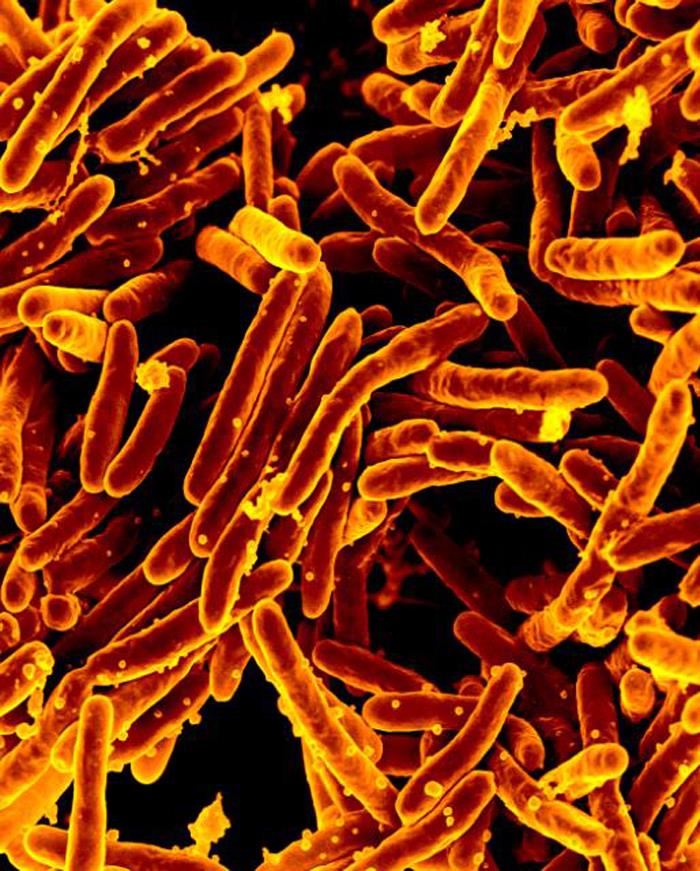

Research – Prevalence of Mycobacterium bovis in milk on dairy cattle farms: An international systematic literature review and meta-analysis

Science Direct

Bovine tuberculosis, caused by Mycobacterium bovis (M. bovis), is a globally distributed chronic disease of animals. The bacteria can be transmitted to humans via the consumption of unpasteurised (raw) milk, thus representing an important public health risk. To investigate the risk of zoonotic transmission of M. bovis via raw milk, this study systematically reviewed published studies to estimate the prevalence of M. bovis in on-farm bulk-tank milk (BTM) and individual cow’s milk (IM) by meta-analysis.

In total, 1,339 articles were identified through seven electronic databases and initially screened using titles and abstracts. The quality of 108 potentially relevant articles was assessed using full texts, and 67 articles comprising 83 studies (76 IM and 7 BTM), were included in the meta-analysis. The prevalence of M. bovis in IM and BTM was summarised according to the diagnostic test used, and the tuberculin skin test (TST) infection status of the individual cows (for IM) or herds (for BTM). Heterogeneity was quantified using the I-squared statistic. Prediction intervals (95% PIs) were also estimated.

For IM, the overall prevalence was summarised at 5% (95%CI: 3%–7%). In TST positive cows, prevalence was summarised at 8% (95%CI: 4%–13%). For BTM, the overall prevalence independent of individual herd TST infection status was summarised at 5% (95%CI: 0%–21%).

There was considerable heterogeneity evident among the included studies, while PIs were also wide. Inconsistency in the quality of reporting was also observed resulting in missing information, such as the TST infection status of the individual animal/herd. No study reported the number of M. bovis bacteria in test-positive milk samples. Several studies reported the detection of M. tuberculosis and M. africanum in milk.

Despite international efforts to control tuberculosis, this study highlights the risk of zoonotic transmission of M. bovis via unpasteurised milk and dairy products made using raw milk.

Research – Microbial safety and sanitary quality of strawberry primary production in Belgium: risk factors for Salmonella and Shiga toxin producing Escherichia coli (STEC) contamination.

AEM

Hepatitis A kswfoodworld

Strawberries are an important fruit in Belgium both in production and consumption, but little information is available about the presence of Salmonella and STEC in these berries, the risk factors in agricultural production and possible specific mitigation options. In 2012, a survey was undertaken of three soil and three soilless cultivation systems in Belgium. No Salmonella spp. was isolated. No STEC was detected in the strawberry samples (0 out of 72), but STEC was detected by qPCR in 11 out of 78 irrigation water and 2 out of 24 substrate samples.

Culture isolates were obtained for 2 out of 11 qPCR positive irrigation water samples and 2 out of 2 substrate samples. Multivariable logistic regression analysis revealed elevated generic E. coli numbers (odds ratio (OR) for 1 log increase being 4.6) as the most important risk factor for STEC, together with the berry picking season (elevated risk in summer).

Presence of generic E. coli in the irrigation water (≥ 1 cfu per 100 ml) was mainly influenced by the type of irrigation water (collected rainfall water stored in ponds was more often contaminated than ground water pumped from boreholes (OR = 5.8)) and the lack of prior treatment (untreated water versus water subjected to sand filtration prior to use (OR = 19.2)).

The follow-up study in 2013 at one of the producers indicated cattle as the most likely source of STEC contamination of the irrigation water.

Denmark – Fermentation in Delicato ketchup

DVFA

ALDI Denmark is recalling Delicato ketchup 500 ml, as there is a risk of fermentation in the product.

Recalled Foods , Published: February 18, 2022

What food:
Delicato Ketchup 500 ml ( see picture )
Best before date: 24.11.2022
EAN barcode: 25020267
Sold in:
ALDI stores throughout the country.
Company recalling:
ALDI Denmark, Herstedøstervej 27-29C, 2620 Albertslund
Cause:
There is a risk of fermentation in the product.
Risk:
Fermentation in the product makes it unsuitable as food.
Advice for consumers:
The Danish Veterinary and Food Administration advises consumers to deliver the product back to the store where it was purchased or to discard it.

Research – Norovirus behind a third of outbreaks in Finland

Food Safety News

Food Borne Illness - Norovirus -CDC Photo

Norovirus was the main cause of foodborne outbreaks in Finland from 2017 to 2019, according to figures published recently by the Finnish Food Authority (Ruokavirasto).

About 2,900 people were reported to have fallen ill in 162 foodborne outbreaks with 110 hospitalizations and nine deaths.

Norovirus caused 57 foodborne outbreaks including two in 2018 through meals at medical and elderly care institutions with 292 and 110 cases. The most commonly reported vectors were fish and fish products, including shellfish and mussels. These caused 14 outbreaks.

USA – FDA Core Investigation Table Update


FDA

Date
Posted

Ref
#

Pathogen
 

Product(s)
Linked to
Illnesses

(if any)

Total
Case Count


Status

2/17/

2022

1056

Cronobacter
sakazakii

&
Salmonella
Newport

Powdered
Infant
Formula

See
Advisory

Active

2/9/

2022

1040

Listeria
monocytogenes

Not Yet
Identified

14

Active

2/2/

2022

1054

Enteroinvasive
E. coli
O143:H26

Not Yet
Identified

16

Active

1/10/

2022

1050

E. coli
O121:H19

Romaine

4

Closed

12/29/

2021

1052

E. coli
O157:H7

Packaged
Salad

See Outbreak
Advisory

Active

12/20/

2021

1039

Listeria
monocytogenes

Packaged
Salad

See Outbreak
Advisory

Active

12/15/

2021

1048

Listeria
monocytogenes

Packaged
Salad

See Outbreak
Advisory

Active

Turkey – Norovirus behind mass hospitalizations in Turkey’s Bilecik – Water Contamination

Daily Sabah

Authorities announced that norovirus is the culprit behind the hospitalization of hundreds of people in the western province of Bilecik in recent weeks. An investigation found out that the virus, whose symptoms include vomiting, diarrhea and stomachache, originated from city’s drinking water. Health Ministry crews discovered that unfiltered water from a spring had contaminated drinking water supplies to the city of more than 228,000 people.

RASFF Alert – Animal Feed – Enterobacteriaceae – Dog Chews

RASFF

Enterobacteriaceae in dog chews from the Netherlands in Belgium

RASFF Alert – Animal Feed – Salmonella – Organic Rapeseed Expeller

RASFF

Salmonella enterica ser. Bradford in organic rapeseed expeller from Germany

Research – Assessment of the Microbiological Quality and Safety of Unpasteurized Milk Cheese for Sale in England between 2019 and 2020

Journal of Food Protection

Cheese made with unpasteurized milk has been associated with outbreaks of illness. However, there are limited data on the prevalence of Shiga toxin–producing Escherichia coli (STEC) in these products and a lack of clarity over the significance of E. coli as a general indicator of hygiene in raw milk cheeses. The aim of this study was to provide further data to address both of these issues, as well as assessing the overall microbiological quality of raw milk cheeses available to consumers in England. A total of 629 samples of cheese were collected from retailers, catering premises, and manufacturers throughout England. The majority (80%) were made using cow’s milk, with 14% made from sheep’s milk and 5% from goat’s milk. Samples were from 18 different countries of origin, with the majority originating from either the United Kingdom (40%) or France (35%). When interpreted against European Union microbiological criteria and United Kingdom guidance, 82% were considered to be of satisfactory microbiological quality, 5% were borderline, and 12% were unsatisfactory. Four samples (0.6%) were potentially injurious to health due to the isolation of STEC from one, >104 CFU/g of coagulase-positive staphylococci in two, and >100 CFU/g of Listeria monocytogenes in the fourth sample. Indicator E. coli and Listeria species were detected more frequently in soft compared with hard cheese. Higher levels of indicator E. coli were significantly associated with a greater likelihood of detecting Shiga toxin genes (stx1 and/or stx2).