Category Archives: Microbiological Risk Assessment

USA – Top Quality Dog Food Recalls Batch Of “Beef HVM” 1-Pound Packages with Lot Number 071521, Because of Possible Salmonella, Listeria Monocytogenes Health Risk

FDA

Top Quality Dog Food.com, Beef HVM, 1 lb.

Summary

Company Announcement Date:
FDA Publish Date:
Product Type:
Animal & Veterinary
Reason for Announcement:
Potential Salmonella & Listeria monocytogenes contamination
Company Name:
Top Quality Dog Food
Brand Name:
Top Quality Dog Food.com
Product Description:
Beef HVM

Company Announcement

Top Quality Dog Food of Hyattsville, MD is recalling “Beef HVM” 1-pound packages due to the potential of Salmonella spp.Listeria monocytogenes.   Salmonella, Listeria, can affect animals eating the product and there is risk to humans handling contaminated products, especially if they have not thoroughly washed their hands after having contact with the products or any surfaces exposed to these products.

Healthy people infected with Salmonella should monitor themselves for the following symptoms: nausea, vomiting, diarrhea or bloody diarrhea, abdominal cramping, and fever. Rarely, Salmonella can result in more serious ailments, including arterial infections, endocarditis, arthritis, muscle pain, eye irritation, and urinary tract symptoms. Pets with Salmonella infections may be lethargic and have diarrhea or bloody diarrhea, fever, and vomiting. Some pets will have only decreased appetite, fever, and abdominal pain. Infected but otherwise healthy pets can be carriers and infect other animals or humans. If your pet has consumed the recalled product and has these symptoms, please contact your veterinarian.

Listeria monocytogenes can cause serious and sometimes fatal infections in young children, vulnerable or elderly people, and others with compromised immune systems. Healthy people may suffer short-term symptoms such as fever, headaches, stiffness, abdominal pain, and diarrhea. Listeria monocytogenes infections pose a serious threat to pregnant woman, as it can lead to miscarriages and stillbirths. Listeria monocytogenes infections are uncommon in pets, but they are possible. Symptoms may include mild to severe diarrhea; anorexia; fever; nervous, muscular, and respiratory signs; abortion; depression; shock; and death. Healthy people should monitor themselves and their pets for symptoms.

The recalled “Beef HVM” was distributed in DC, MD, VA, DE, PA, MA, CT, and SC and product was distributed through mail order and direct delivery from 7/27/21 to 8/2/21. The “Beef HVM” comes in a 1-pound package marked with lot #071521 on the bottom right corner of the label.

No illnesses have been reported to date in connection with the “Beef HVM” 1-pound packages in question.

The contamination was noted after a state surveillance sample revealed the presence of SalmonellaListeria monocytogenes, in some 1-pound. packages of Beef HVM. The remaining “Beef HVM” batch in our possession has been quarantined and we have discontinued the distribution of this batch while FDA and our company continue their investigation as to the source of the contamination.

We have already contacted those who have received this lot number based on our records. We encourage all customers who received this product to dispose of any unused product immediately.

If you find the “Beef HVM” 1-pound package that shows the lot number: 071521 in your possession, we urge you to return it to the place of purchase for a full refund.

Top Quality Dog Food LLC

240-802-6601

customerservice@topqualitydogfood.com

Business Hours: We are open Monday through Friday, 8:00 AM to 4:30 PM EST.


Company Contact Information

Consumers:
Top Quality Dog Food LLC
 240-802-6601
 customerservice@topqualitydogfood.com
Media:
Top Quality Dog Food
 (240) 582-3266

RASFF Alerts – Salmonella – Animal Feed – Rapeseed Feed – Feed – Feed Material

RASFF

Salmonella Tennessee in rapeseed meal from Germany in Finland

RASFF

Salmonella Yoruba in feed from Russia in Finland

RASFF

Salmonella in feed material from Germany in Finland

RASFF

Salmonella spp. in rapeseed meal from Germany in Germany and Austria

RASFF Alerts – Animal Feed – Mould – Fat Feed – Sunflower Feed

RASFF

Mould in fat feed from Ukraine in Poland

RASFF

Mould on post-extraction sunflower feed from Ukraine in Poland

UK – Further update from the Food Standards Agency and Food Standards Scotland following the rise in cases of feline pancytopenia – Mycotoxins

FSA

An update on the investigation into the recalled cat food following a rise in cases of feline pancytopenia and responses to common consumer queries.

The Food Standards Agency has been working closely with Fold Hill Foods over the course of the investigation into the recalled cat food. The company has co-operated fully.

The results of extensive testing identified higher levels of mycotoxins in some samples of the recalled cat food. This includes specific compounds known as T2 and HT2. These products are no longer on sale.

Mycotoxins are found in some types of feed and food and do not, in themselves, indicate they are the cause of feline pancytopenia. No causative link between pancytopenia and the recalled cat food products has been established.

As a result of these findings, Fold Hill Foods is working with its local authority to take steps to resume production.

Next steps in the investigation

A multi-agency approach will continue to try and identify the causes of the pancytopenia. As new information emerges, we will review our approach on managing any identified risks in animal feed and inform industry so that they can take any action required as a result of our findings.

Details of the original product recall notice were published on 17 June.

Frequently asked questions

We understand how upsetting the past two months have been for cat owners and know how important it is that the cause of the recent feline pancytopenia cases is established.

Our tests and analysis to date have not found a causative link to the pancytopenia cases, but our investigation is ongoing and we will provide an update once we have more information.

Was the pancytopenia outbreak not caused by cat food?

To date testing has not been able to definitively determine a cause, we have not ruled out cat food or any other possible causes either.

Is it safe for anyone who still has the recalled cat food to feed it to their cats?

Cat owners should not feed any recalled cat food to their cats and should continue to follow the advice in our recall notice.

What other possible causes are being investigated?

We continue to work with the Animal and Plant Health Agency (APHA) and the Department for the Environment, Food and Rural Affairs (DEFRA) to identify the possible cause of the pancytopenia. At this stage we are not ruling out any possible cause.

Why is the company being allowed to restart production if it is not known for sure that its cat food is safe?

A causative link between the feline pancytopenia and the recalled cat food has not been established

A causative link between the feline pancytopenia and the company’s other cat food products has not been established, either.

Some social media posts have shown the results of mycotoxin tests, suggesting food is unsafe for cats. Why has action not been taken?

We are aware of some social media posts, in which test results have been misinterpreted as showing a danger to cats.

The mere presence of mycotoxins in cat food does not necessarily pose a risk to cats. Mycotoxins are naturally occurring substances produced by certain types of moulds (fungi) which can grow on a variety of different crops and feedstuffs.

If mycotoxins are widely found in animal feed, should people be concerned about other brands of cat food?

No. There is no evidence linking any other products to feline pancytopenia.

USA – Florida Vibrio vulnificus update: Additional case/death in Orange County

Outbreak News Today

Food Illness

The Florida Department of Health reported Friday an additional Vibrio vulnificus case and death in Orange County, bringing the state total to 19 cases and seven deaths so far in 2021.

The even fatalities have been reported in Manatee (2), Duval, Escambia, Lee, Orange and Polk counties.

Since 2008, state officials have reported 471 cases and 124 deaths, including 36 cases and 7 deaths in 2020.

Vibrio vulnificus can cause disease in those who eat contaminated seafood or have an open wound that is exposed to warm seawater containing the bacteria. Ingestion of Vibrio vulnificus can cause vomiting, diarrhea and abdominal pain. Vibrio vulnificus can also cause an infection of the skin when open wounds are exposed to warm seawater; these infections may lead to skin breakdown and ulcers.

India – Over 50 People Get Food Poisoning From Ritual Dish in India

News Ghana

More than 50 people came down with food poisoning in the Indian state of Assam after eating a worship dish known as Prasada, the Indian police said on Monday.

The vegetarian dish was served at a religions function organized by a local villager on Sunday. Guests then started complaining of stomachache and feeling sick.

As a result, over 50 villagers have been hospitalized since Sunday evening. They are in a stable condition as of now.

RASFF Alert – Animal Feed – Enterobacteriaceae – Dog Food

RASFF

Enterobacteriaceae in pet (dog) food from Canada in Spain

RASFF Alerts – Animal Feed – Aflatoxin – Peanut Kernels

RASFF

Aflatoxin B1 in peanut kernels from Argentina in Germany

RASFF Alerts – Animal Feed – Salmonella – Rapeseed Meal – Rape Seed Expeller – Soy Bean Meal

RASFF

Salmonella spp. in rapeseed meal from Germany in Germany and Austria

RASFF

Salmonella ssp. in rape seed expeller from Germany in Germany, Austria, France and Switzerland

RASFF

Salmonella spp. in soy bean meal from Germany in Poland

Research – Thermosonication Combined with Natural Antimicrobial Nisin: A Potential Technique Ensuring Microbiological Safety and Improving the Quality Parameters of Orange Juice

MDPI

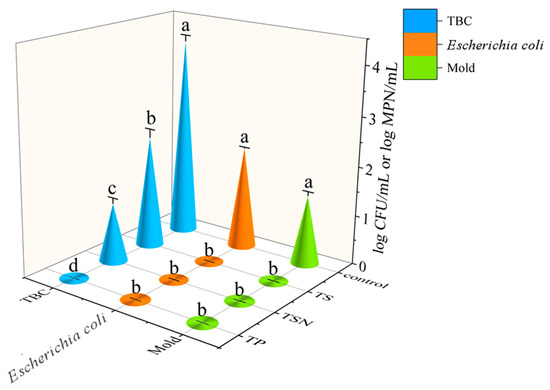
Currently, thermal pasteurisation (TP) remains the most widely applied technique for commercial orange juice preservation; however, a high temperature causes adverse effects on the quality attributes of orange juice. In order to explore a novel non-thermal sterilization method for orange juice, the impacts of thermosonication combined with nisin (TSN) and TP treatments on the quality attributes including microbial and enzyme inactivation and the physicochemical, nutritional, functional, and sensory qualities of orange juice were studied. Both TP and TSN treatments achieved desirable bactericidal and enzyme inactivation effects, and nisin had a significant synergistic lethal effect on aerobic bacteria in orange juice (p < 0.05). Additionally, TSN treatment significantly improved the color attributes of orange juice and well maintained its physicochemical properties and sensory quality. More importantly, TSN treatment significantly increased the total polyphenols content (TPC) and total carotenoids (TC) by 10.03% and 20.10%, increased the ORAC and DPPH by 51.10% and 10.58%, and the contents of total flavonoids and ascorbic acid were largely retained. Correlation analysis of antioxidant activity showed that the ORAC and scavenging ability of DPPH radicals of orange juice are mainly attributed to TC and TPC. These findings indicate that TSN shows great potential application value, which could guarantee the microbiological safety and improve the quality attributes of orange juice. View Full-Text

▼ Show Figures