Category Archives: Microbiological Risk Assessment

USA – CDC – Lettuce, Other Leafy Greens, and Food Safety

CDC

Leafy greens arranged on a white background

Vegetables are an important part of a healthy diet. Leafy vegetables (called leafy greens on this page), such as lettuce, spinach, cabbage, kale, and bok choy, provide nutrients that help protect you from heart diseasestroke, and some cancers.

But leafy greens, like other vegetables and fruits, are sometimes contaminated with harmful germs. Washing leafy greens does not remove all germs. That’s because germs can stick to the surface of leaves and even get inside them. If you eat contaminated leafy greens without cooking them first, such as in a salad or on a sandwich, you might get sick.

Although anyone can get a foodborne illness, sometimes called food poisoning, some groups of people are more likely to get one and to have a serious illness. These groups include:

  • Adults aged 65 and older
  • Children younger than 5 years
  • People who have health problems or take medicines that lower the body’s ability to fight germs and sickness (a weakened immune system)external icon
  • Pregnant people

Eating Leafy Greens

Are leafy greens safe to eat?

Millions of servings of leafy greens are eaten safely every day in the United States. But leafy greens are occasionally contaminated enough to make people sick. To reduce your chance of getting sick, always follow the steps for safely handling and preparing leafy greens before eating or serving them.

Are leafy greens safe for my pet to eat?

Some animals can get sick from some germs that also make people sick. Always follow the steps for safely handling and preparing leafy greens before feeding them to pets and other animals. Never feed recalled food to pets or other animals.

Safely Handling and Preparing Leafy Greens

Do I need to wash all leafy greens?

Prewashed greens don’t need to be washed again. If the label on a leafy greens package says any of the following, you don’t need to wash the greens:

  • Ready-to-eat
  • Triple washed
  • No washing necessary

Prewashed greens sometimes cause illness. But the commercial washing process removes most of the contamination that can be removed by washing.

All other leafy greens should be thoroughly washed before eating, cutting, or cooking.

What is the best way to wash leafy greens?

The best way to wash leafy greens is by rinsing them under running water. Studies show that this step removes some of the germs and dirt on leafy greens and other vegetables and fruits. But no washing method can remove all germs.

Follow these steps to wash leafy greens that you plan to eat raw:

  • Wash your hands for 20 seconds with soap and water before and after preparing leafy greens.
  • Get rid of any torn or bruised leaves. Also, get rid of the outer leaves of cabbages and lettuce heads.
  • Rinse the remaining leaves under running water. Use your hands to gently rub them to help get rid of germs and dirt.
  • Dry leafy greens with a clean cloth or paper towel.

Should I soak leafy greens before washing them?

No. Do not soak leafy greens. If you soak them in a sink, germs in the sink can contaminate the greens. If you soak them in a bowl, germs on one leaf can spread to the other leaves. Rinsing leafy greens under running water is the best way to wash them.

Should I wash leafy greens with vinegar, lemon juice, soap, detergent, or produce wash?

Use plain running water to wash leafy greens and other produce. Kitchen vinegar and lemon juice may be used, but CDC is not aware of studies that show vinegar or lemon juice are any better than plain running water.

Do not wash leafy greens or other produce with soap, detergent, or produce wash. Do not use a bleach solution or other disinfectant to wash produce.

What other food safety steps should I keep in mind when I select, store, and prepare leafy greens and other produce?

  • Select leafy greens and other vegetables and fruits that aren’t bruised or damaged.
  • Make sure pre-cut produce, such as bagged salad or cut fruits and vegetables, is refrigerated or on ice at the store.
  • Separate produce from raw meat, poultry, seafood, and eggs in your shopping cart, grocery bags, and refrigerator.
  • Store leafy greens, salads, and all pre-cut and packaged produce in a clean refrigerator with the temperature set to 40°F or colder.
  • Use separate cutting boards and utensils for produce and for raw meat, poultry, seafood, and eggs. If that isn’t an option, prepare produce before working with raw meat.
  • Wash utensils, cutting boards, and kitchen surfaces with hot, soapy water after each use.
  • Cook thoroughly or throw away any produce that touches raw meat, poultry, seafood or their juices.
  • Refrigerate cooked or cut produce, including salads, within 2 hours (1 hour if the food is exposed to temperatures above 90°F, like a hot car or picnic).

Germs, Outbreaks, and Recalls

How do leafy greens get contaminated with germs?

Germs that make people sick can be found in many places, including in the soil, in the feces or poop of animals, in refrigerators, and on kitchen surfaces.

Germs can contaminate leafy greens at many points before they reach your plate. For example, germs from animal poop can get in irrigation water or fields where theexternal icon vegetables grow. Germs can also get on leafy greens in packing and processing facilities, in trucks used for shipping, from the unwashed hands of food handlers, and in the kitchen. To prevent contamination, leafy greens should be grown and handled safely at all points from farm to fork.

Read a study by CDC and partners on what we have learned from 10 years of investigating E. coli outbreaks linked to leafy greens.

How common are outbreaks linked to leafy greens?

In 2014–2018, a total of 51 foodborne disease outbreaks linked to leafy greens (mainly lettuce) were reported to CDC. Five of the 51 were multistate outbreaks that led CDC to warn the public. Among those five outbreaks, two were linked to packaged salads, two were linked to romaine lettuce, and one could not be linked to a specific type of leafy greens.

Most recently, in 2019–2021, CDC investigated and warned the public about nine multistate outbreaks linked to leafy greens. Among those outbreaks, six were linked to packaged salads, one was linked to romaine lettuce, one was linked to baby spinach, and one could not be linked to a specific type of leafy greens. Learn about these outbreaks.

Most foodborne illnesses are not part of a recognized outbreak. The nearly 2,000 illnesses reported in 2014–2020 outbreaks linked to leafy greens represent only a small part of illnesses caused by contaminated leafy greens during those years.

Does CDC warn the public about every foodborne disease outbreak?

No. CDC does not warn the public about every foodborne outbreak—including ones linked to leafy greens. Some reasons for this include:

  • Most sources of foodborne outbreaks are never identified.
  • By the time a source is identified, it might no longer be in stores, restaurants, or homes. This can happen with foods that are perishable (foods that spoil or go bad quickly), such as leafy greens.
  • Most outbreaks affect people in only one state, so local or state health departments lead the work to identify, investigate, and communicate about those outbreaks. CDC typically communicates only about outbreaks that affect people in more than one state.

Investigating outbreaks linked to leafy greensexternal icon can be especially challenging. These outbreaks often go unidentified or unsolved.

What should I do with leafy greens that are part of a recall?

  • Never eat, serve, or sell food that has been recalled, even if some of it was eaten and no one got sick.
  • Return the recalled food to the store or throw it away at home.
    • Throw out the recalled food and any other foods stored with it or that touched it.
    • Put it in a sealed bag in an outside garbage can with a tight lid (so animals cannot get to it).
    • If the recalled food was stored in a reusable container, wash the container in the dishwasher or with hot, soapy water.
  • Follow CDC’s instructions for cleaning your refrigerator after a food recall.

Organic, Hydroponic, and Home-Grown Leafy Greens

Are organic leafy greens less likely to be contaminated than non-organic ones?

All kinds of produce, including organic leafy greens, can be contaminated with harmful germs at any point from farm to fork. CDC is not aware of any evidence that organic greens are safer.

Learn about some outbreaks linked to organic foodsexternal icon.

Are hydroponic or greenhouse-grown leafy greens less likely to be contaminated?

Leafy greens grown using these methods also can be contaminated with harmful germs at any point from farm to fork.

Learn about an outbreak linked to greenhouse-grown leafy greens.

How do I keep leafy greens in my garden safe to eat?

Home gardens can be an excellent source of fruits and vegetables. Follow these tips to help prevent food poisoning:

  • Plant your garden away from animal pens, compost bins, and manure piles.
  • Water your garden with clean, drinkable water.
  • Keep dirty water, including storm runoff, away from the parts of plants you will eat.

Learn about raised bed gardening pdf icon[PDF – 1 page].

Looking to the Future

What steps are industry and the government taking to make leafy greens safer?

CDC is collaborating with FDA, academia, and industry to investigate the factors that contribute to leafy greens contamination.

The leafy greens industry, FDA, and state regulatory authorities have been implementing provisions of the Produce Safety Ruleexternal icon as part of the FDA Food Safety Modernization Act (FSMA).external icon They are considering what further measures can be taken. FDA’s 2020 Leafy Greens STEC Action Planexternal icon describes the agency’s plans to work with partners to make leafy greens safer.
RASFF Alerts – Animal Feed – Salmonella – Frozen Cat 3 Chicken Meat – Dried Beef Larynx Treats for Dogs

RASFF

Salmonella infantis in frozen chicken meat cat. 3 from Netherlands in Italy

RASFF

Salmonella spp. in dried beef larynx treats for dogs from Albania via Belgium in Germany

Quebec – Update – Notice not to consume products packaged in glass jars and sold by Gourmand caterer (Des Côtés Gourmands inc.) – Food Safety

MAPAQ

WARNING TO THE POPULATION

QUEBEC CITY , March 22, 2022  /CNW Telbec/ – The food recall statement issued on March 18, 2022 has been updated to include additional information on the affected products.

The Ministry of Agriculture, Fisheries and Food (MAPAQ), in collaboration with the company Gourmand caterer (Des Côtés Gourmands inc.), located at 306, boulevard Yvon-L’Heureux Nord, in Beloeil, advises the population not to consume the products indicated in the table below, because they have not been packaged in such a way as to ensure their harmlessness.

Product name

Format

Affected lot

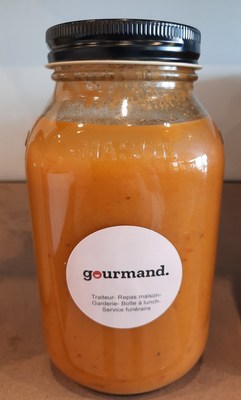
“Vegetable Soup”

(orange)

1 litre

Units sold until March 17, 2022

“Chorizo, potato and white bean soup”

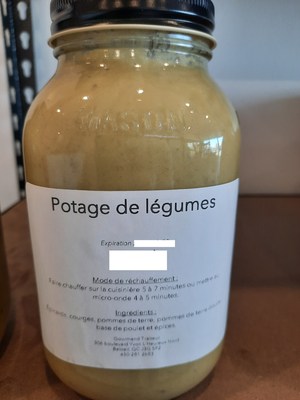
“Vegetable Soup”

(green)

473ml

1 litre

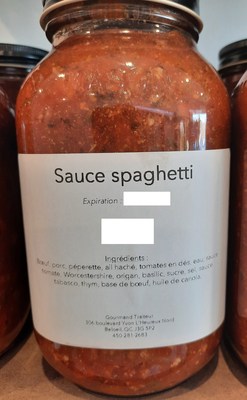
“Spaghetti Sauce”

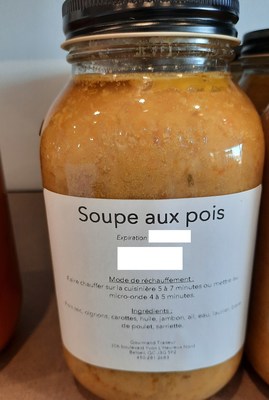
” Pea soup “

PRODUCT ADDED AS OF MARCH 22, 2022

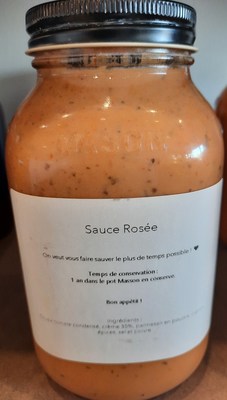
“Rosée Sauce”

1L

Units sold until March 17, 2022

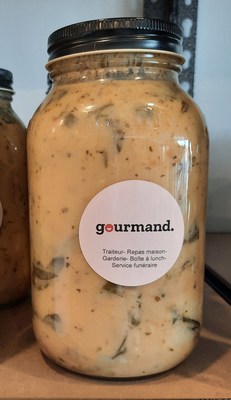
The products that are the subject of this warning were offered for sale until March 17, 2022, and this, only at the establishment designated above. They were packaged in Mason-type glass jars with black lids and sold at room temperature. The label of the products includes, in addition to their denomination, the mention “greedy”.

The operator is voluntarily recalling the products in question. It has agreed with MAPAQ to issue this warning as a precautionary measure. Also, people who have any of these products in their possession are advised not to consume it. They must return it to the establishment where they bought it or throw it away. Even if the affected products show no signs of tampering or suspicious odors, their consumption may represent a health risk. It should be noted that no case of illness associated with the consumption of these foods has been reported to MAPAQ to date.

Additional information

The Ministry publishes various information documents concerning food safety. Interested persons can consult them in the “Food Consumption” section of the MAPAQ website: www.mapaq.gouv.qc.ca/consommation  . They also have the possibility of registering online, by visiting www.mapaq.gouv.qc.ca/rappelsfoods  , to receive, by e-mail, the food recall press releases published by the Ministry. Finally, it is possible to follow “MAPAQfoods” on Twitter at the following address: www.twitter.com/MAPAQfoods  .

Chorizo ​​Soup (CNW Group/Ministry of Agriculture, Fisheries and Food) 

Vegetable soup (orange) (CNW Group/Ministry of Agriculture, Fisheries and Food) 

Spaghetti sauce (CNW Group/Ministry of Agriculture, Fisheries and Food) 

Pea soup (CNW Group/Ministry of Agriculture, Fisheries and Food) 

Vegetable soup (green) (CNW Group/Ministry of Agriculture, Fisheries and Food) 

Sauce Rosée (CNW Group/Ministry of Agriculture, Fisheries and Food) 

Hazard Classification: Class 1
Reference Number: 4518A

Source:
Media relations
Direction des communications
Ministry of Agriculture, Fisheries
and Food
Tel. : 418 380-2100, extension 3512
www.mapaq.gouv.qc.ca 

QuoteView original content to download multimedia: http://www.newswire.ca/en/releases/archive/March2022/22/c8827.html

USA – Webinar on the Foodborne Outbreak Response Improvement Plan – April 13th 2022

FDA

New Era for Smarter Food Safety

The U.S. Food and Drug Administration (FDA) is holding a webinar on the Foodborne Outbreak Response Improvement Plan that the agency released in early December 2021.

Deputy FDA Commissioner Frank Yiannas and FDA experts across agency’s human foods program will be available to explain and answer questions about the plan with the goal of raising awareness, enhancing understanding, and building support. Stakeholders are welcome to provide their insights as well as ask questions.

This response improvement plan focuses on tech-enabled product traceback, root cause investigations, analysis and dissemination of outbreak data, and operational improvements. It is intended to work in concert with FDA’s New Era of Smarter Food Safety Blueprint, which outlines specific approaches the FDA will take over the next decade to address food safety in the rapidly changing food system.

The plan was also informed by an independent review of the FDA’s structural and functional capacity to support, participate in, or lead multistate foodborne illness outbreak investigation activities. You will hear more about that review in this webinar.

The speakers will be:

  • Frank Yiannas, Deputy Commissioner for Food Policy and Response
  • RADM David Goldman, Chief Medical Officer, Office of Food Policy and Response
  • Stic Harris, Director, FDA’s Coordinated Response and Evaluation Network (CORE)
  • CDR Kari Irvin, Deputy Director, CORE
  • Scott MacIntire, Program Director, Office of Human and Animal Food Operations – West
  • Craig Hedberg, University of Minnesota, author of “An Independent Review of FDA’s Foodborne Outbreak Response Processes”

The webinar will also be recorded and posted to the FDA website.

You are also welcome to submit questions during the webinar to SmarterFoodSafety@fda.hhs.gov.

Registration

Registration is required. There will be an opportunity to ask questions in advance on the registration form.

REGISTERExternal Link Disclaimer

Additional Information

India – 48 people, including 22 children hospitalised with food poisoning at Bagalkot

New Indian Express

BAGALKOT: At least 48 people, including 22 children, were rushed to the district civil hospital after they fell ill reportedly because of food poisoning at Domanal village of Bagalkot taluka.

Initially 80 people were reported ill but after medical professionals were pressed into service nearly 50 people have found ill and all have been admitted at the district civil hospital for further treatment.

Within an hour of consuming food served at Yamunarappa Urus, a religious ceremony, many people began vomiting and complained of diarrhoea. The villagers soon alerted the health department, who rushed to the spot within minutes with sufficient medical kits.

Among the 48 people that fell ill 22 are children, 12 are women and 10 are elderly persons. The district hospital declared that all are out of danger and responding to the treatment.

Speaking to The New Indian Express, Dr Jayashree Emmi, District Health Officer (DHO), said that, “We have put enough medical professionals on the job to take care of all the people that fell ill reportedly after consuming food at a religious ceremony. All the people are stable and recovering.”

“We have collected samples of food and water served at Urus. After investigation an investigation will be carried out on the incident. We have also stationed two ambulances and a team of health professionals in the village as a precaution,” stated DHO Jayashree.

USA – Microbiological Surveillance Sampling: FY17–19 Processed Avocado and Guacamole

FDA

The U.S. Food and Drug Administration collected and tested processed avocado, the main ingredient in guacamole, and finished guacamole as part of the agency’s proactive and preventive approach to deploying its sampling resources with the ultimate goal of preventing contaminated food from reaching consumers.

Assignment Overview

The assignment began in November 2017 and ended in September 2019. In total, the FDA collected and tested 887 samples of processed avocado and guacamole (domestic and imported product) for Salmonella spp. and Listeria monocytogenes. This total is smaller than the initial number of samples the agency set out to collect and test because the agency encountered factors that twice required a reduction of the collection target, as explained in the Sample Collection section of this report (page 6).

As to the design of the assignment, the FDA directed its field staff not to collect products that had undergone high-pressure processing (HPP) or products intended for HPP. HPP is a “kill step” validated to eliminate pathogenic microorganisms in food, and it is often used in the manufacture of processed avocado and guacamole. In seeking to exclude from the assignment products that had been HPP-treated, the FDA’s intent was to focus on products that posed the greatest risk to consumers.

The agency learned during its evaluation of the test results that some of the products collected had received HPP treatment but were not labeled as such. FDA staff worked retrospectively with industry to identify the HPP-treatment status of the samples collected but could not determine the status of a number of samples. Those samples were designated as “could not ascertain” for purposes of the data analysis.

Findings and Follow-up Actions

The FDA detected Salmonella spp.in two samples which were later determined to be distinct samples of the same brand of domestically manufactured guacamole from different lots. Neither sample had received HPP treatment. In addition, the agency detected Listeria monocytogenes in 15 samples from nine different firms. Of those 15 samples, eight had not been HPP treated. The HPP-treatment status of the other seven samples could not be ascertained.

When the FDA detected a pathogen in a domestic sample, agency personnel worked with the company that owned or distributed the affected product to conduct a voluntary recall in all cases in which product was available, or likely to still be available, to consumers. The FDA also conducted one follow-up inspection of a domestic facility, and state officials in Florida likewise conducted one domestic inspection. As to the imported samples, the agency refused to admit lots associated with the positives and placed the responsible companies on import alert. In all, the agency placed two firms on import alert. In addition, the agency conducted whole genome sequencing (WGS) analysis on the positives but was unable to determine whether processed avocado or guacamole were the food vehicle associated with any known human illnesses.

In addition to affirming that Salmonella spp. and Listeria monocytogenes may be present in processed avocado and/or guacamole, the assignment data show that the estimated prevalence of these pathogens in the non-HPP-treated samples was higher than in the HPP-treated samples. This finding appears to support other research that shows HPP is effective at neutralizing pathogenic microorganisms,[1] even as this assignment was not designed to compare possible differences based on HPP-treatment status. The findings also underscore the need for processors and others in the processed avocado and guacamole supply chain to comply with the FDA’s Preventive Controls for Human Food Rule[2] and for importers of these foods to comply with the FDA’s Foreign Supplier Verification Programs Rule.[3]


Iceland – Food insecurity in the production of sprouts and tofu

MAST

Matvælastofnun warns against consuming bean sprouts and fried tofu and tofu from Thi hollusta ehf because food safety was not guaranteed at the production site. The establishment does not meet the requirements for food production and it is not possible to ensure the safety of the food. The Health Inspectorate in Hafnarfjörður (HEF) has assisted the company regarding the recall and sent out a press release.

The recall applies to all batches and dates;

  • Brand: THI
  • Product name: Mung sprouts, Tofu white, Tofu fried
  • Manufacturer: Thi produksla ehf.
  • Country of production: Iceland
  • Batch number / best for dates: All dates / all batch numbers
  • Storage conditions: Refrigerated product
  • Distribution: Banh Mi ehf., Bananar ehf. , Fiska.is

Consumers who have purchased the products are advised not to consume them.

Further information provided by the manufacturer by phone: 553-2555 or by e  -mail mariaminh2505@gmail.com

Related material

USA – FDA issues warning to New Mexico onion importer linked to Salmonella outbreak

Food Safety News

An import company in New Mexico is on notice from the FDA for not having food safety documents for a number of imported foods. The inspection was initiated because of an investigation of a multistate foodborne outbreak of Salmonella Oranienburg illnesses linked to whole, fresh onions imported from the state of Chihuahua, Mexico.

The outbreak has sickened more than 800 people in the United States and remains under investigation. The Centers for Disease and Prevention has not yet declared the outbreak over.

In its warning letter the Food and Drug Administration  acknowledged that the company initiated a voluntary recall on Oct. 22, 2021, of red, yellow, and white onions imported from its “suppliers (redacted)” in Chihuahua, Mexico, from July 1, 2021, through Aug. 25, 2021.

In the March 2, 2022, warning letter just made public by the FDA, the agency described a Nov. 16, 2021, Foreign Supplier Verification Program (FSVP) inspection of Keeler Family Farms in DemingNM.

USA – Welcome to the Agricultural Water Assessment Builder!

FDA

Thank you for choosing to use the Agricultural Water Assessment Builder. The Agricultural Water Assessment Builder v. 1.0 is a user-friendly tool designed to help farms understand the proposed requirements for an agricultural water assessment in the “Standards for the Growing, Harvesting, Packing, and Holding of Produce for Human Consumption Relating to Agricultural Water” proposed rule (agricultural water proposed rule). If finalized, the rule would replace the microbial criteria and testing requirements for pre-harvest agricultural water for covered produce (other than sprouts) in the 2015 Produce Safety Final Rule with provisions for systems-based agricultural water assessments. Relevant definitions and resources can be viewed by clicking the icon next to the title of this page.
We welcome feedback on v1.0 of this optional tool, such as suggestions related to the tool’s functionality and useability. Feedback on the tool can be sent to agwaterbuilder@fda.hhs.gov.
Use of this tool is not required by law (see legal disclaimer) and would not be required. If the agricultural water proposed rule is finalized, FDA expects this tool to supplement and not replace other education, training, and experience that would be needed to understand and implement the requirements of the rule.
The information entered into this page will not be shared with FDA and will not be saved. If you need to pause while entering information, we recommend that you export a copy of your data and save it to your local machine. Once the document is saved, you may resume at a later time, and upload the file to begin from where you paused. Once you have reached the end of this tool, you will be given the opportunity to print out a summary of the information entered. Remember, the data that is entered here is not saved unless your export a file to save on your computer.
This tool is being provided for illustrative purposes only because the requirements for agricultural water assessments under proposed § 112.43 have not been finalized.
Legal disclaimer: Use of the Agricultural Water Assessment Builder v. 1.0 does not constitute FDA approval of an agricultural water assessment or guarantee compliance with FDA’s requirements, if finalized. FDA has taken all reasonable precautions in creating the Agricultural Water Assessment Builder v. 1.0. However, FDA is not responsible for errors, omissions or deficiencies regarding the tool. The Agricultural Water Assessment Builder v. 1.0 is available “as is” and without warranties of any kind, either expressed or implied, including, but not limited to, warranties of performance, merchantability, and fitness for a particular purpose. FDA is not making a commitment in any way to regularly update the tool. Responsibility for the interpretation and use of the Agricultural Water Assessment Builder v. 1.0 lies solely with the user. Third parties’ use of or acknowledgment of the tool does not in any way represent that FDA endorses such third parties or expresses any opinion with respect to their statements.

Netherlands – Safety warning Conimex Ready-to-cook Nasi 230 grams – Micro Spoilage

NVWA

Safety warning Conimex Ready-to-cook Nasi 230 grams

Unilever recalls Conimex Ready-made Nasi as a precaution. There may be micro-holes in the packaging. This can spoil the product and is therefore not suitable for consumption.

Which product is it?

  • Conimex Ready-to-cook Nasi 230 grams
  • Consumer unit barcode 8720182086419
  • Trade unit bar code 8720182086426
  • Expiration dates 13/07/2022, 17/08/2022 and 18/08/2022

read more

Yours sincerely

The Dutch Food and Consumer Product Safety Authority