Category Archives: Microbiological Risk Assessment

Research – Impact of the COVID-19 pandemic on gastrointestinal infection trends in England, February–July 2020

bmj

Abstract

Objective To establish the impact of the first 6 months of the COVID-19 outbreak response on gastrointestinal (GI) infection trends in England.

Design Retrospective ecological study using routinely collected national and regional surveillance data from seven UK Health Security Agency coordinated laboratory, outbreak and syndromic surveillance systems using key dates of UK governmental policy change to assign phases for comparison between 2020 and historic data.

Results Decreases in GI illness activity were observed across all surveillance indicators as COVID-19 cases began to peak. Compared with the 5-year average (2015–2019), during the first 6 months of the COVID-19 response, there was a 52% decrease in GI outbreaks reported (1544 vs 3208 (95% CI 2938 to 3478)) and a 34% decrease in laboratory confirmed cases (27 859 vs 42 495 (95% CI 40 068 to 44 922)). GI indicators began to rise during the first lockdown and lockdown easing, although all remained substantially lower than historic figures. Reductions in laboratory confirmed cases were observed across all age groups and both sexes, with geographical heterogeneity observed in diagnosis trends. Health seeking behaviour changed substantially, with attendances decreasing prior to lockdown across all indicators.

Conclusions There has been a marked change in trends of GI infections in the context of the COVID-19 pandemic. The drivers of this change are likely to be multifactorial; while changes in health seeking behaviour, pressure on diagnostic services and surveillance system ascertainment have undoubtably played a role, there has likely been a true decrease in the incidence for some pathogens resulting from the control measures and restrictions implemented. This suggests that if some of these changes in behaviour such as improved hand hygiene were maintained, then we could potentially see sustained reductions in the burden of GI illness.
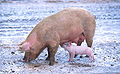
Research – Prevalence, serovar distribution, and antibiotic resistance of Salmonella spp. isolated from pork in China: A systematic review and meta-analysis

Science Direct

120px-Sow_with_piglet

Highlights

A meta-analysis of epidemiological characteristics of Salmonella isolated from pork in China was performed.

Explored the source of heterogeneity by subgroup analysis and meta-regression.

Confirmed an alarming prevalence of Salmonella in pork, and an increasing trend over time.

Derby, Typhimurium, and London dominate most regions; high antibiotic resistance aggravates public health burden.

Improvement of the prevention and control strategies of Salmonella in pork is necessary.

Abstract

The epidemiological characteristics of Salmonella spp. in pork have been widely studied in China, but the results remain inconsistent. This study aimed to summarize the epidemiological characteristics of Salmonella spp. isolated from pork, including its prevalence, serovar distribution, and antibiotic resistance rate. We systematically reviewed published studies on Salmonella spp. isolated from pork in China between 2000 and 2020 in two Chinese and three English databases and quantitatively summarized its prevalence, serovar distribution, and antibiotic resistance using meta-analysis methods. Furthermore, we conducted subgroup analysis and meta-regression to explore the source of the heterogeneity from historical changes and regional difference perspectives. Ninety-one eligible studies published between 2000 and 2020 were included. The meta-analysis showed that the pooled prevalence of Salmonella isolated from pork was 0.17 (95% CI: 0.14, 0.20), with a detected growing trend over time. For the proportions of serovars, Derby (0.32, 95% CI: 0.26, 0.38), Typhimurium (0.10, 95% CI: 0.07, 0.15) and London (0.05, 95% CI: 0.03, 0.08) were dominant in these studies. The antibiotic resistance rates were high for tetracycline (0.68, 95% CI: 0.59, 0.77), sulfisoxazole (0.65, 95% CI: 0.45, 0.83), ampicillin (0.43, 95% CI: 0.34, 0.53), streptomycin (0.42, 95% CI: 0.29, 0.56), and sulfamethoxazole (0.42, 95% CI: 0.25, 0.60). The results of this study revealed a high prevalence, the regional characteristics of serovar distribution, and the severe challenges of antibiotic resistance of Salmonella originating from pork in China, suggesting the potential increasing risk and disease burden. Therefore, it is necessary to improve the prevention and control strategies of Salmonella in pork.

USA – A Decade of E. coli Outbreaks in Leafy Greens in the U.S. and Canada – Podcast

CDC

Katherine Marshall, an epidemiologist at CDC, and Sarah Gregory discuss E. coli outbreaks in leafy greens in the United States and Canada from 2009 to 2018.

More info on this topic
Topics: E. coli InfectionFoodborne DiseasePodcasts
Published: 9/24/2020
Last Updated: 9/24/2020

This podcast belongs to the Emerging Infectious Diseases series.

Subscribe to this Series

Press Play to listen to this CDC Podcast

Running time = 28:10
To save the Podcast, right click the “Save this file” link below and select the “Save Target As…” option.
Save This File (25.8 MB) [right click]

Other Formats: https://tools.cdc.gov/podcasts/media/pdf/EID_10_20_EcoliLeafyGreens.pdf

Research – Zoonotic Pathogens in Wildlife Traded in Markets for Human Consumption, Laos

CDC

Abstract

We tested animals from wildlife trade sites in Laos for the presence of zoonotic pathogens. Leptospira spp. were the most frequently detected infectious agents, found in 20.1% of animals. Rickettsia typhi and R. felis were also detected. These findings suggest a substantial risk for exposure through handling and consumption of wild animal meat.

Consumption of wildlife meat drives emerging infectious diseases , often amplified by human encroachment into natural areas and changes in land use. Wildlife trade and consumption have been responsible for outbreaks of diseases such as HIV-1 , Ebola , and monkeypox and possibly for the coronavirus disease pandemic . Wildlife markets bring diverse species into contact, usually in dense and unsanitary conditions, enabling mixing, amplification, and transmission of pathogens among species, including humans . Small mammals host diverse pathogenic bacteria and viruses , but little investigation of endemic bacteria transmission has occurred. Determining pathogens present in traded wildlife is vital to guide appropriate measures to combat zoonotic diseases and document societal and environmental costs of wildlife trade.

Research – Development of Desiccation-Tolerant Probiotic Biofilms Inhibitory for Growth of Foodborne Pathogens on Stainless Steel Surfaces

MDPI

Lactic acid bacteria biofilms can be used to reduce foodborne pathogen contamination in the food industry. However, studies on growth inhibition of foodborne pathogens by inducing biofilm formation of antagonistic microorganisms on abiotic surfaces are rare. We developed a desiccation-tolerant antimicrobial probiotic biofilm. Lactobacillus sakei M129-1 and Pediococcus pentosaceus M132-2 isolated from fermented Korean foods were found to exhibit broad-spectrum antibacterial activity against Bacillus cereusEscherichia coli O157:H7, Staphylococcus aureusListeria monocytogenes, and Salmonella enterica. Their biofilm levels were significantly (p < 0.05) higher on stainless steel than on polyethylene or ceramic. Biofilms of both isolates showed significantly (p < 0.05) enhanced resistance against desiccation (exposure to 43% atmospheric relative humidity) as compared with the isolates not in the biofilm form. The antimicrobial activity of the isolates was sustained in dried biofilms on stainless steel surface; the initial number of foodborne pathogens (average 7.0 log CFU/mL), inoculated on stainless steel chips containing L. sakei M129-1 or P. pentosaceus M132-2 biofilm decreased to less than 1.0 log CFU within 48 h. The lactic acid bacteria antibacterial biofilms developed in this study may be applied to desiccated environmental surfaces in food-related environments to improve microbiological food safety. View Full-Text

UK – Several supermarkets improve Campylobacter in chicken results

Food Safety News

The supermarket Marks and Spencer has reported better results for Campylobacter in chicken in the latest quarterly figures from the United Kingdom.

The data covers October to December 2021 for nine retailers on high levels of Campylobacter in fresh, shop-bought, UK-produced chickens.

Results at Morrisons, Lidl, Waitrose and Sainsbury’s went up while Marks and Spencer, Tesco, Co-op, Aldi and Asda recorded lower levels of contamination compared to the previous quarter.

The Food Standards Agency (FSA) maximum level is 7 percent of birds with more than 1,000 colony forming units per gram (CFU/g) of Campylobacter.

Research – Salmonella and Campylobacter continue to show high levels of antibiotic resistance

EFSA

Antibiotic resistance in Salmonella and Campylobacter bacteria is still high, says a report released today by the European Centre for Disease Prevention and Control (ECDC) and the European Food Safety Authority (EFSA).

Campylobacteriosis was the most reported zoonosis in the EU in 2020 and the most frequently reported cause of foodborne illness. Campylobacter bacteria from humans and poultry continues to show very high resistance to ciprofloxacin, a fluoroquinolone antibiotic, that is commonly used to treat some types of bacterial human infection.

Increasing trends of resistance against the fluoroquinolone class of antibiotics has been observed in humans and broilers for Campylobacter jejuni. In Salmonella Enteritidis, the most common type of Salmonella in humans, increasing trends of resistance to the quinolone/fluoroquinolone class of antibiotics were observed. In animals, resistance to these antibiotics in Campylobacter jejuni and Salmonella Enteritidis were generally moderate to high.

However, despite the increasing trends of resistance against certain antibiotics, simultaneous resistance to two critically important antibiotics – remains low for E. coliSalmonella and Campylobacter in bacteria from both humans and food-producing animals.

A decline in resistance to tetracyclines and ampicillin in Salmonella from humans was observed in nine and ten countries, respectively, over the period 2016-2020, and this was particularly evident in Salmonella Typhimurium. Despite the decline, resistance to these antibiotics still remains high in bacteria from both humans and animals.

Furthermore, in more than half of the European Union countries, a statistically significant decreasing trend in the prevalence of extended-spectrum β-lactamase (ESBL)-producing E. coli was observed in food-producing animals. This is an important finding as particular strains of ESBL-producing E. coli are responsible for serious infections in humans.

Carbapenem resistance remains extremely rare in E. coli and Salmonella from food-producing animals. Carbapenems are a class of last resort antibiotics and any findings showing resistance to these in zoonotic bacteria are concerning.

Although findings and trends are consistent with data reported in previous years, the COVID-19 pandemic had an impact on the amount of data reported, particularly with regards to public health.

An interactive data visualisation tool shows resistance levels in humans, animals and food, country-by-country in 2019 and 2020.

Additionally, the human food and waterborne antibiotic resistance data is published in ECDC’s Surveillance Atlas of Infectious Diseases (under the diseases campylobacteriosis, salmonellosis and shigellosis, respectively).

USA – District Court Orders New Jersey Company to Stop Distribution of Adulterated Pet Food Contaminated with Salmonella

Justice

This order is on the back of several recalls from this company for Salmonella

A federal court today ordered a Carneys Point, New Jersey company to stop distributing adulterated pet food in violation of the Federal Food, Drug and Cosmetic Act (FDCA).

In a complaint filed March 15, the United States alleged that Bravo Packing Inc., and its owners and operators, Joseph Merola and Amanda Lloyd, violated the FDCA by distributing adulterated animal food and by causing animal food to become adulterated while held for sale. The complaint alleged that samples collected during U.S. Food and Drug Administration (FDA) inspections of the Bravo facility in July 2019 and April 2021 contained Salmonella, a pathogenic microorganism that can cause the illness known as salmonellosis in both humans and animals. Salmonella can be transferred from animal food to humans through handling of the food, or directly from infected animals to humans. Salmonellosis can cause symptoms such as diarrhea, fever and abdominal cramps that last several days in healthy adults. Absent prompt treatment, salmonellosis can cause severe dehydration and even death in infants, young children, the elderly, transplant recipients, pregnant women and individuals with weakened immune systems.

“Animal food manufacturers must ensure that their products are safe,” said Principal Deputy Assistant Attorney General Brian M. Boynton, head of the Justice Department’s Civil Division. “The department will continue to work closely with the FDA to ensure that pet food is manufactured in compliance with the law.”

“The food we give our pets should be safe for them to eat and safe for people to handle,” said Director Steven Solomon, DVM, MPH of the FDA’s Center for Veterinary Medicine. “The FDA has taken this action to protect public health because, despite multiple inspections, notifications of violations and recalls, this firm continued to operate under insanitary conditions and produce pet food contaminated with harmful bacteria. We will not tolerate firms that put people or animals at risk and will take enforcement actions when needed.”

The defendants agreed to settle the suit and be bound by a consent decree of permanent injunction. The negotiated consent decree requires, among other things, that the defendants stop receiving, processing, manufacturing, preparing, packing, holding and distributing adulterated pet food until they take specific remedial measures and demonstrate to the FDA that they will comply with federal law.

The government was represented by Trial Attorney Noah T. Katzen of the Civil Division’s Consumer Protection Branch, with the assistance of Tara Boland of the FDA’s Office of Chief Counsel. The U.S. Attorney’s Office for the District of New Jersey also provided assistance.

Additional information about the Consumer Protection Branch and its enforcement efforts may be found at http://www.justice.gov/civil/consumer-protection-branch.

Norway – Analyzes of Pathogenic Escherichia coli in bacon sausages 2022

Mattilsynet

On behalf of the Norwegian Food Safety Authority, the Norwegian Veterinary Institute has examined 137 Norwegian bacon sausages for pathogenic E. coli bacteria (STEC). There was a discovery of such bacteria, but this type does not usually cause serious illness in humans. Although the sample was small, the conclusion is that the prevalence of STEC in Norwegian bacon sausages is low.

Mattilsynet

What we investigated: 137 Norwegian bacon sausages
Period: The samples were obtained in 2020 and analyzed in 2021
What we were looking for: E. coli and pathogenic STEC variants
What we found: A positive E. coli sample. This was not the type that usually causes serious illness in people, ie good results.
Who carried out the assignment: Veterinary Institute
Escherichia coli is present in the gastro intestinal tract of humans and warm-blooded animals, and are usually harmless. However, some groups of E.coli may cause infections in humans. Shiga toxin-producing E. coli (STEC) is one of the groups of pathogenic E. coli. Ruminants, in particular cattle, are assumed to be the main reservoir for STEC.
The results from previous surveys of cattle and sheep in Norway for the occurrence of STEC of the serogroups most often associated with infection, have indicated a low occurrence. Similar results were observed in a survey of minced meat from cattle, on the Norwegian market. The Norwegian Food Safety Authority commissioned a survey of STEC in domestically produced fermented sausages. The samples were collected in 2020 with subsequent analysis in 2021.
A total of 137 samples of domestically produced fermented sausage were collected and analysed. Enriched samples were examined for the presence of the genetic markers stx1, stx2 and eae. Attempts of isolation were carried out from samples that were positive for one or more of the virulence markers. Isolates identified as STEC were further characterized using whole genome sequencing.
STEC was isolated from only one sample, and the isolate was characterized as STEC O76:H19 harbouring stx1c, but did not carry eae. In the primary screening of enriched samples, only a few samples were positive for the virulence markers. The results from this study indicates that the occurrence of STEC in
Norwegian fermented sausages is low.
Although STEC was isolated, none of the serogroups associated with severe infections were isolated. It must be taken into account that a low number of samples were analysed. Since this type of products has not been analysed previously, the present survey provides knowledge for the industry, authorities and knowledge institutions. It is important to carry out similar surveys regularly to generate updated Norwegian data.

India – 300 fall ill due to food poisoning

The Times of India

Indore: Around 300 people were hospitalized on Thursday night in Khandwa with Food Poisoning