Salmonella in Brazilian black pepper in the Netherlands
Detection of Salmonella in frozen poultry meat from Spain in France
Salmonella typhimurium in turkey meat from Poland in Belgium

Salmonella in Brazilian black pepper in the Netherlands
Detection of Salmonella in frozen poultry meat from Spain in France
Salmonella typhimurium in turkey meat from Poland in Belgium
Posted in Decontamination Microbial, Food Micro Blog, Food Microbiology, Food Microbiology Blog, Food Microbiology Testing, microbial contamination, Microbiological Risk Assessment, Microbiology, Microbiology Investigations, Microbiology Risk, Polish Chicken Salmonella, RASFF, Salmonella, Salmonella in Black Pepper, Salmonella in Chicken
Salmonella in dried porcine haemoglobin from the UK in Spain and the Netherlands
Posted in Animal Feed, Animal Feed Salmonella, Animal Feed Testing, Decontamination Microbial, Food Micro Blog, Food Microbiology, Food Microbiology Blog, Food Microbiology Testing, microbial contamination, Microbiological Risk Assessment, Microbiology, Microbiology Investigations, Microbiology Risk, RASFF, Salmonella
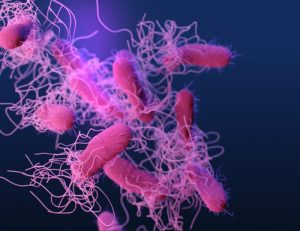
The Centers for Disease Control and Prevention estimates that Salmonella is responsible for 1.35 million infections, 26,500 hospitalizations, and 420 deaths in the United States every year. Food is the source of most of these illnesses, and the Interagency Food Safety Analytics Collaboration estimates that over 23% of foodborne Salmonella illnesses are due to eating chicken and turkey.
FSIS testing data show that Salmonella contamination on poultry has been going down, but this has not translated into a reduction in human illnesses. Rates of human illness have remained stagnant over the last two decades, and we have not moved any closer to the national goal of a 25% reduction in Salmonella illnesses.
All of this data points toward the need for a new approach to controlling Salmonella in poultry in a way that reduces human Salmonella illnesses. These are just a few of the references and research articles we are considering as we look to develop a revised framework for Salmonella control in poultry.
Posted in Food Micro Blog, Food Microbiology, Food Microbiology Blog, Food Microbiology Research, Food Microbiology Testing, microbial contamination, Microbiological Risk Assessment, Microbiology, Microbiology Investigations, Microbiology Risk, Research, Salmonella, Salmonella in Chicken, salmonellosis
Pull out the grill and your red, white, and blue because the Fourth of July is here. This means gatherings, outdoor festivities, and good times with family and friends. As the meat sizzles on the grill, don’t let food safety fizzle out of your memory.
“Wherever you go this summer, don’t forget to bring your safe food handling practices along for the adventure,” said U.S. Department of Agriculture (USDA) Deputy Under Secretary for Food Safety Sandra Eskin. “As temperatures rise, the risk for foodborne illness does too. Always remember that whether you’re grilling for the Fourth of July, camping, or boating, you should wash your hands before and during food prep.”
Whether you’re eating at home or outdoors at a park this Fourth of July, sanitation is key to combat foodborne illness. Be sure to wash your hands and sanitize your cooking area before preparing food. Safe food handling practices also help to avoid cross-contamination. Summertime brings additional unique challenges to food safety because of the warmer temperatures. Be sure to keep hot foods hot and cold foods cold this Fourth of July, and don’t forget your food thermometer.
Clean and Sanitize
Always wash your hands with soap and warm water for at least 20 seconds before and after handling raw meat and poultry. A recent USDA study (PDF, 1.3 MB) showed that 56% of participants didn’t attempt to wash their hands during meal preparation. When preparing your Fourth of July meal, don’t skip this step. Remember, hand sanitizer is not as effective as handwashing, but it’s better than nothing. If you’re out camping and have no access to running water, use hand sanitizer as a backup.
Wash surfaces and utensils with soap and warm water before cooking and after contact with raw meat and poultry. After cleaning surfaces that raw meat and poultry have touched, apply a commercial or homemade sanitizing solution (1 tablespoon of liquid chlorine bleach per gallon of water). Use hand sanitizer that contains at least 60 percent alcohol.
Avoid Cross-Contamination
Cross-contamination is another risk to your summertime fun. Don’t let it spoil your plans or your food. Cross-contamination can happen even when grilling or getting food prepared to grill. In USDA’s recent observational study, 32% of participants contaminated plates and cutting boards and 12% contaminated spice containers while preparing food.
Be sure to wash hands thoroughly after handling raw meat. Any utensils that contacted raw meat must also be cleaned. Use separate plates for taking raw meat to the grill and then pulling cooked meat off the grill. USDA recommends using separate cutting boards; one for meat, and another for fruits and vegetables.
Keep Hot Foods Hot and Cold Foods Cold
Whether you’re transporting food to go hiking, camping, to a barbeque, or a picnic, the rule stays the same: keep hot foods hot and cold foods cold. Food is in the “Danger Zone” when it is in the temperature range of 40 F and 140 F. If in the “Danger Zone” for too long, bacteria can multiply to dangerous levels. Perishable foods (such as hamburgers, hotdogs, and chicken wings) should be discarded if left out longer than two hours, or one hour if outdoor or indoor temperatures in the area are above 90 F.
The warmer the temperature, the sooner food needs to be refrigerated. Be sure to bring a cooler with ice to the next cookout to preserve any perishable foods.
Use a Food Thermometer
Many people use cues like grill marks, color, taste, and firmness to see if their food is fully cooked, but these tests come with great risk of getting food poisoning. Measuring the internal temperature of meat with a food thermometer is the safest way to see if your food is fully cooked. Be sure that the thermometer reaches the thickest part of the meat, through the side, for the most accurate temperature reading. USDA research showed that an alarmingly low number of participants in the control group, just 55%, relied on a food thermometer to determine if their food was safe to eat. This is a stark decline from the previous study where 77% used a food thermometer.
Whatever you’re cooking this summer, be sure to use a food thermometer. The following foods are safe to eat once they’ve reached these internal temperatures:
Posted in Food Micro Blog, Food Microbiology, Food Microbiology Blog, Food Microbiology Research, Food Microbiology Testing, Food Safety, Food Safety Alert, Food Safety Management, food safety training, microbial contamination, Microbiological Risk Assessment, Microbiology, Microbiology Investigations, Microbiology Risk, Research
| Date Posted |
Ref | Pathogen or Cause of Illness |
Product(s) Linked to Illnesses (if any) |
Total Case Count |
Status |
| 6/29/
2022 |
1076 | Not Yet Identified | Frozen Food | 107 adverse event reports | Active |
| 6/22/
2022 |
1075 | Salmonella Braenderup |
Not Yet Identified | 42 | Active |
| 6/22/
2022 |
1072 | Salmonella Paratyphi B var. L(+) tartrate+ |
Not Yet Identified | 14 | Active |
| 6/15/
2022 |
1070 | Listeria monocytogenes |
Not Yet Identified | 12 | Active |
| 6/8/
2022 |
1068 | E. coli O157:H7 |
Not Yet Identified | 10 | Active |
| 6/1/
2022 |
1066 | Hepatitis A Virus | Strawberries | See Outbreak Advisory |
Active |
| 5/25/
2022 |
1067 | Salmonella Senftenberg |
Peanut Butter | See Outbreak Advisory | Active |
| 4/20/
2022 |
1064 | Not Yet Identified |
Dry Cereal | 558 adverse event reports |
Active |
| 4/13/
2022 |
1057 | Listeria monocytogenes |
Not Yet Identified |
22 | Active |
| 3/30/
2022 |
1060 | None Identified |
Meal Replacement Drink |
6 adverse event reports |
Closed |
| 3/16/
2022 |
1055 | Salmonella Saintpaul |
Not Identified | 60 | Closed |
| 2/17/
2022 |
1056 | Cronobacter sakazakii |
Powdered Infant Formula |
See Advisory |
Active (IMG) |
| 2/9/
2022 |
1040 | Listeria monocytogenes |
Not Identified | 20 | Closed |
| 2/2/
2022 |
1054 | Enteroinvasive E. coli O143:H26 |
Not Identified |
16 | Closed |
| 1/10/
2022 |
1050 | E. coli O121:H19 |
Romaine | 4 | Closed |
Posted in Cronobacter sakazakii, E.coli O121, E.coli O157, E.coli O157:H7, FDA, food bourne outbreak, Food Illness, Food Micro Blog, Food Microbiology, Food Microbiology Blog, Food Microbiology Research, Food Microbiology Testing, Foodborne Illness, foodborne outbreak, foodbourne outbreak, Hepatitis A, Illness, Listeria, Listeria monocytogenes, microbial contamination, Microbiological Risk Assessment, Microbiology, Microbiology Investigations, Microbiology Risk, O143:H26, outbreak, Salmonella
Introduction
This introduction is not part of the Animal Products Notice, but is intended to indicate its general effect.
Purpose
This notice supplements the requirements of the Animal Product Regulations 2021 and sets requirements for microbiological sampling and testing of animal material and animal products intended for human consumption.
Background
The National Microbiological Database (NMD) Programme is a standardised microbiological sampling and testing programme to provide ongoing monitoring of microbiological process control across all industry participants.
Who should read this Animal Products Notice?
You should read this notice if you are: an operator who processes red meat or poultry intended for human consumption; or a recognised laboratory that tests red meat or poultry intended for human consumption
Why is this important?
A failure to comply with this notice may be an offence under section 135(1)(c) of the Animal Products Act 1999 and may result in further action by an animal products officer.
As many as 120 students studying in the minority residential girls high school at Siddipet took ill on Monday evening. Many of them were shifted to the government hospital where they are undergoing treatment.
According to sources, after having lunch in the afternoon, some students started vomiting and had loose motions. For some time the issue was kept a secret and they tried to hush it up. However, as the situation went out of control, the students were shifted to government hospital for treatment.
Posted in Decontamination Microbial, Food Illness, Food Micro Blog, Food Microbiology, Food Microbiology Blog, Food Microbiology Testing, Food Poisoning, Foodborne Illness, Illness, microbial contamination, Microbiological Risk Assessment, Microbiology, Microbiology Investigations, Microbiology Risk, Poisoning
A retired retail manager sadly died from one of the worst salmonella infections a consultant had seen in his career after eating four duck eggs bought at a country show.
Niptoon Tavakoli, 65, died in hospital two months after he was taken ill in June 2019, an inquest jury heard today.
Mr Tavakoli’s wife Cheryl told Doncaster Coroner’s Court that they had bought six eggs from the Melton Mowbray Deli stall at Messingham Show, in North Lincolnshire, during a family day out on Sunday, June 2, 2019.
Posted in Decontamination Microbial, Food Illness, Food Micro Blog, Food Microbiology, Food Microbiology Blog, Food Microbiology Testing, Foodborne Illness, Foodborne Illness Death, Illness, microbial contamination, Microbiological Risk Assessment, Microbiology, Microbiology Investigations, Microbiology Risk, Salmonella, Salmonella in Eggs
Antimicrobial resistance (AMR) among foodborne bacteria is a well-known public health problem. A sink survey was conducted to determine the AMR pattern of common foodborne bacteria in cloacal swab of broiler chickens and sewage samples from five wholesale chicken markets of Dhaka city in Bangladesh. Bacteria were identified by culture-based and molecular methods, and subjected to antimicrobial susceptibility testing. Resistance genes were identified by multiplex PCR and sequencing. Multidrug resistance (MDR) was observed in 93.2% of E. coli, 100% of Salmonella spp., and 97.2% of S. aureus from cloacal swab samples. For sewage samples, 80% of E. coli, and 100% of Salmonella and S. aureus showed MDR. Noteworthy, 8.3% of S. aureus from cloacal swab samples showed possible extensively drug resistance. Antimicrobial resistance genes (beta-lactamase—blaTEM, blaSHV; quinolone resistance gene—qnrS) were detected in a number of E. coli and Salmonella isolates from cloacal swab and sewage samples. The methicillin resistance gene (mecA) was detected in 47.2% and 25% S. aureus from cloacal swab and sewage samples, respectively. The findings envisage the potential public health risk and environmental health hazard through spillover of common foodborne MDR bacteria.
Posted in antimicrobial resistance, Antimicrobials, E.coli, ESBL, Food Microbiology, Food Microbiology Blog, Food Microbiology Research, Food Microbiology Testing, microbial contamination, Microbiological Risk Assessment, Microbiology, Microbiology Investigations, Microbiology Risk, Research, Salmonella, Staphylococcus aureus
Peanut butter has a very large and continuously increasing global market. The food safety risks associated with its consumption are also likely to have impacts on a correspondingly large global population. In terms of prevalence and potential magnitude of impact, contamination by Salmonella spp., and aflatoxins, are the major food safety risks associated with peanut butter consumption. The inherent nature of the Salmonella spp., coupled with the unique chemical composition and structure of peanut butter, present serious technical challenges when inactivating Salmonella spp. in contaminated peanut butter. Thermal treatment, microwave, radiofrequency, irradiation, and high-pressure processing all are of limited efficacy in inactivating Salmonella spp. in contaminated peanut butter. The removal of aflatoxins in contaminated peanut butter is equally problematic and for all practical purposes almost impossible at the moment. Adopting good manufacturing hygiene practices from farm to table and avoiding the processing of contaminated peanuts are probably some of the few practically viable strategies for minimising these peanut butter food safety risks. The purpose of this review is to highlight the nature of food safety risks associated with peanut butter and to discuss the effectiveness of the initiatives that are aimed at minimising these risks.
Posted in Aflatoxin, Aflatoxin B1, Decontamination Microbial, Food Micro Blog, Food Microbiology, Food Microbiology Blog, Food Microbiology Research, Food Microbiology Testing, microbial contamination, Microbiological Risk Assessment, Microbiology, Microbiology Investigations, Microbiology Risk, Research, Salmonella, Salmonella Peanut Butter

 FoodWorld