Category Archives: Microbiological Risk Assessment

USA – Another Seattle area E. coli O157 Outbreak

Food Poison Journal

Public Health is investigating an outbreak of three people infected with Shiga toxin-producing E. coli O157:H7 (also known as STEC). Between October 4 – 16, 2022, 3 people from 3 separate households reported becoming ill. Cases have been among people ranging in age from 18 to 36 years old. Symptoms reported include diarrhea and abdominal pain.

The investigation is ongoing, and no source has been identified. Two of the three ill people report eating dishes that were prepared with raw or undercooked beef but we cannot rule out other possible sources at this time.

Confirmed cases have been linked through genetic fingerprinting results (whole genome sequencing) which indicate that they have the same genetic strain, meaning they likely have a common source of infection.

Denmark -Fish meatballs cause disease outbreaks with Listeria

SSI

Since mid-August, the Statens Serum Institut has registered seven patients who have become ill from the same type of Listeria monocytogenes . The Statens Serum Institut, the Danish Food Agency and the DTU Food Institute have jointly investigated the disease outbreak and have identified fish cakes as the cause. The fish meatballs have been recalled from the stores.

Last edited on November 9, 2022
Since mid-August, Statens Serum Institut has registered seven patients with the same type of the food-borne bacterium Listeria monocytogenes . Among the sick are one child and six people over the age of 70, of whom one person has subsequently died. The patients are distributed across the country and are four women and three men.

“By comparing bacteria from patients and samples from Jeka Fish, we have found that the bacteria are exactly the same. Combined with the fact that the patients have stated that they have eaten fish meatballs, this shows that the infection came from here”
Luise Müller, who is an epidemiologist at the Statens Serum Institut

The fish meatballs have been called back

On Tuesday 8 November, Jeka Fish recalled all fish cakes produced between 1 August and 31 October 2022 from the market. The recall was made because the Danish Food and Drug Administration had found listeria in production and in products at the company.

“Jeka Fish has recalled a number of different fish patties, which have now been taken off the shelves, but if you have the product at home, it is important to throw it away”
Annette Perge, section manager at the Danish Food and Drug Administration

The DTU Food Institute, SSI and the Danish Veterinary and Food Administration have analyzed and compared the listeria bacteria that were found in the patients and in samples from the company, using DNA typing.

See which types of fishcakes have been recalled

What should you do if you have eaten fish cakes from the recalled batch?

Even if you have eaten the fishmeals that have now been recalled, there is very little risk that you will get sick. You are at risk of becoming seriously ill with listeria if you are older, have a weakened immune system due to another serious illness or are pregnant.

You should contact a doctor if you have symptoms of illness. The symptoms include high fever, chills, muscle soreness and affected general condition; neck/back stiffness or altered level of consciousness.

The work continues

In addition to patients with the listeria bacteria in question, significantly more patients infected with listeria than usual have been registered since October 2022. So the work to find the causes of the other cases of illness continues.

“To avoid listeria infection, it is extremely important to stick to a refrigerator temperature of no more than 5 degrees and to eat foods such as cold cuts, cold-smoked fish and gravad salmon as fresh as possible. If we change habits, for example due to the energy and economic crisis, we risk that the bacteria will have good growth opportunities and that more people will get sick”
Senior researcher and research group leader Marianne Sandberg, DTU Food Institute 

Research – Scientists map the neural pathways for vomiting after eating infected food

Science Daily

The urge to vomit after eating contaminated food is the body’s natural defensive response to get rid of bacterial toxins. However, the process of how our brain initiates this biological reaction upon detecting the germs remains elusive. For the first time, researchers mapped out the detailed neural pathway of the defensive responses from the gut to the brain in mice. The study, presented November 1 in the journal Cell, could help scientists develop better anti-nausea medications for cancer patients who undergo chemotherapy.

Many foodborne bacteria produce toxins in the host after being ingested. The brain, after sensing their presence, will initiate a series of biological responses, including vomit and nausea, to get rid of the substances and develop an aversion toward foods that taste or look the same.

“But details on how the signals are transmitted from the gut to the brain were unclear, because scientists couldn’t study the process on mice,” says Peng Cao, the paper’s corresponding author at the National Institute of Biological Sciences in Beijing. Rodents cannot vomit, likely because of their long esophagus and weaker muscle strength compared to their body size. As a result, scientists have been studying vomit in other animals like dogs and cats, but these animals are not comprehensively studied and thus failed to reveal the mechanism of nausea and vomiting.

Cao and his team noticed that while mice don’t vomit, they retch — meaning they also experience the urge to vomit without throwing up. The team found that after receiving Staphylococcal enterotoxin A (SEA), which is a common bacterial toxin produced by Staphylococcus aureus that also leads to foodborne illnesses in humans, mice developed episodes of unusual mouth opening. Mice that received SEA opened their mouths at angles wider than those observed in the control group, where mice received saline water. Moreover, during these episodes, the diaphragm and abdominal muscles of the SEA-treated mice contract simultaneously, a pattern seen in dogs when they are vomiting. During normal breathing, animals’ diaphragm and abdominal muscles contract alternatively.

“The neural mechanism of retching is similar to that of vomiting. In this experiment, we successfully build a paradigm for studying toxin-induced retching in mice, with which we can look into the defensive responses from the brain to toxins at the molecular and cellular levels,” Cao says.

Research team work on a rapid test for foodborne pathogens in poultry

Poultry World

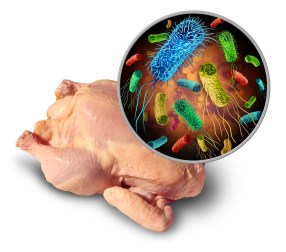
A research team at Michigan State University will use a grant from the USDA to develop a rapid biosensor test for foodborne pathogens. The rapid test will be used onsite at poultry farms and processing facilities to inspect large samples for Salmonella and Campylobacter.

The US$769,000 grant was received from the US Department of Agriculture’s (USDA) National Institute of Food and Agriculture (NIFA), and Professor Evangelyn Alocilja, who is in the MSU Department of Biosystems and Agricultural Engineering, is leading the project. She is an expert in her field and in rapid biosensing diagnostics for infectious and antimicrobial-resistant diseases, having developed such tests for tuberculosis, dengue and Covid-19.

Poultry products are one of the most common sources of infection

Alocilja says that studies have shown poultry products are one of the most common sources of infection due to bacterial contamination from farm production practices and processing equipment. In the US, the economic burden of Salmonella and Campylobacter from all sources exceeded US$6 billion in 2018, according to the USDA Economic Research Service.

Food Safety Aspects of Edible Insects

Food Safety.Com

A recent review of available scientific literature suggests that, when cooked or processed in certain ways, edible insects can be a safe food product. Food safety considerations for the commodity were explored in the review, including microbiological contaminants, anti-nutritive factors, pesticide residues, toxic heavy metals, mycotoxins, and allergens.

The article outlined various food safety aspects of edible insects, stating that the commodity’s microbiological and anti-nutritive characteristics are of greatest concern. In general, research has demonstrated high counts of microorganisms to be present in fresh insects; however, with the appropriate thermal treatment, microbial loads can be eliminated. As with other foods, the efficacy of heat treatment on edible insects depends on factors such as the type, intensity, and duration of treatment, as well as the treated food composition. Solar and oven drying were underlined by the review as potential heat treatment methods.

Research – Influence of commercial laying hen housing systems on the incidence and identification of Salmonella and Campylobacter

Science Direct

Foodborne Pathogen

Abstract

The housing of laying hens is important for social, industrial, and regulatory aspects. Many studies have compared hen housing systems on the research farm, but few have fully examined commercial housing systems and management strategies. The current study compared hens housed in commercial cage-free aviary, conventional cage, and enriched colony cage systems. Environmental and eggshell pool samples were collected from selected cages/segments of the housing systems throughout the production cycle and monitored for Salmonella and Campylobacter prevalence. At 77 wk of age, 120 hens per housing system were examined for Salmonella and Campylobacter colonization in the: adrenal glands, spleen, ceca, follicles, and upper reproductive tract. All isolates detected from environmental swabs, eggshell pools, and tissues were identified for serotype. Two predominant Salmonella were detected in all samples: S. Braenderup and S. Kentucky. Campylobacter coli and C. jejuni were the only Campylobacter detected in the flocks. Across all housing systems, approximately 7% of hens were colonized with Salmonella, whereas > 90% were colonized with CampylobacterSalmonella Braenderup was the isolate most frequently detected in environmental swabs (P < 0.0001) and housing system impacted Salmonella spp. shedding (P < 0.0001). Campylobacter jejuni was the isolate most frequently found in environmental swabs (P < 0.01), while housing system impacted the prevalence of C. coli and jejuni in ceca (P < 0.0001). The results of this study provide a greater understanding of the impact of hen housing systems on hen health and product safety. Additionally, producers and academia can utilize the findings to make informed decisions on hen housing and management strategies to enhance hen health and food safety.

Research – Propionate and Butyrate Inhibit Biofilm Formation of Salmonella Typhimurium Grown in Laboratory Media and Food Models

MDPI

Salmonella is among the most frequently isolated foodborne pathogens, and biofilm formed by Salmonella poses a potential threat to food safety. Short-chain fatty acids (SCFAs), especially propionate and butyrate, have been demonstrated to exhibit a beneficial effect on promoting intestinal health and regulating the host immune system, but their anti-biofilm property has not been well studied. This study aims to investigate the effects of propionate or butyrate on the biofilm formation and certain virulence traits of Salmonella. We investigated the effect of propionate or butyrate on the biofilm formation of Salmonella enterica serovar Typhimurium (S. Typhimurium) SL1344 grown in LB broth or food models (milk or chicken juice) by crystal violet staining methods. Biofilm formation was significantly reduced in LB broth and food models and the reduction was visualized using a scanning electron microscope (SEM). Biofilm metabolic activity was attenuated in the presence of propionate or butyrate. Meanwhile, both SCFAs decreased AI-2 quorum sensing based on reporter strain assay. Butyrate, not propionate, could effectively reduce bacterial motility. Bacterial adhesion to and invasion of Caco-2 cells were also significantly inhibited in the presence of both SCFAs. Finally, two SCFAs downregulated virulence genes related to biofilm formation and invasion through real-time polymerase chain reaction (RT-PCR). These findings demonstrate the potential application of SCFAs in the mitigation of Salmonella biofilm in food systems, but future research mimicking food environments encountered during the food chain is necessitated. View Full-Text

Research – Hepatitis A outbreak in Australia linked to imported Medjool dates, June–September 202

Gov Au

Abstract

Imported, minimally processed food products have been historically associated with several hepati-tis A outbreaks in Australia. Here, we report the first known hepatitis A outbreak in Australia linked to consumption of imported fresh Medjool dates. Between June and September 2021, six genetically identical hepatitis A cases were notified in New South Wales and the Australian Capital Territory. All cases reported date consumption during their exposure period. The implicated dates were positive for hepatitis A virus (HAV) by reverse transcription polymerase chain reaction. Rapid detection of this outbreak and the swift implementation of control measures was facilitated by two key factors. Firstly, Australian international border closures implemented in response to the COVID-19 pan-demic meant that a common locally-acquired, as opposed to travel-acquired, source for cases was strongly suspected. Secondly, prompt awareness of a hepatitis A outbreak in the United Kingdom (which was found to be associated with date consumption) allowed for early hypothesis generation and investigation. This paper details the epidemiological and microbiological factors involved in this outbreak investigation and the actions taken to mitigate public health risk.

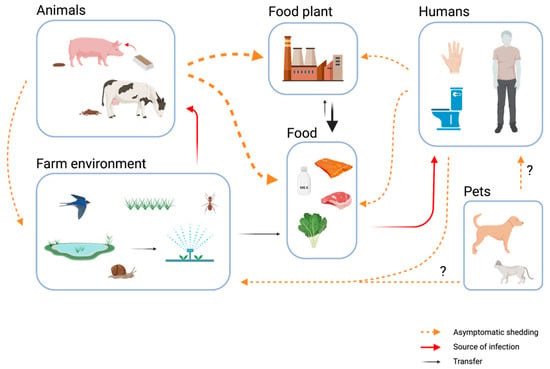
Research – Asymptomatic Carriage of Listeria monocytogenes by Animals and Humans and Its Impact on the Food Chain

MDPI

Humans and animals can become asymptomatic carriers of Listeria monocytogenes and introduce the pathogen into their environment with their feces. In turn, this environmental contamination can become the source of food- and feed-borne illnesses in humans and animals, with the food production chain representing a continuum between the farm environment and human populations that are susceptible to listeriosis. Here, we update a review from 2012 and summarize the current knowledge on the asymptomatic carrier statuses in humans and animals. The data on fecal shedding by species with an impact on the food chain are summarized, and the ways by which asymptomatic carriers contribute to the risk of listeriosis in humans and animals are reviewed. View Full-Text

Vietnam reports more food poisoning deaths in 10 months in 2022

English News

HANOI, Nov. 7 (Xinhua) — A total of 581 people in Vietnam suffered from food poisoning in the first 10 months of 2022, of whom 11 died, according to the country’s Preventive Health Department on Monday.

In the same period last year, as many as 1,519 people were affected by food poisoning, of whom five died.