Category Archives: microbial contamination

RASFF Alert- Animal Feed – Aflatoxin – White Sunflower Seeds

RASFF

Aflatoxin B1 in white sunflowers seeds from Egypt, via the Netherlands in France and Belgium

USA – Five people hospitalized in E. coli O157 outbreak at the University of Arkansas

The Washington Post

Health officials are investigating an outbreak of E. coli food poisoning among students at the University of Arkansas, with dozens reporting symptoms and five people needing treatment in the hospital.

Among those affected are two 19-year-old sorority members who developed a serious complication that can lead to kidney failure after being infected with the E. coli strain O157:H7. That’s according to Bill Marler, a Seattle food safety lawyer who said he reviewed the patients’ medical records after being contacted by the families.

USA – Vibrio and Food

CDC

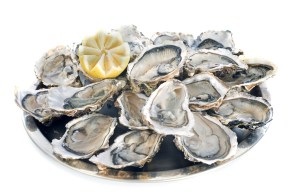
You can get a Vibrio infection by eating raw or undercooked seafood, particularly oysters. You also can get an infection if you have an open wound that comes in contact with raw or undercooked seafood, their juices, or their drippings.

If you enjoy eating seafood, fishing in coastal waters, or crabbing off the pier, learn more about how you can protect yourself and family from a Vibrio infection.

What foods are commonly linked to Vibrio?

Vibrio bacteria naturally live in coastal waters and can concentrate inside shellfish and other seafood that live in these waters.

  • Oysters: Oysters feed by filtering water. As oysters feed, Vibrio, norovirus, and other germs can concentrate in them. When you eat raw or undercooked oysters, germs that may be in them can make you sick. Get the facts about Vibrio and oysters >
  • Other shellfish: Oysters aren’t the only shellfish that can carry Vibrio and other germs. Vibrio illnesses have also been linked to crawfish, crab meat, and other shellfish including clams, mussels, and scallops. Stay safe by following CDC’s tips for cooking shellfish and preventing wound infections.
  • Fish: Although Vibrio infections from fish aren’t as common as infections from shellfish, they do happen from time to time. Other harmful germs can be found in fish, too. To help prevent infection, cook fish to 145°F or until its flesh is opaque.

How many people get a Vibrio illness (vibriosis) from food each year?

CDC estimates that vibriosis causes 80,000 illnesses each year in the United States. An estimated 52,000 of those illnesses are caused by eating food containing Vibrio. Most people with a foodborne Vibrio infection have watery diarrhea. Some people may also have stomach cramping, nausea, vomiting, fever, and chills. Symptoms usually start within 1 day after infection and last about 3 days.

UK – Mogul Restaurant in Bagshot prosecuted for food safety failures.

Surrey Heath

Surrey Heath Borough Council has successfully prosecuted the previous operator of Mogul Restaurant for failing to comply with food safety regulations following a significant food poisoning outbreak amongst customers at the end of 2022.

The company has been ordered to pay a fine of £25,000, a victim surcharge of £2,000 and the Council’s costs of £14,116.

This prosecution is in addition to the restaurant being temporarily shut under Emergency Prohibition provisions to protect further risk of ill health to the public at the time of the outbreak whilst the necessary improvements were made.

Denmark – Polish chicken kebab is linked to Danish salmonella outbreak

SSI

Since May, 22 people have been registered in Denmark with the same salmonella type, which has also made people sick in other European countries. Now the investigation has shown that imported chicken kebab meat from Poland is also the source of infection for the Danish cases.

Last edited on August 29, 2023
Last week, the Danish Veterinary and Food Administration found salmonella in a batch of frozen chicken kebab meat from Poland, and the batch was withdrawn from the market. Further analyzes have shown that it is the same type of salmonella that made 22 people sick in Denmark in the period May to August 2023. It is estimated that more people may have been infected, as not all infected people go to the doctor and are tested for salmonella. The frozen chicken kebab products have mainly been sold to restaurants.

“The investigation into this salmonella outbreak has been extensive – partly there has been international collaboration to compare salmonella samples from humans and food, and partly we in the Danish food emergency department have interviewed patients and unraveled where the chicken kebab meat they had eaten came from. We have now found a clear connection between the salmonella type in the chicken kebab meat and the salmonella type in the Danish cases,” says epidemiologist at the Statens Serum Institut, Luise Müller.

“In general, it is the restaurant’s responsibility that consumers do not get sick from the food that is served. The Salmonella bacteria cannot survive heat treatment above 75 degrees,” says Senior researcher and research group leader at the DTU Food Institute Marianne Sandberg.

Head of unit Lene Mølsted Jensen from the Danish Food and Drug Administration states: “The chicken kebab meat from Poland was pre-fried and intended to be further heat-treated before eating. It is therefore an important lesson for restaurants and kebab places that in the future they pay attention to the handling and frying of chicken kebab meat to avoid this happening again.”

In the coming time, the Danish Food and Food Administration will keep an extra eye on whether other batches of chicken products from Poland may be contaminated with salmonella.

What should you do if you have eaten chicken kebab?

If you have not had symptoms of a salmonella infection, or if you have had symptoms that have resolved on their own, do not take any action. In case of persistent symptoms or questions, you can contact your own doctor.

The coordination of the investigation of the disease outbreak has taken place under the auspices of the Central Outbreak Group. It consists of representatives from SSI, the DTU Food Institute and the Danish Veterinary and Food Administration.

USA – Ready-to-eat meat products recalled because of contamination with Listeria

Food Safety News

Salmon’s Meat Products of Luxemburg, WI, is issuing a recall for a variety of ready-to-eat meat products sold at retail stores throughout Northeast Wisconsin because of contamination from Listeria monocytogenes.

USA – University of Arkansas officials report E. coli outbreak

Food Safety News

State and federal public health officials are working with the University of Arkansas on what appears to be an outbreak of E. Coli infections.

During a news conference this afternoon, a spokesman from the Arkansas Department of Health said four people were hospitalized. Also, about 100 students from the university responded to an email saying they currently have or have recently had symptoms.

The total number of confirmed outbreak patients has not been released.

The spokesman said the outbreak seems limited to the Northeast part of the state. He also said the state department and university officials are working with the U.S. Centers for Disease Control and Prevention to investigate the outbreak.

The spokesman said health officials believe the outbreak started about a week ago.

China records a rise in domestic foodborne outbreaks.

Food Safety News

The number of domestic foodborne outbreaks in China has increased over 10 years, according to a study.

Researchers analyzed the cause of household foodborne disease outbreaks from 2010 to 2020 using data from the National Foodborne Disease Surveillance System.

A total of 17,985 outbreaks, which resulted in 73,252 illnesses, 38,829 hospitalizations, and 1,269 deaths, were reported. Most episodes were from May to October, and the highest number occurred in July.

A similar study, published in China CDC Weekly, looked at outbreaks in catering facilities in the country using data from the same time period.

Research – Inactivation of Foodborne Pathogens by Lactobacillus Strains during Meat Fermentation: Kinetics and Mathematical Modelling

MDPI

Abstract

This study examined the effect of beef fermentation with Lactiplantibacillus paraplantarum (L) PTCC 1965, Lactiplantibacillus (Lplantarum subsp. plantarum PTCC 1745, and Lactiplantibacillus (Lpentosus PTCC 1872 bacteria on the growth of pathogenic bacteria, including Salmonella (S) Typhi PTCC 1609 and Staphylococcus (Saureus PTCC 1826. The growth of lactic acid bacteria (LAB) and the effect of fermentation on pathogenic bacteria were studied using Weibull: biphasic linear and competitive models. The results showed that the rate of pH reduction was lower in the early stages and increased as the microbial population grew. The α parameter was lower for L. plantarum subsp. plantarum compared to L. paraplantarum and L. pentosus. The comparison of the α parameter for bacterial growth and pH data showed that the time interval required to initiate the rapid growth phase of the bacteria was much shorter than that for the rapid pH reduction phase. The pH value had a 50% greater effect on the inactivation of S. Typhi when compared to the samples containing L. plantarum subsp. plantarum and L. pentosus. The same parameter was reported to be 72% for the inactivation of St. aureus. In general, during the fermentation process, LAB strains caused a decrease in pH, and as a result, reduced the growth of pathogens, which improves consumer health and increases the food safety of fermented meat.

Research – Genomic diversity and epidemiological significance of non-typhoidal Salmonella found in retail food collected in Norfolk, UK

Microbiology Research

ABSTRACT

Non-typhoidal  (NTS) is a major cause of bacterial gastroenteritis. Although many countries have implemented whole genome sequencing (WGS) of NTS, there is limited knowledge on NTS diversity on food and its contribution to human disease. In this study, the aim was to characterise the NTS genomes from retail foods in a particular region of the UK and assess the contribution to human NTS infections. Raw food samples were collected at retail in a repeated cross-sectional design in Norfolk, UK, including chicken (=311), leafy green (=311), pork (=311), prawn (=279) and salmon (=157) samples. Up to eight presumptive NTS isolates per positive sample underwent WGS and were compared to publicly available NTS genomes from UK human cases. NTS was isolated from chicken (9.6 %), prawn (2.9 %) and pork (1.3 %) samples and included 14 serovars, of which  Infantis and  Enteritidis were the most common. The . Enteritidis isolates were only isolated from imported chicken. No antimicrobial resistance determinants were found in prawn isolates, whilst 5.1 % of chicken and 0.64 % of pork samples contained multi-drug resistant NTS. The maximum number of pairwise core non-recombinant single nucleotide polymorphisms (SNPs) amongst isolates from the same sample was used to measure diversity and most samples had a median of two SNPs (range: 0–251). NTS isolates that were within five SNPs to clinical UK isolates belonged to specific serovars: . Enteritidis and . Infantis (chicken), and . I 4,[5],12:i- (pork and chicken). Most NTS isolates that were closely related to human-derived isolates were obtained from imported chicken, but further epidemiological data are required to assess definitively the probable source of the human cases. Continued WGS surveillance of  on retail food involving multiple isolates from each sample is necessary to capture the diversity of  and determine the relative importance of different sources of human disease.