Category Archives: Foodborne Illness

USA – Over 100 Cases Reported so Far in the Wendy’s E coli Outbreak

Food Poisoning News

In the latest update posted by the CDC on August 19th, 37 cases of E. coli O157:H7 infections were reported in the states of Ohio (19), Michigan (15), Indiana (1), and Pennsylvania (2). However, experts believe the actual number of infections to be much higher than 100, with estimates of at least 200 cases. Most notably, despite the CDC reporting 15 of the 37 cases occurring in Michigan, the Michigan Department of Health and Human Services (MDHHS) has reported 43 confirmed E. coli O157 infections. In total, the MDHHS received 98 reports of E. coli infections in August from Michigan residents. For reference, Michigan officials only received 20 reports of E. coli infections during the same time period in 2021. The 43 Michigan E. coli O157 infections have been confirmed to match the same strain of E. coli as the Wendy’s outbreak strain and all cases match the illness onset date of late July through early August. Michigan health officials are currently testing at least 55 additional E. coli infections to determine if they are also connected to the Wendy’s outbreak.

In Ohio, officials in Wood Country are testing samples from 22 residents with E. coli infections and have so far confirmed 9 of the cases to have stemmed from the same strain of E. coli bacteria. Experts believe that the true number of cases involved in the Wendy’s outbreak is much higher than reported and expect to see an increase of reported cases in the days to come.
USA – E. coli Outbreak with Unknown Food Source

CDC

Fast Facts
  • Illnesses: 84
  • Hospitalizations: 38
  • Deaths: 0
  • States: 4
  • Recall: No
  • Investigation status: Active
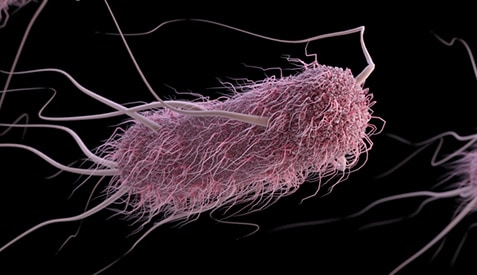
Illustration of E. coli pathogen
Update on the Source

A specific food has not yet been confirmed as the source of this outbreak, but many sick people reported eating sandwiches with romaine lettuce at Wendy’s restaurants in Indiana, Michigan, Ohio, and Pennsylvania before getting sick. Based on this information, Wendy’s has taken the precautionary measure of removing the romaine lettuce being used in sandwiches from restaurants in that region. Wendy’s uses a different type of romaine lettuce for salads. Investigators are working to confirm whether romaine lettuce is the source of this outbreak, and whether romaine lettuce used in Wendy’s sandwiches was served or sold at other businesses. Wendy’s is fully cooperating with the investigation.

What You Should Do

CDC is not advising that people avoid eating at Wendy’s restaurants or that people stop eating romaine lettuce.

  • Wendy’s has taken the precautionary measure of removing the romaine lettuce being used in sandwiches from restaurants in this region.
  • At this time, there is no evidence to indicate that romaine lettuce sold in grocery stores, served in other restaurants, or in people’s homes is linked to this outbreak.
  • CDC will update this advice if the investigation identifies foods to avoid.

Research – Listeria monocytogenes Illness and Deaths Associated With Ongoing Contamination of a Multi-Regional Brand of Ice Cream Products, United States, 2010–2015 

Academia Edu

Abstract

Background

Frozen foods have rarely been linked to Listeria monocytogenes illness. We describe an outbreak investigation prompted both by hospital clustering of illnesses and product testing.

Methods

We identified outbreak-associated listeriosis cases using whole-genome sequencing (WGS), product testing results, and epidemiologic linkage to cases in the same Kansas hospital. We reviewed hospital medical and dietary records, product invoices, and molecular subtyping results. Federal and state officials tested product and environmental samples for L. monocytogenes.

Results

Kansas officials were investigating five cases of listeriosis at a single hospital when, simultaneously, unrelated sampling for a study in South Carolina identified L. monocytogenes in Company A ice cream products made in Texas. Isolates from four patients and Company A products were closely related by WGS, and the four patients with known exposures had consumed milkshakes made with Company A ice cream while hospitalized. Further testing identified L. monocytogenes in ice cream produced in a second Company A production facility in Oklahoma; these isolates were closely related by WGS to those from five patients in three other states. These ten illnesses, involving three deaths, occurred from 2010 through 2015. Company A ultimately recalled all products.

Conclusion

In this U.S. outbreak of listeriosis linked to a widely distributed brand of ice cream, WGS and product sampling helped link cases spanning five years to two production facilities, indicating longstanding contamination. Comprehensive sanitation controls and environmental and product testing for L. monocytogenes, with regulatory over

Research – E. coli O104:H4 is similar to the 2011 outbreak strain found in Europe

Food Safety News

A type of E. coli similar to what caused a large outbreak in 2011 has recently been detected in Europe, according to researchers.

Two cases of Shiga toxin-producing Enteroaggregative E. coli (EAEC) O104:H4 were reported in the Netherlands in 2019 and 2020 and in one food isolate from 2017. There was also a patient from Austria in 2021.

In 2011, a huge outbreak caused by STEC O104:H4 occurred in Europe, mainly Germany and France, that was associated with sprouts grown from fenugreek seeds from Egypt. The outbreak resulted in more than 4,000 infections and 54 deaths from 16 countries, including six cases in the United States.

After this outbreak, only a few sporadic infections with EAEC O104:H4 were reported, most related to travel to Turkey or North Africa, said the study published in Emerging Infectious Diseases.

Research – 10 Deadly Food Poisoning Outbreaks in US History

Food Poisoning News

Over the years, the United States has seen several foodborne illness outbreaks, some of which have been more lethal than others. The Centers for Disease Control and Prevention (CDC) estimates that contaminated food causes approximately 128,000 hospitalizations and 3,000 deaths yearly. The number of cases is usually higher during an outbreak than in a normal year. Foodborne illness outbreaks typically occur when multiple people contract a similar illness after consuming a common food, and analysis of the food implicates it as the source of the disease.

In the early 1920s, the Public Health Service was responsible for reporting foodborne illness outbreaks in the US. In 1961, the CDC, then known as the Communicable Disease Center, took over the role, and in 2011, it began publishing annual summaries of food poisoning outbreaks online.

Check the link above for the top ten.

Research – Pooled prevalence and genetic diversity of norovirus in Africa: a systematic review and meta-analysis

Virology J

Food Borne Illness - Norovirus -CDC Photo

Abstract

Background

Noroviruses are the leading cause of acute gastroenteritis in all age groups globally. The problem is magnified in developing countries including Africa. These viruses are highly prevalent with high genetic diversity and fast evolution rates. With this dynamicity, there are no recent review in the past five years in Africa. Therefore, this review and meta-analysis aimed to assess the prevalence and genetic diversity of noroviruses in Africa and tried to address the change in the prevalence and genetic diverisity the virus has been observed in Africa and in the world.

Methods

Twenty-one studies for the pooled prevalence, and 11 out of the 21 studies for genetic characterization of norovirus were included. Studies conducted since 2006, among symptomatic cases of all age groups in Africa, conducted with any study design, used molecular diagnostic methods and reported since 2015, were included and considered for the main meta-analysis. PubMed, Cochrane Library, and Google Scholar were searched to obtain the studies. The quality the studies was assessed using the JBI assessment tool. Data from studies reporting both asymptomatic and symptomatic cases, that did not meet the inclusion criteria were reviewed and included as discussion points. Data was entered to excel and imported to STATA 2011 to compute the prevalence and genetic diversity. Heterogeneity was checked using I2 test statistics followed by subgroup and sensitivity analysis. Publication bias was assessed using a funnel plot and eggers test that was followed by trim and fill analysis.

Result

The pooled prevalence of norovirus was 20.2% (95% CI: 15.91, 24.4). The highest (36.3%) prevalence was reported in Ghana. Genogroup II noroviruses were dominant and reported as 89.5% (95% CI: 87.8, 96). The highest and lowest prevalence of this genogroup were reported in Ethiopia (98.3%), and in Burkina Faso (72.4%), respectively. Diversified genotypes had been identified with an overall prevalence of GII. 4 NoV (50.8%) which was followed by GII.6, GII.17, GI.3 and GII.2 with a pooled prevalence of 7.7, 5.1, 4.6, and 4.2%, respectively.

Conclusion

The overall pooled prevalence of norovirus was high in Africa with the dominance of genogroup II and GII.4 genotype. This prevalence is comparable with some reviews done in the same time frame around the world. However, in Africa, an in increasing trained of pooled prevalence had been reported through time. Likewise, a variable distribution of non-GII.4 norovirus genotypes were reported as compared to those studies done in the world of the same time frame, and those previous reviews done in Africa. Therefore, continuous surveillance is required in Africa to support future interventions and vaccine programs.

USA – E. coli Outbreak with Unknown Food Source

CDC

A food has not yet been identified as the source of this fast-moving outbreak. So far, illnesses have only been reported from Michigan and Ohio. To prevent getting sick from E. coli, follow these four steps when handling or preparing food: clean, separate, cook, and chill.

Fast Facts
Illnesses: 29
Hospitalizations: 9
Deaths: 0
States: 2
Recall: No
Investigation status: Active
Illustration of E. coli pathogen
What You Should Do
Call your healthcare provider right away if you have any of these severe E. coli symptoms:

Diarrhea and a fever higher than 102°F
Diarrhea for more than 3 days that is not improving
Bloody diarrhea
So much vomiting that you cannot keep liquids down
Signs of dehydration, such as:
Not peeing much
Dry mouth and throat
Feeling dizzy when standing up
If you have symptoms of E. coli, help us solve this outbreak:

Write down what you ate in the week before you got sick.
Report your illness to your local or state health department.
Answer public health officials’ questions about your illness.
Follow these four food safety steps to prevent getting sick from E. coli.

Clean: Wash your hands, utensils, and surfaces often. Rinse fruits and vegetables under running water before eating, cutting, or peeling.
Separate: Keep food that won’t be cooked separate from raw meat, poultry, and seafood.
Cook: Use a food thermometer to make sure you have cooked your food to a temperature high enough to kill germs.
Chill: Refrigerate perishable food (food that goes bad) within 2 hours. If the food is exposed to temperatures above 90°F (like a hot car or picnic), refrigerate within 1 hour. Thaw food in the refrigerator, not on the counter.

USA – FDA Coe Investigation Table Update

FDA

What’s New

  • An outbreak of E. coli O157:H7 (ref# 1081) in an unidentified product was added to the table and FDA has initiated a traceback investigation. CDC has issued an Investigation Notice.
  • An outbreak of Salmonella Senftenberg (ref# 1087) in an unidentified product was added to the table.
  • An outbreak of Salmonella Typhimurium (ref# 1095) in an unidentified product was added to the table and traceback has been initiated.
  • For the outbreak of Salmonella Braenderup (ref# 1075) in an unidentified product, the outbreak has ended.
  • For the outbreak of Cyclospora in an unidentified product (ref# 1084), the case count has increased from 77 to 98.
  • For the outbreak of hepatitis A illnesses linked to fresh strawberries (ref# 1066), the FDA investigation has closed and the outbreak is over.
Date
Posted
Ref
Pathogen
Product(s)
Linked to
Illnesses

(if any)
Total
Case Count

Status
8/17/

2022

1081 E. coli
O157:H7
Not Yet Identified See CDC Investigation Notice Active
8/17/

2022

1087 Salmonella
Senftenberg
Not Yet Identified 19 Active
8/17/

2022

1095 Salmonella
Typhimurium
Not Yet Identified 44 Active
8/3/

2022

1080 Cyclospora Not Yet Identified 6 Active
7/27/

2022

1084 Cyclospora Not Yet Identified 98 Active
6/29/

2022

1076 Not Yet Identified Frozen Food See Outbreak
Advisory
Active
6/22/

2022

1075 Salmonella
Braenderup
Not Yet Identified 74 Active
6/22/

2022

1072 Salmonella
Paratyphi B var. L(+) tartrate+
Not Identified 14 Closed
6/15/

2022

1070 Listeria
monocytogenes
Not Identified 12 Closed
6/8/

2022

1068 E. coli
O157:H7
Not Identified 10 Closed
6/1/

2022

1066 Hepatitis A Virus Strawberries See Outbreak
Advisory
Closed
5/25/

2022

1067 Salmonella 
Senftenberg
Peanut Butter See Outbreak Advisory Closed
4/20/

2022

1064 Not Yet
Identified
Dry Cereal 558 adverse
event reports
Active
4/13/

2022

1057 Listeria
monocytogenes
Ice Cream See Outbreak Advisory Active
3/30/

2022

1060 None
Identified
Meal Replacement
Drink
6 adverse
event reports
Closed
3/16/

2022

1055 Salmonella
Saintpaul
Not Identified 60 Closed
2/17/

2022

1056 Cronobacter
sakazakii
Powdered
Infant
Formula
See
Advisory
Active (IMG)
2/9/

2022

1040 Listeria
monocytogenes
Not Identified 20 Closed
2/2/

2022

1054 Enteroinvasive
E. coli
O143:H26
Not
Identified
16 Closed
1/10/

2022

1050 E. coli
O121:H19
Romaine 4 Closed

USA – With E. coli Outbreaks in Ohio and Michigan, what do you need to know?

Food Poison Journal

With at least 18 ill in Ohio and nearly 100 ill in Michigan – not yet clear if the outbreaks from the two states are linked – the public is looking for information about this potentially deadly pathogen.

Read all about it at the link above

Scotland – E. coli outbreak in Scotland linked to nursery

Food Safety News

Almost 30 cases of E. coli infection have been linked to a nursery in Scotland.

NHS Lothian is part of a team investigating 28 cases of E. coli linked to Pear Tree Nursery on Church Street in Haddington. Officials previously said E. coli O157 had sickened a number of young people in the East Lothian area.

Cases are confined to the nursery, respective households, or other close contacts. The site has been closed while the investigation continues.

A number of confirmed patients have been hospitalized but all are in a stable condition. Most people had mild symptoms and did not require hospital treatment.

Some people at a partner nursery in the same town reported symptoms of vomiting and diarrhoea, which have resolved without medical treatment. Meadowpark Pear Tree Nursery in Haddington has also been closed.