Category Archives: Foodborne Illness

India – 32 Girl Students Are Seriously Ill Due To Food Poisoning, Many In Serious Condition

IND Today

Hanamkonda/Hyderabad, July 17 (Maxim News): 32 girl students fell ill due to food poisoning in Bhattupalli SR Prime School of Khajipet Mandal of Hanumakonda district. the students fell ill on Sunday night July 16.

The students committed and had diarrhea immediately after eating chicken at night. As the condition of the students became alarming, the sick students were taken to the hospital, while 16 students are being treated at Father Colombo Hospital, 16 others are being treated at Jaya Hospital, and four of them seem to be in serious condition.

Some of the affected students are suffering from stomach pain. Some other students are being given breath on a ventilator. Parents are worried about their children getting food poisoning. More than half of the students have already vacated the SR Prime School hostel due to his incident. Many student unions are upset over this incident. (Maxim News)

Norway – Smoked salmon and trout suspected as the source of outbreaks of Listeriosis

Matportalen

The Norwegian Food Safety Authority is collaborating with the Norwegian Institute of Public Health , the Norwegian Veterinary Institute and relevant municipal supervisors to find the cause of the outbreak.

All four people, three women and one man, fell ill in June this year and have been admitted to hospital. All are now healthy or improving. They are aged 50-80 and live in Viken (2), Vestland and Oslo. 

The Norwegian Food Safety Authority has interviewed the persons and obtained product samples which the Veterinary Institute has analyzed (vi.no). Three out of four people report having eaten either smoked salmon or smoked trout from Troll Salmon in the time before they became ill. The outbreak bacterium was found in two packs of smoked salmon from Troll Salmon . One of the people had the packages in the freezer.

The bacterial strain in this outbreak is similar to the outbreak strain detected in an outbreak of listeriosis in 2022, where smoked salmon was the suspected source of infection (fhi.no).

– The Norwegian Food Safety Authority is in close dialogue with the business, which must ensure that they do not sell products that represent a possible health hazard for consumers. The Norwegian Food Safety Authority also monitors that the company carries out necessary investigations and implements sufficient measures in production, says Lindis Folkvord, section manager in the Norwegian Food Safety Authority’s biological food safety section.

Advice for vulnerable groups  

Most people can eat foods containing the listeria bacteria without becoming seriously ill, but susceptible people tolerate less of the bacteria.  

– It is a general advice that pregnant women, people with weakened immune systems and the elderly with a weakened general condition should eat fish and smoked fish that are as fresh as possible. This means that the product should be well within the best-before date, says Folkvord. 

Other measures to reduce the risk of listeria bacteria are to store such products in a refrigerator at 4 degrees or colder, and to wash equipment and hands after handling risk products to reduce the risk of transfer of listeria bacteria to other products.  

Risk product

Listeria is usually transmitted through food, especially refrigerated foods with a long shelf life that are eaten without heat treatment. Examples of such risk products are soft ripening cheeses and unpasteurized semi-hard cheeses, unpasteurized milk, smoked, raw and raw fish, some types of cut-up cooked meat spreads and raw meat.  

Catalonia – Information on cases of botulism

ACSA

4 cases of botulism have been confirmed and 2 probable with a common link of consumption in the previous days of packaged potato omelet purchased from different supermarkets. The cases have occurred in several autonomous communities.

The public health services of the communities and autonomous cities are informed to strengthen early detection in the event of the appearance of new cases with suspicion of botulism should they occur.

The Spanish Food Safety Agency (AESAN) has transferred all the available information to the contact points of the autonomous communities so that they can carry out the relevant investigations in relation to the products that could have been consumed in some of the cases.

In at least three of the confirmed cases and one of the probable ones, the company that makes the tortillas is the same. To date, no evidence has been established, neither in the products nor in the processes, that relate cause and effect. However, investigations are continuing with the collaboration of the production company.

Investigations are being carried out in relation to the possibility that there is any product on the market that is not safe or if there are deviations in the processes of production, distribution, storage or transport that justify the existence of this risk.

It is public knowledge that some distribution chain, applying the precautionary principle and in the face of the lack of certainties, has decided to withdraw from sale the products to which the epidemiological surveys have pointed, while waiting for the investigations to progress.

In any case, we want to remind consumers of the importance, especially at this time of year due to the heat, of preserving food products at the storage temperatures indicated on the labeling and following the instructions for use indicated by the manufacturers, already which guarantee the safety of products for which an expiration date is established.

The case of packaged potato tortillas is particularly important, as one can get the false impression that they are like canned foods, which have thermal stability, and keeping them unrefrigerated at the current room temperature can lead to health problems after consumption

When new information becomes available in relation to this matter, this news will be updated.

Research – Bacteriophages for the Targeted Control of Foodborne Pathogens

MDPI

Abstract

Foodborne illness is exacerbated by novel and emerging pathotypes, persistent contamination, antimicrobial resistance, an ever-changing environment, and the complexity of food production systems. Sporadic and outbreak events of common foodborne pathogens like Shiga toxigenic Ecoli (STEC), SalmonellaCampylobacter, and Listeria monocytogenes are increasingly identified. Methods of controlling human infections linked with food products are essential to improve food safety and public health and to avoid economic losses associated with contaminated food product recalls and litigations. Bacteriophages (phages) are an attractive additional weapon in the ongoing search for preventative measures to improve food safety and public health. However, like all other antimicrobial interventions that are being employed in food production systems, phages are not a panacea to all food safety challenges. Therefore, while phage-based biocontrol can be promising in combating foodborne pathogens, their antibacterial spectrum is generally narrower than most antibiotics. The emergence of phage-insensitive single-cell variants and the formulation of effective cocktails are some of the challenges faced by phage-based biocontrol methods. This review examines phage-based applications at critical control points in food production systems with an emphasis on when and where they can be successfully applied at production and processing levels. Shortcomings associated with phage-based control measures are outlined together with strategies that can be applied to improve phage utility for current and future applications in food safety.

USA – How the FDA Uses Traceback to Respond to Foodborne Illness Outbreaks

FDA

Every year the FDA responds to dozens of foodborne outbreaks, but what does that mean? What are the steps the FDA and other public health agencies take to determine the source of a foodborne illness outbreak and protect public health?

In a video and infographic, the FDA provides an overview of the traceback process used to examine the complex path of food as it travels through the supply chain. Typically, in a traceback investigation, investigators trace food that ill people report eating all the way back to a farm or production facility. Finding commonalities in the supply chains of foods eaten by ill people helps investigators zero in on a potential source of the outbreak. Traceback is one tool used by FDA investigators during the many steps taken by the agency along with the Centers for Disease Control and Prevention (CDC) and local, state, and international public health authorities to respond to outbreaks in FDA-regulated food products.

The video explores how the CDC works with public health authorities to learn more about what might be making consumers sick, and then if an FDA-regulated food product is identified, how the FDA investigates the cause of the outbreak and works with industry to remove any potentially contaminated product from store shelves. The FDA, CDC, and local and state partners also work together to warn the public, as appropriate, and to help prevent additional illnesses.

Infographic (PDF)

Japan sees rise in food poisoning from eating raw chicken

The Mainichi

TOKYO — Japan’s health ministry is calling for caution amid an increase in food poisoning caused by Campylobacter, a form of bacteria found in raw and half-cooked chicken.

Food poisoning cases usually rise in Japan during the damp rainy season from late May to early July. This year, experts have expressed concern about a sudden rise due to the easing of coronavirus-related restrictions, which have brought more customers back to dining out.

Once infected with Campylobacter, commonly found in raw or not fully cooked meat dishes such as sashimi, Korean “yukhoe” and lightly seared “tataki,” the bacteria can cause stomach pain and diarrhea among other symptoms. Although usually not fatal, children and the elderly are at risk of developing serious illness. In addition, the bacteria can result in Guillain-Barre syndrome (GBS), which can bring about difficulty breathing and paralysis of the limbs and face.

Around 2,000 people are afflicted with food poisoning by Campylobacter annually. Some regions, such as Kagoshima Prefecture, where chicken sashimi is part of the local cuisine, have established strict hygiene standards for the consumption of raw chicken meat, but caution is needed as about 70% of cases occur at restaurants.

Cambodia – 20 people suffered from food poisoning after having a buffet at a Siem Reap restaurant

Khmer Times

20 people have suffered from food poisoning, with at least three of them hospitalised after buffer breakfast.

The restaurant is identified as Srey Khouch Container, located in Siem Reap city.

The victims, who ate at the restaurant yesterday, accused the restaurant owner of serving them bad food and demanded compensation, but the owner denied it and instead claimed that the victims “were eating improperly”, leading to the illness.

As of this morning, the two parties are still trying to find a solution under the supervision of the local police.

A Beginner’s Guide to Spotting Food Poisoning: The Summer Months are Peak Time for Food Borne Illness – So What to Look Out for?

Food Poisoning News

Food poisoning illnesses are already pesky enough in the cold weather, but what happens when the bacteria that causes these illnesses are exposed to warmer temperatures? Well, since bacteria tends to thrive in a warmer, more humid environment, food poisoning illnesses tend to become more common during the summer time. This also means that it is important for consumers to clean and store their products properly in order to prevent both bacterial contamination and the spread of these harmful pathogens. Rules such as always washing hands, or rinsing off fruits and vegetables before consumption, become that much more vital to a person’s safety and health in the summer.

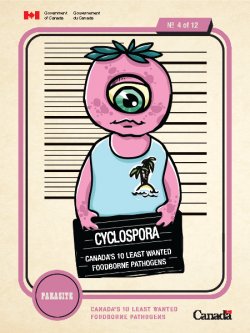
Although true commitment to there remedial actions is vital, it is also important to realize that some cases of food poisoning illness are simply unavoidable is the summer heat. Even if one follows all the health rules, sometimes that slippery bacteria still manages to make it into the food consumers eat. Leafy greens, earthy-grown vegetables, hard to clean fruits, and tenacious pathogens like Cyclospora and Hepatitis A, can and do “fall through the cracks” at times. Usually this is ok, and here is no need to panic, as most cases of foodborne illnesses aren’t life-threatening.

But even so, it is still important to be able to identify the different symptoms and signs so that if one does become ill, they can contact their health provider before things get serious.

Read More at the Link Above

USA -Patient count in Cyclospora parasite outbreak jumps by more than 200

Food Safety News

The number of patients in a large outbreak of infections from the cyclospora parasite has increased significantly, with the count approaching 600.

The Centers for Disease Control and Prevention has been tracking the outbreak since April 1. As of this week there are 581 laboratory confirmed patients. The previous update from the agency on June 22 had 317 patients listed.

“No specific food items have been identified as the source of most of these illnesses. State and local public health officials are interviewing people with cyclosporiasis to find out what foods they ate before getting sick,” according to the CDC’s outbreak update.

USA – Cyclospora Outbreak increases by 371 to 581 sick in 31 states and NYC

Food Poison Journal

No specific food items have been identified as the source of most of these illnesses. State and local public health officials are interviewing people with cyclosporiasis to find out what foods they ate before getting sick.

As of July 11, 2023, a total of 581 laboratory-confirmed cases of cyclosporiasis in people who had not traveled outside the United States during the 14 days before they got sick have been reported from 32 jurisdictions, including 31 states and New York City. This is an increase of 371 cases since the last update on June 22, 2023.