Category Archives: Foodborne Illness

USA – Salmonella Onion Outbreak continues to expand after 900 sickened

Food Poison Journal

Potandon Produce L.L.C. of Idaho Falls, Idaho is updating its October 26 voluntary recall of onions supplied from Keeler Family Farms and sold as Green Giant Fresh to include 3lb. and 5lb. bags of whole yellow onions and 2 lb. bags of whole white onions shipped between July 15 and August 22, 2021 to a UNFI retail distribution center in Champaign, Illinois. This recall does not affect any other Green Giant Fresh products or include any Green Giant canned or frozen vegetable products.

The recalled onions are being recalled because they have the potential to be contaminated with Salmonella.

USA – Salmonella Serotypes Associated with Illnesses after Thanksgiving Holiday, United States, 1998–2018

CDC

Food Poisoning Salmonella

Abstract

We sought to determine which Salmonella serotypes cause illness related to the Thanksgiving holiday in the United States and to foods disproportionately eaten then (e.g., turkey). Using routine surveillance for 1998–2018 and a case-crossover design, we found serotype Reading to be most strongly associated with Thanksgiving.

Thanksgiving, celebrated annually in the United States on the fourth Thursday of November, often brings together family and friends who eat specific traditional foods, such as mashed potatoes, cranberry sauce, and pumpkin pie; the most prominent food eaten is turkey (1). In 2017, ≈45 million turkeys were produced for Thanksgiving, ≈18% of annual production (2). Turkey is popular across regions, races, sexes, and generations; 88% of person in the United States report eating turkey during their Thanksgiving meal (1,3,4).

Foodborne Salmonella infections cause substantial illness and death in the United States: an estimated1 million cases, 20,000 hospitalizations, and 400 deaths occur annually (5). Typical illness consists of diarrhea, fever, and abdominal pain lasting 3–7 days; only a minority of persons seek health care. Incubation typically ranges from 6 hours to 6 days (5). Salmonella outbreaks caused by serotypes Hadar and Saint Paul have been most commonly attributed to turkey, and serotypes Enteritidis, Heidelberg, and Typhimurium have been frequent causes of turkey-associated outbreaks (6). During 2015‒2020, Reading and Hadar were the serotypes most often isolated from turkeys (7); less is known about which serotypes cause turkey-associated sporadic Salmonella infections. We aimed to determine which Salmonella serotypes cause sporadic enteric infections after the Thanksgiving holiday and are most likely related to foods disproportionately eaten then, particularly turkey.

USA – Outbreak Investigation of E. Coli O157:H7 – Spinach (November 2021)

FDA

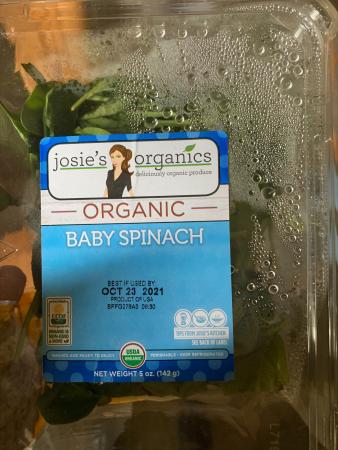
Outbreak Investigation of E. Coli O157:H7 in Spinach (November 2021): Sample Image of Josie's Organics Baby Spinach

The FDA and CDC, in collaboration with state and local partners, are investigating illnesses in a multistate outbreak of E. coli O157:H7. According to the CDC, as of November 15, 2021, 10 people infected with the outbreak strain of E. coli O157:H7 have been reported from 7 states. Illnesses started on dates ranging from October 15 to October 27, 2021. Five people in this outbreak report eating spinach in the week before becoming sick and one person reported Josie’s Organics brand.

On November 15, 2021, the Minnesota Department of Agriculture reported that, as part of this outbreak investigation, a sample of Josie’s Organics Baby Spinach collected from the home of an ill person tested positive for E. coli O157:H7. This sample had a “Best If Used By” date of October 23, 2021 and is undergoing Whole Genome Sequencing (WGS) analysis to determine if the strain of E. coli O157:H7 present in the product sample matches the outbreak strain.

As WGS analysis of the sample is underway, FDA is tracing back the supply of the baby spinach in the positive product sample. Thus far, FDA has traced supply chains for this product back to a small number of farms in two different geographic regions and is deploying investigators along the supply chains of interest.

FDA and state partners are working with the firm to determine if additional products could be affected. This is an ongoing investigation and additional information will be provided as it becomes available.

Recommendation

Consumers, restaurants, and retailers, should not eat, sell, or serve Josie’s Organics Baby Spinach with a “Best If Used By” date of October 23, 2021. Josie’s Organics Baby Spinach is sold in a clear plastic clamshell with the Best If Used By Date on the top label.

Although this product is past expiration and should no longer be available for purchase, consumers should check their homes for product and discard it. If consumers froze fresh Josie’s Organics Baby Spinach, they should discard it.


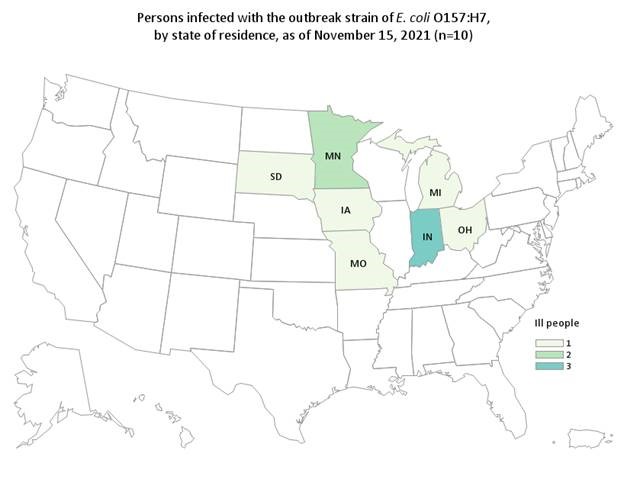
Case Count Map Provided by CDC

Outbreak Investigation of E. Coli O157:H7 in Spinach: Case Count Map Provided by CDC (November 15, 2021)

Case Counts

Total Illnesses: 10
Hospitalizations: 2
Deaths: 0
Last Illness Onset: October 27, 2021
States with Cases: IA (1), IN (3), MI (1), MN (2), MO (1), OH (1), SD (1)

USA – Salmonella Outbreak linked to Onions hits nearly 900 in 38 States

Food Poison Journal

Since the last update on October 29, 2021, 84 more sick people were added to this outbreak. As of November 12, 2021, 892 people infected with the outbreak strain of Salmonella Oranienburg have been reported from 38 states and Puerto Rico (see map). Illnesses started on dates ranging from May 31, 2021, to October 25, 2021 (see timeline).
Sick people range in age from less than 1 year to 101 years, with a median age of 37, and 58% are female. Of 571 people with information available, 183 (32%) have been hospitalized.

The true number of sick people in an outbreak is likely much higher than the number reported, and the outbreak may not be limited to the states with known illnesses. This is because many people recover without medical care and are not tested for Salmonella. In addition, recent illnesses may not yet be reported as it usually takes 3 to 4 weeks to determine if a sick person is part of an outbreak.

Philippines – Food poisoning downs 50 Pasay City government employees

MB

Fifty employees of the Pasay City Treasurer’s Office, two janitorial staff, and a reporter fell ill after eating pancit Malabon on Nov. 9

Amor Virata, publisher of a weekly newspaper “People’s Lider”, was among the victims of food poisoning.

City Epidemiology and Surveillance Unit (CESU) head Mico Llorca said most of the employees affected by the food poisoning are now recovering at home.

Llorca said Mayor Emi Calixto-Rubiano ordered an investigation to determine if the pancit Malabon, which was ordered through food delivery service, was indeed the cause of food poisoning.

USA – Outbreak Investigation of Salmonella Oranienburg: Whole, Fresh Onions (October 2021) – Update

FDA

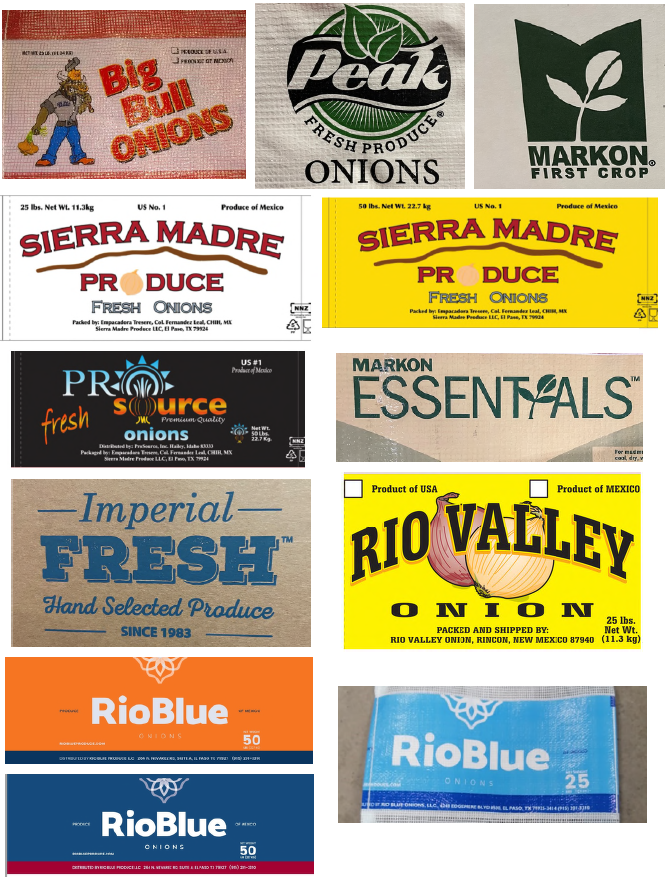
Outbreak Investigation of Salmonella Oranienburg in Whole, Fresh Onions - Sample Product Images (October 2021)

The FDA, along with CDC and state and local partners, is investigating a multistate outbreak of Salmonella Oranienburg infections linked to whole, fresh onions. FDA’s traceback investigation is ongoing but has identified ProSource Produce, LLC (also known as ProSource Inc.) of Hailey, Idaho, and Keeler Family Farms of Deming, New Mexico, as suppliers of potentially contaminated whole, fresh onions imported from the State of Chihuahua, Mexico.

On October 29, 2021, the FDA published a list of retail establishments that received product recalled by ProSource Produce LLC. This list represents the best information currently available to the FDA; however, it may not include all retail establishments that have received the recalled product or may include retail establishments that did not actually receive the recalled product. It is important that you use the product-specific information, available on the ProSource Produce LLC recall announcement, in addition to this list of retail stores, when you check the food you have to see if it has been recalled.

FDA’s investigation is ongoing to determine the source of contamination and if additional products or firms are linked to illness. Additional information will be provided as it becomes available.

Recommendation

Advice for restaurants, retailers and consumers: Do not eat, sell or serve recalled onions, or products containing recalled onions. All recalled onions were supplied by ProSource Produce LLC and Keeler Family Farms and imported from the State of Chihuahua, Mexico between July 1, 2021 and August 31, 2021. FDA has posted a list of additional recalls being conducted by companies that may have received recalled onions from ProSource Produce LLC and Keeler Family Farms. This list includes recalls conducted by companies that further processed the onions by using them as ingredients in new products or by repackaging them. If you cannot tell if your onions were recalled, do not eat, sell, or serve them and throw them out.

Onions may last up to three months if stored in a cool, dry place. Restaurants, retailers, and consumers who suspect having purchased such onions may still have them in storage and should not eat, sell, or serve them, and should throw them out.

FDA recommends that anyone who received or suspects having received recalled onions use extra vigilance in cleaning and sanitizing any surfaces and containers that may have come in contact with these products to reduce the risk of cross-contamination. This includes cleaning and sanitizing cutting boards, slicers, countertops, refrigerators, displays, and storage bins.

Suppliers and Distributors: Do not use, ship, or sell recalled onions. Suppliers and distributors that repackage raw onions should clean, rinse, sanitize, and air dry any surfaces and storage areas that may have come into contact with these products.  Farms and firms within the supply chain of recalled onions, including shippers, distribution centers, retailers and restaurants, should immediately clean and sanitize all food contact surfaces and non-food contact surfaces of equipment and tools that the onions may have touched or that may have become contaminated, including refrigerators, counter tops, storage shelving, trucks or other transportation carriers, etc. If there has been potential cross contamination or mixing of onions from other sources with these products, suppliers and distributors should discard all comingled and potentially cross-contaminated product.


Recall Information

FDA published a list of retail establishments that received product recalled by ProSource Produce LLC. This list represents the best information currently available to the FDA; however, it may not include all retail establishments that have received the recalled product or may include retail establishments that did not actually receive the recalled product. It is important that you use the product-specific information, available on the ProSource Produce LLC recall announcement, in addition to this list of retail stores, when you check the food you have to see if it has been recalled.

FDA has posted a list of additional recalls being conducted by companies that may have received recall onions from ProSource Produce LLC and Keeler Family Farms. This list includes recalls conducted by companies that further processed the onions by using them as ingredients in new products or by repackaging them.

ProSource Produce LLC has voluntarily recalled red, yellow, and white onions imported from the State of Chihuahua, Mexico, with import dates from July 1, 2021, through August 31, 2021. Additional descriptors used for these onion types may include, but are not limited to, jumbo, colossal, medium, summer and sweet onions. Additional recall information will be made public as soon as it is available from ProSource Inc.

The onions were distributed to wholesalers, broadline foodservice customers, and retail or grocery stores in:

  • 50 lb., 25 lb., 10 lb., 5 lb., 3 lb., and 2 lb. mesh sacks
  • 50 lb., 40 lb., 25 lb., 10 lb., and 5 lb. cartons

And by the following distributors and/or under the following brands:

  • Big Bull
  • Peak Fresh Produce
  • Sierra Madre
  • Markon First Crop.
  • Markon Essentials
  • Rio Blue
  • ProSource
  • Rio Valley
  • Sysco Imperial

Keeler Family Farms has recalled red, yellow, and white whole, fresh onions imported from the State of Chihuahua, Mexico, with import dates from July 1, 2021, through August 25, 2021. The onions were distributed in 25lb and 50lb mesh sacks. They contain a label that is marked as “MVP (product of MX)”.

Additional details regarding the recalled products are available on the Keeler Family Farms recall announcement.

Recalls have also been initiated by companies that sold recalled onions or products containing the recalled onions.

Egypt – Over 30 Russian tourists suffer food poisoning in Hurghada hotel

Egypt Indpendent

The Russian Consul General in Hurghada, Viktor Voropaev said that 31 Russian tourists have suffered food poisoning during their stay in a hotel in Hurghada.

In statements to Al-Masry Al-Youm, Voropaev said that the health condition of the tourists is stable and they will be allowed to leave the hospital later on Sunday.

He added that he is closely following up the situation with health authorities and tourism companies to monitor medical care provided in the hospital.

The Russian consul confirmed that the tourists suffering from food poisoning will be transferred to an alternative hotel upon their discharge from the hospital.

Canada – Correction – Updated Food Recall Warning – Dorsey brand, MVP brand, Pier-C brand, and Riga Farms brand Onions, Product of Mexico recalled due to Salmonella

CFIA

Advisory details

Ottawa, October 29, 2021 – The food recall warning issued on October 28, 2021 has been amended to correctly identify the affected products. The corrections for these products are marked by an asterisk (*). This additional information was identified during the Canadian Food Inspection Agency’s (CFIA) food safety investigation.

Industry is recalling Dorsey brand, MVP brand, Pier-C brand, and Riga Farms brand Onions, Product of Mexico from the marketplace due to possible Salmonella contamination. Consumers should not consume the recalled products described below or foods containing these raw onions. Retailers, distributors, manufacturers, and food service establishments such as hotels, restaurants, cafeterias, hospitals, and nursing homes should not serve, use, or sell the recalled products described below.

The following products have been sold in Ontario, Quebec, Nova Scotia, and may have been distributed in other provinces and territories.

These products may also have been sold in bulk or in smaller packages with or without a label and may not bear the same brand or product names as described below. The CFIA will continue its investigation into other possible importers and additional recalls may follow.

Recalled product

Brand Product Size UPC Codes Additional information
Dorsey Yellow Onions Mesh sacks:
10 lb / 4.54 kg
0 33383 60004 8* None – all products sold between July 7, 2021 and October 28, 2021, inclusively. Product of Mexico
MVP Yellow Onions 50 lb / 22.7 kg None 197*
208*
221*
Product of Mexico
Pier-C White Onions 2 lb / 0.907 kg 0 33383 60051 2 203*
209*
218*
228*
Product of Mexico. These onions may have been sold loose.
Pier-C White Onions 25 lb 0 33383 45101 5* 214*
215*
217*
221*
223*
224*
228*
Product of Mexico. These onions may have been sold loose.
Pier-C Yellow Onions 25 lb 0 33383 45095 7* 204*
210*
Product of Mexico. These onions may have been sold loose.
Pier-C Yellow Onions 40 lb /18.15 kg None 204*
208*
209*
210*
Product of Mexico. These onions may have been sold loose.
Riga Farms Yellow Onions 3 lbs / 1.36 kg 0 33383 60002 4 321621
323521
323621*
Product is labelled as Product of USA, although the onions are Product of Mexico

What you should do

If you think you became sick from consuming a recalled product, call your doctor.

Check to see if you have the recalled products in your home or establishment. Recalled products should be thrown out or returned to the location where they were purchased. If you are unsure of the identity of the onions in your possession, check with your place of purchase.

Background

This recall was triggered by recalls in another country by Prosource Produce LLC of Hailey, Idaho and by Keeler Family Farms of Deming, NM. The CFIA is conducting a food safety investigation, which may lead to the recall of other products. If other high-risk products are recalled, the CFIA will notify the public through updated Food Recall Warnings.

The CFIA is verifying that industry is removing the recalled products from the marketplace.

Illnesses

There have been no reported illnesses in Canada associated with the consumption of these products.

Public enquiries and media

Public enquiries
Toll-free: 1-800-442-2342 (Canada and U.S.)
Telephone: 1-613-773-2342 (local or international)
Email: information@inspection.gc.ca
Media relations
Telephone: 613-773-6600
Email: cfia.media.acia@inspection.gc.ca

Research – Healthcare-associated foodborne outbreaks in high-income countries: a literature review and surveillance study, 16 OECD countries, 2001 to 2019

Eurosurveillance

Yearly, 23 million foodborne disease illnesses and 5,000 deaths are estimated in the World Health Organization (WHO) European Region, and 41 foodborne Disability Adjusted Life Years (DALYs) per 100,000 population were estimated for the WHO Sub-Region EUR A in 2010 [1]. In Europe, a total of 5,146 foodborne and waterborne outbreaks, including 48,365 cases of illness and 40 deaths were reported to the European Food Safety Authority (EFSA) in 2018 [2]. Vulnerable populations, including elderly patients, immunocompromised patients, children younger than five years old and pregnant women are more susceptible to foodborne infections and are more prone to develop severe courses of disease compared with healthy people [3]. Therefore, healthcare is a setting where foodborne outbreaks (FBO) can cause considerable morbidity and mortality. In 2020, 20.6% of the European Union (EU) population was aged 65 years and older [4]. As the proportion of elderly people is projected to further increase, the share of the vulnerable population as patients in healthcare facilities (HCF) is likely to increase and thereby the risk associated with healthcare-associated foodborne outbreaks (HA-FBO). Personnel (medical and non-medical staff, food handlers etc) of HCF may also be at risk for HA-FBO and be a source of further spread in healthcare settings and elsewhere. This can cause major disruption of services [5].

So far, literature reviews have covered pathogens responsible for HA-FBO, including  [6],  [79] and norovirus [10,11] and focused on microbiological food safety issues in healthcare settings [5,12]. Between 2014 and 2019, a listeriosis outbreak in Germany affected 13 cases who had an inpatient stay in 12 different HCF during the incubation period [13]. In the United Kingdom (UK) in 2019, nine listeriosis cases of which seven died, had consumed sandwiches in seven HCF during the incubation period [14].

We conducted a literature review to describe the causative agents including bacteria, viruses, parasites and fungi, the incriminated food vehicles and other outbreak characteristics of HA-FBO in 37 countries that are members of the Organisation for Economic Cooperation and Development (OECD) [15]. Furthermore, we analysed German surveillance data and data from the EFSA on HA-FBO. The aim of this article is to describe the current status of HA-FBO in order to improve surveillance and provide public health recommendations for prevention.

Kyrgyzstan

Kyrgyzstan – Mass food poisoning at Imperiya Pizzy: 179 patients registered

24KG

The number of people who applied for help to medical institutions in Bishkek and Chui region after getting food poisoning at Imperiya Pizzy chain cafes increased to 179 people. Press center of the Ministry of Health of Kyrgyzstan reported.

According to the ministry, 18 of the patients are children. «At least 50 people receive inpatient care. There are 13 people in the Railway Hospital, 12 people — in the City Children’s Clinical Hospital of Emergency Medicine, 24 — in the National Hospital, and 1 — in the General Medical Practice Center in Issyk-Ata,» the ministry said.

Their condition is assessed by doctors as stable. The rest of the patients were sent for outpatient treatment at their place of residence after the provision of medical care.

All the cafes of the chain have been closed for the period of the epidemic investigation. The Ministry of Health reported that in connection with the mass food poisoning in Bishkek, specialists from the Centers for State Sanitary and Epidemiological Surveillance will inspect foodservice outlets throughout the republic.