Category Archives: Foodborne Illness

USA – FDA Investigation of Cronobacter Infections: Powdered Infant Formula (February 2022) – The problem is more than two years old.

FDA

If you want to check if your powdered formula is part of the recall, you can enter the product lot code on the bottom of your package on the company’s websiteExternal Link Disclaimer.

If you have questions or need information about the recall, you can Submit Questions/Get Assistance.

If your infant is experiencing symptoms related to Cronobacter infection, such as poor feeding, irritability, temperature changes, jaundice, grunting breaths, or abnormal body movements; contact your health care provider to report their symptoms and receive immediate care.

To report an illness or adverse event, you can

The FDA, along with CDC and state and local partners are investigating consumer complaints and/or reports of infant illness related to products from Abbott Nutrition’s Sturgis, MI facility. All of the ill patients are reported to have consumed powdered infant formula produced from Abbott Nutrition’s Sturgis, MI facility.

The FDA is releasing the FDA Form 483s from three inspections conducted at Abbott Nutrition’s facility on Sept. 16-24, 2019Sept. 20-24, 2021, and Jan. 31-March 18, 2022. The inspectional observations in these Form 483s do not constitute final FDA determinations of whether any condition was or is in violation of the Federal Food, Drug, and Cosmetic Act or any of its implementing regulations. FDA will take appropriate action in the future – if warranted – as we continue to evaluate the 2022 inspectional findings.

Important observations noted in the 2022 Form 483 include, but are not limited to:

  • [Abbott Nutrition] did not establish a system of process controls covering all stages of processing that was designed to ensure that infant formula does not become adulterated due to the presence of microorganisms in the formula or in the processing environment.
  • [Abbott Nutrition] did not ensure that all surfaces that contacted infant formula were maintained to protect infant formula from being contaminated by any source.

Once the immediate public health risk is minimized, FDA will conduct a programmatic review to ensure the maximum effectiveness of agency programs and policies related to infant formula and special medical food complaints, illnesses, and recalls.

Conducting this review is a top priority for the FDA and will be done as efficiently as possible, and we can ensure this effort will not interfere with the immediate recall response activities. We will and must continue focusing on taking all steps possible to protect the health of those who rely on safe powdered infant formula.

Recommendation

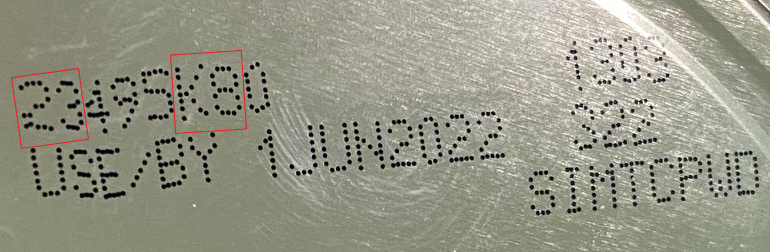
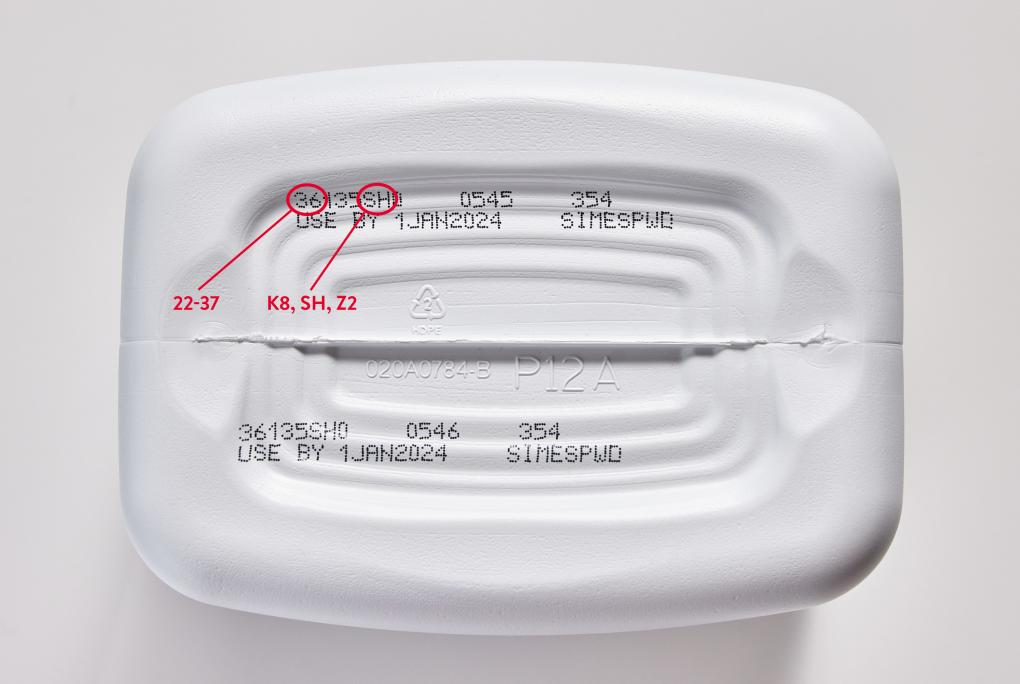
The FDA is advising consumers not to use recalled Similac, Alimentum, or EleCare powdered infant formulas. Recalled products can be identified by the 7 to 9 digit code and expiration date on the bottom of the package (see image below). Products are included in the recall if they have all three items below:

  • the first two digits of the code are 22 through 37 and
  • the code on the container contains K8, SH, or Z2, and
  • the expiration date is 4-1-2022 (APR 2022) or later.

In addition to products described above, Abbott Nutrition has recalled Similac PM 60/40 with a lot code 27032K80 (can) / 27032K800 (case). At this time, Similac PM 60/40 with lot code 27032K80 (can) / 27032K800 (case) is the only type and lot of this specialty formula being recalled. Additional recall information for the initial recall is available on the FDA website. Parents can also enter their product lot code on the company’s websiteExternal Link Disclaimer to check if it is part of the recall.

Additional information for parents and caregivers of infants receiving medical specialty infant formulas and individuals using certain medical foods is available below.

Additional Information for Parents and Caregivers:

The recalls do not include liquid formula products.

Parents and caregivers should never dilute infant formula and should not make or feed homemade infant formula to infants. Consumers should also avoid purchasing imported formula through online sales, as it has the potential to be counterfeit.

If your regular formula is not available, contact your child’s healthcare provider for recommendations on changing feeding practices.

If you get infant formula through WIC, do not throw the formula out. Instead, you should take it to the store for a refund and exchange or call the company at 1-800-986-8540 to help you. WIC recipients should be able to obtain a different brand of similar formula. Call your local WIC clinic for more guidance. Also see:

More information on Cronobacter and infant formula is available on CDC’s website.

Recalled powdered infant formulas have the potential to be contaminated with Cronobacter, a bacterium that can cause severe foodborne illness primarily in infants. Cronobacter infections are rare but are especially high risk for newborn infants (see symptoms below).

Cronobacter bacteria can cause severe, life-threatening infections (sepsis) or meningitis (an inflammation of the membranes that protect the brain and spine). Symptoms of sepsis and meningitis may include poor feeding, irritability, temperature changes, jaundice (yellow skin and whites of the eyes), grunting breaths, and abnormal body movements. Cronobacter infection may also cause bowel damage and may spread through the blood to other parts of the body.

If your child is experiencing any of these symptoms, you should notify your child’s healthcare provider and seek medical care for your child immediately. Healthcare providers and health departments are encouraged to report any confirmed cases of Cronobacter sakazakii to CDC.


Product Images

Sample Product Image from the FDA Investigation of Cronobacter and Salmonella Complaints about Powdered Infant Formula (February 2022)

Case Counts

Total Adverse Events: 4
Hospitalizations: 4
Reported Deaths: 2*
Illness Onset Date Range: 9/6/2021 – 1/4/2022
States with Adverse Events: MN (1), OH (2), TX (1)
Product Distribution: Nationwide and International
* Two deaths have been reported. Cronobacter infection may have contributed to the cause of death for both patients.

USA – FDA issues warning to New Mexico onion importer linked to Salmonella outbreak

Food Safety News

An import company in New Mexico is on notice from the FDA for not having food safety documents for a number of imported foods. The inspection was initiated because of an investigation of a multistate foodborne outbreak of Salmonella Oranienburg illnesses linked to whole, fresh onions imported from the state of Chihuahua, Mexico.

The outbreak has sickened more than 800 people in the United States and remains under investigation. The Centers for Disease and Prevention has not yet declared the outbreak over.

In its warning letter the Food and Drug Administration  acknowledged that the company initiated a voluntary recall on Oct. 22, 2021, of red, yellow, and white onions imported from its “suppliers (redacted)” in Chihuahua, Mexico, from July 1, 2021, through Aug. 25, 2021.

In the March 2, 2022, warning letter just made public by the FDA, the agency described a Nov. 16, 2021, Foreign Supplier Verification Program (FSVP) inspection of Keeler Family Farms in DemingNM.

Canada – Norovirus: Dozens affected in British Columbia, linked to raw oysters

Outbreak News Today

french oysters

Vancouver Coastal Health (VCH) is warning consumers to take steps to protect their health following an increase in cases of norovirus associated with consumption of raw B.C. oysters.

Since Monday, March 14, more than 50 people have been affected with acute gastrointestinal illness, such as stomach pain, diarrhea or vomiting, after eating raw oysters. Lab testing has confirmed the presence of norovirus in some of the cases and it is suspected in others.

The BC Centre for Disease Control (BCCDC) has issued a notice to restaurants and retailers in B.C. to advise them of the risk.

Based on an investigation by the BCCDC, local and federal agencies, and the shellfish industry, affected harvest areas are being closed and will reopen when contamination is cleared.

USA – Mystery Salmonella and Listeria Outbreaks sicken 75 in United States while infant formula kills 2

Food Poison Journal

The Food and Drug Administration has posted an increase in the number of patients in an outbreak of Listeria monocytogenes infections as it continues investigations into three other outbreaks.

The new patient count in the Listeria outbreak is 16, up from 14 reported a week ago. As of March 16 the FDA had not determined the cause of the outbreak. The agency has initiated traceback efforts, but has not revealed what food or foods are involved in those activities.

The FDA has not revealed any demographic information on the Listeria patients and has not reported where they live.

In other outbreak news the FDA is investigating a new outbreak of Salmonella SaintPaul infections that has sickened 59 people. The agency announced the outbreak on March 16. As with the Listeria outbreak investigation, the FDA has not released any patient information for the Salmonella outbreak and has not reported where the patients live. Traceback efforts have begun, according to the FDA, but the agency did not report what food or foods are involved.

USA – Core Investigation Table Update – Salmonella Saintpaul Outbreak

FDA

The FDA has launched a Traceback Investigation to identify the source of the outbreak. 59 cases have been reported so far, no Public Health Advisory has been issued yet. Salmonella Saintpaul has been identified as the strain causing the illnesses.

Date
Posted
Ref Pathogen
Product
Linked to
Illnesses

(if any)
Case Count
Status
3/16/

2022

1055 Salmonella
Saintpaul
Not Yet
Identified
59 Active
2/17/

2022

1056 Cronobacter
sakazakii
Powdered
Infant
Formula
See
Advisory
Active
2/9/

2022

1040 Listeria
monocytogenes
Not Yet
Identified
16 Active
2/2/

2022

1054 Enteroinvasive
E. coli
O143:H26
Not
Identified
16 Closed
1/10/

2022

1050 E. coli
O121:H19
Romaine 4 Closed
12/29/

2021

1052 E. coli
O157:H7
Packaged
Salad
See Outbreak
Advisory
Closed
12/20/

2021

1039 Listeria
monocytogenes
Packaged
Salad
See Outbreak
Advisory
Closed
12/15/2021 1048 Listeria
monocytogenes
Packaged
Salad
See Outbreak
Advisory
Active

India – 42 students affected by food poisoning at Kurnool school

Deccan Chronicle

ANANTAPUR: Some 42 students of the government school in the Viswanagar area of Nandyal town in Kurnool district fell sick after having their mid-day meal at the school premises on Friday.

There was contamination of food as spoilt eggs were used in cooking, which caused food poisoning. Soon after the students started vomiting in the school, they were taken to the government hospital at Nandyal town.

Some 92 children were studying at the government school in Viswanagar locality of Nandyal municipality. The students were served the mid-day meal consisting of rice, asparagus, boiled egg and chickpea as part of the Friday menu fixed by the state government.

Soon after having their lunch, the students went to their classrooms. Many of them soon complained of stomach pain and started vomiting.

About 50 students with sensation of vomiting were shifted to the hospital and a team of doctors treated them. Nandyal hospital superintendent Dr.Vijayakumar said contamination of food was the cause. “All are being provided necessary medical aid. The students are safe,” he said.

USA – FDA Investigation of Cronobacter Infections: Powdered Infant Formula (February 2022)

FDA

If you want to check if your powdered formula is part of the recall, you can enter the product lot code on the bottom of your package on the company’s websiteExternal Link Disclaimer.

If you have questions or need information about the recall, you can Submit Questions/Get Assistance.

If your infant is experiencing symptoms related to Cronobacter infection, such as poor feeding, irritability, temperature changes, jaundice, grunting breaths, or abnormal movements; contact your health care provider to report their symptoms and receive immediate care.

To report an illness or adverse event, you can

The FDA, along with CDC and state and local partners are investigating consumer complaints and/or reports of infant illness related to products from Abbott Nutrition’s Sturgis, MI facility. All of the ill patients are reported to have consumed powdered infant formula produced from Abbott Nutrition’s Sturgis, MI facility.

To provide clarity about which products are included in the Abbott Nutrition recall, FDA is publishing a full list of recalled brands  that have been included in the initial and expanded recall. Recalled products should no longer be available for sale, but if consumers have these products in their homes, they should check the lot code on the bottom of the package to determine if it is included in the recall.

The FDA is also providing additional information for parents and caregivers  of infants receiving medical specialty infant formula and individuals using certain medical foods.

We understand that infant formula is the sole source of nutrition for many infants and is an essential product. FDA is continuing to work with Abbott Nutrition to better assess the impacts of the recall and understand production capacity at other Abbott facilities that produce some of the impacted brands. We are also working with Abbott Nutrition on safe resumption of production at the Sturgis, MI facility. FDA is continuing to investigate and will update this advisory should additional consumer safety information become available.

Recommendation

The FDA is advising consumers not to use recalled Similac, Alimentum, or EleCare powdered infant formulas. Recalled products can be identified by the 7 to 9 digit code and expiration date on the bottom of the package (see image below). Products are included in the recall if they have all three items below:

  • the first two digits of the code are 22 through 37 and
  • the code on the container contains K8, SH, or Z2, and
  • the expiration date is 4-1-2022 (APR 2022) or later.

In addition to products described above, Abbott Nutrition has recalled Similac PM 60/40 with a lot code 27032K80 (can) / 27032K800 (case). At this time, Similac PM 60/40 with lot code 27032K80 (can) / 27032K800 (case) is the only type and lot of this specialty formula being recalled. Additional recall information for the initial recall is available on the FDA website. Parents can also enter their product lot code on the company’s websiteExternal Link Disclaimer to check if it is part of the recall.

Additional information for parents and caregivers of infants receiving medical specialty infant formulas and individuals using certain medical foods is available below.

Additional Information for Parents and Caregivers:

The recalls do not include liquid formula products.

Parents and caregivers should never dilute infant formula and should not make or feed homemade infant formula to infants. Consumers should also avoid purchasing imported formula through online sales, as it has the potential to be counterfeit.

If your regular formula is not available, contact your child’s healthcare provider for recommendations on changing feeding practices.

If you get infant formula through WIC, do not throw the formula out. Instead, you should take it to the store for a refund and exchange or call the company at 1-800-986-8540 to help you. WIC recipients should be able to obtain a different brand of similar formula. Call your local WIC clinic for more guidance. Also see:

More information on Cronobacter and infant formula is available on CDC’s website.

Recalled powdered infant formulas have the potential to be contaminated with Cronobacter, a bacterium that can cause severe foodborne illness primarily in infants. Cronobacter infections are rare but are especially high risk for newborn infants (see symptoms below).

Cronobacter bacteria can cause severe, life-threatening infections (sepsis) or meningitis (an inflammation of the membranes that protect the brain and spine). Symptoms of sepsis and meningitis may include poor feeding, irritability, temperature changes, jaundice (yellow skin and whites of the eyes), grunting breaths, and abnormal movements. Cronobacter infection may also cause bowel damage and may spread through the blood to other parts of the body.

If your child is experiencing any of these symptoms, you should notify your child’s healthcare provider and seek medical care for your child immediately. Healthcare providers and health departments are encouraged to report any confirmed cases of Cronobacter sakazakii to CDC.

Slovakia – Safe defrosting of food – promotional leaflet in Slovakian

MPSR

The National Contact Point EFSA (Department of Food Safety and Nutrition MPRV SR ) in cooperation with the European Food Safety Authority has prepared a leaflet on safe defrosting of food in the Slovak language.

The leaflet presents basic information on defrosting food, usable in every household. By reducing the mistakes that consumers make when handling frozen food incorrectly, the formation of harmful bacteria is eliminated. Proper thawing procedures reduce the risk of foodborne illness and reduce food waste.

USA – FDA: Salmonella removed from Infant Formula Outbreak – Cronobacter sakazakii still cause of 4 illnesses with 2 deaths

Food Poison Journal

Total Adverse Events: 4
Hospitalizations: 4
Reported Deaths: 2
Illness Onset Date Range: 9/6/2021 – 1/4/2022
States with Adverse Events: MN (1), OH (2), TX (1)
Product Distribution: Nationwide and International

The FDA, along with CDC and state and local partners are investigating consumer complaints and/or reports of infant illness related to products from Abbott Nutrition’s Sturgis, MI facility. All of the ill patients are reported to have consumed powdered infant formula produced from Abbott Nutrition’s Sturgis, MI facility.

The Salmonella Newport illness previously included in this investigation of complaints and illnesses has been removed. In the early stages of this investigation, FDA included all consumer complaints of illness with exposure to products from the Sturgis, MI, facility. After further investigation, the FDA has determined that there is not enough information to definitively link this illness to powdered infant formula. CDC confirmed that this single Salmonella illness is not linked to an outbreak. The FDA and CDC are continuing to monitor for Salmonella cases and consumer complaints that may be related to this incident.

Cronobacter infection surveillance is not handled the same way as infection with more common foodborne pathogens, such as Salmonella or E. coli O157:H7. Cronobacter is not nationally notifiable and not reportable except in one state, which means doctors and labs are not required to report cases to their health department. Because Cronobacter is not a nationally notifiable pathogen, FDA relies on consumer complaints of illness sent to the Agency and on health care providers informing FDA directly about infants with Cronobacter infections. In addition, because Cronobacter is not nationally notifiable, whole genome sequencing (WGS) is rarely performed on these isolates. To date, no outbreaks of Cronobacter have been detected using WGS.

When single cases of Cronobacter are reported, the FDA conducts a thorough review of each complaint, conducts sampling of products, and initiates inspections as appropriate. FDA collaborates with CDC, which has developed a detailed questionnaire specifically for Cronobacter infections that is often used by state health departments in instances of Cronobacter sakazakii infection.

USA – Outbreak Investigation of Listeria monocytogenes: Fresh Express Packaged Salad (December 2021) is Over.

FDA

The FDA and CDC, in collaboration with state and local partners, investigated a multistate outbreak of Listeria monocytogenes infections. According to the CDC, as of March 8, 2022, this outbreak has ended.

On December 20, 2021, Fresh Express voluntarily recalled certain varieties of its branded and private label salad products produced at the company’s Streamwood, Illinois, facility.

Recommendation

On March 8, 2022, CDC announced this outbreak is over. The product is past expiration and should no longer be available to consumers. Therefore, there are no recommendations for consumers, retailers, or suppliers.

FDA recommends that anyone who received recalled products use extra vigilance in cleaning and sanitizing any surfaces and containers that may have come in contact with these products to reduce the risk of cross-contamination. Listeria can survive in refrigerated temperatures and can easily spread to other foods and surfaces.


Product Images

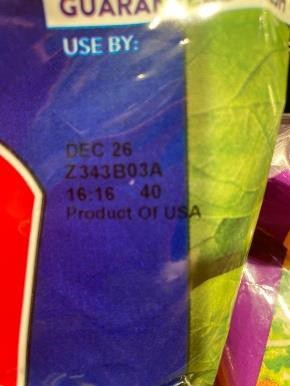
Image – Bagged Salad, Use By Date

Map of U.S. Distribution of Recalled Packaged Salad

Outbreak Investigation of Listeria monocytogenes: Packaged Salad: Case Count Map Provided by CDC (December 21, 2021)

Case Count

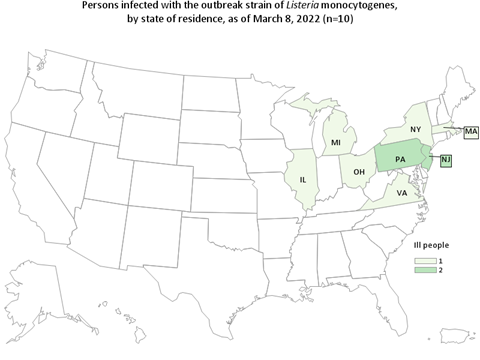
People infected with the outbreak strain of Listeria monocytogenes by state of residence, as of March 8, 2022 (n=10)

Case Counts People infected with the outbreak strain of Listeria monocytogenes by state of residence, as of March 8, 2022 (n=10)

Case Counts

Total Illnesses: 10
Hospitalizations: 10
Deaths: 1
Last Illness Onset: October 19, 2021
States with Cases: IL, MA, MI, NJ, NY, OH, PA, VA