Category Archives: Foodborne Illness

Finland – Finland on alert after Yersinia outbreak reports

Food Safety News

National public health officials in Finland are monitoring the situation following local reports of Yersinia outbreaks.

Two outbreaks of Yersinia enterocolitica serotype O:3 have been reported to the Finnish Institute for Health and Welfare (THL) in recent weeks from the South Savo and Helsinki-Uusimaa regions.

Another suspected outbreak has been recorded in the Pirkanmaa region but patient samples have not been serotyped. People fell sick between early and mid-February.

A total of 39 cases were noted in all of Finland in February 2022, which is less than the 55 infections in February 2021.

In February 2022, five cases of Yersinia enterocolitica from South Savo were reported to the Infectious Diseases Register, which is run by THL, while from 2019 to 2021 there were no illnesses at the same time.

Jordan – Homemade leftovers leave three people poisoned in Mafraq

Roya News

Director of Al-Mafraq Governmental Hospital Moqbel Al-Sharafat told Roya Saturday that three people were diagnosed with food poisoning after eating leftovers.

Roya’s correspondent in Mafraq said that the three initially came to the hospital after feeling unwell. They thought they were feeling unwell due to inhaling gases from a heating device. However, later, it was found that they were food poisoned as a result of eating leftover food.

India – 1,000 hospitalised due to food poisoning in Mehsana

India Express

Over 1,000 people who attended a wedding dinner in the Savala village of Visnagar, Mehsana on Friday were rushed to health facilities following food poisoning. According to Visnagar taluka police, an inquiry has been initiated and proceedings shall be initiated accordingly.

According to police inspector BL Maheriya of Visnagar taluka police station, the wedding of former Congress leader Wazir Khan Pathan’s son was held on March 3 and the next day on March 4 a dinner was organised at Savala with “12,000-15,000 guests in attendance”, of which around 1,057 guests started exhibiting symptoms of food poisoning such as vomiting and diarrhoea and were admitted at various health facilities in Gandhinagar.

“FSL and FDCA has taken samples of sweets and other food items served at the dinner and the results are awaited. Health department too is working on this and have taken samples of the vomit and stool. Prima facie it seems the caterer may have been negligent and there could have been adulteration in the food,” Gohil said.

UK – Norovirus outbreaks increasing in England

Gov UK

Norovirus outbreaks in care homes have risen in recent weeks, leading UKHSA to remind people of simple steps that can be taken to limit the spread of the bug.

The UK Health Security Agency (UKHSA) is reminding the public of simple actions that they can take to reduce the spread of norovirus. The advice comes after routine surveillance in England shows that the number of outbreaks caused by the vomiting bug has increased in recent weeks (4-week period from end January to February), initially in educational settings and now in care home settings.

Norovirus is highly infectious and causes vomiting and diarrhoea but usually passes in a couple of days. It is easily transmitted through contact with infected individuals or contaminated surfaces.

The increase in reported outbreaks was initially in educational settings, particularly in nursery and childcare facilities, with 48% more incidents reported to UKHSA than would be expected.

Reports of norovirus outbreaks in care home settings to UKHSA have also increased in recent weeks in 2022 – with a rise from 24 reported in week 6 (week commencing 7 February), to 40 reported in week 7 (week commencing 14 February).

While outbreaks reported in care home settings overall remain below pre-pandemic expected levels, it is likely they will continue to increase in the coming weeks and a rise in norovirus outbreaks in care home settings often precedes an increase in outbreaks in hospital settings. Therefore, it is important to take steps to limit the spread of norovirus.

Professor Saheer Gharbia, Gastrointestinal Pathogens and Food Safety Directorate, UKHSA, said:

Norovirus, commonly known as the winter vomiting bug, has been at lower levels than normal throughout the pandemic but as people have begun to mix more, the numbers of outbreaks have started to increase again.

Symptoms include sudden onset of nausea, projectile vomiting and diarrhoea but can also include a high temperature, abdominal pain and aching limbs. Stay at home if you are experiencing norovirus symptoms and do not return to work or send children to school or nursery until 48 hours after symptoms have cleared.

Please avoid visiting elderly relatives if you are unwell – particularly if they are in a care home or hospital. As with COVID-19 and other infectious illnesses, hand washing is really important to help stop the spread of this bug, but remember, unlike for COVID-19 alcohol gels do not kill off norovirus so soap and water is best.

How to reduce the spread of norovirus

  1. Stay at home if you are experiencing norovirus symptoms. Do not return to work or send children to school until 48 hours after symptoms have cleared. Also avoid visiting elderly or poorly relatives, particularly if they are in hospital or a care home.
  2. Wash your hands frequently and thoroughly with soap and warm water. Alcohol hand gels don’t kill norovirus.
  3. When an infected person vomits, the droplets contaminate the surrounding surfaces. A bleach-based household cleaner or a combination of bleach and hot water should be used to disinfect potentially contaminated household surfaces and commonly used objects such as toilets, taps, telephones, door handles and kitchen surfaces.
  4. If you are ill, avoid cooking and helping prepare meals for others until 48 hours after symptoms have stopped, as norovirus can be spread through food contaminated by the virus when food is handled by symptomatic people or infected individuals.
  5. Wash any contaminated clothing or bedding using detergent and at 60°C and, if possible, wear disposable gloves to handle contaminated items.

Norovirus activity has risen as people have begun to mix more – it is possible that unusual or out-of-season increases could be seen in the coming months.

UKHSA’s National Norovirus Surveillance Team will continue to closely monitor all available surveillance data to ensure early detection of any unusual norovirus activity and outbreaks.

You can view the National Norovirus and Rotavirus Bulletin here.

Those showing symptoms should avoid visiting their GP, but if they are concerned should contact NHS 111 or talk to their GP by phone.

USA – Outbreak Investigation of E. coli O157:H7: Power Greens Packaged Salad (January 2022) is Over.

FDA

The FDA and CDC, in collaboration with state and local partners, investigated illnesses in a multistate outbreak of E. coli O157:H7. According to the CDC, as of March 2, 2022, this outbreak has ended. Consumer purchase data indicated that seven people purchased Nature’s Basket Power Greens or Simple Truth Organic Power Greens at grocery stores before becoming sick.

FDA conducted a traceback investigation on the products of interest. Farms from both the Yuma, AZ and Salinas, CA growing regions were identified to have supplied product that could have been available to consumers, however no single production code was identified by the traceback. During FDA’s investigation, environmental samples collected near farms identified in the traceback in the Yuma, AZ and Salinas, CA growing regions tested positive for Shiga-toxin producing E. coli (STEC), however all were different strains and did not match the strain identified in this outbreak.

Recommendation

CDC announced this outbreak is over. The product is past expiration and should no longer be available to consumers. Therefore, there are no recommendations for consumers, retailers, or suppliers.


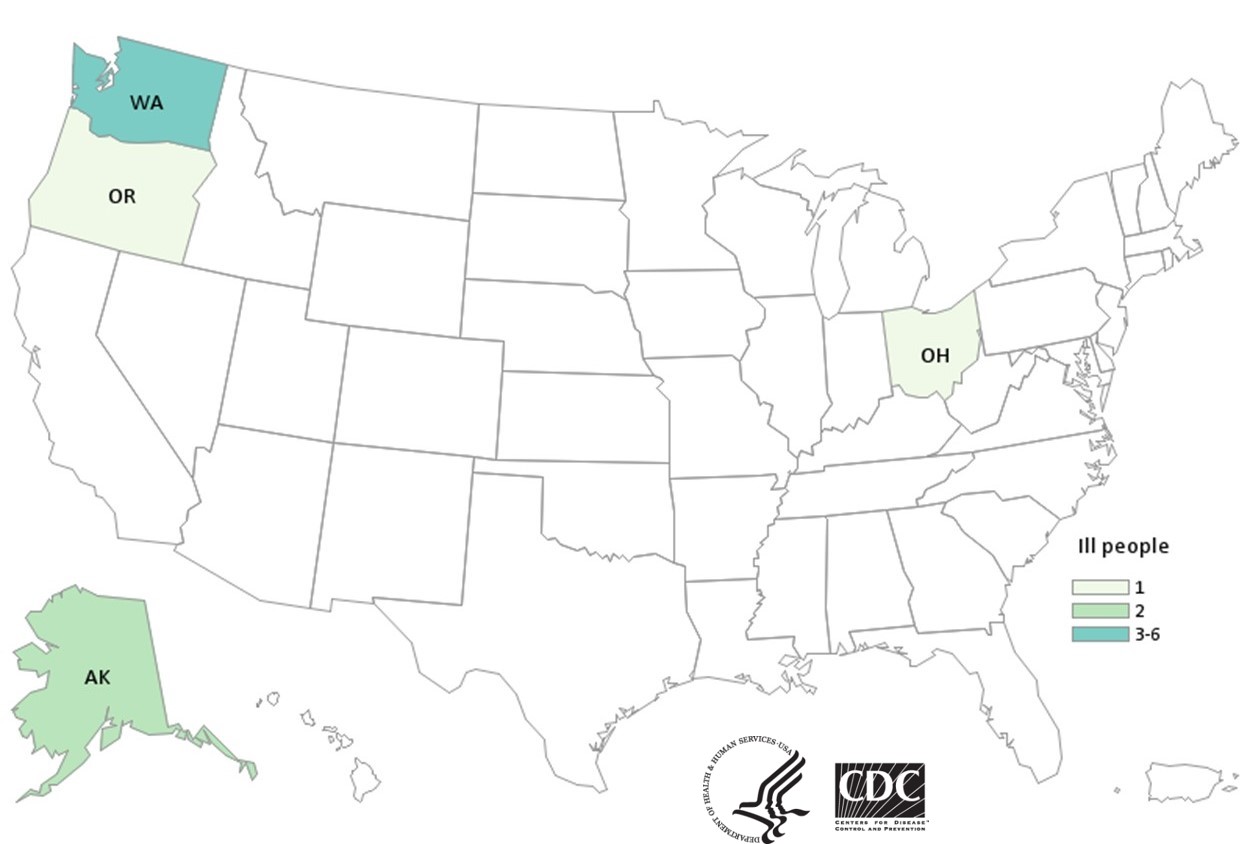
Case Count Map Provided by CDC

Outbreak Investigation of E. coli O157:H7: Packaged Salad - CDC Case Count Map (January 6, 2022)

Case Counts

Total Illnesses: 10
Hospitalizations: 4
Deaths: 0
Last Illness Onset: December 19, 2021
States with Cases: AK (2), OH (1), OR (1), WA (6)

USA – FDA Core Investigation Table Update

FDA

Date
Posted
Ref
Pathogen
Product(s)
Linked to
Illnesses

(if any)
Total
Case Count

Status
2/17/2022 1056 Cronobacter
sakazakii

&
Salmonella
Newport
Powdered
Infant
Formula
See
Advisory
Active
2/9/2022 1040 Listeria
monocytogenes
Not Yet
Identified
14 Active
2/2/2022 1054 Enteroinvasive
E. coli
O143:H26
Not Yet
Identified
16 Closed
1/10/2022 1050 E. coli
O121:H19
Romaine 4 Closed
12/29/2021 1052 E. coli
O157:H7
Packaged
Salad
See Outbreak
Advisory
Closed
12/20/2021 1039 Listeria
monocytogenes
Packaged
Salad
See Outbreak
Advisory
Active
12/15/2021 1048 Listeria
monocytogenes
Packaged
Salad
See Outbreak
Advisory
Active

Nigeria – Class I Recall: Abbott Recalls Certain Powdered Infant Formula Linked To Food Borne Illness Outbreak Due To Presence Of Cronobacter Sakazakii And Salmonella Newport Bacteria

NAFDAC

In the U.S, four consumer complaints of infant illness were received from September 2021 to December 2021. This includes three reports of Cronobacter sakazakii infections and one Salmonella Newport infection. All four infants were hospitalized and Cronobacter may have contributed to one death.

Abbott’s recall of these powdered  infant formula produced at its facility in Sturgis, Michigan MI, has spread globally and now includes Croatia, Italy, Ireland, Netherlands, Slovenia, and Spain, among many other countries. Food Standards Agency (FSA) is investigating whether three infant illnesses reported recently  in the United Kingdom are connected to an outbreak in the United States from the recalled  infant formula.

Background:

Cronobacter bacteria can cause severe, life-threatening infections(sepsis) or meningitis. Symptoms of which include poor feeding, irritability, temperature changes, jaundice, grunting breaths and abnormal movement in infants. The infection can also lead to bowel damage and may spread through the blood to other parts of the body.

Salmonella bacteria causes gastrointestinal illness, fever called salmonellosis which may lead to diarrhea, fever, and abdominal cramps. A severe case of salmonella infection results in headache, lethargy, rash, blood in the urine or stool and may be fatal in some cases.

PLEASE NOTE THAT ABBOTT’S SIMILAC INFANT FORMULA POWDER REGISTERED BY NAFDAC ARE MANUFACTURED IN SOUTH AFRICA AND REPUBLIC OF IRELAND WHILE,

THE RECALLED PRODUCTS LISTED ABOVE WERE MANUFACTURED IN STURGIS, MICHIGAN- AMERICA.

Recommendation:

The Agency advises that parents of infant experiencing any of these symptoms after consumption of the recalled Abbott Infant formula, should notify your child’s healthcare provider and seek medical care for your child immediately.  Healthcare providers and health departments are encouraged to report any confirmed cases of Cronobacter sakazakii to relevant authorities.

NAFDAC implores importers, distributors, retailers and the public to exercise caution and vigilance to avoid  sale, distribution and consumption  of the recalled  products listed above or if in possession should  submit  to the nearest NAFDAC office or report to NAFDAC PRASCOR (20543 or 0800-1-623322) TOLL FREE from all networks) or via pharmacovigilance@nafdac.gov.ng or via e-Reporting platform available on the NAFDAC website http://www.nafdac,gov.ng.

NAFDAC……..Customer-focused, Agency-minded!!!

Spain – Alert for the possible presence of Cronobacter sakazakii and Salmonella Newport in special infant milk from the United States

ACSA

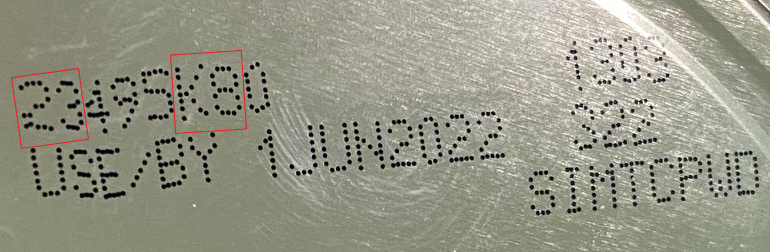
lot identification on can and box

On February 22, the Spanish Agency for Food Safety and Nutrition informed the Autonomous Communities throughthe Coordinated System for the Rapid Exchange of Information (SCIRI) of an alert notification sent by the health authorities of the Autonomous Community of Madrid regarding the possible presence of  Cronobacter sakazakii  and  Salmonella  Newport in two special infant formulas.

The ABBOTT company has clarified that the batch numbers indicated in the initial notification appear on the boxes of 6 cans. On the other hand, the last digit does not appear on the cans. A photograph of how the lot appears in both cases is attached.

The updated data of the product involved are:

SIMILAC FOOD 400g. Lots:

  • BOXLOTS 25659Z261 (expiry 01 2023); lots IN CAN 25659Z26 (expiry 01 2023)
  • BOXLOTS 28123Z261 (expiry 04 2023); lots IN CAN 28123Z26 (expiry 04 2023)
  • BOXLOTS 30283Z262 (expiry 06 2023); lots IN CAN 30283Z26 (expiry 06 2023)
  • BOXLOTS 31410Z204 (expiry 07 2023); lots IN CAN 31410Z20 (expiry 07 2023)
  • BOX-LOTS 33688Z201 (expiry 09 2023); lots IN CAN 33688Z20 (expiry 09 2023)

SIMILAC ELECARE 400g. Lots:

  • BOXED lots: 25557Z203 (expiry 07 2022); lots IN CAN: 25557Z20 (expiry 07 2022)
  • BOXED lots: 30374Z202 (expiry 12 2022); lots IN CAN: 30374Z20 (expiry 12 2022)

With the information available there is NO record in Spain of any reported case associated with this alert.

People who have products affected by this alert at home are recommended to refrain from consuming them and return them to the point of purchase.

USA – Senators Ask Abbott Nutrition to Explain Cronobacter Infant Illnesses

Food Poisoning Bulletin

Senators ask Abbott Nutrition to explain the Cronobacter and Salmonella illnesses associated with certain types of their Similac, EleCare, and Alimentum powdered infant formulas. A letter was sent to the chairman of the board by two Senators: Patty Murray (D-WA) and Robert Casey Jr. (D-PA). Senator Casey is the Chairman of the Subcommittee on Children and Families in the Senate, and both Senators are members of the U.S. Senate Commitee on Health, Education, Labor and Pensions.

USA – FDA Investigation of Cronobacter and Salmonella Complaints: Powdered Infant Formula (February 2022)

FDA

If you want to check if your powdered formula is part of the recall, you can enter the product lot code on the bottom of your package on the company’s websiteExternal Link Disclaimer.

If you have questions or need information about the recall, you can Submit Questions/Get Assistance.

If your infant is experiencing symptoms related to Cronobacter or Salmonella infection, such as poor feeding, irritability, temperature changes, jaundice, grunting breaths, abnormal movements, lethargy, rash, or blood in the urine or stool; contact your health care provider to report their symptoms and receive immediate care.

To report an illness or adverse event, you can

The FDA, along with CDC and state and local partners are investigating consumer complaints and/or reports of infant illness related to products from Abbott Nutrition’s Sturgis, MI facility. All of the ill patients are reported to have consumed powdered infant formula produced from Abbott Nutrition’s Sturgis, MI facility.

As of February 28, CDC has announced one additional illness of Cronobacter sakazakii with exposure to powdered infant formula produced at Abbott Nutrition’s Sturgis, MI facility. Cronobacter infection may have been a contributing cause of death for this patient. In total, this investigation includes four reports of Cronobacter sakazakii infections in infants (three from FDA complaints and one from a CDC case finding) and one complaint of a Salmonella Newport infection in an infant. All five (four Cronobacter infections and one Salmonella Newport infection) illnesses resulted in hospitalization and Cronobacter may have contributed to death in two patients.

The most recent patient was reported to have consumed Abbott Nutrition’s Similac PM 60/40 product with the lot code 27032K800 prior to Cronobacter sakazakii infection. FDA and CDC informed the firm of these findings and on February 28, 2022, Abbott Nutrition voluntarily recalled Similac PM 60/40 powdered infant formula with the lot code 27032K800. This is a specialty formula for certain infants who would benefit from lowered mineral intake and was not included in the previous recall. At this time, Similac PM 60/40 with lot code 27032K80 (can) / 27032K800 (case) are the only type and lots of this specialty formula being recalled.

This particular lot of Similac PM 60/40 was distributed to the U.S. and Israel. If your regular formula is not available, contact your child’s healthcare provider for recommendations on changing feeding practices.

We understand that infant formula is the sole source of nutrition for many infants and is an essential product. FDA is working with Abbott Nutrition to better assess the impacts of the recall and understand production capacity at other Abbott facilities that produce some of the impacted brands. We are also working with Abbott Nutrition on safe resumption of production at the Sturgis, MI facility. FDA is continuing to investigate and will update this advisory should additional consumer safety information become available.

Recommendation

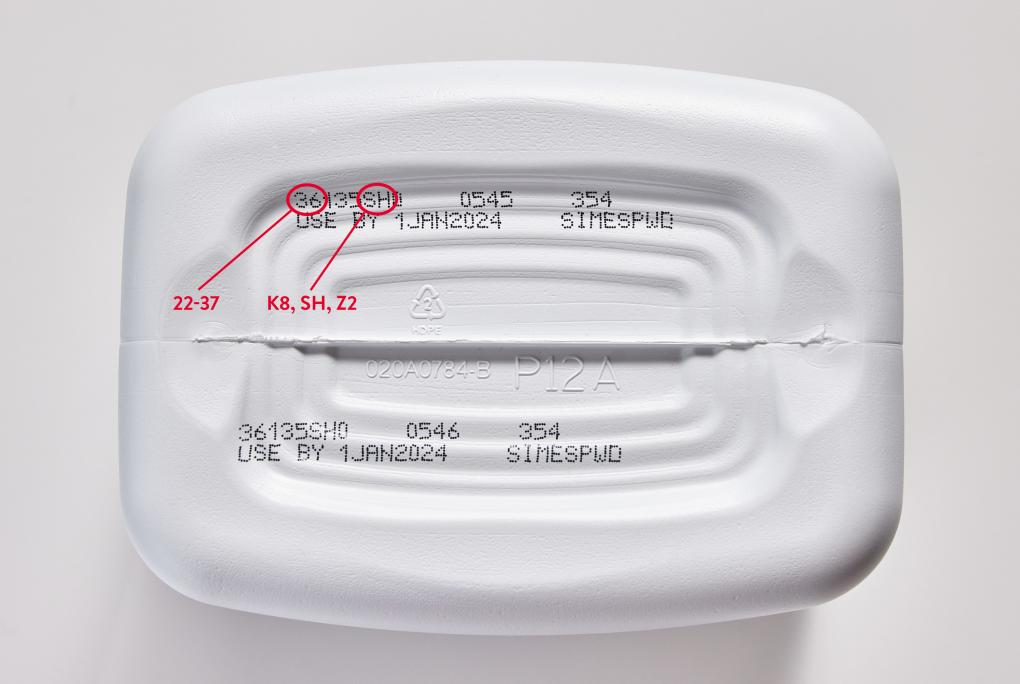
The FDA is advising consumers not to use recalled Similac, Alimentum, or EleCare powdered infant formulas. Recalled products can be identified by the 7 to 9 digit code and expiration date on the bottom of the package (see image below). Products are included in the recall if they have all three items below:

  • the first two digits of the code are 22 through 37 and
  • the code on the container contains K8, SH, or Z2, and
  • the expiration date is 4-1-2022 (APR 2022) or later.

In addition to products described above, Abbott Nutrition has recalled Similac PM 60/40 with a lot code 27032K80 (can) / 27032K800 (case). At this time, Similac PM 60/40 with lot code 27032K80 (can) / 27032K800 (case) are the only type and lots of this specialty formula being recalled.

Additional recall information for the initial recall is available on the FDA website. Parents can also enter their product lot code on the company’s websiteExternal Link Disclaimer to check if it is part of the recall.

Additional Information for Parents and Caregivers:

The recalls do not include liquid formula products. Consumers should continue to use all product not included in the recalls.

Parents and caregivers should never dilute infant formula and should not make or feed homemade infant formula to infants. Consumers should also avoid purchasing imported formula through online sales, as it has the potential to be counterfeit.

If your regular formula is not available, contact your child’s healthcare provider for recommendations on changing feeding practices.

If you get infant formula through WIC, do not throw the formula out. Instead, you should take it to the store for a refund and exchange or call the company at 1-800-986-8540 to help you. WIC recipients should be able to obtain a different brand of similar formula. Call your local WIC clinic for more guidance. Also see:

More information on Cronobacter and infant formula is available on CDC’s website.

Recalled powdered infant formulas have the potential to be contaminated with Cronobacter, a bacterium that can cause severe foodborne illness primarily in infants. Cronobacter infections are rare but are especially high risk for newborn infants (see symptoms below).

Cronobacter bacteria can cause severe, life-threatening infections (sepsis) or meningitis (an inflammation of the membranes that protect the brain and spine). Symptoms of sepsis and meningitis may include poor feeding, irritability, temperature changes, jaundice (yellow skin and whites of the eyes), grunting breaths, and abnormal movements. Cronobacter infection may also cause bowel damage and may spread through the blood to other parts of the body.

If your child is experiencing any of these symptoms, you should notify your child’s healthcare provider and seek medical care for your child immediately. Healthcare providers and health departments are encouraged to report any confirmed cases of Cronobacter sakazakii to CDC.


Product Images

Sample Product Image from the FDA Investigation of Cronobacter and Salmonella Complaints about Powdered Infant Formula (February 2022)
Powdered Infant Formation Container with Product Coding

Case Counts

Total Adverse Events: 5 (4 Cronobacter, 1 Salmonella)
Hospitalizations: 5
Reported Deaths: 2*
Adverse Event Dates: 9/16/2021 – 1/4/2022
States with Adverse Events: MN (1), OH (2), TX (2)
Product Distribution: Nationwide and International
* Two deaths have been reported. Cronobacter infection may have contributed to the cause of death for both ill patients.


International Product Distribution

The recall impacts Alimentum, EleCare, and Human Milk Fortifier for markets outside the U.S. No other Abbott Nutrition products distributed outside of the U.S. are affected by this recall. According to the firm, recalled products were distributed to the following countries/locations: Australia, Bahrain, Barbados, Bermuda, Canada, Chile, China, Colombia, Costa Rica, Dominican Republic, Ecuador, Egypt, Guam, Guatemala, Hong Kong, India, Indonesia, Israel, Jordan, Kuwait, Lebanon, Malaysia, Mexico, New Zealand, Oman, Peru, Puerto Rico, Qatar, Saudi Arabia, Singapore, South Africa, Sudan, Taiwan, Thailand, United Arab Emirates, United Kingdom, and Vietnam ANI South.

For additional information, international officials and customers can visit the company’s recall page for contact informationExternal Link Disclaimer.

Cronobacter Surveillance

Cronobacter infection surveillance is not handled the same way as infection with more common foodborne pathogens, such as Salmonella or E. coli O157:H7. Cronobacter is not nationally notifiable and not reportable except in one state, which means doctors and labs are not required to report cases to their health department. Because Cronobacter is not a nationally notifiable pathogen, FDA relies on consumer complaints of illness sent to the Agency and on health care providers informing FDA directly about infants with Cronobacter infections. In addition, because Cronobacter is not nationally notifiable, whole genome sequencing (WGS) is rarely performed on these isolates. To date, no outbreaks of Cronobacter have been detected using WGS.

When single cases of Cronobacter are reported, the FDA conducts a thorough review of each complaint, conducts sampling of products, and initiates inspections as appropriate. FDA collaborates with CDC, which has developed a detailed questionnaire specifically for Cronobacter infections that is often used by state health departments in instances of Cronobacter sakazakii infection.