Brand : ALICOM
Name : Packed eggs of 6/10 and cartons of 180/200/360 “S”, “M”, “L”, “XL”
Reason for reporting : Recall due to microbiological risk
Publication date : 8 January 2024


Brand : ALICOM
Name : Packed eggs of 6/10 and cartons of 180/200/360 “S”, “M”, “L”, “XL”
Reason for reporting : Recall due to microbiological risk
Publication date : 8 January 2024
Posted in food contamination, food handler, Food Hazard, Food Hygiene, Food Inspections, Food Micro Blog, Food Microbiology, Food Microbiology Research, Food Microbiology Testing, Food Pathogen, Food Quality, food recall, Food Safety, Food Safety Alert, Food Safety Management, Food Safety Regulations, Food Testing, Salmonella, Salmonella in Eggs
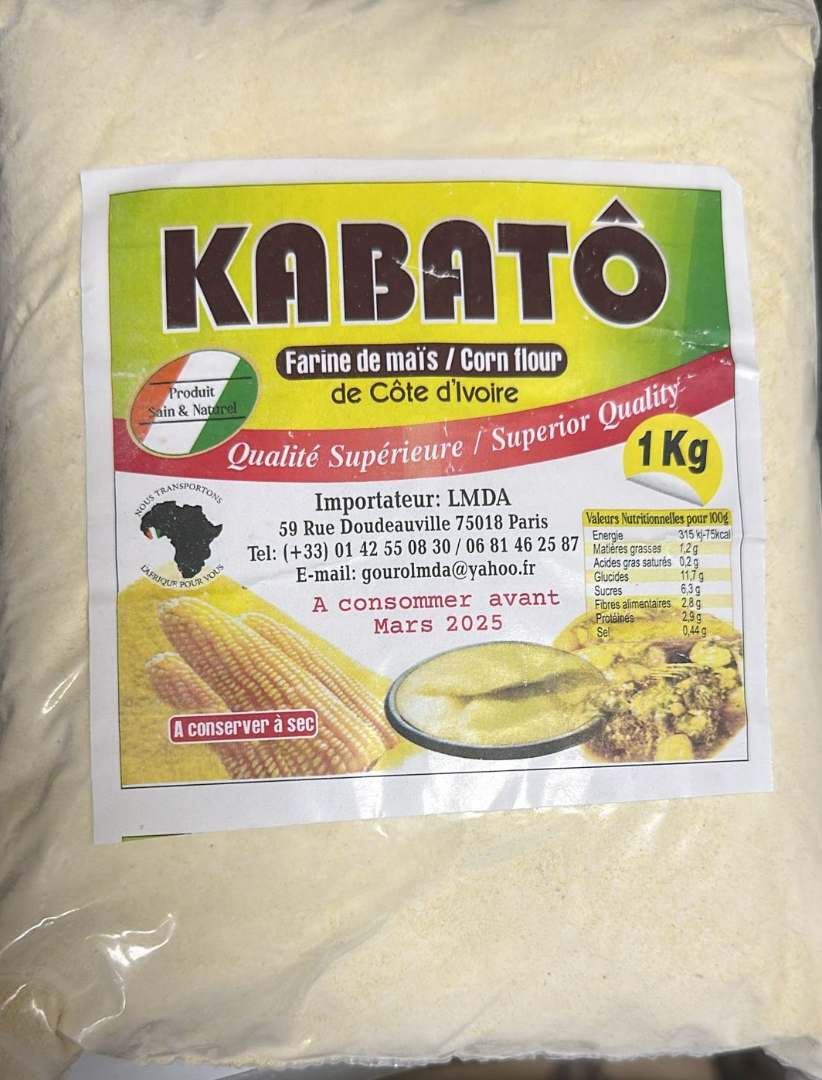
Product category
Food
Product subcategory
Cereals and bakery products
Product brand name
KABATO
Model names or references
KABATO – CORN FLOUR
Product identification
GTIN Batch Date
1102209000 1 bag 1kg Use-by date 03/31/2025
Products List
kabatophoto.pdfAttachment
Packaging
bag 1 kg
Start/end date of marketing
From 07/01/2023 to 12/29/2023
Storage temperature
Product to be stored at room temperature
Geographical sales area
Regions: Île-de-France
Distributors
-GOURO MARCH – EXOFOODS – EXOTICA – TROPICA RUNGIS
Posted in Aflatoxin, Aspergillus Toxin, food contamination, food handler, Food Hazard, Food Hygiene, Food Inspections, Food Micro Blog, Food Microbiology, Food Microbiology Blog, Food Microbiology Testing, Food Poisoning, Food Quality, food recall, Food Safety, Food Safety Alert, Food Safety Management, Food Safety Regulations, Food Testing, Food Toxin, Mold Toxin, Mould Toxin, Mycotoxin
Posted in E.coli, food contamination, food handler, Food Hazard, Food Hygiene, Food Inspections, Food Micro Blog, Food Microbiology, Food Microbiology Blog, Food Microbiology Testing, Food Pathogen, Food Quality, food recall, Food Safety, Food Safety Alert, Food Safety Management, Food Safety Regulations, Food Temperature Abuse, Food Testing, STEC, STEC E.coli, Toxigenic
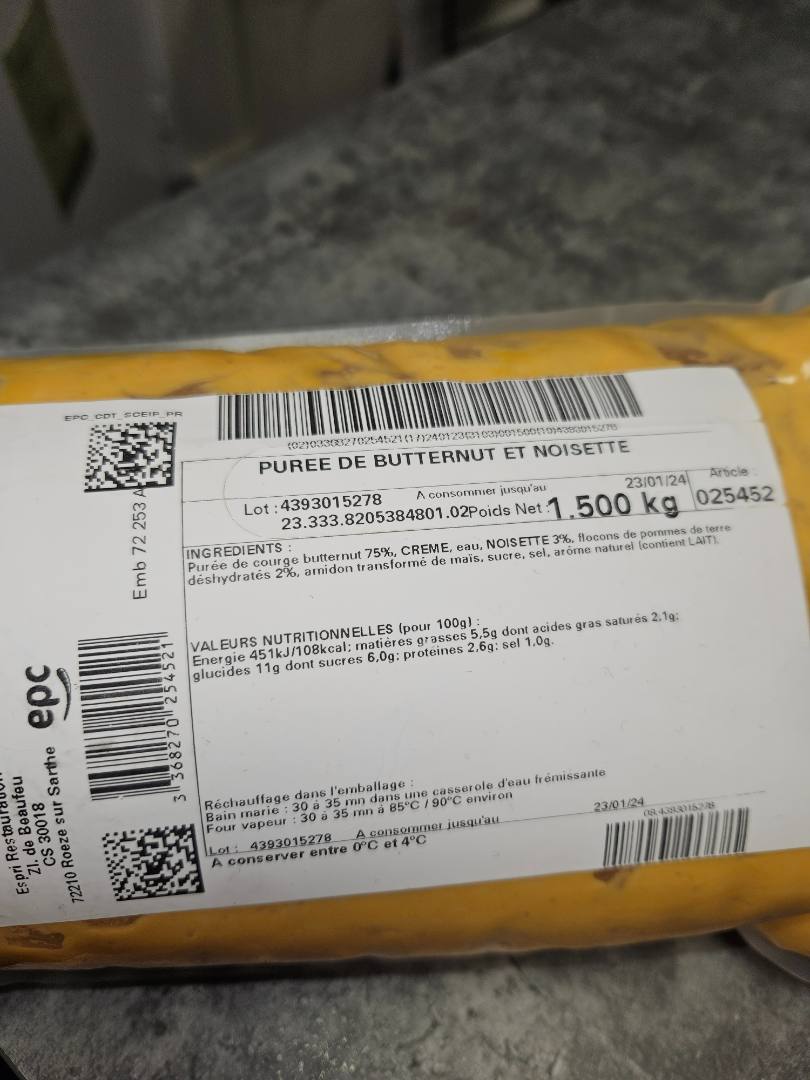
Product category
Food
Product subcategory
Soups, sauces and condiments
Product brand name
EPC
Model names or references
00025452.002 BUTTERNUT HAZELNUT PUREE 1.5KG
Product identification
GTIN Batch Date
3368270254521 Lot No. = 4393015278 with sublot 23.333.8205384801.02 This is indeed the lot ending in 02 Use-by date 01/23/2024
Products List
identification_table.pdfAttachment
Packaging
1.5kg vacuum bag
Start/end date of marketing
From 12/13/2023 to 12/27/2023
Storage temperature
Product to keep in the refrigerator
Health mark
FR72 253 002 CE
Further information
Orange butternut puree in 1.5kg vacuum bag Lot number = 4393015278 with sublot 23.333.8205384801.02 This is indeed the lot ending with 02
Geographical sales area
Whole France
Distributors
RHD
Recall from the FASFC
Product: dried fig from the Rekolte brand.
Problem: too high ochratoxin A content.
Following notification via the RASFF system (European Food and Feed rapid alert system), the FASFC withdraws from sale the “dried fig” product of the Rekolte brand and recalls it from consumers due to excessive content. high in ochratoxin A.
The FASFC asks not to consume this product and to return it to the point of sale in which it was purchased.
Product description:
Product name: dried fig
Brand: Rekolte
Minimum durability date (MBD): 03/31/2024
Batch number: 090022480/1-11-111
Weight: 250 g
 |
 |
The product was sold through different outlets.
For any further information , you can contact the AFSCA contact point for consumers: 0800/13.550 or pointdecontact@afsca.be .
Posted in Aspergillus Toxin, food contamination, food handler, Food Hazard, Food Hygiene, Food Inspections, Food Micro Blog, Food Microbiology, Food Microbiology Blog, Food Microbiology Testing, Food Pathogen, Food Poisoning, Food Quality, food recall, Food Safety, Food Safety Alert, Food Safety Management, Food Safety Regulations, Food Testing, Food Toxin, Mold Toxin, Mould Toxin, Mycotoxin, Ochratoxin, Ochratoxin A
The Spanish Agency for Food Safety and Nutrition has learned, through the Coordinated System for Rapid Information Exchange (SCIRI), of an alert notification sent by the health authorities of Catalonia regarding the possible presence of Cronobacter sakazaki , in the Nutramigen product. 1 PRO 400mg.
This information has been transferred to the contact point in Catalonia by the marketing company in Spain following the decision of the manufacturer, located in the United States, to voluntarily withdraw the product, as a precautionary measure, due to possible cross-contamination with Cronobacter sakazakii . detected in a unit from another batch tested outside of Spain.
The ZL3F6J batch has been distributed in Spain since August 2023 and so far no incident has been reported with it. The operator has already contacted its customers to proceed with the withdrawal of the affected product.
The data of the product involved are:
Available images are attached.


According to the information available, distribution has occurred in most of the national territory.
This information has been transferred to the competent authorities of the autonomous communities through the Coordinated System for Rapid Information Exchange (SCIRI) and to the Coordination Center for Health Alerts and Emergencies (CCAES), in order to verify the withdrawal of the affected products from the marketing channels and the existence of possible cases is reported.
People who have products affected by this alert in their homes are recommended to refrain from consuming them.
If you have consumed the product from the affected batch and present any symptoms compatible with Cronobacter sakazakii toxiinfection (gastrointestinal symptoms, fever, irritability, jaundice, seizures), go to a health center.
You can expand the information from the AESAN on Cronobacter sakazakii toxiinfection at the following link.
Posted in AESAN, Cronobacter sakazakii, food contamination, food handler, Food Hazard, Food Hygiene, Food Inspections, Food Micro Blog, Food Microbiology, Food Microbiology Blog, Food Microbiology Testing, Food Pathogen, Food Quality, food recall, Food Safety, Food Safety Alert, Food Safety Management, Food Safety Regulations, Food Testing

Recalled Food
Salmonella was identified in an unopened sample of “Busseto Foods Charcuterie Sampler Prosciutto, Sweet Soppressata, and Dry Coppa” collected by the Minnesota Department of Agriculture as a part of the investigation. Testing is being conducted to determine if the Salmonella in the sample is the outbreak strain.
On January 3, 2024, Fratelli Beretta USA, Inc., recalled approximately 11,097 pounds of Busseto Foods brand ready-to-eat charcuterie meat products.
Busseto Charcuterie Sampler
18-oz. plastic tray packages of “Busseto Foods Charcuterie Sampler Prosciutto, Sweet Soppressata, and Dry Coppa”
LOT Code L075330300 and “best by” date on April 27, 2024. This product is sold as a twin pack with two 9-oz. packages.
The products have the establishments numbers “EST. 7543B” inside the U.S. Department of Agriculture’s mark of inspection and “EST. #47967” on the package. See recall notice for more details.
These items were shipped to Sam’s Club distribution centers in Georgia, Illinois, Indiana, Minnesota, North Carolina, Ohio, Oklahoma, and Texas.
What You Should Do
Check your fridge for recalled products. Do not eat them. Throw them away or return them to where you bought them.
Wash surfaces and containers that may have touched the recalled product using hot soapy water or a dishwasher.
Call your healthcare provider right away if you have any of these severe Salmonella symptoms:
Diarrhea and a fever higher than 102°F
Diarrhea for more than 3 days that is not improving
Bloody diarrhea
So much vomiting that you cannot keep liquids down
Signs of dehydration, such as:
Not peeing much
Dry mouth and throat
Feeling dizzy when standing up
What Businesses Should Do
Do not sell or serve the recalled “Busseto Foods Charcuterie Sampler Prosciutto, Sweet Soppressata, and Dry Coppa.”
Wash and sanitize items and surfaces that may have come in contact with recalled products.
Posted in CDC, food contamination, food handler, Food Hazard, Food Hygiene, Food Illness, Food Inspections, Food Micro Blog, Food Microbiology, Food Microbiology Blog, Food Microbiology Testing, Food Pathogen, Food Quality, food recall, Food Safety, Food Safety Alert, Food Safety Management, Food Safety Regulations, Food Testing, Foodborne Illness, Illness, Salmonella
01/05/2024
Pizza meatloaf baked in the oven In addition, the following products are being voluntarily recalled as a precautionary measure: ham red sausage, baked meat loaf, fine ham sausage with Peppadew, ham Scherz’l, crusted roast, Kasseler saddle


Company Wolf GmbH Am Lindenhof 40 04626 Schmölln
see attached consumer information about the product recall
see attached consumer information about the product recall
Wolf GmbH is carrying out a voluntary recall for reasons of preventative consumer protection.
Posted in food contamination, food handler, Food Hazard, Food Hygiene, Food Inspections, Food Micro Blog, Food Microbiology, Food Microbiology Blog, Food Microbiology Testing, Food Pathogen, Food Quality, food recall, Food Safety, Food Safety Alert, Food Safety Management, Food Safety Regulations, Food Testing, Lebensmittelwarnung, Listeria, Listeria monocytogenes
Brand : AZIENDA AGRICOLA BIO FLORIDDIA
Name : ORGANIC CORN FLOUR
Reason for reporting : Recall due to chemical risk
Publication date : 5 January 2024
Posted in Aflatoxin, Aspergillus Toxin, food contamination, food handler, Food Hazard, Food Hygiene, Food Inspections, Food Micro Blog, Food Microbiology Blog, Food Microbiology Testing, Food Poisoning, Food Quality, food recall, Food Safety, Food Safety Alert, Food Safety Management, Food Safety Regulations, Food Testing, Food Toxin, Mold Toxin, Mould Toxin, Mycotoxin





 FoodWorld