Category Archives: Food Microbiology

RASFF Alert – Animal Feed – Salmonella – Rapeseed Expeller

RASFF

Salmonella in rapeseed expeller from Russia in Belgium, France and the Netherlands

Hong Kong – Food Safety Focus – Bacteria in Raw Meat vs Cooked Meat

CFS

Recently, bacterial contamination of meat has attracted public attention. According to the World Health Organization, contamination of food by microbiological agents is a worldwide public health concern; and most countries have documented significant increases over the past few decades in the incidence of diseases caused by microorganisms in food. In this article, we will introduce some factors that determine the growth of bacteria in food, and discuss the different food safety considerations for bacteria in raw meat and cooked meat and the measures to reduce risks of food poisoning caused by bacteria.

Factors Determining the Growth of Bacteria in Food

Bacteria grow best when intrinsic and extrinsic properties are optimal for their growth. Intrinsic properties are the properties that are inherent parts of the food, such as pH and water activity, while extrinsic properties are the properties of the environment in which the food is stored, such as temperature. Water activity is not the same as the moisture content of the food but is a measure, ranging from 0 to 1, of the availability of water in food which determines the growth and survival of bacteria. By controlling these factors (e.g. controlling the storage temperature of the food), bacterial overgrowth can be prevented.

USA – Cyclospora outbreak in Georgia prompts public health alert

Food Safety News

Officials in Georgia are investigating an outbreak of cyclospora infections in the northwest part of the state.

The Georgia Department of Public Health Northwest Health District has not released any numbers, but it is urging people with symptoms of cyclospora infection to seek medical treatment and report any confirmed infections to local public health officials.

Georgia public health officials say their investigation is ongoing and the number of cases is expected to increase.

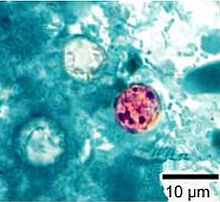
Cyclosporiasis causes an illness that can result in prolonged gastrointestinal distress, including watery diarrhea with frequent, sometimes explosive, bowel movements that can last for weeks. In severe cases, cyclospora infection can require hospitalization.220px-Cyclospora_cayetanensis_stained

Hong Kong – Bacteria and viruses that cause food poisoning

CFS

In a nutshell: Bacteria and viruses are the most common causative agents of foodborne illnesses. Bacteria grow rapidly in foods that are warm, rich in moisture or protein and low in acidity. Milk, shell eggs, poultry, fish, meat and shellfish are common foods susceptible to bacteria growth. Although viruses cannot grow in food or water, a small number of viral particles can cause sickness when consuming the contaminated food.

Information on some of the most common bacteria and viruses that cause foodborne illnesses is provided below:

USA – FDA – Core Outbreak Table – Investigations of Foodborne Illness Outbreaks

FDA

What’s New

Date
Posted
Ref Pathogen
or
Cause of
Illness
Product(s)
Linked to
Illnesses

(if any)
Total
Case
Count

Status
4/26/2023 1152 Not Yet Identified Morel Mushroom
(suspect)
41 Active
3/29/2023 1141 Salmonella Infantis Raw Flour See
Outbreak
Advisory
Active
3/1/2023 1143 Hepatitis A Virus Frozen Organic
Strawberries
See
Outbreak
Advisory
Active
2/15/2023 1123 Listeria
monocytogenes
Not Yet
Identified
See
CDC
Investigation
Notice
Active

Norway tests flour for STEC; issues warning about Prime beverages

Food Safety News

Norwegian surveillance has found a low level of flour samples positive for Shiga toxin-producing E. coli (STEC).

The Norwegian Food Safety Authority (Mattilsynet) commissioned a survey of STEC in wheat flour to gather data on the problem.

A total of 151 samples of flour were collected from retailers in 2021 and analyzed in 2022. Enriched samples were examined for the presence of selected genetic markers. Attempts to isolate STEC were carried out from samples that were positive for Shiga toxin (stx) 1 and/or stx2. Isolates identified as STEC were further characterized using whole genome sequencing.

Israel – Pasta Biga Ltd. calls for the return of the product: artichoke spread – Listeria monocytogenes

GovIL

Due to concern about the presence of Listeria bacteria in the raw material and taking extra care and responsibility towards the company’s customers, the company is carrying out an initiated return of the product.

Research – Six E. coli infections linked to fermented raw milk

Food Safety News

Five people are sick in France, two seriously, and one in Belgium after drinking a brand of raw fermented milk.

In France, four children and one adult have been infected by Shiga toxin-producing E. coli (STEC) O26:H11. They fell ill between the end of March and the beginning of April this year.

Santé publique France has been investigating two cases of Hemolytic Uremic Syndrome (HUS) in the Hauts-de-France and Île-de France regions. The latter was in the context of a family outbreak. The suspected food was fermented raw milk. HUS is a severe complication associated with E. coli infections that causes kidney failure.

“The sequencing of the strains isolated within these outbreaks confirmed the same genomic profile. Food investigations made it possible to identify, for the case in Hauts-de-France, the place of purchase and to sample milk on sale at the time of the inspections. It was fermented raw milk made in Belgium,” agency officials told Food Safety News.

New Zealand – North Island warning Extended – PSP

MPI

North Island warning

Reason for alert Paralytic Shellfish Poisoning (PSP)

Date warning issued Extended 18 May 2023

10 May 2023

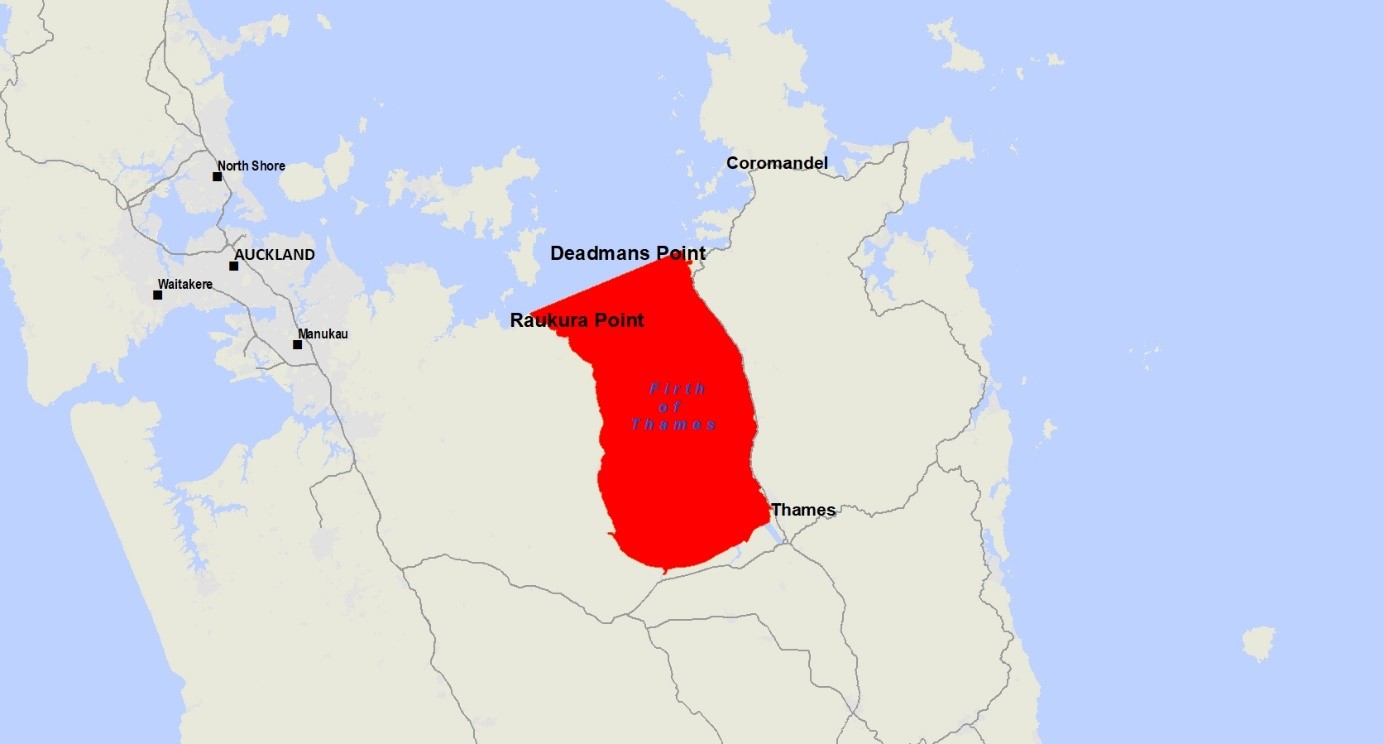
Affected area Firth of Thames.
Shellfish affected Mussels, oysters, tuatua, pipi, toheroa, cockles, scallops, catseyes, kina (sea urchin) and all other bivalve shellfish.

Note, cooking shellfish does not remove the toxin.

Pāua, crab and crayfish may still be eaten if the gut has been completely removed prior to cooking, as toxins accumulate in the gut. If the gut is not removed its contents could contaminate the meat during the cooking process.

Symptoms Symptoms typically appear between 10 minutes and 3 hours after ingestion and may include:

  • numbness and a tingling (prickly feeling) around the mouth, face, and extremities (hands and feet)
  • difficulty swallowing or breathing
  • dizziness
  • headache
  • nausea
  • vomiting
  • diarrhoea
  • paralysis and respiratory failure and in severe cases, death.
Other information Paralytic shellfish toxins have been detected in shellfish from the Kaipara Harbour at levels over the safe limit of 0.8mg/kg set by MPI. Ongoing testing will continue and any changes will be communicated accordingly.

Map of the affected area

Map of affected area from Raukura Point across to Deadmans Point.

Public warnings about toxic shellfish

We test shellfish and seawater for toxic algae every week from popular shellfish gathering areas around New Zealand. If the shellfish are not safe to eat, we issue public health warnings and put up signs at affected beaches.

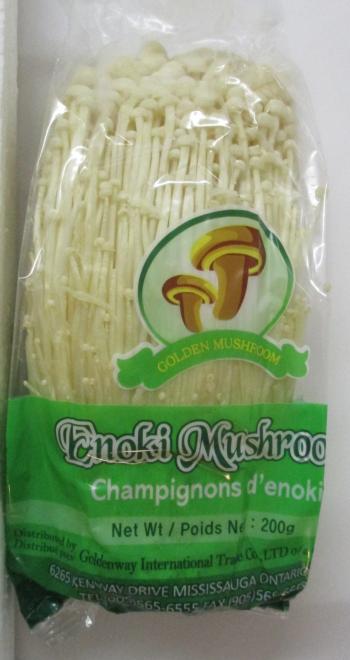
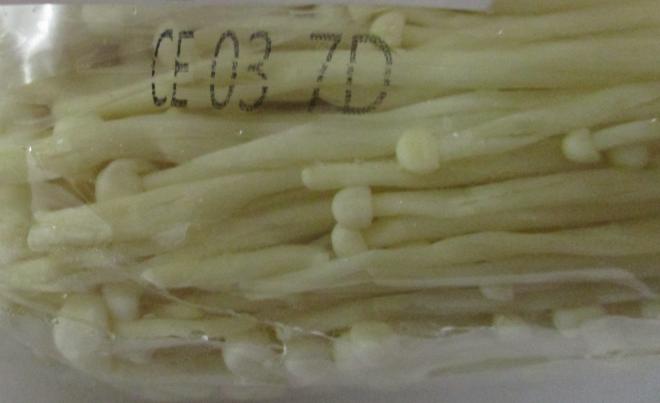
Golden Mushroom brand Enoki Mushroom recalled due to Listeria monocytogenes

CFIA

Summary

Product
Enoki Mushroom
Issue
Food – Microbial Contamination – Listeria
What to do

Do not consume, use, sell, serve, or distribute recalled products

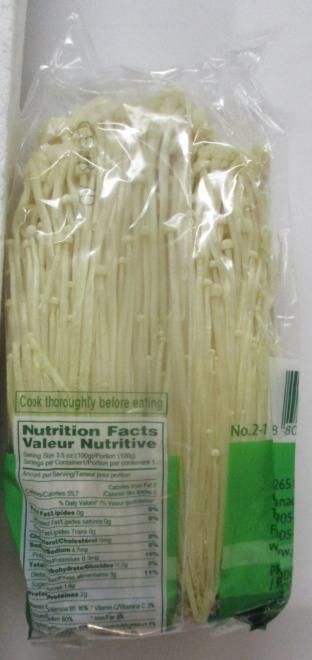
Affected products

Issue

The affected product is being recalled from the marketplace due to possible Listeria monocytogenes contamination.

The recalled product has been sold in Ontario and may have been distributed in other provinces and territories.

What you should do

  • If you think you became sick from consuming a recalled product, contact your healthcare provider
  • Check to see if you have recalled products
  • Do not consume, serve, use, sell, or distribute recalled products
  • Recalled products should be thrown out or returned to the location where they were purchased

Food contaminated with Listeria monocytogenes may not look or smell spoiled but can still make you sick. Symptoms can include vomiting, nausea, persistent fever, muscle aches, severe headache and neck stiffness. Pregnant women, the elderly and people with weakened immune systems are particularly at risk. Although infected pregnant women may experience only mild, flu-like symptoms, the infection can lead to premature delivery, infection of the newborn or even stillbirth. In severe cases of illness, people may die.