Category Archives: Food Microbiology Research

Why Listeria is so dangerous during Pregnancy

Food Poison Journal

Listeria, specifically the bacterium Listeria monocytogenes, poses a significant risk to pregnant women due to several factors: Read more at the link above.

During pregnancy, a woman’s immune system undergoes changes to support the fetus, making her more susceptible to infections like listeriosis. This altered immune response means that even a small amount of bacteria that might not impact others can have serious effects on a pregnant woman.

What is Liverwurst and why is it prone to Listeria?

Food Poison Journal

Liverwurst is a type of sausage made from liver and other meats, along with spices. It’s popular in various cuisines, particularly in German-speaking countries. Liverwurst can be spreadable or sliceable, depending on its formulation.

Liverwurst, along with other ready-to-eat deli meats and pâtés, is prone to contamination by Listeria monocytogenes, the bacterium that causes listeriosis, for several reasons: Read more at the link above.

Research – Efficacy of an Edible Coating with Carvacrol and Citral in Frozen Strawberries and Blueberries to Control Foodborne Pathogens

MDPI

Adding essential oils in an edible coating could be an alternative for the food industry to control foodborne pathogens. In 2014, EFSA published a report highlighting the risk associated with Salmonella spp. and Norovirus in fresh and frozen berries. This study aimed to evaluate the efficacy of an edible coating (RP-7) with carvacrol and citral on reducing the population of Salmonella entericaEscherichia coli O157:H7, Listeria monocytogenes, and murine Norovirus (MNV-1) in frozen strawberries and blueberries. Before evaluating the efficacy, the best method for applying the coating on fruit was studied. The immersion method was selected, with an optimal drying time of 45 min. After this, the berries were frozen and stored for one, two, three, four, and eight weeks at −18 °C. In strawberries, all bacteria were reduced to below 0.7 log cfu/strawberry in the eighth week, and the MNV-1 infectivity showed a reduction of nearly 2 logarithmic units. In blueberries, S. enterica and E. coli O157:H7 were reduced to 0.8 log cfu/blueberries within a week, and MNV-1 achieved a reduction of 0.8 logarithmic units at the end of the assay. The application of RP-7 affected the studied microorganisms in frozen strawberries and blueberries.

Why is E. coli O157:H7 and HUS a parent’s worst nightmare

Food Poison Journal

Escherichia coli O157:H7 (often referred to simply as E. coli O157:H7) and hemolytic uremic syndrome (HUS) can be particularly alarming for parents due to the severity and potential outcomes of infections associated with them. Here’s why they are considered a serious concern: Read more at the link above

Research – Ireland shares the latest pathogen statistics

Food Safety News

Ireland has reported the number of infections caused by major pathogens from April to June.

Data comes from a report published by the Health Protection Surveillance Centre (HPSC) that includes foodborne illnesses in the second quarter of 2024.

In the first quarter of 2024, there were 733 Campylobacter cases, five Listeria infections, 67 Salmonella cases, and 116 Shiga toxin-producing E. coli (STEC) infections.

Research – FDA Releases Investigation Findings Following Summer 2020 Outbreak Linked to Peaches

FDA

The U.S. Food and Drug Administration (FDA) has released a report on its investigation of the Salmonella Enteritidis outbreak in Peaches. The FDA and multiple state and federal partners investigated an outbreak of Salmonella Enteritidis infections that were linked to the consumption of peaches during the summer of 2020. In total, the outbreak caused 101 reported illnesses across 17 states, including 28 hospitalizations. This appears to be the first time a Salmonella outbreak has been linked to peaches.

The FDA conducted this investigation in conjunction with the U.S. Centers for Disease Control and Prevention (CDC), state partners, and Canadian public health officials between August and October 2020. The epidemiological and traceback investigation determined that peaches packed or supplied by a large grower/producer were the likely source of the outbreak. The traceback evidence informed and helped to prioritize two subsequent investigations of peach packing/holding operations and peach orchards in Cutler, Kerman, and Sanger, California.  The large grower/producer cooperated with FDA throughout the investigation and is continuing to engage with FDA on the agency’s findings and recommendations.

Investigators conducted over 700 tests on environmental, peach, and peach tree leaf samples.  While no test results matched the 2020 outbreak strain, four tests conducted on peach and peach tree leaf samples collected from an orchard adjacent to a poultry operation yielded positives for Salmonella Alachua which were further linked via whole genome sequencing (WGS) to 2019 and 2020 chicken isolates. This finding prompted a follow-up investigation more closely focused on growing areas and a voluntary recall by the firm, preventing the tested, contaminated product from reaching the market. During the follow-up investigation, two tests of peach tree leaf samples collected from orchards adjacent to a cattle feedlot yielded positives for Salmonella Montevideo that were genetically similar via WGS to 2018-2020 beef and cattle isolates.

While investigators did not find the outbreak strain, and the strains of Salmonella found during this outbreak were not linked to any clinical illnesses, the investigational findings reinforce the FDA’s concern about the potential impact that adjacent land uses can have on the safety of produce.

The FDA views the implementation of appropriate science- and risk-based measures to reduce the potential for contamination of peaches and other produce as the most effective and practicable means to improve the safety of fresh produce, especially when measures are tailored to the specific practices and conditions on individual farms. The FDA encourages all growers to be cognizant of and assess risks that may be posed by adjacent and nearby land uses, including for the potential impact of dust exposure. The FDA also recognizes the interconnection between people, animals, plants, and their shared environment when it comes to public health outcomes, and we encourage collaboration among various groups in the broader agricultural community (e.g., produce growers, those managing animal operations, state and federal government agencies, and academia) to address this issue.

Additional Information

Food Poisoning Concerns Following Natural Disasters: A Look at Hurricane Helene’s Potential Impact on Florida, Georgia, and North Carolina

Food Poisoning News

Natural disasters, such as hurricanes, can create significant public health challenges, particularly regarding food and water safety. When Hurricane Idalia hit Florida, Georgia, and North Carolina in late September 2023, it not only brought destruction through powerful winds and floods but also triggered concerns about foodborne illnesses. Now survivors are contending with the aftermath of Helene – having survived the storm, they now need to focus on preventing further harm to their families and themselves.

Food poisoning is a common aftermath of hurricanes due to compromised food storage, contamination of food and water supplies, and lack of sanitation in areas affected by widespread power outages and flooding.

Research – Climate Change Is Making Europe’s Shellfish Dangerous

Medscape

Climate change is putting Europeans at an increased risk of contracting Vibrio-related infections, according to an assessment recently released by the European Food Safety Authority (EFSA).

Warming sea temperatures are expecting to increase the prevalence of the bacteria in seafood, especially in low-salinity or brackish waters, with a rise in antimicrobial resistance among the species creating additional cause for concern.

Vibrio bacteria, traditionally a problem in tropical and subtropical regions, can cause a range of illnesses, from mild gastroenteritis and ear infections to life-threatening conditions like sepsis.

Experts in Europe are calling for proper surveillance, funded research, and public awareness campaigns.

France – SMOKED SALMON ATLANTIC RED LABEL 2 SLICES – Listeria monocytogenes

Gov France

Product Category
Food
Product subcategory
Fishery and aquaculture products
Product brand name
THE DELIGHTS OF BEAUTIFUL FRANCE
Model names or references
SMOKED SALMON ATLANTIC LABEL ROUGE 2 SLICES 80 G LES DELICES DE BELLE FRANCE
Product identification
GTIN Batch Date
3258563490111 38882X239 Expiry date 09/16/2024
Packaging
80 g – 2 slices
Start/End of marketing date
From 08/27/2024 to 09/16/2024
Storage temperature
Product to be kept in the refrigerator
Geographic area of ​​sale
Whole France
Distributors
LADYBUG – COCCIMARKET – RAPIDE MARKET

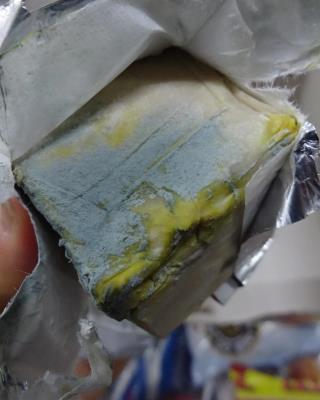
Czech Republic – FRESH BAKER’S YEAST -Visible Mould/Mold

Potravinynapranyri

Illustrative photo #1

Place of inspection:
Turnov ( Nádražní 1437, 51101 Turnov )
ID: 28169387
Food group: Distillery products Yeast

FRESH BAKER’S YEAST
Category: Dangerous foods
Invalid parameter:

fungi visible to the eye

There were mold colonies on the surface of the food visible to the naked eye. Food is not considered safe if it shows signs of spoilage.

The food had an expired use-by date.

Expiration date: 09.07.24
Packaging: other
Date of sample collection: 22/08/2024
Reference number: 24-000429-SZPI-CZ
The sample was detected by the official control of the State Agricultural and Food Inspection.