Category Archives: Food Microbiology Research

France – Meat Product – Constable – Listeria monocytogenes

Gov France

Product category
Food
Product subcategory
Meats
Product brand name
Gourmet farm
Model names or references
Constable
Product identification
Batch Date
11/30/2023 (lot 334) Use-by date 12/14/2023
Packaging
Bulk per piece
Start/end date of marketing
From 06/12/2023 to 09/12/2023
Storage temperature
Product to keep in the refrigerator
Further information
Raw sausage to consume as is
Geographical sales area
Departments: BAS-RHIN (67)
Distributors
At the counter of the Ferme Gourmande store located at Rond-Point des Trois Croix, 67670 WITTERSHEIM
List of points of sale
Places of marketing for Gendarmes Lot 334.pdf

Research – Lactic acid bacteria and spoilage bacteria: Their interactions in Escherichia coli O157:H7 biofilms on food contact surfaces and implications for beef contamination

Wiley Online

Abstract

This research explores the interaction between Shiga toxin-producing Escherichia coli (STEC) O157:H7 and bacteria species commonly found in beef processing environments, specifically CarnobacteriumLactobacillusComamonasRaoultella, and Pseudomonas. The study investigated how various environmental conditions impact the formation of biofilms and the ability of O157:H7 to transfer from multispecies biofilm onto beef surfaces. For this purpose, a mixture of lactic acid bacteria (LAB), spoilage bacteria (106 CFU/mL), and E. coli O157 (103 CFU/mL) were combined as follows: LAB (T1)Carnobacterium piscicola + Lactobacillus bulgaricus + O157:H7, an spoilage bacteria (T2)Comamonas koreensis + Raoultella terrigena + O157:H7, an spoilage bacteria (T3)Pseudomonas aeruginosa + C. koreensis strain + O157:H7 and only O157:H7 as control (T4). Multispecies biofilms were developed on thermoplastic polyurethane (TPU) and stainless steel (SS) coupons at 10 and 25°C for 6 days, washed and stored for 6, 30, and 60 days at wet (60%–90% RH) and dry (20%–50%, RH) conditions. To evaluate O157:H7 transfer, beef cubes (3 × 3 × 1 cm) were placed on the coupons, followed by a 50-g weight (7.35 kPa). The experiment was repeated three times in triplicate for each strain combination. Results demonstrate that biofilms formed at 10°C were generally weaker (less biomass) than those at 25°C. Regardless of temperature, more viable O157:H7 cells were transferred to beef from moist biofilms on TPU surfaces. At 25°C, T3 biofilm exhibited the lowest O157:H7 transfer to beef by 1.44 log10 CFU/cm2 (p < 0.01). At 10°C, none of the multispecies biofilm (T1–T3) affected the number of O157:H7 transfers to beef (p > 0.05). Notably, O157:H7 was not detected on food contact surfaces with 30 and 60-day-old dry biofilms (T1–T4). Through enrichment, E. coli O157:H7 was recovered from multispecies biofilms T1, T2, and T3. Findings from this study imply that multispecies biofilms contribute to the persistence of O157:H7 under dry conditions, regardless of temperature. These results underscore the intricate influence of multiple environmental factors—including surface type, biofilm age, humidity, temperature, and the presence of other bacterial species—on the risk of beef contamination facilitated by biofilms.

Research – Impact of High-Pressure Processing (HPP) on Listeria monocytogenes—An Overview of Challenges and Responses

MDPI

Abstract

High-pressure processing (HPP) is currently one of the leading methods of non-thermal food preservation as an alternative to traditional methods based on thermal processing. The application of HPP involves the simultaneous action of a combination of several factors—pressure values (100–600 MPa), time of operation (a few–several minutes), and temperature of operation (room temperature or lower)—using a liquid medium responsible for pressure transfer. The combination of these three factors results in the inactivation of microorganisms, thus extending food shelf life and improving the food’s microbiological safety. HPP can provide high value for the sensory and quality characteristics of products and reduce the population of pathogenic microorganisms such as L. monocytogenes to the required safety level. Nevertheless, the technology is not without impact on the cellular response of pathogens. L. monocytogenes cells surviving the HPP treatment may have multiple damages, which may impact the activation of mechanisms involved in the repair of cellular damage, increased virulence, or antibiotic resistance, as well as an increased expression of genes encoding pathogenicity and antibiotic resistance. This review has demonstrated that HPP is a technology that can reduce L. monocytogenes cells to below detection levels, thus indicating the potential to provide the desired level of safety. However, problems have been noted related to the possibilities of cell recovery during storage and changes in virulence and antibiotic resistance due to the activation of gene expression mechanisms, and the lack of a sufficient number of studies explaining these changes has been reported.

Research – Association between the Presence of Resistance Genes and Sanitiser Resistance of Listeria monocytogenes Isolates Recovered from Different Food-Processing Facilities

MDPI

Abstract

Sanitisers are widely used in cleaning food-processing facilities, but their continued use may cause an increased resistance of pathogenic bacteria. Several genes have been attributed to the increased sanitiser resistance ability of L. monocytogenes. This study determined the presence of sanitiser resistance genes in Irish-sourced L. monocytogenes isolates and explored the association with phenotypic sanitiser resistance. The presence of three genes associated with sanitiser resistance and a three-gene cassette (mdrLqacHemrEbcrABC) were determined in 150 L. monocytogenes isolates collected from Irish food-processing facilities. A total of 23 isolates contained bcrABC, 42 isolates contained qacH, one isolate contained emrE, and all isolates contained mdrL. Additionally, 47 isolates were selected and grouped according to the number and type of resistance genes, and the minimal inhibitory concentration (MIC) of these isolates for benzalkonium chloride (BAC) was determined experimentally using the broth microdilution method. The BAC resistance of the strain carrying the bcrABC gene cassette was significantly higher than that of strains lacking the gene cassette, and the BAC resistance of the strain carrying the qacH gene was significantly higher than that of strains lacking the qacH gene (p < 0.05). Isolates harbouring both the qacH and bcrABC genes did not show higher BAC resistance. With respect to environmental factors, there was no significant difference in MIC values for isolates recovered from different processing facilities. In summary, this investigation highlights the prevalence of specific sanitiser resistance genes in L. monocytogenes isolates from Irish food-processing settings. While certain genes correlated with increased resistance to benzalkonium chloride, the combination of multiple genes did not necessarily amplify this resistance.

Research – Predictive Mapping of Antimicrobial Resistance for Escherichia coli, Salmonella, and Campylobacter in Food-Producing Animals, Europe, 2000–2021

cdc

Abstract

In Europe, systematic national surveillance of antimicrobial resistance (AMR) in food-producing animals has been conducted for decades; however, geographic distribution within countries remains unknown. To determine distribution within Europe, we combined 33,802 country-level AMR prevalence estimates with 2,849 local AMR prevalence estimates from 209 point prevalence surveys across 31 countries. We produced geospatial models of AMR prevalence in Escherichia coli, nontyphoidal Salmonella, and Campylobacter for cattle, pigs, and poultry. We summarized AMR trends by using the proportion of tested antimicrobial compounds with resistance >50% and generated predictive maps at 10 × 10 km resolution that disaggregated AMR prevalence. For E. coli, predicted prevalence rates were highest in southern Romania and southern/eastern Italy; for Salmonella, southern Hungary and central Poland; and for Campylobacter, throughout Spain. Our findings suggest that AMR distribution is heterogeneous within countries and that surveillance data from below the country level could help with prioritizing resources to reduce AMR.

RASFF Alerts – Salmonella – Polish Poultry Products – Sesame Seeds – Fish Meal – Organic Dried Goji Berries – Chicken Thigh Satay

RASFF

Salmonella spp in sesame seeds from Nigeria in Greece

RASFF

Salmonella detected in a batch of fish meal from Spain in France

RASFF

Salmonella spp. in organic dried goji berries from China, via Austria in  Austria, Belgium, Croatia, France, Germany, Hungary, Italy, Luxembourg, Romania, Slovenia, Switzerland.

RASFF

Salmonella Enteritidis in chilled chicken breast from Poland in Slovakia

RASFF

Salmonella spp in sesame seeds from Nigeria in Greece

RASFF

Salmonella in Chicken thigh satay from Romania in Poland and the Netherlands

Information – Shiga toxin-producing E.coli (STEC)

HSC

Shiga toxin-producing E.coli (STEC) are a group of bacteria which cause illness in humans. Symptoms can include diarrhoea, abdominal pain and fever.  In Northern Ireland, the most common serotypes are O157 and O26. In a small number of people STEC can cause a serious illness called Haemolytic Uraemic Syndrome (HUS). This condition affects the blood and blood vessels and can result in kidney failure. The risk of HUS is highest in children aged five years and under.

Sometimes STEC is referred to a Verocytotoxin-producing E Coli (VTEC). These are different names for the same group of bacteria.

STEC is very infectious and can be easily passed to others. People can become infected by:

  • eating infected/contaminated food that has not been cooked all the way through, particularly minced meat products such as burgers and sausages, or salad items that have not been washed properly;
  • handling/preparation of food contaminated with soil for example, potatoes and leeks where the soil has not been washed away;
  • drinking infected/contaminated water such as from streams, rivers and lakes etc. which may contain animal poo;
  • close contact with animals, particularly cattle, sheep and goats. Animal saliva may be infected because of the way animals clean themselves;
  • direct contact with animal poo on the animal itself, in their pen or on the floor;
  • contact with an infected person, particularly if you don’t wash your hands thoroughly after using the toilet or before handling food.

UK – STEC O145 E. coli tainted cheese sickens 30 in the UK

Food Poison Journal

There have been at least 30 confirmed cases of this specific outbreak strain of STEC in the UK.

The Food Standards Agency (FSA), Food Standards Scotland, (FSS) and UK Health Security Agency (UKHSA) are warning the public not to eat four Mrs. Kirkham’s Lancashire Cheese which has been recalled because they may be contaminated with a specific type of E. coli bacteria called Shiga toxin producing E. coli, also known as STEC or VTEC or E. coli O145.

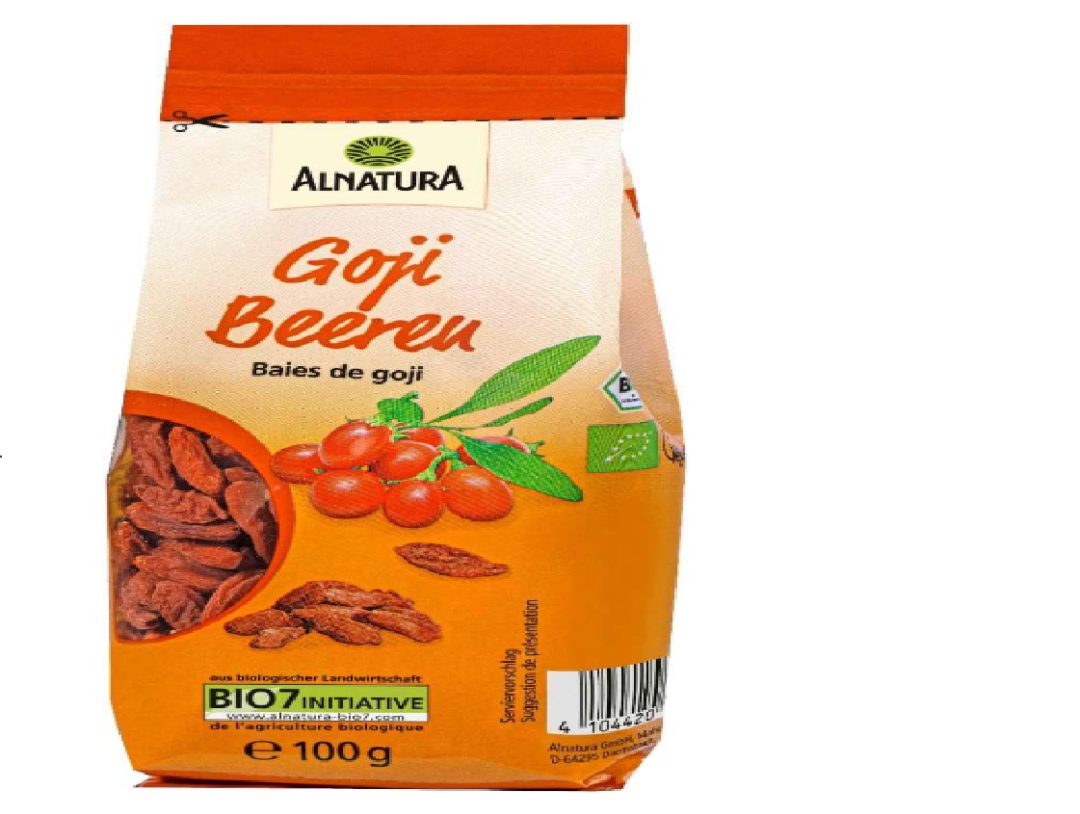
France – ORGANIC Goji Berries (dried)-Salmonella

Gov France

Product category
Food
Product subcategory
Nuts and seeds
Product brand name
Alnatura
Model names or references
Alnatura brand 100g bag
Product identification
Batch
see traceability in attachment
Products List
_FRxlsx.pdfAttachment
Packaging
100g bag
Start/end date of marketing
From 08/08/2023 to 12/28/2023
Storage temperature
Product to be stored at room temperature
Geographical sales area
Whole France
Distributors
see list in attachment
List of points of sale
_FRxlsx.pdf

USA -Canada – As many as 17,941 with Salmonella linked to Cantaloupe in U.S. and Canada

Marler Blog

Canada:164 lab confirmed cases with 61 hospitalized with 7 deaths. (as of December 22)

United States: 302 lab confirmed cases with 129 hospitalized with 4 deaths. (as of December 14)

According to health officials, only a small proportion of all Salmonella infections are diagnosed and reported to health departments. It is estimated that for every reported case, there are approximately 38.6 undiagnosed infections.[1] The CDC estimates that 1.4 million cases, 15,000 hospitalizations, and 400 deaths are caused by Salmonella infections in the U.S. every year.[2]