Category Archives: Food Microbiology Research

Research – Microbiological quality of raw drinking milk and unpasteurised dairy products: results from England 2013–2019

cambridge.org

The aim of this study was to review microbiology results from testing >2500 raw drinking milk and dairy products made with unpasteurised milk examined in England between 2013 and 2019. Samples were collected as part of incidents of contamination, investigation of infections or as part of routine monitoring and were tested using standard methods for a range of both pathogens and hygiene indicators. Results from testing samples of raw cow’s milk or cheese made from unpasteurised milk for routine monitoring purposes were overall of better microbiological quality than those collected during incident or investigations of infections. Results from routine monitoring were satisfactory for 62% of milks, 82% of cream, 100% of ice-cream, 51% of butter, 63% of kefir and 79% of cheeses, with 5% of all samples being considered potentially hazardous. Analysis of data from cheese demonstrated a significant association between increasing levels of indicator Escherichia coli with elevated levels of coagulase positive staphylococci and decreased probability of isolation of Shiga toxin-producing E. coli. These data highlight the public health risk associated with these products and provide further justification for controls applied to raw drinking milk and dairy products made with unpasteurised milk.
Research – Viability of Listeria monocytogenes and Salmonella Typhimurium after isochoric freezing

Wiley Online

Isochoric freezing, different from isobaric (conventional) freezing, allows for storage below freezing temperatures without significant damage from ice formation. While several types of tissues have been successfully stored in sub‐zero isochoric conditions, it is unknown how isochoric freezing affects pathogenic microorganisms. Thus, the objective of this study was to investigate the survival of Salmonella Typhimurium and Listeria monocytogenes at below freezing storage (<0°C) in isochoric conditions. Tested conditions included storage at −4, −7, and −15°C for 24 hr and at −15°C for 1, 2, 3, 6, 12, and 24 hr. A comparison of bacterial survival during isobaric freezing was included with every trial. Additionally, bacterial cells were examined for morphological damage using transmission electron and field‐emission scanning electron microscopes. Isochoric freezing at −15°C for 24 hr reduced both species of bacteria down to unrecoverable levels and maximum efficacy achieved after the 6 hr timepoint for L. monocytogenes and the 12 hr timepoint for S. Typhimurium. When viewed using electron microscopy, S. Typhimurium cells were noticeably disfigured with regions of cytosol separated from the cell wall. The results of this study demonstrate that isochoric freezing is capable of substantial levels of pathogen reduction. Unlike conventional nonthermal interventions, isochoric freezing does not require additional devices such as elevated pressure machines or pulsed electric fields and can be achieved with simple, inexpensive, rigid closed volume containers such as household freezers or commercial cold storage facilities.

Research – Predicting Cholera Risk in Yemen

Earth Observatory

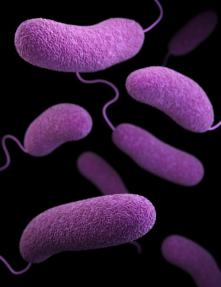
CDC Vibrio

Image CDC

This story is adapted from our recent feature, Of Mosquitoes and Models: Tracking Disease by Satellite.

In 2017, Yemen experienced one of its worst cholera outbreaks on record. Following heavy rains, flooding, and mass movement of the population due to civil unrest, more than one million people were suspected of contracting cholera and at least 2,000 died. A few scientists saw it coming, and they are now working to make sure people are prepared for future cholera outbreaks in Yemen and around the world.

Cholera is a waterborne bacterial infection that can spread quickly through a population. The disease is primarily contracted by consuming water or food contaminated with the cholera bacteria, Vibrio cholerae. It causes uncontrollable diarrhea that, if left untreated, can result in dehydration or death.

A team of NASA-funded researchers has been using satellite and ground-based data to forecast the risk of cholera in Yemen and other countries. The map above shows the forecasted risk of cholera in Yemen from August 10 to September 6, 2020. It was created with the Cholera Prediction Modeling System, which incorporates NASA precipitation data, air temperature data from NASA’s MERRA-2 reanalysis product, and population data. The number of cholera cases could increase in coming weeks, influenced by heavy rains that usually fall in August, though researchers predict the outbreaks should be limited to a few hotspots unless there is a large population displacement.

Research – Escape artists: How vibrio bacteria break out of cells

Science Daily

Food Illness

Image CDC

As soon as the foodborne pathogen Vibrio parahaemolyticus infects a human intestinal cell, the bacteria are already planning their escape. After all, once it is in and multiplies, the bacterium must find a way out to infect new cells.

Now, UT Southwestern scientists have discovered the surprising route that V. parahaemolyticus takes during this exit — or egress — from cells. The bacteria, they report in the journal eLife, gradually modify cholesterol found in a cell’s plasma membrane, eventually weakening the membrane enough so that it can break through.

“The more we understand how bacteria are manipulating host cells at a molecular level, the more we understand how they cause disease,” says study leader Kim Orth, Ph.D., professor of molecular biology and biochemistry at UTSW and a Howard Hughes Medical Institute investigator. “Bacteria have many different mechanisms to escape, but this stood out because it’s an especially novel one.”


Research – Modeling the interactions among Salmonella enteritidis, Pseudomonas aeruginosa , and Lactobacillus plantarum

Wiley Online

This paper was to investigate the interactions among Salmonella enteritidis, Lactobacillus plantarum , and Pseudomonas aeruginosa at four combinations of initial concentration. Firstly, fitting the growth curves to obtain growth parameters—lag time (λ ), maximal growth rate ( μ max), initial concentration (0), and maximum population density (max) for each strain in monocultures or cocultures. Then interactions among S. enteritidis, P. aeruginosa , and L. plantarum in cocultures at four combinations of initial concentration were quantified by the Lotka–Volterra model with six interaction coefficients. Results indicated that there were no interactions between S. enteritidis and P. aeruginosa S. enteritidis and P. aeruginosa had an inhibitory effect on L. plantarum , but L. plantarum had no effects on another two. Besides, the higher the initial concentrations of S. enteritidis or P. aeruginosa , the lower the growth potential of L. plantarum . This study provided more accurate predictions for the growth of bacteria under actual food contamination conditions.

Research – Comparative study of microbiological transfer from four materials used in direct contact with apples

Science Direct

Several materials such as plastic, wood, cardboard or stainless steel are used as working surfaces or packaging in direct contact with foodstuffs. In food industries, the hygienic surface status is one of the criteria to product conform packaging as described in the European regulation ECR 1935/2004. Today in European Union, it exists one harmonized regulation specific for Food Contact material made of plastic called EU N°10/2011 (Anonymous 2011a). This regulation specifies that materials intended for safe foodstuff contact must not modify food characteristics in terms of chemical, microbiological and sensorial properties.

This study aims to compare the survival and transfer of Penicillium expansum conidia and Escherichia coli cells from several materials to apples. Poplar, cardboards, newly manufactured plastic and reusable plastic specimens were artificially inoculated with both microorganisms, subsequently put in contact with apples and stored under realistic storage conditions. After incubation for up to 1 week, apples and specimens were analysed to assess the survival of the microorganisms and their transfer from materials to apples.

While P. expansum survived and did not grow on any of the materials, E. coli mortality was observed after 1 h on wood and cardboard and after 1 week on both plastics. The proportion of microorganisms transferred was different according to the considered material. This transfer was lower than 1% for wood.

Research – Incidence of aflatoxins, ochratoxin A, zearalenone, and deoxynivalenol in food commodities from Turkey

Wiley Online

AspergillusPenicilliumFusarium, and Alternaria species which produce toxic metabolites, create a big problem in terms of the production of reliable human food and animal feeds. This study was conducted to determine the mycotoxin contents of foodstuff collected uniformly in each year of 2017, 2018, and 2019 in Şebinkarahisar, Turkey by enzyme‐linked immunosorbent assay. The highest total aflatoxin, and aflatoxin B1 were determined in red pepper in 2018 with 6.47 ± 0.07 and 4.58 ± 0.01 μg kg−1, respectively while the highest ochratoxin amount was obtained again in the red paper in 2019 with 7.97 ± 0.57 μg kg−1. Contrarily, the highest incidence of zearalenone and deoxynivalenol was determined in wheat and corn flour with 12.49 ± 0.3 and 397.6 ± 7.34 μg kg−1, respectively. Weather changes have also been found to affect the incidence of mycotoxin. But, determined mycotoxin values do not pose a risk according to the Turkish Food Codex Contaminants Regulation.

Research -Determination of Enterococcus faecium thermal reduction in normal and high oleic peanut products

Wiley Online

During processing, peanut butter can become contaminated with pathogenic bacteria (e.g., Salmonella ). The introduction of an additional heat treatment step after roasting can help inactivate these microorganisms. In this study, trials were conducted to determine Enterococcus faecium (Salmonella surrogate) reduction rates during the roasting of high oleic (HO) peanuts and heat‐treatment of normal oleic (NO) and HO peanut butters. HO peanuts were inoculated with E. faecium and roasted in a convection oven at 190°C. There was a 2 and 6 log CFU/g reduction at 300 and 480 s, respectively. ‐values for HO peanut butter at 110, 120, and 125°C were 438.9, 165.1, and 80.6 s, respectively. The ‐value was calculated to be 20.8°C. There was no significant difference in ‐values and ‐values between NO and HO peanut butter. In a pilot scale experiment, HO peanut butter was inoculated with E. faecium and agitated in a heated mixer for 21.5 min. E. faecium was reduced by 5.1 log CFU/g after 16.5 min with no apparent change in viscosity or texture. This study demonstrated that significant reductions in E. faecium can be achieved during roasting and through an additional heat‐treatment step.


Research – Variation of antibiotic resistance in Salmonella Enteritidis, Escherichia coli O157 :H7 , and Listeria monocytogenes after exposure to acid, salt, and cold stress

Wiley Online

Abstract

Bacteria with antibiotic‐resistant could seriously threaten to human health, increasing the treatment cost for infections and negatively affecting treatment outcomes. Stress adaptation is one possible mechanism for the acquisition or enhancement of antibiotic resistance in bacteria as a result of cross‐protection. In this study, the effects of acid, salt, and cold stress on the antibiotic resistance of Salmonella Enteritidis, Listeria monocytogenes , and Escherichia coli O157:H7 were investigated using the disc diffusion method. For S. Enteritidis, acidic growth conditions increased resistance to ciprofloxacin and erythromycin ( < .05), and addition of 4% NaCl to growth media decreased resistance to chloramphenicol ( < .05). Irrespective of pH and the NaCl concentration of the growth medium, refrigerated E. coli O157:H7 showed increased resistance to amoxycillin, ciprofloxacin, gentamicin, streptomycin, and erythromycin ( < .05). Acid‐adapted L. monocytogenes showed decreased the resistance to amoxycillin, ampicillin, chloramphenicol, ciprofloxacin, erythromycin, gentamicin, streptomycin, and tetracycline ( < .05). In conclusion, prolonged exposure of foodborne pathogens to acid, salt, and cold stress alters their antibiotic resistance. However, the effect of acid, salt, and cold stress on bacterial antibiotic resistance depend on both the bacterial species and the specific antibiotic. Therefore, multiple factors need to be considered for a foodborne antimicrobial resistant risk assessment.

Research – The effect of royal jelly and propolis alone and in combination on inhibition of Aspergillus parasiticus growth, aflatoxin production, and aflR gene expression

Wiley Online

The objective of this study was to determine the inhibitory effect of royal jelly (RJ) and propolis on growth, aflatoxin production and aflR gene expression in Aspergillus parasiticus . Inhibitory effect of RJ and propolis against a standard strain of A. parasiticus (ATCC 15517) was determined alone and in combination in accordance with the CLSI M38‐A2 and checkerboard methods, respectively. The aflatoxin concentrations in the control and treated media were determined by HPLC. Also, the quantitative changes in the aflR gene expression were analyzed. The minimum inhibitory concentrations (MIC) of RJ and propolis alone were 3,200 and 100μg/ml, respectively. Also, the MICs of RJ and propolis in combination were 200 and 25μg/ml, respectively. When combined, a synergistic interaction was observed with a FICI of 0.312. Total levels of aflatoxin decreased from 386.1ppm to 8.72, 3.01 and 1.75ppm at 1,600μg/ml of RJ, 50μg/ml of propolis and 100+12.5μg/ml of RJ and propolis, respectively. In addition, the level of afIR gene expression was significantly decreased after treatment with RJ and propolis extracts alone and with their combination. The findings reveal that RJ and propolis extracts, either alone or in combination, have a significant inhibitory effect on aflR gene expression in aflatoxin production.