Category Archives: Food Microbiology Research

Canada – Public Health Notice: Outbreak of Salmonella infections linked to red onions imported from the United States

PHS

August 31, 2020 – Update

The outbreak investigation is ongoing as illnesses continue to be reported to the Public Health Agency of Canada. Since August 21, there have been 78 additional illnesses reported in the ongoing Canadian investigation. There are now 457 confirmed cases in Canada. One individual has died, but it is not known if Salmonella contributed to the cause of death.

There is no evidence to suggest that onions grown in Canada are associated with this outbreak. Onions imported from the United States are under investigation.

Do not eat, use, sell or serve any red, white, yellow, and sweet yellow onions from Thomson International Inc. of Bakersfield, California, USA, or any products made with these onions. This advice applies to all individuals across Canada, as well as retailers, distributors, manufacturers and food service establishments such as hotels, restaurants, cafeterias, hospitals and nursing homes.

If you are not sure where a red, yellow, white, or sweet yellow onion was grown, do not eat it. This notice contains more advice on how to avoid getting sick.

The Canadian Food Inspection Agency (CFIA) has issued food recall warnings for related products that came to Canada. Some of these products were possibly distributed nationally. Additional food recall warnings in Canada are possible. More information on recalled products is available on CFIA’s website.

Research – A critical literature review to assess the significance of intervention methods to reduce the microbiological load on beef through primary production

FSA

Background

The sale and consumption of burgers served less than thoroughly cooked (LTTC) and pink in the middle is a steadily increasing trend and several catering chains and outlets now offer this option to customers. This prompted concerns that there may be an increased risk of exposure to E. coli O157 for consumers who prefer this type of food. Our Board concluded that burgers served LTTC should be delivered to the same level of protection as thorough cooking provides the consumer. The safe production of this product at catering establishments is likely to be significantly reliant on controls and/or interventions applied at the beef processing facilities previously in the chain, particularly slaughterhouses and cutting plants.

Research Approach

The main aim of this study is to perform a broad critical review of available literature on the scientific research in intervention measures for beef, to obtain quantitative information on the reduction of bacterial load in the minced beef production chain. The review covers a range of GHP-based and hazard-based interventions at the abattoir stage (from receive and unload of animals to chilled carcasses) and post-abattoir stage (further processing of raw beef and packaging). It looks at the outcome of interventions on a range of bacterial indicators and foodborne pathogens.

Relevant outcome measures for interventions where the effectiveness of each intervention in reducing log levels of indicator bacteria (aerobic colony counts (ACC), Enterobacteriaceae counts (EBC), total coliform counts and generic E. coli counts and log levels of foodborne pathogens (primarily E. coli O157 and other VTEC and Salmonella, but also other foodborne pathogens).

Results

The main relevant outcome measures are:

  • Pre-slaughter beef interventions: Several interventions were identified at the lairage stage, from cattle received to the stunning and bleeding steps. Good hygiene practices such as lairage cleaning, proper cattle handling to prevent hide cross-contamination and hide cleanliness assessment, are recommended for use
  • Beef interventions at slaughter: Cattle hide interventions, such as chemical hide washes and microbial immobilisation treatment with shellac, are recommended for consideration as potential hazard-based interventions when applied post-exsanguination and before dehiding for reducing microbial contamination of resulting beef carcasses

Multiple use of carcass interventions was shown to have the biggest impact on microbial reduction on beef carcasses, more than any of these interventions applied alone

  • Post-slaughter beef interventions: Good hygiene practices during carcass fabrication are necessary to prevent and minimise carcass cross-contamination post-chill. Various interventions for beef primals, subprimals and trim with physical (hot water) or chemical substances have shown good reduction effects on microbiota, often statistically significant. However, these treatments can only be used if properly optimised so to retain acceptable sensory quality of the final products

Packaging-based interventions for beef cuts and minced beef had very variable effects in reduction of microbiota. Modified atmosphere packaging (MAP) and vacuum packaging are considered useful to extend the shelf life of beef trim and minced beef, but they had very limited and not statistically significant reduction effect on E. coli O157:H7

 

USA – 1,469 with Salmonella in the United States and Canada linked to Onions

1,469 with Salmonella in the United States  and Canada linked to Onions

USA – As of today 457 in Canada and 869 in United States with Salmonella Newport linked to United States Onions

As of today 457 in Canada and 869 in United States with Salmonella Newport linked to United States Onions

Switzerland – Cheese firm in Switzerland investigated over Listeria link

Cheese firm in Switzerland investigated over Listeria link

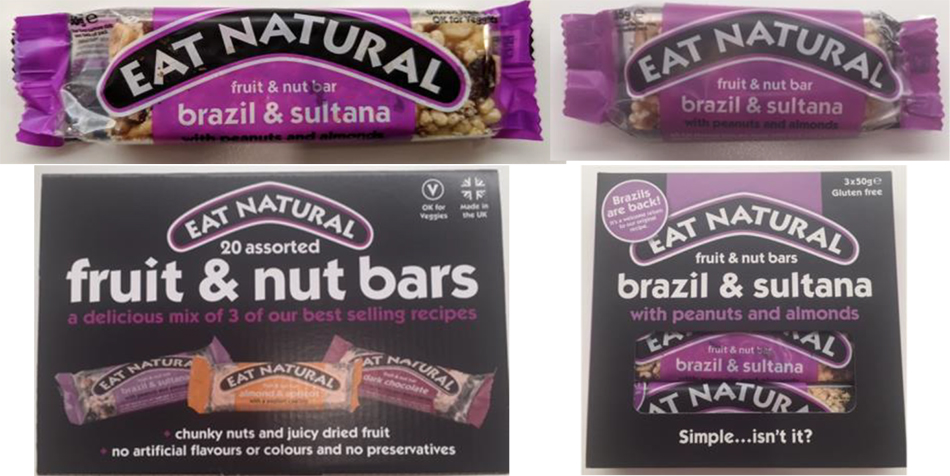
Iceland – Salmonella in an energy bar

Mast

Matvælastofnun warns against consuming Eat Natural energy bars from the British company Hand2mouth, which Costco imports and sells in its store due to the risk of salmonella. Costco in Iceland has contacted its customers who have purchased the product and recalled it, in consultation with the Health Inspectorate of the Hafnarfjörður and Kópavogur areas.

The recall only applies to the following cycles:

  • Product: Brazil & sultana with peanuts and almonds 
  • Brand: Eat Natural 
  • Size and bar code: 
    35g pcs. 96003787 
    4x 35g package 5013803666712 
    50g pcs. 50676262 
    3x 50g package 5013803666149
    12x 50g box 50138803621247
    20x 50g various types 5013803666385
  • Best for: AUGUST 2020, SEP 2020, OCT 2020, NOV 2020, DEC 2020, JAN 2021, FEB 2021, MAR 2021, APR 2021, MAY 2021, JUNE 2021, JUL 2021
  • Distribution: Costco and Heimkaup store

Energy bar - salmonella

Customers can get their product refunded according to the instructions in Costco’s press release below. 

Related material

Updated 27.08.20 at 13:18

Research -Erythrosine B (Red Dye No. 3): A potential photosensitizer for the photodynamic inactivation of foodborne pathogens in tomato juice

Wiley Online

The objectives of this study were to evaluate the efficacy of erythrosine B (ERY, Red No. 3)‐mediated photodynamic therapy (PDT) for inactivating Escherichia coli O157:H7, Salmonella Typhimurium, and Listeria monocytogenes in tomato juice. The inoculated tomato juice was subjected to xenon light (E − L+), ERY (E + L−), or xenon light and ERY combination (E + L+) treatments. Treatment with E + L+ for 15 min decreased the cell counts of E. coli O157:H7, . Typhimurium, and L. monocytogenes by 6.77, 2.74, and 6.43 log CFU/mL, respectively, without generating sublethally injured cells. The cell count reductions of E. coli O157:H7 and L. monocytogenes in the E + L+ treatment group were higher than the sum of cell count reductions in the E − L+ and E + L− treatment groups, which indicated the synergistic activity of the treatment combination. The 3d and 5d values calculated by the Weibull model indicated that . Typhimurium exhibited higher resistance to the E + L+ treatment than the other two pathogens. Compared with control group, the E + L+ treatment group exhibited higher lycopene content and * (red) value, whereas the pH value and sensory attributes were not significantly ( > .05) altered. These results suggest that ERY‐mediated PDT can be potentially applied to control foodborne pathogens in tomato juice products without negatively affecting the product quality.

Research – Enhanced elimination of Salmonella Typhimurium and Campylobacter jejuni on chicken skin by sequential exposure to ultrasound and peroxyacetic acid

Wiley Online

The present study investigated the effects of combined ultrasound (37 kHz, 380 W for 5 min) and peroxyacetic acid (PAA; 50–200 ppm) treatment on the reduction of Salmonella Typhimurium and Campylobacter jejuni on chicken skin. Ultrasound was not sufficient to inactivate . Typhimurium (0.48 log CFU/g reduction) or C. jejuni (0.25 log CFU/g reduction), whereas PAA significantly ( < .05) reduced . Typhimurium (0.93–1.59 log CFU/g reduction) and C. jejuni (0.77–1.52 log CFU/g reduction). However, maximum reductions of 2.21 and 2.08 log CFU/g were observed for . Typhimurium and C. jejuni , respectively, for combined treatment with 5 min of ultrasound and 200 ppm PAA. Our results indicate that a combination of ultrasound treatment for 5 min and 200 ppm PAA was more effective in reducing . Typhimurium and C. jejuni compared to the individual treatments, without significantly affecting the color or texture of the chicken skin, thus, demonstrating its potential to increase the microbial safety during poultry processing.

Research – Effectiveness of edible coatings to inhibit browning and inactivate foodborne pathogens on fresh‐cut apples

Wiley Online

Multiple formulations of edible coating solutions were developed and evaluated for their ability to maintain the quality and minimize populations of foodborne bacteria on fresh‐cut apples. Fresh‐cut apples were artificially inoculated with Salmonella spp., Escherichia coli O157:H7, and Listeria monocytogenes , and dip‐treated with coating solutions. Changes in populations of pathogens and molds and yeasts (M&Y) were evaluated after solution treatments and during storage at 4°C for 35 days. Changes in color, texture firmness, and weight loss during storage were also determined. Among the formulations, the solution containing 1% of three organic acids (acetic, lactic, and levulinic acids), 2% N‐acetyl‐l‐cysteine or L‐cysteine with 0.5% chitosan demonstrated the best effectiveness for the simultaneous reduction of pathogenic and spoilage microorganisms, control of browning, and maintenance of the quality of fresh‐cut apples. The treated apple slices had nondetectable pathogens and M&Y (<1 log CFU) and the least quality changes for 35‐day storage. The developed solutions can be used at processing plants, retail stores, or homes to protect fresh‐cut apples or other fresh‐cut fruits and vegetables from microbiological and quality deterioration.


Research – Effect of antibacterial treatments and natural chemicals on the quality and safety of marinated raw crab paste during storage at −20°C

Wiley Online

The effects of antibacterial treatments and several natural chemicals on the quality and safety of crab paste during storage at −20°C were investigated. All antibacterial treatments significantly reduced the bacterial total viable count (TVC) of swimming crabs, with sodium hypochlorite (NaClO) combined with ultrasonic cleaning having the best effects. Four chemicals significantly inhibited the increase in TVC, pH, and the accumulation of total volatile basic nitrogen (TVB‐N) compared to controls, and their combined treatment had synergistic effects. The (3 orthogonal experiment showed that the optimum combination was 1332 (i.e., 0.1 g kg−1 nisin, 0.4 g kg−1 ε‐polylysine hydrochloride, 0.3 g kg−1 tea polyphenol, and 0.5 g kg−1 citric acid). The TVC, TVB‐N concentration, and pH in 1333‐treated samples remained far below the maximum acceptable limit for good‐quality marinated, raw, aquatic animal product after 12 months of frozen storage at −20°C. Furthermore, the combined treatment (1333) significantly inhibited the reproduction of foodborne pathogenic bacteria and spoilage bacteria. The antibacterial treatments and natural chemicals reduced foodborne pathogenic bacteria and inhibited microbial spoilage, and therefore maintained the quality and safety of crab paste during frozen storage. Antibacterial treatments and natural chemicals could be commercially utilized to maintain the quality and safety of crab paste.