Category Archives: Food Microbiology Research

Research – Quantitative microbial spoilage risk assessment (QMSRA) of pasteurized strawberry purees by Aspergillus fischeri (teleomorph Neosartorya fischeri)

Science Direct

Aspergillus fischeri ascospores are known as potential spoilage microorganisms of pasteurized fruit products due to their high incidence in fruits, the ability to survive pasteurization and to grow in acidic conditions. This study aimed to develop a quantitative microbial spoilage risk assessment (QMSRA) model approach to estimate the spoilage risk of packaged strawberry purees due to A. fischeri under various scenarios regarding product formulation, processing and storage conditions. The development of the risk assessment comprised three steps: (1) initial contamination level of raw material by ascospores (N0), (2) inactivation of ascospores during thermal processing (Np) and (3) determination of the number of ascospores which are able to survive thermal processing and develop visible mycelia (D = 2 mm) during storage (Nf). Data of visible growth (tv, days) comprised distributions previously obtained as function of water activity (aw) (0.860–0.985), oxygen (0–21%), temperature (8–30 °C) and pasteurization (95–105 °C/15 s). The simulations were performed in triplicate with 100,000 iterations using the software R. The outcome “spoilage risk” was defined as the probability of having at least one ascospore (Nf) capable of forming visible colonies in 100 g-pack strawberry puree within the typical use-by dates. Overall, high probabilities of spoilage were estimated for purees pasteurized at milder treatments at 85 °C/15–60 s (67%) and 90 °C/15–60 s (≥40%) stored at ambient temperature (22 °C). The spoilage risk was only effectively reduced (0.02%) by increasing pasteurization conditions to 95 °C for at least 45 s. Moreover, the microbial stability of such purees, i.e., spoilage risk <0.001% (=less than 1 spoilage pack out of 105 produced units) was predicted to occur for purees treated at 100 °C/15 s or stored at chilled conditions (≤8 °C) or at strict anaerobic conditions or produced as concentrates (aw ≤ 0.860). Based on the outcomes obtained, a set of specifications for Heat-Resistant Moulds (HRMs) in raw material and pasteurized purees aimed to be used as an ingredient was suggested. Furthermore, the results can be used to support risk management decisions in identifying and quantifying the impact of possible interventions during formulation, processing and storage conditions of fruit purees to effectively reduce this risk.

RASFF Alerts – Aflatoxin – Dried Figs – Chakki Atta Wheat Flour

European Food Alerts

RASFF

Aflatoxins (B1 = 10.5; Tot. = 25.1 µg/kg – ppb) in dried figs from Turkey in Belgium

RASFF

Aflatoxins (B1 = 7.5; Tot. = 8.2 µg/kg – ppb) in chakki atta wheat flour from Nepal, via India in the UK

Research – Estimating the distribution of norovirus in individual oysters

Science Direct

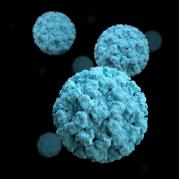
Food Borne Illness - Norovirus -CDC Photo

Image CDC

Norovirus in oysters is a significant food safety risk. A recent ISO detection method allows for reliable and repeatable estimates of norovirus concentrations in pooled samples, but there is insufficient data to estimate a distribution of copies per animal from this. The spread of norovirus accumulated across individual oysters is useful for risk assessment models. Six sets of thirty individual Crassostrea gigas oysters were tested for norovirus concentration levels by reverse-transcription quantitative PCR (RT-qPCR): three from a commercial harvest site, and three post-depuration. Five sets had norovirus GII means above the limit of quantification (LOQ), and one below the LOQ, but above the limit of detection. No norovirus GI was detected in pooled tests, and individual oysters were not tested for norovirus GI. Depuration was shown to reduce the mean concentration of GII copies, but not to affect the shape of the distribution around the mean. Deconvoluting the uncertainty of the method, the coefficient of variation was stationary (0.45 ± 0.2). The best fit distribution was either a lognormal distribution or a gamma. Multiplying these distributions by the weight of oyster digestive tissues gave an estimate for the count mean. This was used as the parameter λ in three compound Poisson distributions: Poisson-lognormal, Poisson-gamma, and Poisson-K. No model was found to fit better than the others, with advantages for each. All three could be used in future risk assessments. Preliminary validation of sampling uncertainty using repeated testing data from a previous study suggests that these results have predictive power.


Research – Fingerprinting of human noroviruses co-infections in a possible foodborne outbreak by metagenomics

Science Direct

Human noroviruses (HuNoVs) are the primary non-bacterial pathogens causing acute gastroenteritis worldwide. Here we reported a co-infection of HuNoVs with different genotypes during an outbreak of gastroenteritis in travelers. The aim was to trace the source and transmission patterns of the infections using next-generation sequencing (NGS). An investigation was conducted on a cross-border travel group who came back to China from Thailand for symptoms of gastroenteritis. Anal swabs were collected from 23 people and samples were analyzed using RT-qPCR. A total of 11 samples tested positive for HuNoVs. All samples tested negative for bacterial pathogens in the surveillance list. Positive samples for HuNoVs were further analyzed using NGS. Seven out of 11 positive samples were sequenced and 16 viral genome sequences for 10 different strains of HuNoVs were obtained. We demonstrated that the outbreak was associated with co-infection of multiple genotypes of HuNoVs and the source of infections was probably contaminated water or food. Besides, four different HuNoVs genotypes (GI.5[P12], GIX.1[GII·P15], GI.7[P7] and GII.8[P8]) were identified in one patient. Co-infection with both genogroup GI and GII, and co-infection with two different P types ([P10] and [P13]) of genotype GI.3 were identified in different patients. Findings from this study show that individuals can be simultaneously infected with multiple strains of HuNoVs and NGS can help investigating these issues. Further, this study shows that food and water are potential vehicles for transmission of multiple foodborne viruses.

Research – Commercial green tea from Portugal: Comprehensive microbiologic analyses

Science Direct

In recent times green tea (GT) consumption has increased, due to the numerous studies that indicate a wide variety of health benefits following its regular consumption. The aim of this study was to assess the bioburden (bacteria and fungi) of bulk and bags of GT marketed in Lisbon and to obtain a more refined fungal burden characterization, including azole resistance profile. The bacteriota in tea bags before boiling ranged from lower than the detection limit to 1770 CFU.g−1, whereas in brew samples ranged from lower than the detection limit to 54.55 CFU.mL−1. In bulk samples before boiling ranged from lower than the detection limit to 2636 CFU.g−1, while after boiling ranged from lower than the detection limit to 72.73 CFU.mL−1. Fungal contamination on tea bags before boiling ranged from lower than the detection limit to 66.67 CFU.g−1 and after boiling, all samples presented results lower than the detection limit. Concerning bulk samples before boiling ranged from lower than the detection limit to 96.97 CFU.g−1, whereas after boiling ranged from lower the detection limit to 30.3 CFU.mL−1. Before boiling, the most common fungal species in the bagged tea (90.91 CFU.g−1; 45.45%) and bulk samples (66.67 CFU.g−1; 91.67%) was Aspergillus section Nigri. Fungal diversity was higher on bulk samples than in tea bags. Aspergillus section Nigri and Rhizopus sp. growth was observed mostly on itraconazole-supplemented Sabouraud dextrose agar media, which require further investigation. Aspergillus sections Fumigati and Nidulantes were detected by using real time PCR, but not in the GT samples in which they were identified through culture-based methods. A significantly reduction of bacterial contamination after boiling was observed, however fungal contamination with toxigenic potential was observed before and after boiling. Future research work needs to characterize in detail the mycotoxins contamination to allow a risk-benefit assessment to estimate the human health benefits and risks following tea consumption and to support policy-actions, if and when needed. The results also suggest that the conditions how tea is packed can influence the fungal diversity and this variable should be further investigated.

Research – Inactivation of Salmonella and Listeria monocytogenes on dried fruit, pistachio nuts, cornflakes and chocolate crumb using a peracetic acid-ethanol based sanitizer or Advanced Oxidation Process

Science Direct

Two decontamination methods were evaluated for inactivating a cocktail of Salmonella or Listeria monocytogenes inoculated onto model low moisture foods (LMFs; dried strawberry, dried apple, raisins, chocolate crumb, cornflakes, shell-on or deshelled pistachio nuts). One treatment was based on a peracetic acid-ethanol (PAA-ethanol) sanitizer combination with the other being an Advanced Oxidation Process (AOP) that simultaneously applied UV-C (254 nm), ozone and hydrogen peroxide. The low moisture food was spray inoculated then dried prior to treatment. With Salmonella it was found that a pre-incubation step in 1% w/v glycerol-tryptic soy broth for 1 h prior to plating, significantly increased recovery of the pathogen compared to TSB alone. However, no increased recovery of L. monocytogenes was observed using the TSB-glycerol pre-incubation step. No Salmonella was detected on cornflakes, chocolate crumb and strawberry using 1.25 parts per thousand (‰) PAA-ethanol. The inactivation of Salmonella on deshelled pistachio was significantly higher using 2.5‰ PAA-ethanol sanitizer compared to the AOP treatments tested. Only negligible reductions of Salmonella (<1 log cfu) were obtained with shell-on pistachio treated with PAA-ethanol sanitizer or AOP. Salmonella could be reduced on dried apple slices by >4 log CFU when 5.0‰ PAA-ethanol was applied. L. monocytogenes was more sensitive to PAA-ethanol compared to Salmonella and could be eliminated on all the LMFs apart from shell-on pistachio. An AOP treatment applied 10% v/v hydrogen peroxide, ozone and 54 mJ/cm2 UV-C could significantly reduce Salmonella on dried apple slices compared to when the individual elements (hydrogen peroxide, ozone or UV-C) were applied. Salmonella was also eliminated by AOP on the other LMFs (apart from shell-on pistachio) although the same level of inactivation was achieved by spraying with 10% v/v hydrogen peroxide alone. L. monocytogenes was sensitive to hydrogen peroxide and AOP being eliminated from all the LMFs. Although this may suggest that hydrogen peroxide spray was equivalent to AOP treatment it was noted that no residual H2O2 or changes in visual appearance was evident on samples treated with the latter process. The study has demonstrated that the two decontamination methods assessed can be applied to reduce Salmonella and L. monocytogenes on LMFs although efficacy is dependent on the pathogen and product type.

Research – Pre-growth conditions and strain diversity affect nisin treatment efficacy against Listeria monocytogenes on cold-smoked salmon

Science Direct

Listeria monocytogenes is a human pathogen that is commonly found in environments associated with cold-smoked salmon. Nisin is a natural antimicrobial that can be used as a food preservative. While nisin is active against a number of Gram-positive bacteria, including L. monocytogenes, environmental stresses encountered in cold-smoked salmon processing facilities might affect L. monocytogenes‘ nisin susceptibility. The objective of this study was to investigate the effect of seafood-relevant pre-growth conditions and L. monocytogenes strain diversity on nisin treatment efficacy on cold-smoked salmon. Six L. monocytogenes strains representing serotypes most commonly associated with cold-smoked salmon (1/2a, 1/2b, and 4b) were initially pre-grown under a number of seafood-relevant conditions and challenged with nisin in growth media modified to represent the characteristics of cold-smoked salmon. The pre-growth conditions with the lowest mean log reduction due to nisin and the highest strain-to-strain variability were selected for experiments on cold-smoked salmon; these included: (i) 4.65% w.p. NaCl (“NaCl”); (ii) pH = 6.1 (“pH”); (iii) 0.5 μg/ml benzalkonium chloride (“Quat”); and a control (“BHI”). Cold-smoked salmon slices with or without nisin were inoculated with L. monocytogenes pre-grown in one of the conditions above, vacuum-packed, and incubated at 7 °C. L. monocytogenes were enumerated on days 1, 15, and 30. A linear mixed effects model was constructed to investigate the effect of pre-growth condition, day in storage, serotype, source of isolation as well as their interactions on nisin efficacy against L. monocytogenes. Compared to pre-growth in “BHI”, significant reduction (P < 0.05) in nisin efficacy was induced by pre-growth in “pH” and “Quat” on both days 15 and 30, and by pre-growth in “NaCl” on day 30, indicating a time-dependent cross-protection effect. Additionally, an effect of L. monocytogenes‘ serotype on the cross-protection to nisin was observed; pre-growth in “pH” significantly reduced nisin efficacy against serotype 1/2a and 4b strains, but not against 1/2b strains. In conclusion, pre-exposure to mildly acidic environment, high salt content, and sublethal concentrations of quaternary ammonium compounds, is likely to provide cross-protection against a subsequent nisin treatment of L. monocytogenes on cold-smoked salmon. Therefore, challenge studies that use pre-growth in “BHI”, as well as more susceptible L. monocytogenes strains, may overestimate the efficacy of nisin as a control strategy for cold-smoked salmon.

Research – SSEL, a selective enrichment broth for simultaneous growth of Salmonella enterica, Staphylococcus aureus, Escherichia coli O157: H7, and Listeria monocytogenes

Wiley Online

Salmonella entericaStaphylococcus aureusEscherichia coli O157: H7, and Listeria monocytogenes may contaminate similar types of food and cause foodborne disease. The objective of this study was to develop a selective enrichment broth for simultaneous enrichment of Salmonella entericaStaphylococcus aureusEscherichia coli O157: H7, and Listeria monocytogenes (SSEL) using nalidixic acid, acriflavine, lithium chloride, and sodium cholate as selective agents. Developed SSEL broth not only enriched the target pathogens to 5 log10 CFU/ml after 18 hr incubation at 37°C with 10–100 CFU/mL of inoculation concentration, but also could successfully support the simultaneous enrichment of target pathogens with similar growth rates and inhibit the growth of most nontarget bacteria effectively. The enrichment effect of SSEL was confirmed by artificial contamination test coupled with multiplex PCR. In summary, SSEL has been shown to be a promising multiplex selective enrichment broth for the detection of the four pathogens on a single‐assay platform.

Australia – Inquiry criticizes handling of I Cook Foods Listeria case

Food Safety News

A parliamentary inquiry into the closure of an Australian catering business has found the council failed in its role as a regulator.

I Cook Foods, which provided pre-packed meals to hospitals and the aged care sector, was temporarily closed in February 2019 during attempts to find the source of infection after an 86-year-old woman with listeriosis died.

The investigation led to a closure order which ultimately resulted in the loss of contracts and clients, employees being made redundant, and shutting down the business. Witnesses told the inquiry it was not normal for a site to remain shut under a closure order for a month. I Cook Foods was charged with 48 breaches of the Food Act but these were later dropped by the City of Greater Dandenong.

Research – Restaurant towels can carry pathogenic bacteria for weeks in simulated lab conditions

Healio

Commercial restaurant workers often use sponges and microfiber towels to clean food contact surfaces, but these types of absorbent materials were found to harbour potentially pathogenic organisms for more than 2 weeks, researchers said.

“The hypothesis of our study was that cleaning tools such as sponges and wiping cloths may become contaminated with bacterial pathogens and cross-contaminate other surfaces over time,” Sujata A. Sirsat, PhDan assistant professor at the Conrad N. Hilton College of Hotel and Restaurant Management at the University of Houston, told Healio. “There is some literature about this in the domestic kitchen context; however, there is a paucity of literature in food service settings.”