Category Archives: Food Microbiology Research

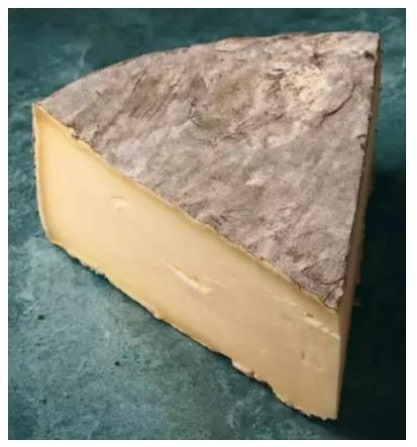
France – Saint Nectaire AOP farm – Listeria monocytogenes

Gov France

Product Category
Food
Product subcategory
Milk and dairy products
Product brand name
Unbranded
Model names or references
Saint Nectaire AOP farm
Product identification
Batch Date
A41790203 Expiry date 07/10/2024
A41830119 and A41830175 Expiry date 07/14/2024
A41840180 Expiry date 07/15/2024
A41850243 Expiry date 07/16/2024
A41860130 Expiry date 07/17/2024
A41900133 and A41900225 Expiry date 07/21/2024
A41910194 and A41910196 Expiry date 07/22/2024
Start/End of marketing date
From 06/29/2024 to 07/19/2024
Storage temperature
Product to be kept in the refrigerator
Health mark
FR 69 273 010 CE
Geographic area of ​​sale
Whole France
Distributors
Product distributed in the GRAND FRAIS, FRESH, Mon Marché stores (online sales)

Research – IAEA helps Cuba with Ciguatoxin problem

Food Safety News

Scientists are helping researchers in Cuba find dangerous toxins in marine algae that can lead to outbreaks from contaminated seafood.

The International Atomic Energy Agency (IAEA) has been building capacity for monitoring ciguatera using nuclear and isotopic techniques to identify seafood biotoxins.

Ciguatoxins are a class of algal toxins. They enter the food chain by consuming Ciguatoxin-containing algae by fish and shellfish and accumulating in larger predatory fish.

Research – Inactivation of Bacillus cereus Spores and Vegetative Cells in Inert Matrix and Rice Grains Using Low-Pressure Cold Plasma

MDPI

Abstract

This study investigated the effects of low-pressure cold plasma on the inactivation of Bacillus cereus vegetative cells and spores in an inert matrix (borosilicate glass slide) and in rice grains, using oxygen as ionization gas. Greater reductions in B. cereus counts were observed in vegetative cells rather than spores. The experimental data obtained show that both the power of the plasma treatment and the matrix proved to be determining factors in the inactivation of both the spores and vegetative cells of B. cereus. To characterize the inactivation of B. cereus, experimental data were accurately fitted to the Weibull model. A significant decrease in parameter “a”, representing resistance to treatment, was confirmed with treatment intensification. Furthermore, significant differences in the “a” value were observed between spores in inert and food matrices, suggesting the additional protective role of the food matrix for B. cereus spores. These results demonstrate the importance of considering matrix effects in plasma treatment to ensure the effective inactivation of pathogenic microorganisms, particularly in foods with low water activity, such as rice. This approach contributes to mitigating the impact of foodborne illnesses caused by pathogenic microorganisms.

Research – Application of Plant Antimicrobials in the Food Sector: Where Do We Stand?

MDPI

Abstract
The Special Issue “Plant Extracts Used to Control Microbial Growth: Efficacy, Stability and Safety Issues for Food Applications” explored the potential of plant-based extracts as natural antimicrobial agents in the food industry. Its purpose was to address the growing demand for natural, safe, and effective food preservation methods. The contributions highlighted various plant extracts’ antimicrobial efficacy, including phenolic compounds, terpenes, and other bioactive substances. Research papers and one review were submitted from countries, including Spain, Portugal, Italy, Mexico, Turkey, India, USA, Romania, China, and Lithuania, showcasing a diverse international collaboration. Key topics covered in this issue included the chemical characterization of plant extracts, their stability under different processing and storage conditions, and their safety assessments. Advances were reported in using plant extracts to inhibit spoilage microorganisms and foodborne pathogens, enhance food safety, and extend shelf life. The published papers in the Special Issue studied various food types, including yogurt, catfish fillets, edible Mushrooms, red grapes, herring Fillets, and various food types covered in the review. This diversity demonstrates the broad applicability of plant extracts across different food products. Notable findings included the antimicrobial activities of fermented grapevine leaves, grapefruit seed extract, cinnamaldehyde, clove oil, and other plant-based compounds. In conclusion, this Special Issue demonstrated significant progress in applying plant extracts for food preservation, highlighting their potential to contribute to safer and more sustainable food systems worldwide.

Research – Risk Assessment Predicts Most of the Salmonellosis Risk in Raw Chicken Parts is Concentrated in Those Few Products with High Levels of High-Virulence Serotypes of Salmonella

Science Direct

Abstract

Salmonella prevalence declined in U.S. raw poultry products since adopting prevalence-based Salmonella performance standards, but human illnesses did not reduce proportionally. We used Quantitative Microbial Risk Assessment (QMRA) to evaluate public health risks of raw chicken parts contaminated with different levels of all Salmonella and specific high- and low-virulence serotypes. Lognormal Salmonella level distributions were fitted to 2012 USDA-FSIS Baseline parts survey and 2023 USDA-FSIS HACCP verification sampling data. Three different Dose-Response (DR) approaches included (i) a single DR for all serotypes, (ii) DR that reduces Salmonella Kentucky ST152 virulence, and (iii) multiple serotype-specific DR models. All scenarios found risk concentrated in the few products with high Salmonella levels. Using a single DR model with Baseline data (μ = −3.19, σ = 1.29 Log CFU/g), 68% and 37% of illnesses were attributed to the 0.7% and 0.06% of products with >1 and >10 CFU/g Salmonella, respectively. Using distributions from 2023 HACCP data (μ = −5.53, σ = 2.45), 99.8% and 99.0% of illnesses were attributed to the 1.3% and 0.4% of products with >1 and >10 CFU/g Salmonella, respectively. Scenarios with serotype-specific DR models showed more concentrated risk at higher levels. Baseline data showed 92% and 67% and HACCP data showed >99.99% and 99.96% of illnesses attributed to products with >1 and >10 CFU/g Salmonella, respectively. Regarding serotypes using Baseline or HACCP input data, 0.002% and 0.1% of illnesses were attributed to the 0.2% and 0.4% of products with >1 CFU/g of Kentucky ST152, respectively, while 69% and 83% of illnesses were attributed to the 0.3% and 0.6% of products with >1 CFU/g of Enteritidis, Infantis, or Typhimurium, respectively. Therefore, public health risk in chicken parts is concentrated in finished products with high levels and specifically high levels of high-virulence serotypes. Low-virulence serotypes like Kentucky contribute few human cases.

Research – Survival of Salmonella spp., Escherichia coli O157:H7, and Listeria monocytogenes in Ready-to-Eat “Guacamole”: Role of Added Antimicrobials

MDPI

Abstract

Ensuring the microbiological safety of food products is majorly important to regulatory agencies, producers, and consumers. This study aimed to examine the effects of three different antimicrobial agents, including chitosan (CH), mastic oil (M), and citric acid (CA), individually or as a combination, against Salmonella spp., Escherichia coli O157:H7, and Listeria monocytogenes (artificially inoculated) in Guacamole, a ready-to-eat (RTE) avocado-based salad. The Guacamole samples included untreated samples, designated as CNL, and samples treated as follows: CA 0.15% and CA 0.30% with citric acid added at 0.15% and 0.30% v/w; CH 0.5% and CH 1% with chitosan at 0.5 and 1% v/w; M 0.2% and M 0.4% with mastic essential oil (EO) at 0.2% and 0.4% v/w; CACH with CA 0.30% and CH 1% v/w; CAM with CA 0.30% and M 0.4% v/w; CHM with CH 1% and M 0.4% v/w; and CACHM with CA 0.30%, CH 1%, and M 0.4% v/w. Microbiological evaluation, monitoring of the pH values, and proximate analyses (moisture, fat, protein, ash, and water activity) were performed at different time intervals (days 0, 1, 3, 5, and 7) at two storage temperatures (4 and 10 °C). Antimicrobial treatments, particularly CH 1% and CACHM, effectively (p < 0.05) reduced Salmonella spp. and E. coli O157:H7 populations at 4 °C, while CACHM showed the most efficacy against L. monocytogenes. However, at 10 °C, antimicrobials had limited impact, and the bacterial counts exhibited an increasing trend during storage. The pH values in the avocado-based salad samples showed, in general, higher decreases at 10 compared to 4 °C, with the CHM combination showing the highest antimicrobial effect.

Research – Recent Advances in Non-Contact Food Decontamination Technologies for Removing Mycotoxins and Fungal Contaminants

MDPI

Abstract

Agricultural food commodities are highly susceptible to contamination by fungi and mycotoxins, which cause great economic losses and threaten public health. New technologies such as gamma ray irradiation, ultraviolet radiation, electron beam irradiation, microwave irradiation, pulsed light, pulsed electric fields, plasma, ozone, etc. can solve the problem of fungal and mycotoxin contamination which cannot be effectively solved by traditional food processing methods. This paper summarizes recent advancements in emerging food decontamination technologies used to control various fungi and their associated toxin contamination in food. It discusses the problems and challenges faced by the various methods currently used to control mycotoxins, looks forward to the new trends in the development of mycotoxin degradation methods in the future food industry, and proposes new research directions.

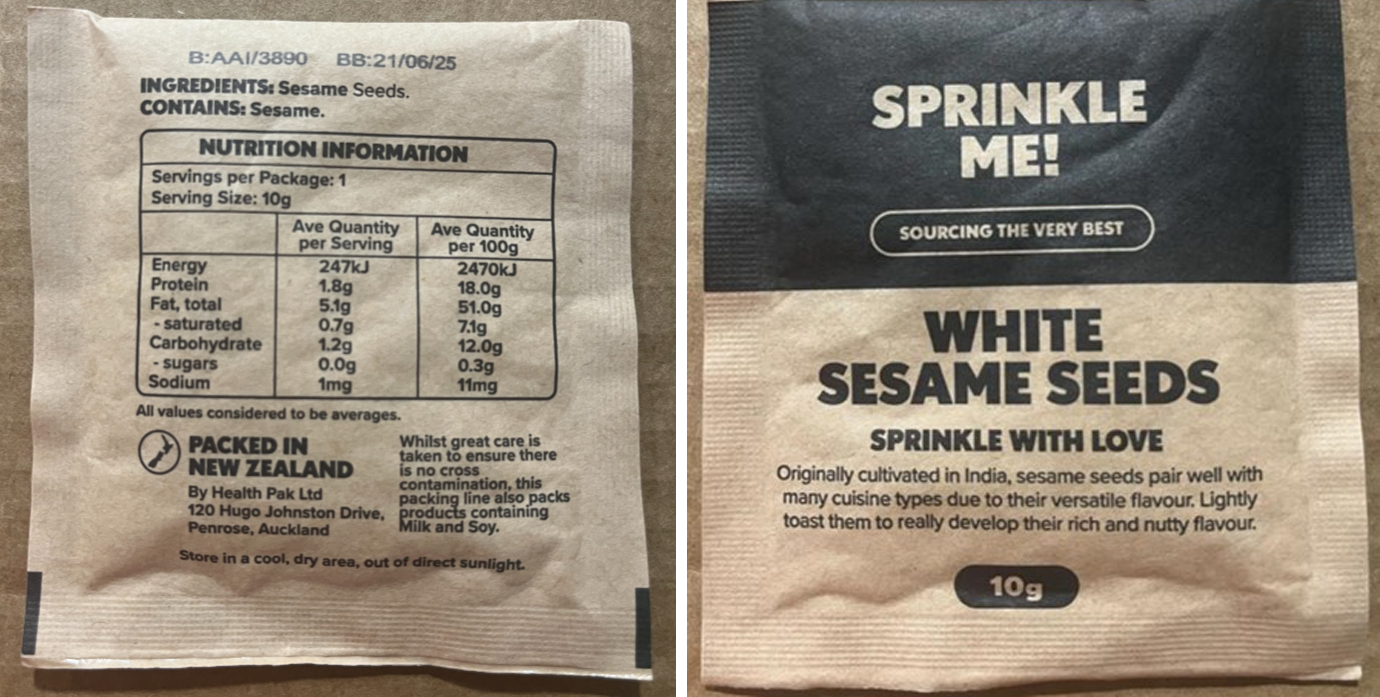
New Zealand – My Food Bag Ltd White Sesame Seed and products containing sesame seeds – Salmonella

MPI

19 July 2024: This recall has been updated to include various products containing sesame seed, due to the possible presence of Salmonella.

19 July 2024: My Food Bag is recalling a specific batch of White Sesame Seed and various products containing sesame seeds, due to the possible presence of Salmonella.

Product type Sesame seed
Name of product (size) White Sesame Seed (10g)
Batch marking AAI/3890
Package size and description The product is sold in a 10g paper packet.
Distribution The product is imported from India.

The product has not been re-exported.

The product was sold through My Food Bag between 6 July and 15 July 2024.

Product identification
Product type Sauces
Name of product (size) and date marking (Best before date) Sesame Peanut Dressing 50g – 22/08/2024

Gluten Free Korean Soy chilli Sauce 100g – 17/08/2024, 27/08/2024

Korean Soy Chilli Sauce (50g, 100g) – 27/08/2024

Korean Sticky Chilli Sauce 100g – 1/10/2025

Creamy Roasted Sesame Dressing (50g, 100g) – 15/08/2024

Wasabi Ginger Dressing (50g, 100g) – 17/08/2024

Korean Sticky Chilli Sauce 100g – 27/12/2024

Distribution The products have not been exported.

The products were delivered through My Food Bag between 6 July and 20 July 2024.

Consumer advice

Affected product should not be consumed. If you have consumed any of this product and have any concerns about your health, seek medical advice. Affected product should be disposed of.

More information on Salmonella

Who to contact

If you have questions, contact My Food Bag Ltd:

  • Phone: 0800 46 93 66
  • Address: 56 Parnell Road, Parnell, Auckland.

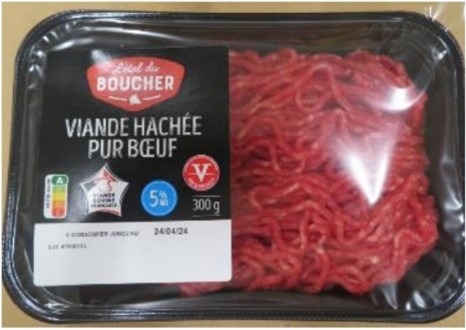
France – Pure ground beef 5% fat – STEC E.coli

Gov France

Product Category
Food
Product subcategory
Meats
Product brand name
The Butcher’s Stall
Model names or references
Pure ground beef 5% fat
Product identification
GTIN Batch Date
4056489513902 41850122 Expiry date 12/07/2024
Packaging
300g tray
Start/End of marketing date
From 04/07/2024 to 12/07/2024
Storage temperature
Product to be kept in the refrigerator
Health mark
FR 42 094 002 CE
Geographic area of ​​sale
see list of stores in PJ
Distributors
some Lidl supermarkets see list of stores attached

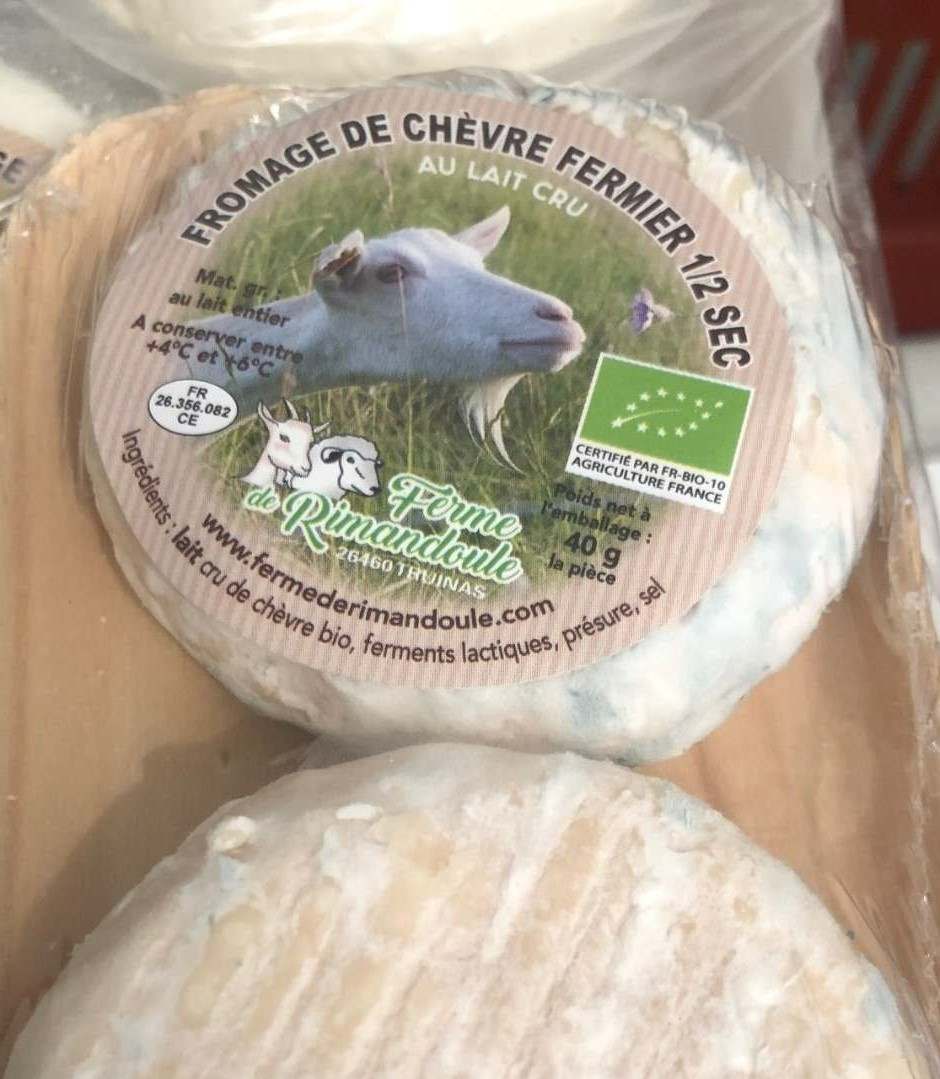
France – Semi-dry goat raw milk cheese – Salmonella

Gov France

Product Category
Food
Product subcategory
Milk and dairy products
Product brand name
Rrimandoule Farm
Model names or references
Semi-dry goat cheese, unit and tub of 2
Product identification
Batch Date
lot 07 06 2024 lot 10 06 2024 Expiry date 08/11/2024
lot 07 06 2024 lot 10 06 2024 Expiry date 08/18/2024
lot 07 06 2024 lot 10 06 2024 Expiry date 08/25/2024
Start/End of marketing date
From 06/13/2024 to 06/27/2024
Storage temperature
Product to be kept in the refrigerator
Health mark
FR26.356.082 CE
Geographic area of ​​sale
Departments: ARDECHE (07), DROME (26)
Distributors
U express, Provençal Garden, Gerentes, My Bio Shop, Marcel et fils, Bio St Prix, Au Pistou, Pomme Cannelle, Héloïse’s vegetable garden, Petit Potager, Proxi, Grocery store and Co, The Artisanal Beer Factory.