Category Archives: Food Microbiology Research

Research – Salmonella Typhimurium outbreak associated with frozen tomato cubes at a restaurant in western Finland, January to February 2021

Eurosurveillance

On 2 February 2021, a local environmental health authority in western Finland notified the National Registry for Food and Waterborne Outbreaks about six cases of  infection suspected to be related to a local lunch restaurant in a region where there had been between one and three salmonellosis cases per month. More cases were soon discovered that were linked to food eaten at the same restaurant on the days 27–29 January 2021, and the Finnish Institute for Health and Welfare (THL) was informed of 44 outbreak-related cases. The estimated number of potentially exposed persons was 400. THL and the Finnish Food Authority joined the local outbreak investigation team to support and coordinate the epidemiological and microbiological investigations.

We report here a food-borne outbreak caused by a non-monophasic multidrug-resistant  Typhimurium strain that was not detected in Finland before.

Research – Impregnation of the French population by mycotoxins. National Biomonitoring Program, Esteban 2014-2016

Sante Publique

Mycotoxins are substances secreted by certain toxigenic strains of several species of molds (microscopic fungi) such as Aspergillus, Penicillium, Fusarium, Byssochlamys, Alternaria etc. which in particular contaminate cereals and plants before and or after harvest. 

The toxicity of mycotoxins depends on the species and the nature of the toxin. They are generally thermostable, resistant to transformation processes and can be found in many foodstuffs and be responsible for acute or chronic poisoning in humans or animals. 

Of the 300 to 400 known mycotoxins, about ten of them can cause animal or human pathologies: aflatoxins (AF), ochratoxin A (OTA), fumonisins deoxynivalenol (DON), T-2 and HT-2 toxins, trichotecenes (TC), zearalenone (ZEN) and patulins which contaminate fruits, especially apples. In 1993, the IARC (International Agency for Research on Cancer) classified aflatoxins in group 1, carcinogenic to humans; AFB1, considered one of the most potent natural genotoxic carcinogens, is classified in group 1 (IARC, 2002). 

The target organ is the liver. As for OTA, it is considered possibly carcinogenic for humans and classified in group 2B (1993); in humans as in animals, the kidney is the main target organ. OTA would also have immunotoxic and neurotoxic effects. Due to their harmful effects, exposure to mycotoxins must remain as low as possible to protect the population. L’ WHO encourages the monitoring of mycotoxin levels in food because they represent a risk for human and animal health. 

In France, data on the impregnation of the French population by mycotoxins are almost non-existent, with the exception of a study carried out in three French regions [1, 2]. The Esteban cross-sectional study (Health study on the environment, biomonitoring, physical activity and nutrition) made it possible to measure the levels of impregnation by aflatoxins and OTA of the population in mainland France aged 6 at 74 years old between April 2014 and March 2016.

The purpose of this note is to present the results of impregnation by AFs and OTA, and to analyze the determinants of exposure to OTA in adults . Aflatoxins B1, B2, G1, G2, M1 were not quantified, neither in children nor in adults. For OTA, the percentage of quantification was equal to 45.5% in children and 47.8% in adults. The geometric means of the levels of impregnation by the OTA were lower than the LOQ or not provided considering the important rate of censorship. 

The search for the determinants of exposure by OTA, essentially dietary, in adults showed an increase in impregnation with the consumption of processed meats. Not all associations could likely be identified due to small sample size. A future biomonitoring study could make it possible to deepen the search for determinants of the impregnations observed and to broaden the knowledge of the

Author: Oleko Amivi, Hoang Phan, Fillol Clémence, Gane Jessica, Saoudi Abdessattar, Zeghnoun Abdelkrim
Year of publication: 2022
Pages: 35 p.
Collection: Studies and Surveys

Canada – Shigella outbreak in Edmonton Zone

Alberta Health Services

Shigella - kswfoodworld

Image CDC

EDMONTON – Alberta Health Services (AHS) is notifying the public about an ongoing investigation into a Shigella outbreak in the Edmonton Zone.

In August of this year, AHS identified a cluster of Shigella cases among the inner city population of Edmonton.

To date, we have identified 87 people with Shigella, 64 of those people required hospitalizations. The first person became ill on August 17, 2022. No deaths have been reported connected to this outbreak.

Shigella is a disease that’s commonly associated with diarrhea, as well as fever, nausea and stomach cramps. It can cause severe illness, resulting in hospitalization and it spreads when someone comes into contact with fecal matter from an infected person and also by eating food contaminated with the bacteria.

AHS has reached out to physicians and inner city shelters and partners to advise them of the situation and has provided advice for helping reduce the spread of illness while also ensuring that anyone who requires medical attention receives the care they need.

A task force led by AHS with representation from the City of Edmonton, Alberta Health, Alberta Community and Social Services, Edmonton area shelters and other partner organizations has been created with the goal of sharing resources and support to help stop the spread of this bacteria.

The majority of the cases to date are within the city’s inner city population, so the risk to the general public remains low. However, we would like to remind people that proper hand hygiene helps to prevent the spread of many illnesses, including Shigella.

Anyone experiencing symptoms that might be related to Shigella or anyone with questions or concerns about their health is encouraged to speak with their healthcare provider or call Health Link at 811.

Alberta Health Services is the provincial health authority responsible for planning and delivering health supports and services for more than four million adults and children living in Alberta. Its mission is to provide a patient-focused, quality health system that is accessible and sustainable for all Albertans.

RASFF Alerts – Mycotoxin – Ochratoxin A – Astragalus Extract Pulver – Indian Rice

RASFF

Ochratoxin A in Astragalus Extract Pulver from Croatia in Austria, Bosnia, Germany, Malaysia, Montenegro and Serbia

RASFF

Ochratoxin A in Indian Rice in the Netherlands

RASFF

Ochratoxin A in Indian Rice in the Netherlands

USA – Outbreak Investigation of Salmonella: Seafood (October 2022)

FDA

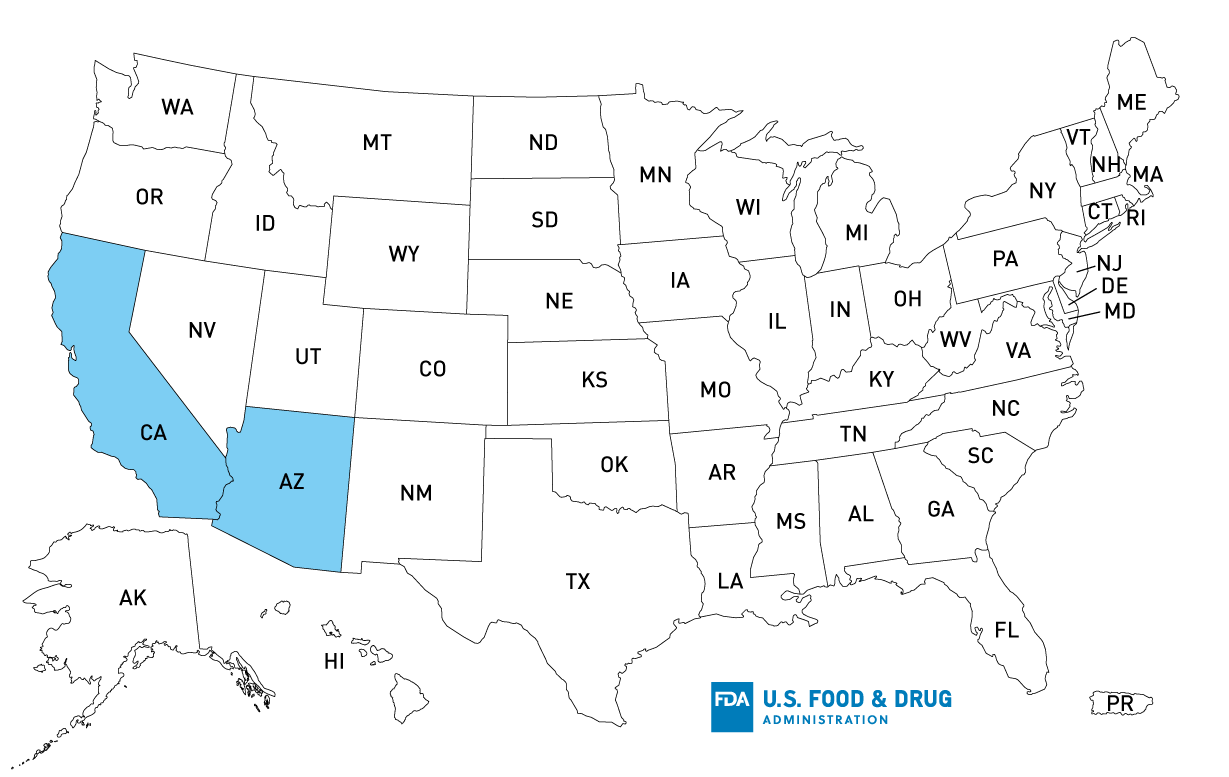
The FDA, along with CDC and state and local partners, is investigating a multistate outbreak of Salmonella Litchfield infections linked to fresh, raw salmon supplied to restaurants in California and Arizona by Mariscos Bahia, Inc.

Based on epidemiologic information provided by CDC and interviews conducted by state and local public health officials, of 16 people interviewed, 12 reported eating sushi, sashimi, or poke. Of those interviewed, 11 people remembered details about the type of fish consumed and 9 report eating raw salmon before getting sick. The FDA’s investigation traced the distribution of fresh, raw salmon back to Mariscos Bahia, Inc.

In addition, the FDA collected an environmental sample that included multiple swabs at Mariscos Bahia, Inc. (Pico Rivera, CA). Multiple environmental swabs collected at the facility are positive for Salmonella and subsequent  Whole Genome Sequencing (WGS) analysis is ongoing. The WGS completed to date indicates the Salmonella detected in at least one of the swabs from the facility matches the outbreak strain. While epidemiological evidence indicates that ill people consumed fresh, raw salmon processed at this firm, the presence of Salmonella in the processing environment indicates that additional types of fish processed in the same area of the facility could also be contaminated which includes fresh, raw halibut, Chilean seabass, tuna, and swordfish. Salmon, halibut, Chilean seabass, tuna, and swordfish processed in Marisco Bahia Inc.’s Pico Rivera, CA, facility could have also been sent to the Mariscos Bahia, Inc. facilities in Phoenix, AZ and then sent to restaurants.

The firm is cooperating with the FDA investigation and has agreed to initiate a voluntary recall. As a part of the firm’s voluntary recall, the firm will contact its direct customers who received recalled product.

The FDA’s investigation is ongoing. Updates to this advisory will be provided as they become available.

Recommendation

According to Mariscos Bahia, Inc., seafood was only sold directly to restaurants in California and Arizona and would not be available for purchase by consumers in stores.

Restaurants should check with their suppliers and not sell or serve salmon, halibut, Chilean seabass, tuna, and swordfish received fresh, not frozen from Mariscos Bahia, Inc. (Pico Rivera, CA and Phoenix, AZ) on or after June 14, 2022. If restaurants received these fish and then froze it, they should not sell or serve it. Restaurants should also be sure to wash and sanitize locations where these fish from Mariscos Bahia, Inc. were stored or prepared.

Consumers eating salmon, halibut, Chilean seabass, tuna, and swordfish at a restaurant in California or Arizona should ask whether the fish is from Mariscos Bahia, Inc and was received fresh, not frozen.


Map of U.S. Distribution

Map of U.S. Distribution

Case Count Map Provided by CDC

Salmon Outbreak of Salmonella - CDC Case Count Map as of October 19, 2022

Case Counts

Total Illnesses: 33
Hospitalizations: 13
Deaths: 0
Last illness onset: September 18, 2022
States with Cases: AZ (11), CA (21), IL (1)
Product Distribution*:  AZ, CA
*Distribution has been confirmed for states listed, but product could have been distributed further, reaching additional states

Norway – Smoked salmon suspected as source of Listeriosis outbreak

Matportalen

The patient samples were taken between February and August this year (2022). The four people are aged 50 – 90, two women and two men, and they live in Nordland, Trøndelag, Oslo and Viken.

Bacteria with the same genetic profile have been detected in samples from all four patients. In addition, there is one suspected case where we are awaiting final clarification of the test result. 

The Norwegian Food Safety Authority has collaborated with the Institute of Public Health, the municipal chief veterinarians and the Veterinary Institute, in order to map whether the patients may have a common source of infection.

Three of the four patients have been interviewed by the Norwegian Food Safety Authority. All state having eaten smoked salmon or smoked trout in the time before they became ill, and two of them state smoked salmon from the same producer. During the outbreak investigation, the outbreak bacteria was found in a product from this manufacturer that had been analyzed earlier this year. The sample was a routine sample, taken in connection with the Norwegian Food Safety Authority’s monitoring program for ready-to-eat products in 2022. The amount of listeria in the routine sample was so low that it posed no health risk.

The Norwegian Food Safety Authority has followed up the manufacturer through an inspection of the premises and several environmental samples have been obtained which were analyzed at the Veterinary Institute. The bacterium Listeria monocytogene was found in some of the samples. Although that listeria bacterium was not genetically similar to the outbreak strain, a discrepancy has been found. The Norwegian Food Safety Authority therefore decided based on a precautionary principle that the company had to withdraw products from the market.

The company has initiated thorough internal work to find the source of the outbreak strain. Extra cleaning of premises and equipment has also been carried out, to ensure that their products are safe.

Types of Data Collected in Foodborne Outbreak Investigations

CDC

Three Types of Data

When a foodborne outbreak is detected, public health and regulatory officials work quickly to collect as much information as possible to find out what is making people sick.

Epidemiologic Data

map of the continental U.S. with sites of outbreaks highlighted

Where and when did people get sick? Has the same germ caused outbreaks before? If it has, what made people sick in those outbreaks?

plate of food

What foods did people eat before they got sick?

restaurant and diners

What restaurants, grocery stores, or events did sick people go to?

Traceback Data

flow chart and checklists

Is there a common point in the distribution chain where the food could have gotten contaminated?

farm with barn and fields

Is there anything about the food production facilities, farms, or restaurants that made germs likely to spread?

Food and Environmental Testing Data

person wearing gloves and shield testing food

Is the germ causing the outbreak also found in a food item or in the food production environment?

woman looking at viruses under microscope

Do the germs found in the food or food production environment have the same DNA fingerprints as germs found in sick people?

Actions to Stop the Outbreak

Outbreak investigators take actions to protect the public when there is clear and convincing information showing that people got sick from the same contaminated food.

Live breaking news: outbreak

Health officials warn the public

recalled packaged lettuce

Companies recall contaminated products

"closed" sign

Restaurants or food production facilities close temporarily

Constantly Improving

investigators working at a table

Investigators don’t solve every outbreak. Sometimes outbreaks end before enough information is gathered to identify the contaminated food. Outbreak investigators are constantly developing new ways to investigate and solve outbreaks faster.

Research – Study on the effect of atmospheric and low-pressure plasma and its combination on the microbial reduction and quality of milk

Wiley Online

Abstract

This study is aimed to identify the effects of atmospheric and low-pressure plasma on milk individually and in combination, as the plasma generated and applied at different conditions have variations in the effect on food. Plasma bubbling unit (200 V and 0.24 A) was used for atmospheric plasma and Dielectric Barrier Discharge discharge plasma (70 Pa) with milk passing between the electrodes was used for low-pressure plasma. After treatment, the initial coliform load of 7.62 log CFU/ml was decreased by a maximum of 1.26, 1.58, and 2.2 log reduction, when milk was treated using low-pressure plasma (2 kV and 3 ml/min milk flow rate), plasma bubbling (10 min) and combination of both atmospheric bubbling and low-pressure plasma application (10 min bubbling +2 kV and 3 ml/min milk flow rate) respectively. The conductivity (significantly increased) and pH (slight reduction) of milk supported the presence of reactive species. However, alkaline phosphatase activity was not eliminated in plasma-treated milk; the initial activity in terms of mg phenols/ml of milk was 23.20 which was reduced to 22.57 in low-pressure plasma and 22.35 in plasma bubbling, however, it increased while both the treatments were combined. The sodium dodecyl sulfate–polyacrylamide gel electrophoresis analysis uncovered that the plasma processing didn’t have any prominent impact on the protein fractions in milk. Though plasma bubbling was effective compared to low-pressure plasma, the combination was proved to have a synergistic effect on milk. However, the enzyme structure needs to be studied in the future for analyzing the exact change in the activity.

Netherlands – NVWA urges Salmonella focus in poultry despite bird flu problem

Food Safety News

Dutch authorities have stressed the need to keep a focus on Salmonella despite restrictions because of avian flu outbreaks.

Avian influenza, also known as bird flu, is causing a lot of concern among companies and within the poultry farming sector.

Efforts are being made to prevent further infections by taking steps such as limiting visitors in the yard and in stables as much as possible.

EU return audit to Poland finds unresolved issues; Salmonella in poultry still a problem

Food Safety News

Major problems remain in the Polish control system for beef and poultry meat, according to the European Commission’s health and safety agency.

A remote DG Sante audit, in October 2021 in Poland, followed-up two audits in 2019 on beef and poultry meat and made nine recommendations.

In 2019, a Polish television broadcast showed practices in a bovine slaughterhouse that pointed to violations of EU animal welfare law and, possibly, of food safety legislation.

DG Sante said several actions to address findings made after the beef and poultry audits have been implemented. However, other shortcomings have not been solved by Polish authorities.