Category Archives: Food Microbiology Research

France – 4 waffles – Microbiological Contamination

Gov france

Identification information of the recalled product

  • Product category Feed
  • Product subcategory Cereals and baked goods
  • Product brand name Stephan Pastry
  • Model names or references723: Brussels waffles x 4,280 g in blister pack
  • Identification of products
    GTIN Lot Date
    3533950000617 03823A Date of minimum durability 07/02/2025
  • Packaging Brussels waffles x 4 – 280g in blister pack
  • Marketing start/end date From 02/11/2023 to 02/25/2023
  • Storage temperature Product to be stored at room temperature
  • Further information Break in the cold chain during transport
  • Geographic area of ​​sale Regions: Hauts-de-France
  • Distributors Carrefour – Montsoult logistics warehouse
  • List of points of sale Traceability_Frozen_waffle_Carrefour.pdf

Practical information regarding the recall

  • Reason for recall Break in the cold chain during transport
  • Risks incurred by the consumer Other biological contaminants
    Organoleptic changes
  • Additional description of the risk Bacteriological risk due to the breaking of the cold chain – yeasts, moulds

USA – Employees had nowhere to wash hands at ice cream factory behind Listeria outbreak, FDA says

CBS News

Employees at Big Olaf Creamery, the Florida-based creamery behind a multistate listeria outbreak last year, had nowhere to wash their hands before they entered the production room, according to an investigation conducted by the Food and Drug Administration. The outbreak killed at least one person and hospitalized 27 others across 11 states.

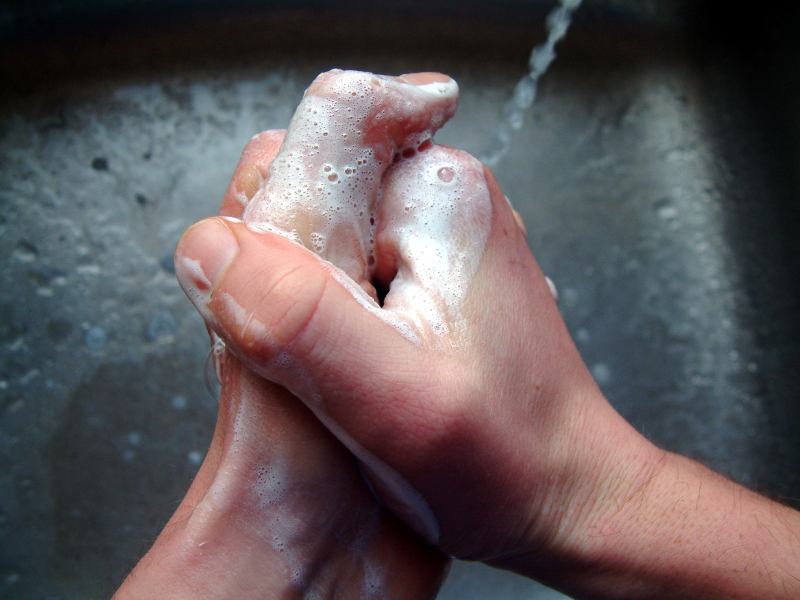
“It was observed that there was no handwash sink outside of the production area for employees to wash and sanitize hands before entering the production room,” the FDA wrote.

England – National standards for healthcare food and drink

England NHS

There are eight standards that all NHS organisations are required to meet

Organisations must have a designated board director responsible for food (nutrition and safety) and report on compliance with the healthcare food and drink standards at board level as a standing agenda item.

  1. Organisations must have a food and drink strategy.
  2. Organisations must consider the level of input from a named food service dietitian to ensure choices are appropriate.
  3. Organisations must nominate a food safety specialist.
  4. Organisations must invest in a high calibre workforce, improved staffing and recognise the complex knowledge and skills required by chefs and food service teams in the provision of safe food and drink services.
  5. Organisations must be able to demonstrate that they have an established training matrix and a learning and development programme for all staff involved in healthcare food and drink services.
  6. Organisations must monitor, manage and actively reduce their food waste from production waste, plate waste and unserved meals.
  7. NHS organisations must be able to demonstrate that they have suitable 24/7 food service provision, which is appropriate for their demographic.

Research – E. coli, Salmonella, and Campylobacter: How Important is Sanitizing Your Shopping Cart?

Food Poisoning News

During the height of the pandemic, grocery stores began routinely sanitizing shopping carts and baskets after each use to reduce the spread of the COVID-19 virus. Now that the rate of COVID infections is far less, this practice of cleaning carts is becoming a thing of the past. However, sanitizing shopping carts is extremely beneficial to minimize the spread of foodborne pathogens and grocery stores should not overlook its importance.

In a study by the University of Arizona, their results found that the number of bacteria on a shopping cart was higher than the amount on surfaces of a public restroom and on diaper changing stations because restrooms are frequently cleaned. Out of the 85 shopping carts tested, a remarkable 51% carried evidence of E. coli. Traces of salmonella and campylobacter were also found. These foodborne illness causing bacteria can all survive on surfaces for extended periods of time. Campylobacter can survive on a surface for up to 4 hours and Salmonella up to 32 hours. These types of bacteria can cause symptoms such as diarrhea, headache, fevers, and vomiting.

It is also very important to keep sanitation in mind when handling food in the grocery store that will not be reheated before consumption. Shoppers inevitably touch these foods immediately after manouvering the cart and risk spreading bacteria to the food they purchase.

Ireland – Salmonella outbreak at ninth poultry farm

Irish Examiner

A ninth Irish poultry flock has tested positive for salmonella typhimurium, officials have confirmed.

A cause for the current outbreak, which was first detected on January 24, has yet to be identified.

Responding to questions from the Irish Examiner, the Department of Agriculture, Food and the Marine confirmed the nine affected broiler flocks are based in Monaghan, Cork, Limerick, and Mayo.

The flocks affected were detected through routine testing as part of the National Salmonella Control Programme, with the department claiming that the identification of the cases demonstrates the effectiveness of the programme.

India – Aflatoxin, which causes cancer and other deadly diseases, detected in milk samples in Kerala

Kerala Kaumudi

The toxic substance was present in ten percent of the samples from different districts.

The Department of Food Safety assesses that this toxin in milk is due to feeding of spoiled fodder, and lack of widespread awareness about improving the quality of milk

France Contaminated infant milk: the Lactalis group is indicted for aggravated deception and involuntary injuries – Salmonella

France Info

The Lactalis group and the Celia Laiterie company were indicted on Thursday, February 16, for aggravated deception and involuntary injuries in the investigation into the salmonella contamination of infant milk which affected dozens of infants at the end of 2017, announced the group in a press release. The two companies are placed under judicial supervision with a bond of 300,000 euros each, according to the group.

A total of 53 identified infants had been affected by salmonellosis in France at the end of 2017 after consuming a product for children, mainly of the Milumel or Picot brand, from the Craon factory, located in Mayenne.

Research – Avoiding a global chocolate disaster – how tracing and recalls avoided a worldwide Salmonella outbreak

Eurekalert

Largest ever recall of chocolate products in global history, just before Easter 2022, prevented thousands of extra cases; a total of 455 cases of Salmonella Typhimurium found in 17 countries; UK had most cases with 128.

Like any other manufactured food product, chocolate can be contaminated if key ingredients or processes break down. In a presentation in a pre-ECCMID day for this year’s European Congress of Clinical Microbiology & Infectious Diseases (ECCMID 2023, Copenhagen, 15-19 April), Dr Johanna Takkinen, Principal Expert for Food- and Waterborne Diseases at the European Centres for Disease Control and Prevention (ECDC), Stockholm, Sweden, will discuss the drama as the story unfolded, and the lessons learned from an outbreak of Salmonella Typhimurium in Kinder Chocolate Eggs traced to a Belgian chocolate factory.

”If not for clear and co-ordinated action across Europe and beyond, there may have been many thousands more children falling ill, and potentially many deaths,” says Dr Takkinen.

Authorities in the UK (the UK Health Security Agency [UKHSA]) first raised the alarm in ECDC-hosted alert platform EpiPulse on 17 February 2022, reporting a cluster of 18 children reported ill with monophasic Salmonella Typhimurium infections since January 2022. Of these, seven were hospitalised and five of the seven had bloody diarrhoea, a serious symptom. “Preliminary interviews of first cases indicated Kinder chocolate products as a possible vehicle of infection. Several countries then began reporting an increasing number of infections with strains the same as the UK outbreak,” explains Dr Takkinen. By 18 February, France had reported its first 2 cases, and by 18 March 59 cases were reported in five countries.

Late in March 2022, ECDC coordinated a teleconference with affected countries when four non-human monophasic S. Typhimurium isolates, genetically close to the human isolates, were identified in a public database. Within a week, these isolates were confirmed originating from one particular Belgian chocolate factory. Prior to this, identifying which factory or factories were involved was difficult since there are four factories within the European Union that produce Kinder chocolate in large quantities. This new microbiological evidence allowed the various agencies to focus their investigations on one factory.

Meanwhile, the Food Standards Agency (FSA) in the UK* and the Food Safety Authority (FSA) in Ireland and the UK FSA decided to recall, on April 2**, certain Kinder Chocolate products (including Kinder Surprise Eggs).  On April 8 authorities, now confident the factory was identified, ordered that chocolate factory (Ferrero) closed, and two days later had issued a global recall of products from the factory. The alert reached 130 countries, and in addition to the 401 cases* identified in the EU and UK combined (the UK had the most cases, with 128), further cases were identified in Switzerland (49) and Canada (4) and the USA (1) – giving a global total of 455 cases in 17 countries.  The ECDC and EFSA also published Rapid Outbreak Assessments to keep the public updated.

For link to Dr Takkinen’s slides, click here

*For the ECDC update showing case numbers from different countries, click here

**For the Food Standards Agency (UK) notice on this, original published April 2, 2022, click here

USA – Legionnaire’s Disease Outbreak Linked to American Cruise Lines

Daily Hornet

The U.S. Food and Drug Administration (FDA) sent a warning letter to American Cruise Lines after 3 passengers got Legionnaire’s disease and the company failed to adequately treat the ships’ drinking water.

The first confirmed case of Legionnaire’s disease was reported in April 2021, with two more cases reported in September and October 2021.

Between April and August 2022, FDA inspectors tested the drinking water on the American Star and American Heritage and found ongoing evidence of Legionella bacteria.

Shockingly, 93% of water samples on the American Star tested positive for Legionella bacteria in April 2022, including samples taken from showerheads in the rooms for passengers and crew.

In June 2022, multiple samples of drinking water from showerheads and faucets on the American Heritage also tested positive for Legionella, according to the FDA.

Despite problems with Legionella contamination and illnesses, the FDA said that American Cruise Lines failed to take adequate stops to treat the ships’ water supply.

Jordan – 120 food poisoning cases reported in Jerash

Roya News

Approximately 120 food poisoning cases have been reported in Jerash, including two children, according to Roya’s correspondent Wednesday.

The Jodan Food and Drug Administration (JFDA) had shut down a fast food restaurant in Jerash Tuesday, as a precaution, after a significant number of people reported feeling ill after eating from that restaurant.