Category Archives: Food Microbiology Blog

RASFF Alert – Animal Feed – Microbiological Contamination – Hay

RASFF

Microbiological deviation in hay for animals from Austria in Croatia

RASFF Alert- Animal Feed – Salmonella – Pigs Ear

RASFF

Salmonella spp. in Ear Pork from Poland in Malta

Norway – Sampling issues found at producer linked to Listeria outbreak

Food Safety News

Norwegian authorities found problems with the sampling plan of a company linked to a Listeria outbreak in 2022, according to a report.

At an inspection in October, the Norwegian Food Safety Authority (Mattilsynet) discovered the fish producer’s sampling plan was not sufficient, and that environmental samples had not been taken in line with Troll Salmon’s internal program.

During the visit, the agency took 14 environmental samples and the company also conducted sampling afterward. One of the authority’s tests was positive and the producer detected Listeria in two different drain samples.

The firm was ordered to take daily samples for an undefined time period and to update the sampling plan. It also carried out additional cleaning and disinfection of premises and equipment as well as work to find the source of the outbreak strain.

Research – Surveillance of Vibrio parahaemolyticus pathogens recovered from ready-to-eat foods

Nature.com

This study examined the occurrence of V. parahaemolyticus from ready-to-eat (RTE) food in Delta State, Nigeria. It also characterized antibiotic resistance and virulence gene profile patterns to determine the associated health risk hazard. Food samples total of 380 were collected randomly and assessed for V. parahaemolyticus. V. parahaemolyticus isolates were characterized for their virulence and antibiogram potentials using a phenotypic and polymerase chain reaction (PCR) approach. A total of 42 (11.1%) samples were contaminated with V. parahaemolyticus. In 17/42 (40.5%) of the V. parahaemolyticus-positive samples, the densities were < 10 MPN/g. However, 19/42 (45.2%) and 6/42 (14.3%) of the samples had densities of 10 – 102 and > 102 MPN/g, respectively. A total of 67 V. parahaemolyticus isolates were identified using PCR; 54(80.6%) isolates were multidrug resistant. A total of 22 (32.8%), 39 (58.2%), and 67 (100%) of the V. parahaemolyticus harbored the tdh, trh, and tlh toxin genes, respectively. The T3SS1 gene (vcrD1) was detected in 67 (100%) of the isolates. The T3SS2α genes which were vcrD2, vopB2, and vopT were detected in 21 (31.3%), 11 (16.4%) and 30 (44.8%) of the isolates respectively. Some of the V. parahaemolytics strains harbored the orf8 gene 20 (29.9%), and a combination of orf8 + tdh genes 12 (17.9%), categorized as pandemic strains. The antibiotic resistance genes detected in this study include blaTEM 33 (49.3), tetM 19 (28.4), cmlA 32(47.8) and sul1 14 (20.9). The concentration levels and prevalence of V. parahaemolyticus in RTE foods indicate contamination of ready-to-eat foods, particularly street foods consumed in the Delta State of Nigeria, threatening public health and consumer safety.

Research – High winds can worsen pathogen spread at outdoor chicken farms – Campylobacter

Science Daily

A study of chicken farms in the West found that high winds increased the prevalence of Campylobacter in outdoor flocks, a bacterial pathogen in poultry that is the largest single cause of foodborne illness in the U.S. Researchers found that about 26% of individual chickens had the pathogen at the ‘open environment’ farms in the study, which included organic and free-range chicken farms. High winds the week prior to sampling and the farms’ location in more intensive agricultural settings were linked to a greater prevalence of Campylobacter.

Research – Solar water disinfection effective for E. coli at high, low altitudes

Waterworld

Solar water disinfection (SODIS) may be just as effective at decontamination E. coli-infected water at high altitudes as it is at low altitutdes, according to a press release by Elsevier.

The results of a new study appearing in the Wilderness Medical Society’s official journal Wilderness & Environmental Medicine, published by Elsevier, shows promise this method of disinfection..

Water can be successfully disinfected through several methods: heat, filtration, chemical treatment, and ultraviolet (UV) light. The use of natural sunlight for solar disinfection of contaminated water effectively inactivates many microorganisms, including bacteria, viruses, protozoa, and fungi.

A team of researchers at the University of Colorado Anschutz Medical Campus conducted an experimental study to determine the effect of SODIS on water purification at high altitude (above 2,500 meters) compared to low altitude (below 2,500 meters) among different types of water containers.

“No other published research examining the effectiveness of SODIS at high altitude is available to our knowledge,” said William Mundo, lead investigator of the study. “Adequate access to water, sanitation, and hygiene is a crucial component of human health during emergency situations such as natural disasters and extreme weather events, which are becoming prevalent with climate change.”

A study design previously described in the literature was modified, most notably to evaluate the concentration of E. coli colony-forming units (CFUs) at multiple time points throughout the required six hours of direct sunlight, as recommended by the World Health Organization.

Compared to control containers with no sunlight exposure, the researchers found that all bacteria were inactivated by six hours. At two hours, bacterial inactivation at high altitude was 1.7-fold greater than at lower altitude, however, at the end of six hours, there were no significant differences between high and low altitude samples.

Singapore – Spize’s outlets at Simpang Bedok get hygiene downgrade after food poisoning cases

Channel News Asia

SINGAPORE: Two food establishments owned by Spize have had their food hygiene grades downgraded from A to C, said the Singapore Food Agency (SFA) on Saturday (Mar 11).

Fifteen people reportedly developed gastroenteritis symptoms following the consumption of food prepared at Spize @ Simpang Bedok from Jul 5 to Jul 6, 2022.

New Zealand- Cornucopia Organic Foods brand Organic Unhulled Tahini – Salmonella

MPI

15 March 2023: Cornucopia Natural Foods is recalling all batches and all dates of its Cornucopia Organic Foods brand Organic Unhulled Tahini due to the possible presence of Salmonella.

Product identification

Product type Tahini
Name of product (size) Cornucopia Organic Foods brand Organic Unhulled Tahini (various weights)
Batch and date marking All batches, all dates.
Package size and description The product is packaged in glass jars of various weights.
Distribution The product is imported from Turkey, but has been incorrectly labelled as product of Mexico.

The product is sold at Cornucopia Organics, 221 Heretanga  Street East, Hastings.

The products have not been re-exported.

Notes This recall does not affect any other Cornucopia Organic Foods brand products.

Consumer advice

Affected products should not be consumed. There have been no reports of associated illness, however if you have consumed any of these products and have any concerns about your health, seek medical advice.

Customers should return the products to their retailer for a full refund.

Catalonia – Alert for the presence of Listeria monocytogenes in sliced ​​jerky with olive oil from Spain – Update

ACSA

alert jerky

In relation to the alert about the presence of Listeria monocytogenes in Cecina smoked in slices with olive oil, the manufacturer has communicated that, within the same manufacturing batch affected, the product has also been marketed under the Pajariel brand.

The updated data of the products involved are:

  • Product name: Jerky with olive oil
  • Trademarks: Pajariel and LIDL
  • Product appearance: Packaged sliced ​​jerky
  • Lot number, for both brands: 30203
  • Expiration date, for both brands: 07/11/2023
  • Unit Weight: 100g
  • Temperature: refrigerated

The Spanish Agency for Food Safety and Nutrition (AESAN) has transferred this information to the competent authorities of the autonomous communities through the Coordinated System for Rapid Information Exchange (SCIRI), in order to verify the withdrawal of the affected products. of marketing channels.

People who have products affected by this alert at home are recommended to refrain from consuming them.

In the case of having consumed any of the products from the affected lots and presenting symptoms compatible with listeriosis (vomiting, diarrhea or fever), it is recommended to go to a health center.

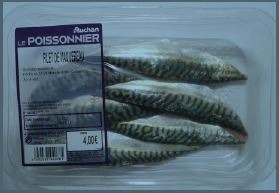
France – MACKEREL FILLET – Histamine

Gov france

Identification information of the recalled product

  • Product category Feed
  • Product subcategory Fishery and aquaculture products
  • Product brand name AUCHAN THE FISHMONGER
  • Model names or references MACKEREL FILLET AUCHAN LE POISSONNIER 200G
  • Identification of products
    GTIN Batch Date
    3254567940881 0415-049 Use-by date 02/24/2023
  • Products ListPoster_Reminder_Filet_of_Mackerel_(1).pdfAttachment
  • Packaging PACKED IN TRAYS UNDER MODIFIED ATMOSPHERE
  • Marketing start/end date From 02/18/2023 to 02/25/2023
  • Storage temperature Product to be stored in the refrigerator
  • Health mark FR 62 160 172 EC
  • Geographic area of ​​sale Whole France
  • Distributors AUCHAN

Practical information regarding the recall

  • Reason for recall PRESENCE OF HISTAMINE