Category Archives: Food Illness

Research – EU – More Salmonella infections in Europe: Hygiene rules help prepare poultry safely

Eurekalert

kswfoodworld salmonella

In recent months, more than three hundred cases of salmonellosis have occurred in various European countries and Canada, which are linked to each other. In the UK the cases could be partly traced back to frozen breaded poultry meat. The cause was contamination with the bacterium Salmonella Enteritidis, which causes gastrointestinal inflammation. Salmonella is not killed by deep freezing and can remain infectious at temperatures below zero degrees Celsius. The Robert Koch Institute (RKI) and the BfR are monitoring the situation together with the Federal Office of Consumer Protection and Food Safety (BVL). In Germany, the number of reported cases has currently risen to more than 20 in six federal states. In 2020, there were a total of about 10,000 reported cases of salmonellosis in Germany, most of which were caused by the consumption of contaminated food. In principle, foodborne infections can be avoided by paying particular attention to hygienic care when preparing raw poultry. Due to the measures taken to contain the COVID 19 pandemic, people are currently cooking more often at home and, in the course of this, convenience products such as frozen goods are also being used more frequently. Sometimes it is not obvious at first glance whether such products contain pre-cooked or raw meat. Sufficient heating should always be ensured during preparation, especially of products containing raw poultry meat. In addition, bacterial contamination of other dishes via the raw meat and breading is possible. “Especially for children and elderly people there is a higher risk of getting sick from salmonella,” says BfR President Prof. Dr. Dr. Andreas Hensel.

USA- Salmonella Outbreaks Linked to Backyard Poultry

CDC

Fast Facts
  • Illnesses: 163
  • Hospitalizations: 34
  • Deaths: 0
  • States: 43
  • Recall: No
  • Investigation status: Active
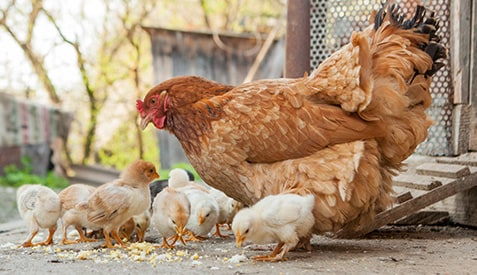
Backyard poultry with chickens eating
Backyard Poultry and Salmonella

Backyard poultry, like chicken and ducks, can carry Salmonella germs even if they look healthy and clean. These germs can easily spread to anything in the areas where they live and roam.

You can get sick from touching your backyard poultry or anything in their environment and then touching your mouth or food, and swallowing Salmonella germs.

RASFF Alert – Foodborne outbreak suspected to be caused by thawed yellowfin tuna steaks – No cause given but i would suspect Histamine

RASFF

Foodborne outbreak suspected to be caused by thawed yellowfin tuna steaks (Thunnus albacares) with added water from Italy, with raw material from Spain in Croatia, Italy, Poland, Romania and Slovenia


USA – Core Investigation Updated

FDA

The table includes the conclusion of an  E. coli O145:H28 outbreak. The FDA reports that 16 people were sickened in the outbreak for which a cause has not been detected.

A new Salmonella outbreak has also been added with little other information.

Research -Center for Foodborne Illness Research and Prevention – Impact reReport

Click to access 2019-2020%20CFI%20Impact%20Report.pdf

Research – Whole genome sequencing data used for surveillance of Campylobacter infections: detection of a large continuous outbreak, Denmark, 2019

Eurosurveillance

CDC Campy

Human campylobacteriosis is the most commonly reported zoonotic disease in Europe, with 246,571 reported cases in the European Union (EU) in 2018 [1].  infections are predominantly food-borne, with poultry as the primary source. However, other transmission routes are known, such as bathing, drinking contaminated water or direct contact with animals. In food samples, the highest occurrence of  was detected in fresh chicken meat (37.5% of samples tested) [1]. In Denmark, we had 5,389 registered human cases in 2019 (incidence: 93/100,000 inhabitants) and 33% of conventional chicken meat samples were positive for  at slaughter [2]. Of note, one third of the human infections diagnosed in Denmark are estimated to be travel-related [3].

Efforts to identify the specific source of  infection in humans are rarely made in Denmark or other countries. Therefore, relevant information for targeted public health actions to prevent  infections often does not exist. For decades, surveillance of other food-borne pathogens, especially  and  with high-discriminatory typing methods has proved to be a powerful tool for outbreak detection and investigations as well as for following trends and emergence of epidemic strains. Similar typing-based surveillance for  has not been widely used and generally has not been very useful for the decision-making process on mitigating efforts by the public health and food safety authorities. The high diversity of  isolates and the general assumption that most  infections are sporadic are plausible explanations.

We have previously shown that, based on whole genome sequencing (WGS) data of  isolates in 2015–17, we could identify numerous small outbreak-like clusters and, in many instances, genetically link them to concurrent animal and food isolates [4]. A large fraction of all 774 clinical isolates (27%) could be genetically linked to broilers or chicken meat, whereas only a few clinical isolates (2%) could be genetically linked to cattle isolates. A Danish case–control study conducted in the same period pointed at several food sources of campylobacteriosis among children and young adults, including consumption of chicken meat, minced beef, and fresh strawberries [5]. Therefore, in addition to sampling of chicken meat, the Danish Veterinary and Food Administration (DVFA) initiated sampling and analysis for  in several other food sources that were identified by the case–control study to obtain knowledge on the impact of these sources.

In our 2015–17 study, a comparison of human isolates to food and animal isolates was done retrospectively and therefore no specific public health actions were taken. To evaluate the value of a prospective and continuous WGS-based surveillance system for  in Denmark, we initiated WGS of isolates from human cases and retail food samples as well as the concurrent analysis of these cross-sector data. Here, we report the first year of surveillance (2019) and show that integrated WGS-based surveillance of  in humans and food sources can identify correlations between the occurrence of specific strains in chicken meat and in human infections. The surveillance was also able to detect prolonged or reappearing outbreaks, which allows for specific interventions to control  in the food production chain and thereby prevent human infections.

France – Product recall: Fromagerie Du Pré Verdot brand raw cream – Microbiological Contamination

Oulah

ENCOUNTERED PROBLEM

Microbiological contamination.
Symptoms are vomiting, mild or severe diarrhea, abdominal pain. These symptoms may be aggravated in pregnant women, young children, immunocompromised individuals and the elderly.

PROPOSED SOLUTION

Do not consume and bring back to the point of sale

FURTHER INFORMATION

▸ Model names or references
Raw cream 25 cL
Raw cream 50 cL


▸ Barcode
376009100026


▸ Lot
16/06/2021


▸ DLC – DDM
06/16/2021


▸ Packaging
Plastic jars


▸ Start date / End of marketing
From 05/26/2021 to 06/03/2021


▸ Health mark
FR-25-467-001-CE


▸ Geographical sales area


▸ Distributors
Click here


▸ Contact
customer service 0381590846


▸ Source
Fromagerie Du Pré Verdot

France – Product recall: Fromagerie Du Pré Verdot brand raw milk white cheese – Microbiological Contamination

Oulah

ENCOUNTERED PROBLEM

Microbiological contamination.
Symptoms are vomiting, mild or severe diarrhea, abdominal pain. These symptoms may be aggravated in pregnant women, young children, immunocompromised individuals and the elderly.

PROPOSED SOLUTION

Do not consume and bring back to the point of sale

FURTHER INFORMATION

▸ Model Names or reference
white cheese beaten Nature 500g
white cheese beaten with fruit 500g
white cheese 500g cottage cheese
Cottage cheese curds 6x110g
curd cheese 1kg


▸ Barcode
3760091000156


▸ Lot
06/13/2021


▸ DLC – DDM
06/13/2021


▸ Packaging
Plastic jars


▸ Start date / End of marketing
From 05/26/2021 to 06/03/2021


▸ Health mark
FR-25-467-001-CE


▸ Geographical sales area


▸ Distributors
Click here


▸ Contact
customer service 0381590846


▸ Source
Fromagerie Du Pré Verdot

USA – Norovirus Outbreak sickens 23 linked to Habit Burger Grill in Shoreline

Food Poison Journal

Norovirus Food Safety kswfoodworld

According to Seattle King County Department of Health there appears to be a norovirus outbreak in Shoreline.

Public Health is investigating an outbreak of norovirus-like illness with vomiting, diarrhea, body aches, and chills associated with Habit Burger Grill in Shoreline.

We have not identified how norovirus was spread within the restaurant. This is not uncommon for norovirus outbreaks because the virus can spread through multiple contaminated food items, environmental surfaces, and from person to person.

EU – Large Salmonella outbreak linked to melons

Food Safety News

catalopue

Melons have been linked to a Salmonella Braenderup outbreak that has affected 200 people in more than 10 countries.

Patients have been reported in Denmark, Belgium, Finland, France, Germany, Ireland, the Netherlands, Norway, Sweden, the United Kingdom, Canada and Switzerland. Illnesses started in late March.

Czech Republic and Spain have also recorded recent Salmonella Braenderup infections but it is not yet clear if they belong to this outbreak.

food