Category Archives: Food Illness

Libya – 53 cases of food poisoning arrive at Kufra Teaching Hospital

Libya Observer

The emergency department of Kufra Teaching Hospital received 53 cases of food poisoning on Saturday, including women and children, due to eating rotten food in a restaurant in the city.

Patients have received the necessary treatment, awaiting to for the preliminary results of the laboratory, the hospital’s media office said, adding that all measures will be taken towards the responsible party.

Research – International outbreak of salmonellosis in young children linked to the consumption of Kinder brand products. Update in France as of June 2, 2022.

Sante Publique

Following the investigations carried out by the Belgian health authorities, together with their English, European and in particular French counterparts, the company Ferrero proceeded on April 5, 2022 to the recall of several Kinder range products manufactured in a factory in Belgium due to suspected contamination by Salmonella Typhimurium . On April 8, 2022, the recall finally affected all Kinder products from this factory, regardless of their expiry date. On April 14, 2022, an update of the recalled products, including the 2021 Christmas Advent Calendars, was released.

Case of salmonellosis in France: update on June 2, 2022

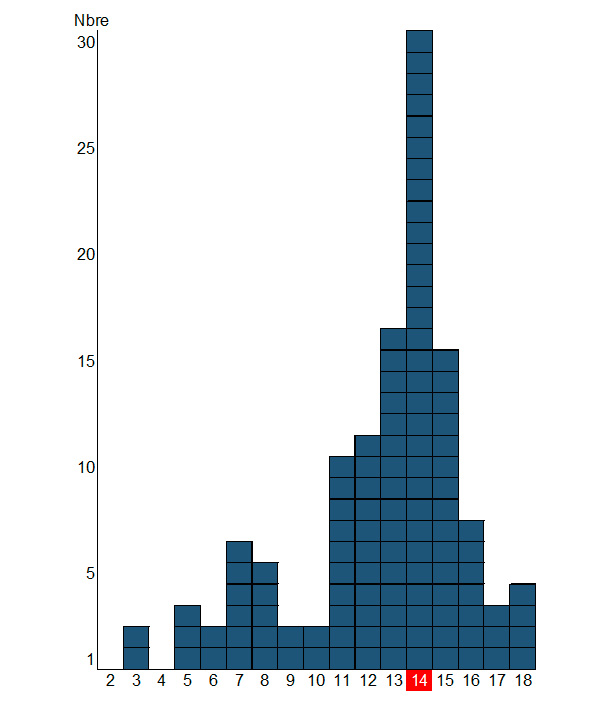
In total, as of 02/06/2022: 118 cases of salmonellosis with a strain belonging to the epidemic have been identified by the National Reference Center (CNR) for salmonella at the Institut Pasteur in France (figure 1) .

Figure 1 – Epidemic curve: number of confirmed cases of salmonellosis caused by Salmonella Typhimurium, monophasic variant (cluster 1 HC5_296366 and cluster 2 HC5_298160), by week of isolation (with in red the week corresponding to the recall of products from the production plant) ‘Arlon in Belgium) – Metropolitan France, weeks 2 to 18, 2022 (N=118)
Figure 1 - Epidemic curve: number of confirmed cases of salmonellosis caused by Salmonella Typhimurium, monophasic variant (cluster 1 HC5_296366 and cluster 2 HC5_298160), by week of isolation (with in red the week corresponding to the recall of products from the production plant) 'Arlon in Belgium) - Metropolitan France, weeks 2 to 18, 2022 (N=118)

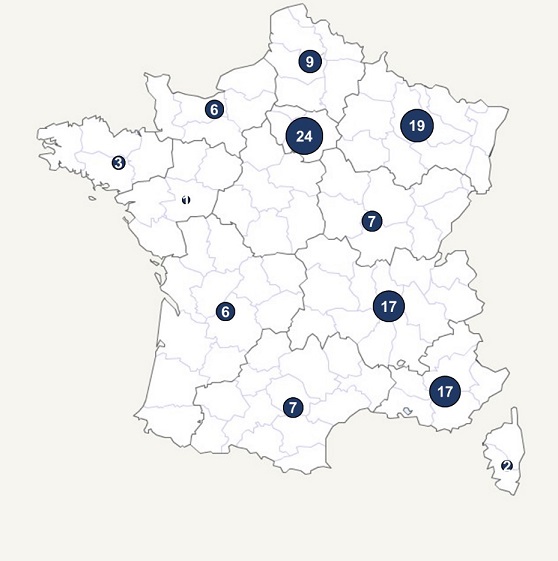
The 118 cases are spread over 12 metropolitan regions (Ile-de-France (24 cases), Grand-Est (19 cases), Auvergne-Rhône-Alpes (17 cases), Provence-Alpes-Côte d’Azur (17 cases) , Hauts-de-France (9 cases), Bourgogne-Franche-Comté (7 cases), Occitanie (7 cases), Normandy (6 cases), New Aquitaine (6 cases), Brittany (3 cases), Corsica (2 cases) and Pays de la Loire (1 case)) with a median age of 4 years, and concern 57 girls and 61 boys.

Figure 2 – Geographical distribution of confirmed cases of salmonellosis due to Salmonella Typhimurium, monophasic variant (cluster 1 HC5_296366 and cluster 2 HC5_298160), by region of residence – metropolitan France, weeks 2 to 18, 2022
Figure 2 - Geographical distribution of confirmed cases of salmonellosis due to Salmonella Typhimurium, monophasic variant (cluster 1 HC5_296366 and cluster 2 HC5_298160), by region of residence - metropolitan France, weeks 2 to 18, 2022

Fifty-one cases were questioned by Public Health France. All the cases, except 1, report, before the onset of their symptoms (which occurred between 20/01 and 04/04/2022), the consumption of chocolates of the brand cited here.

Twenty-two people were hospitalized for their salmonellosis, all since discharged. No deaths were reported.

The foods in question having been identified and the management measures taken, the weekly situation updates are drawn up. Public Health France continues to monitor the reporting of cases by the NR, which are expected due to the different delays inherent in monitoring ( see the infographic dedicated to food alerts ).

The successive withdrawals and recalls of the Kinder brand products concerned, produced by the Belgian factory with its closure by the Belgian authorities, should limit the occurrence in France of new cases of salmonellosis in connection with these chocolates.

The possible identification of new cases with dates of isolation at a distance from the recall withdrawal measures will be the subject of investigations if necessary.

To find out the list of products concerned by the withdrawal-recall: https://rappel.conso.gouv.fr/

People who have consumed the products mentioned above and who present symptoms (gastrointestinal disorders, fever within 72 hours of consumption), are invited to consult their doctor without delay, notifying him of this consumption.

In order to limit person-to-person transmission (especially in households with young children), it is recommended to wash your hands well with soap and water after using the toilet, after changing your child, and before to cook.

USA – CDC investigates two cruise ship outbreaks – Cause Unknown

Outbreak News Today

The Centers for Disease Control and Prevention’s (CDC) Vessel Sanitation Program (VSP) reports investigating two outbreaks on recent cruise ship voyages- Seabourn Cruise Lines, Seabourn Odyssey and Carnival Cruise Line’s Carnival Splendor.

Seabourn Odyssey: 20 passengers and crew on a recent voyage (April 28–May 19, 2022) were sickened with symptoms of diarrhea and vomiting.

The etiology of the outbreak is unknown.

In response to the outbreak, Seabourn Cruise Lines and the crew aboard the ship reported the following actions:

  • Increased cleaning and disinfection procedures according to the ship’s outbreak prevention and response plan.
  • Sent daily reports of gastrointestinal illness cases to VSP.
  • Consulted with VSP about sanitation cleaning procedures and reporting ill cases.

Carnival Splendor: 93 passengers and crew have reported being ill during the May 24–31, 2022 voyage.

Like the Seabourn outbreak, individuals affected on this cruise suffered from vomiting and diarrhea. The cause of the outbreak is unknown.

USA – Outbreak Investigation of Hepatitis A Virus: Strawberries (May 2022)

FDA

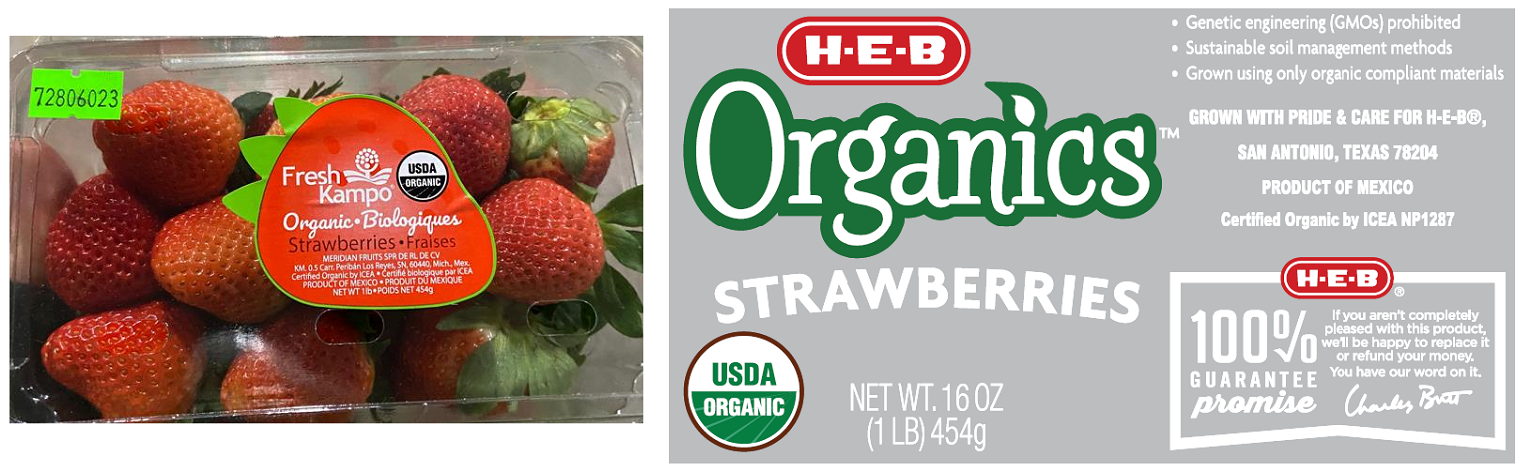
The FDA, along with CDC, and state and local partners, is investigating a multistate outbreak of hepatitis Ainfections in the United States linked to fresh organic strawberries. These potentially contaminated strawberries were imported from Baja California, a state in northern Mexico and branded as FreshKampo and HEB by a common supplier; they were purchased between March 5, 2022, and April 25, 2022. The Public Health Agency of CanadaExternal Link Disclaimer and the Canadian Food Inspection AgencyExternal Link Disclaimer are also investigating an outbreak of hepatitis A. Imported fresh organic strawberries have been identified as the likely source of that outbreak.

Currently, these fresh organic strawberries branded as FreshKampo and HEB products are past shelf life and are not available for purchase in stores. People who purchased FreshKampo and HEB fresh organic strawberries between March 5, 2022, and April 25, 2022, and then froze those strawberries for later consumption should not eat them. These products may have been sold at the following retailers, including, but not limited to:

  • HEB
  • Kroger
  • Safeway
  • Sprouts Farmers Market
  • Trader Joe’s
  • Walmart
  • Weis Markets
  • WinCo Foods

If you are unsure of what brand you purchased, when you purchased your strawberries, or where you purchased them from prior to freezing them, the strawberries should be thrown away.

Epidemiologic and traceback data show that fresh organic strawberries are a likely source of illness in this outbreak. Illness onset dates range from March 28 – April 30, 2022. Records from outbreak-associated cases in California and Minnesota show cases having purchased FreshKampo brand fresh organic strawberries prior to becoming ill. These purchases occurred between March 5, 2022, and April 25, 2022. The traceback investigation for these cases shows that the strawberries were imported from Baja California, Mexico by a common supplier.  Strawberries that were identified in shipments purchased by cases were sold under both the FreshKampo and HEB brands.

As this investigation is ongoing, additional products may be included. More information will be provided in this advisory as it becomes available.

Recommendation

Consumers, restaurants, and retailers should not sell, serve, or eat any fresh organic strawberries branded as FreshKampo or HEB if purchased between March 5, 2022, and April 25, 2022. People who purchased the fresh strawberries and then froze those strawberries for later consumption should not eat them. They should be thrown away. Currently, the potentially contaminated product is past its shelf life. If you are unsure of what brand you purchased, when you purchased your strawberries, or where you purchased them from prior to freezing them, the strawberries should be thrown away.

If consumers purchased fresh organic strawberries branded as FreshKampo or HEB between March 5, 2022, and April 25, 2022, ate those berries in the last two weeks, and have not been vaccinated against hepatitis A, they should immediately consult with their healthcare professional to determine whether post exposure prophylaxis (PEP) is needed. PEP is recommended for unvaccinated people who have been exposed to hepatitis A virus in the last two weeks because vaccination can prevent a hepatitis A infection if given within 14 days of exposure. Those with evidence of previous hepatitis A vaccination or previous hepatitis A infection do not require PEP.

Contact your healthcare provider if you think you may have symptoms of a hepatitis A infection after eating these fresh organic strawberries, or if you believe that you have eaten these strawberries in the last two weeks.

Product Images

Outbreak Investigation of Hepatitis A Virus: Strawberries (May 2022) - Sample Product Images

Case Counts

Total U.S. Illnesses: 17
Hospitalizations: 12
Deaths: 0
Last illness onset: April 30, 2022
States with Cases: CA (15), MN (1), ND (1)
Product Distribution: Nationwide

Useful Links

Germany – Various JIF branded peanut butter products – Salmonella

LMW

Alert type: Food
Date of first publication: 06/02/2022
Product name:

various JIF branded peanut butter products

Product images:

Product Image.png

FDA sample product image

Manufacturer (distributor):

JM Smucker Company

Reason for warning:

possible contamination with Salmonella Senftenberg

Packaging Unit: various
Durability: see batch number / lot identification
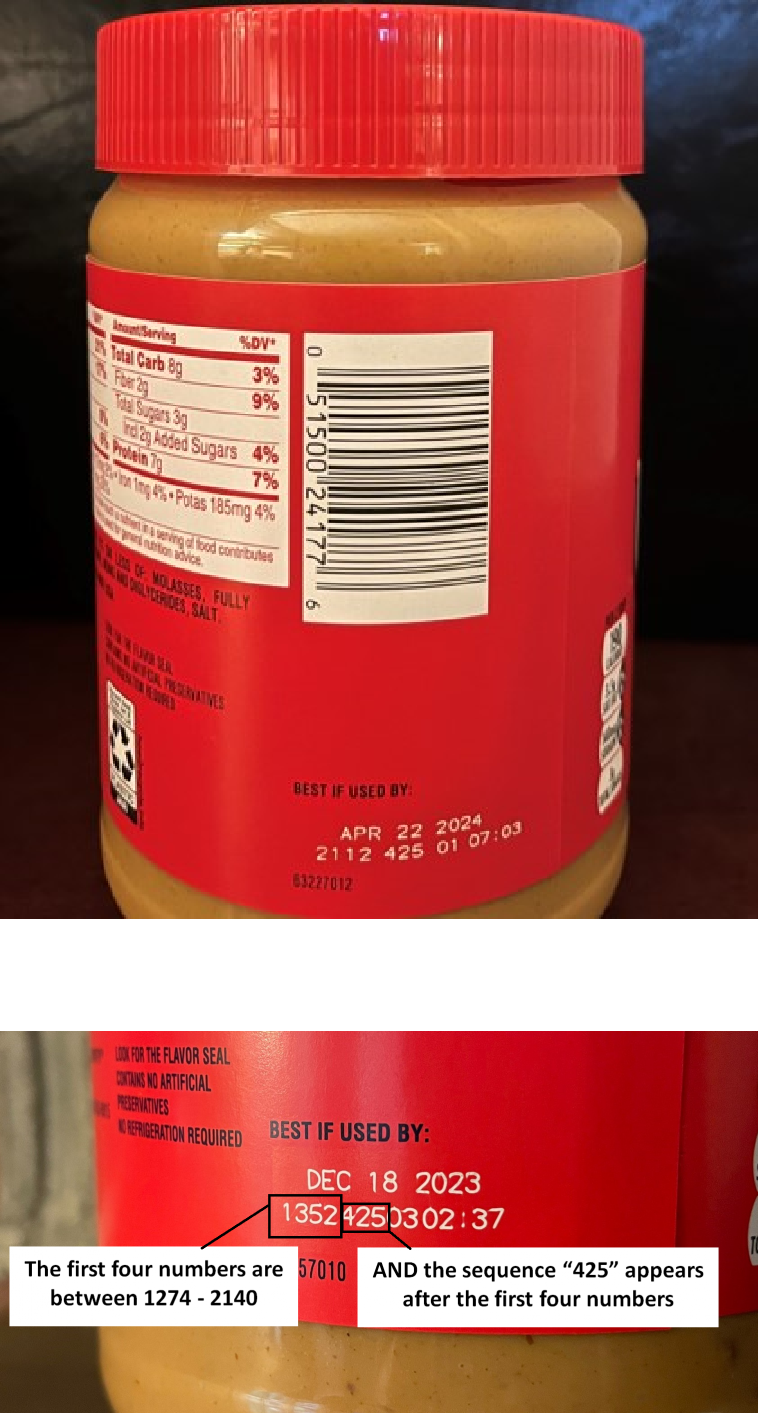
Lot identification: Lot numbers: 1274425 – 2140425
Further information:

Reference to a public warning from the US Food and Drug Administration:

ossible contamination with Salmonella Senftenberg in peanut butter products from the USA

As of June 1st, 2022

The US Food and Drug Administration (FDA) warns against consuming certain “JIF” branded peanut butter products.

On May 24, 2022, JIF announced that it had initiated a voluntary recall of certain lots of potentially affected products. The product designation can be found in the attachment.

The recall is related to an outbreak of Salmonella Senftenberg in the United States.

The products were distributed within the USA and other third countries, as well as in Spain. The products mentioned are currently not recognizable in Germany.

There is a possibility that consumers could have purchased the products online via marketplaces or through short-term stays in the Member States and third countries in which sales took place.

The FDA advises consumers to observe the following points:

  1. Check if you have JIF peanut butter in the house.
  2.  Locate the batch code on the back of the jar under the best before date (see product image).
  3. If the first four digits of the batch code are between 1274 and 2140 and the next three digits after that are “425”, this product has been recalled and you should not consume it.

The FDA warns against using the products mentioned as feed for animals.

For more information on the FDA’s warning, please visit the following link: https://www.fda.gov/food/outbreaks-foodborne-illness/outbreak-investigation-salmonella-peanut-butter-may-2022

You can find the manufacturer’s recall under the following link: https://jms-s3-mkt-consumer-p-pmc6.s3.us-east-2.amazonaws.com/recall.html

Salmonella:

Salmonella disease manifests itself within a few days after infection with diarrhoea, abdominal pain and occasionally vomiting and a slight fever. The symptoms usually subside on their own after a few days. Babies, small children, senior citizens and people with a weakened immune system in particular can develop more severe illnesses. Anyone who has eaten this food and develops severe or persistent symptoms should seek medical attention and report possible salmonella infection. It makes no sense to seek preventive medical treatment without symptoms.

Further information on salmonella, also in other languages, can be found here: http://www.infection-protection.de/erregersteckbriefe/salmonellen

BVL Email:

poststelle@bvl.bund.de

RASFF Alert – Possible foodborne outbreak suspected to be caused by fresh tuna fish – Czech Republic – Histamine

RASFF

Possible foodborne outbreak suspected to be caused by fresh tuna fish from India via Netherlands in the Czech Republic

Research – Public Health Response to Multistate Salmonella Typhimurium Outbreak Associated with Prepackaged Chicken Salad, United States, 2018

CDC

Abstract

Quantifying the effect of public health actions on population health is essential when justifying sustained public health investment. Using modeling, we conservatively estimated that rapid response to a multistate foodborne outbreak of Salmonella Typhimurium in the United States in 2018 potentially averted 94 reported cases and $633,181 in medical costs and productivity losses.

The US Centers for Disease Control and Prevention estimates that 48 million illnesses, 128,000 hospitalizations, and 3,000 deaths are caused by foodborne illnesses each year in the United States (1). Salmonella alone accounts for 1.35 million illnesses, 26,600 hospitalizations, and 421 deaths in the United States annually (2). Although incidence of Salmonella enterica serotype Typhimurium has declined since 2000, infection with this serotype continues to pose a public health burden because it can result in higher rates of hospitalization and longer lengths of stay in a hospital relative to other serotypes (36). A subset of Salmonella illnesses are identified and reported as part of an outbreak (defined as >2 persons who become ill from the same exposure); 96% of Salmonella outbreaks are caused by foodborne transmission (7). Outbreaks provide an opportunity to identify implicated food vehicles, as well as root causes for contamination, which can in turn inform broader food safety prevention efforts. If a Salmonella outbreak is suspected, public health officials can limit further cases by quickly identifying the source and issuing a recall for the implicated product or making other recommendations for restricting exposure to it.

Research – Foodborne Illness Outbreaks Reported to National Surveillance, United States, 2009–2018

CDC

Abstract

Foodborne outbreaks reported to national surveillance systems represent a subset of all outbreaks in the United States; not all outbreaks are detected, investigated, and reported. We described the structural factors and outbreak characteristics of outbreaks reported during 2009–2018. We categorized states (plus DC) as high (highest quintile), middle (middle 3 quintiles), or low (lowest quintile) reporters on the basis of the number of reported outbreaks per 10 million population. Analysis revealed considerable variation across states in the number and types of foodborne outbreaks reported. High-reporting states reported 4 times more outbreaks than low reporters. Low reporters were more likely than high reporters to report larger outbreaks and less likely to implicate a setting or food vehicle; however, we did not observe a significant difference in the types of food vehicles identified. Per capita funding was strongly associated with increased reporting. Investments in public health programming have a measurable effect on outbreak reporting.

Foodborne diseases remain a major public health challenge in the United States, where 31 known pathogens cause an estimated 9 million illnesses, 56,000 hospitalizations, and 1,300 deaths annually (1). Efforts to improve food safety and reduce the burden of foodborne disease rely on data from foodborne disease surveillance and outbreak investigations to help prioritize food safety interventions, policies, and practices. Data from foodborne illness outbreaks reported to the Centers for Disease Control and Prevention (CDC) provide vital information on the foods causing illness and common food–pathogen pairs. Those data are used by the Interagency Food Safety Analytics Collaboration (IFSAC) to inform outbreak-based attribution models that attribute illnesses to specific food categories (2,3).

Foodborne illness outbreaks are investigated by local, state, and territorial health departments, CDC, the US Food and Drug Administration (FDA), and the Food Safety and Inspection Service of the United States Department of Agriculture and are reported to CDC’s Foodborne Disease Outbreak Reporting Surveillance System (FDOSS) through the web-based National Outbreak Reporting System (NORS). Although reported outbreaks are a rich data source, they represent a subset of all outbreaks occurring in the United States; not all outbreaks will be detected, investigated, and reported. Factors influencing which outbreaks are detected, investigated, and reported to CDC include both structural factors associated with the jurisdiction in which the outbreak occurred (e.g., infrastructure and capacity) and characteristics of the outbreak (e.g., size, geographic location, pathogen).

We integrated data from a variety of sources to examine structural factors and describe outbreak characteristics of foodborne outbreaks involving Salmonella, Shiga toxin–producing Escherichia coli (STEC) O157, norovirus, and bacterial toxins that were reported to national surveillance. In addition, we assessed the effects of state variation in outbreak reporting on the types of food vehicles identified.

Moldova – Cronobacter found in Numil infant formula

ANSA

The National Food Safety Agency informs consumers that, following the notification of the European food alert system RASFF 2022.2901, regarding the non-compliant powdered milk product: “Mixture of powdered milk with prebiotics for children – from birth, with rapid preparation”, lot. L02.05.2022 and L28.04.2022, valid until 12.10.2023, exporter: PW Proszki Mleczne, Poland, imported into the Republic of Moldova by the food business operator “PȘENEAC”, the Agency urgently ordered the withdrawal from the network of trade in the said lots.

Product information:

Product name: “Mixture of milk powder with prebiotics for children – from birth, with rapid preparation”;

Trademark: “NUMIL”;

Lot: 02.05.2022 and 28.04.2022;

Net weight: 900 gr;

Valid until 12.10.2023;

Exporter: PW Proszki Mleczne, Poland;

Importer: “PȘENEAC”, Republic of Moldova.

Under current legislation, food business owners who own non-compliant products are required to withdraw them from the market and cooperate with the National Agency for Food Safety on actions taken to avoid or reduce the risks to human health posed by a product. non-compliant food.

Non-compliant food business owners who have not taken steps to withdraw these products from the market are liable for legal liability.

 People who have purchased these products are asked not to feed them and are entitled to return them to the shops where they were purchased.

In case of non-compliant foodstuffs or deviations from the provisions of consumer protection legislation, citizens are urged to petition the Agency.

Green Line: 0 800 800 33;

Viber: 067675544;

e-mail: sesizare@ansa.gov.md.

The action is in progress

Cambodia – About 50 people sick in suspected mass food poisoning

Khmer Times

At least 50 people are seeking for treatment after a suspected mass food poisoning incident. The people all ate raw vegetables in a festival.

Of the 52 people who were poisoned 20 were rushed to the Maung Russey District Health Centre and Referral Hospital. According to the inspector, this case is still being investigated by the specialized police force.