Category Archives: Food Hygiene

USA – Additional patients identified in outbreak tied to organic yogurt; one in Arizona – E.coli O157

Food Safety News

More patients are being identified by investigators working on an E. coli O157 outbreak that has been limited to Washington State. However, today Arizona officials confirmed there is a child in that state with an infection from the same strain of the pathogen.

There are 11 confirmed patients in Washington in the outbreak linked to locally produced organic yogurt sold by Pure Eire Dairy. Another three probable patients are from the Moses Lake area in Grant County, WA. Teresa McCallion of the Washington Department of Health said it is not unusual for counties and local health departments to know of probable cases before they are added to the state’s tally.

“We only report confirmed cases,” McCallion told Food Safety News on Wednesday evening. The Washington Health Department is working on a special outbreak information web page, which McCallion said should be available soon.

Spain – Alert for the presence of Listeria monocytogenes in marinated smoked salmon from Spain

ACSA

The Spanish Agency for Food Safety and Nutrition has become aware through the Coordinated System of Rapid Exchange of Information (SCIRI), of an alert notification transferred by the health authorities of the Autonomous Community of Andalusia regarding the presence of Listeria monocytogenes, in smoked salmon marinated with dill made in Spain.

The presence of Listeria monocytogenes above the established limits has been detected as a result of an official control carried out by the health authorities of the Autonomous Community of Andalusia.

The manufacturing company has contacted its customers and is managing the withdrawal of product from market.

The data of the product involved are:

  • Product name on the label: Smoked salmon marinated with dill
  • Brand: Royal
  • Lot: 1098B1-098
  • Expiry date: 23/05/2021
  • Barcode: EAN841248-051128-0
  • Unit weight: 80 g
  • Temperature: Cooling

The product has been distributed to all the autonomous communities.

This information has been transferred to the competent authorities of the Autonomous Communities through the SCIRI, in order to verify the withdrawal of the affected products from the marketing channels.

With the information available, no case associated with this alert has been confirmed in Spain.

As a precautionary measure, it  is recommended that people who have lots of the products listed above at home, refrain from consuming them and return them to points of sale.

In the case of having consumed these products from the affected batches and presenting any symptoms compatible with Listeriosis (vomiting, diarrhoea and fever), it is recommended to go to a health center.

For more information on this disease, you can call CatSalut 24 hours a day (061).

In the event that new information on this withdrawal is available, ASPCAT will update this statement.

Korea – Food poisoning bacteria found in 15 kimchi products from China

Korean Times

Yersinia p

Food poisoning bacteria were detected in 15 out of 289 kimchi products imported from China, according to the Ministry of Food and Drug Safety, Tuesday.

Two out of four Chinese salt-cured cabbage products were also found to have used preservatives that are not permitted in Korea.


It examined the 289 products from 55 Chinese companies imported here, and detected Yersinia enterocolitica, a type of food poisoning bacteria, in 15 of them.

USA – USDA – Outbreak Investigations

FSIS USDA

The table below lists outbreak investigations in which FSIS responded by posting a recall of FSIS-regulated product linked to illness, a public health alert, and/or an after-action review report. The table does not include outbreak investigations that did not result in one or more of these outcomes.

Outbreak Year Pathogen Product Outcomes & References Active
2021 Salmonella Hadar Turkey, ground FSIS Public Notification: FSIS Issues Public Health Alert for Raw Ground Turkey Products Linked to Salmonella Hadar Illness

CDC Notice: Salmonella Outbreak Linked to Ground Turkey

Yes
2021 Salmonella Enteritidis Chicken, raw, breaded, stuffed (suspect) Yes
2021 Escherichia coli O157:H7 (E. coli) Beef, ground (suspect) No
2021 Escherichia coli O145 (E. coli) Beef, ground (suspect) No
2021 Escherichia coli O157:H7 (E. coli) Unknown

CDC Notice: View CDC Investigation Notice

No
2021 Listeria monocytogenes Unknown No

France – Product recall: Unbranded mackerel fillet – Histamine

Oulah

Product recall: Unbranded mackerel fillet

ENCOUNTERED PROBLEM

Presence of histamine

PROPOSED SOLUTION

People who may have this product are asked not to consume it and to return it to the point of sale where it was purchased.

Histamine poisoning is manifested by allergic-type reactions triggered when histamine is absorbed in high amounts. The symptoms most often encountered are: facial-cervical redness, rash, itching, tingling of the skin. They are generally followed by neurological disorders: headache, heart palpitations, dizziness. Secondary symptoms, of a gastrointestinal nature, may appear: nausea, stomach pain, vomiting, diarrhea. Symptoms appear immediately or several hours after ingestion of food. They normally disappear within a few hours, but can exceptionally last for several days. In rare cases (high doses of histamine and sensitivity of the subject), the allergic reaction can then go up to histamine shock.

If you think you are having symptoms of histamine poisoning, seek medical advice immediately.

FURTHER INFORMATION

▸ Names of models or references
Fresh mackerel fillet packaged self-service mackerel fillet in the traditional department


▸ Barcode
203756029718


▸ Lot
1118411229


▸ DLC – DDM
05/05/2021


▸ Packaging
packed in trays in transparent film


▸ Start date / End of marketing
From 04/30/2021 to 05/05/2021


▸
YFFINIAC geographic sales area


▸
HYPER U YFFINIAC distributors (22120) shopping center in the bay


▸ Consumer service contact
0296633633


▸ Source
YFFINIAC DISTRIBUTION COMPANY SAS SDY HYPER U

France – Product recall: MAISON CHEVALLIER canned cooked meals – DSP

Oulah

Product recall: MAISON CHEVALLIER canned cooked meals

ENCOUNTERED PROBLEM

Health risk, linked to the lack of stability test. (microbiological)
Marine biotoxins DSP (diarrheal toxins)
Manufacturing defect, sealing defect (ex: micro leaks, defective heat sealing) or packaging anomalies

PROPOSED SOLUTION

Do not consume and return to the point of sale for reimbursement

FURTHER INFORMATION

▸ Names of the models or references
• Country
pâté • Country pâté
• Rabbit terrine with prunes
• Rabbit terrine with duck foie gras • Pork terrine with duck
foie gras
• Lamb semolina
• Duck
parmentier • Diots crozets
• Quinoa salmon
• Sauerkraut
• Beef bourguignon
• Savoyard stew
• Blanquette of veal
• Chicken curry


▸ Packaging
Canned in glass


▸ Start date / End of marketing
From 12/01/2020 to 05/06/2021


▸ Health mark
FR 74 006 007 CE


▸ Geographical sales area
AIN (01), LOIRET (45), MARNE (51), SAVOIE (73), HAUTE-SAVOIE (74)


▸
MAISON CHEVALLIER – TRES ALPAIN distributors


▸ List of points of sale
Click here


▸ Consumer service contact
0450695241


▸ Source
SARL CHEVALLIER

Hong Kong – Listeria monocytogenes in Cheese Products

CFS

Food Safety Focus (94th Issue, May 2014) – Incident in Focus

Listeria monocytogenes in Cheese Products

Reported by Ms. Janny MA, Scientific Officer,
Risk Assessment Section,
Centre for Food Safety

On 18 April 2014, the US Centers for Disease Control and Prevention (CDC) announced its final investigation on a listeriosis outbreak which involved eight persons, including two mother-newborn pairs and a newborn, with one death in the US. Results of the investigation, with food (fresh cheese curd) and environmental samples tested positive for Listeria monocytogenes, indicated that cheese products made by Roos Foods were the likely source of the outbreak. This article discusses the risk of L. monocytogenes in cheese products.

Cheeses

Cheeses can generally be obtained by coagulating the protein of milk and by partially draining the whey resulting from the coagulation. Nowadays, over 500 types of cheeses are available worldwide, with variations deriving from different cheese manufacturing processes, e.g. type of milk, coagulation method, starting culture, addition of salt and ripening etc.

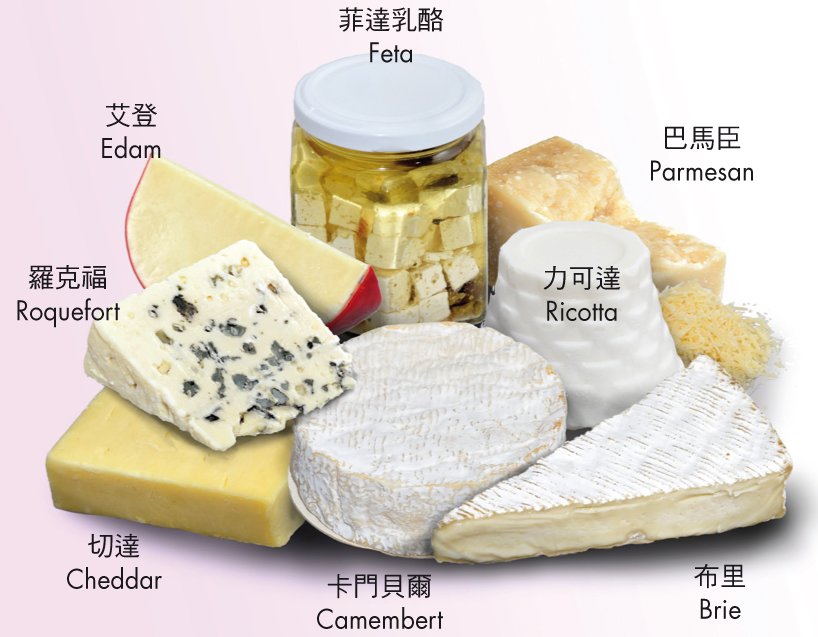
Various types of cheeses are available on the local market

In fact, there are various ways to categorise cheeses. Traditionally, cheeses have been classified principally by their moisture content-

Soft cheese – Has a higher moisture content, e.g. Feta, Brie, Camembert

Semi-hard cheese – Moisture content sits between soft and hard cheeses, e.g. Edam, Gouda

Hard cheese – Has a lower moisture content, e.g. Cheddar, Emmental

Extra hard cheese – Dry, slightly brittle, suitable for grating, e.g. Parmesan

Cheeses may also be grouped according to their principal ripening –

Unripened/ Fresh cheese – Ready for consumption soon after manufacture, e.g. Cottage cheese, Ricotta

Ripened cheese – Not ready for consumption shortly after manufacture; must be held for such time, temperature and other conditions that results in the necessary biochemical and physical changes characterising the cheese, including –

  • Mould ripened cheese – ripening has been accomplished primarily by the development of characteristic mould growth
  • Internal mould ripened: c haracterised by the growth of Penicillium roquefortii resulting a network of blue and green veins throughout the cheese (blue cheese), e.g. Danish blue, Roquefort, Stilton
  • Surface mould ripened: characterised by the growth of Penicillium camemberti on the cheese surface, e.g. Brie, Camembert
  • Cheese in brine – has no actual rind and preserved in brine e.g. Feta

Listeria monocytogenes in Cheeses

Cheeses, particularly soft cheeses, have been implicated in listeriosis outbreaks worldwide. Foodborne listeriosis is a relatively uncommon but serious disease caused by L. monocytogenes, a pathogen that can be killed under normal cooking temperature but is able to grow slowly at refrigerated temperature as low as 0°C. Asymptomatic infection of listeriosis probably occurs in most healthy people, but it can pose serious health risks for the susceptible population including pregnant women, elderly and immunocompromised individuals such as patients with AIDS and diabetes mellitus.

The presence of L. monocytogenes in cheeses may be originated from the ingredients particularly raw milk or can come from the processing plant environment, including the equipment, personnel or cross-contamination between finished products and raw materials. If the temperature as well as other conditions especially acidity and water content permit, L. monocytogenes can grow to high levels upon prolonged storage.

Cheeses of Higher or Lower Risk

Since pasteurisation, by heating milk to a specific temperature for a set period of time, kills L. monocytogenes effectively, cheeses made with pasteurised milk are generally considered of lower risk unless post-process contamination occurs.

For cheeses made with unpasteurised milk, their safety relies on a range of factors that influence the presence, growth, survival and inactivation of pathogenic microorganisms including L. monocytogenes.

In general, soft cheeses made with unpasteurised milk are of much higher L. monocytogenes risk than hard/ extra hard cheeses made with unpasteurised milk as the formers are likely to be less acidic and contain more moisture, which provide a favourable environment for the growth of L. monocytogenes, than the latter. A recent risk assessment study conducted by Food Standards Australia New Zealand also pointed out that the estimated L. monocytogenes risk from the consumption of certain raw milk soft cheeses i.e. feta and camembert is low in the general population but is high in the susceptible population. However, the L. monocytogenes risk upon the consumption of raw milk cheddar cheese (a type of hard cheese) and extra hard cheese in the general and susceptible populations is negligible and low/ very low respectively.

Key Points to Note:

  1. Cheeses, particularly soft cheeses, have been implicated in outbreaks of listeriosis worldwide.
  2. Cheeses made with pasteurised milk are generally considered of lower risk.
  3. Soft cheeses made from unpasteurised milk are the most risky.

Advice to susceptible populations

  • Read food labels and choose cheeses carefully before consumption.
    • Hard and extra hard cheeses are generally safe.
    • Avoid soft cheeses (e.g. Feta, Brie, Camembert) and blue cheeses (e.g. Danish blue, Gorgonzola and Roquefort).
    • For other types of cheeses, choose only those made from pasteurised milk.
    • Do not eat if in doubt.
  • Store cheese products strictly in accordance with the instructions on the labels.

Advice to the trade

  • Maintain good food and personal hygiene and avoid cross-contamination.
  • Provide sufficient information on food label for the consumers to make informed food choices.
    • Properly label whether the cheese products are made from raw/ unpasteurised or pasteurised milk.
    • Consider providing more information e.g. description on firmness of the cheese products.

Sweden and Denmark – Salmonella sickens up to 50 in Denmark and Sweden; food source suspected

Food Safety News

Danish authorities are investigating Salmonella Braenderup infections that are related to an outbreak in Sweden. In Denmark, 24 people have fallen sick since late March while in Sweden, there are 22 confirmed patients since mid-April.

An international outbreak investigation is ongoing and the European Centre for Disease Prevention and Control (ECDC) is helping with cross-border coordination.

Between March 26 and April 26, 24 cases of Salmonella Braenderup have been reported to the Statens Serum Institut in Denmark. Those affected live all over the country with 17 women and seven men aged 1 to 90 years old sick. The median age is 67 years of age.

Work is underway to clarify the cause of the outbreak and identify the source of infection, which is suspected to be a widely distributed food.

USA – Faribault Foods, Inc. Announces Extension of Voluntary Recall of a Limited Quantity of S&W Brand Organic Black Beans, and O Organic Brand Black Beans and O Organic Brand Chili Beans Due to Compromised Hermetic Seal – Clostridium

FDA

kswfoodworld

Faribault Foods, Inc. is voluntarily recalling 15 ounce cans of S&W Organic Black Beans, 15 ounce cans of O Organic Brand Black Beans and 15 ounce cans of O Organic Brand Chili Beans because the cans may have a compromised hermetic seal. The compromised hermetic seal may affect can integrity and may cause the cans to leak, bloat or allow bacteria to grow inside the product which could lead to serious illness. Clostridium botulinum poisoning in humans can begin from six hours to two weeks after eating food that contains the toxin. Symptoms may include double vision, blurred vision, drooping eyelids, slurred speech, difficulty swallowing, and muscle weakness. Botulism poisoning can cause paralysis of the breathing muscles, which can result in death unless assistance with breathing (mechanical ventilation) is provided.

The recalled products were distributed to the States of CA, WA, UT, OR, AZ, CO, AK, HI, TX, GA, and ID in retail stores.

This event only affects the lot codes listed below: The lot codes are printed on the bottom of the can.

Product Lot Number Distribution Dates
S&W Organic Black Beans, 15 oz. Best By JUL 19 2022
1329A 202 20
August 2020-October 2020
S&W Organic Black Beans, 15 oz. Best By JUL 20 2022
1329A 203 20
September 2020-March 2021
S&W Organic Black Beans, 15 oz. Best By JUL 23 2022
1329A 205 20
August 2020-November 2020
S&W Organic Black Beans, 15 oz. Best By SEP 13 2022
1329A 258 20
November 2020-March 2021
S&W Organic Black Beans, 15 oz. Best By SEP 14 2022
1329A 259 20
November 2020-March 2021
S&W Organic Black Beans, 15 oz. Best By SEP 15 2022
1329A 260 20
October 2020-December 2020
S&W Organic Black Beans, 15 oz. Best By MAR 11 2023
1329A 071 21
March 2021-April 2021
S&W Organic Black Beans, 15 oz. Best By MAR 14 2023
1329A 074 21
April 2021
S&W Organic Black Beans, 15 oz. Best By MAR 15 2023
1329A 075 21
April 2021
S&W Organic Black Beans, 15 oz. Best By MAR 16 2023
1329A 076 21
March 2021-April 2021
S&W Organic Black Beans, 15 oz. Best By JAN 31 2023
1329A 032 21
February 2021-April 2021
S&W Organic Black Beans, 15 oz. Best By FEB 01 2023
1329A 033 21
February 2021-April 2021
S&W Organic Black Beans, 15 oz. Best By FEB 02 2023
1329A 034 21
February 2021-April 2021
S&W Organic Black Beans, 15 oz. Best By FEB 03 2023
1329A 035 21
February 2021-April 2021
O Organics Organic Black Beans, 15 oz. Best By FEB 03 2023
981A 035 21
February 2021-April 2021
O Organics Organic Chili Beans, 15 oz. Best By FEB 04 2023
978A 036 21
February 2021-April 2021

No other production codes, sizes or brands of Faribault Foods, Inc. products are affected by this recall.

Consumers who may have purchased the products listed above should return them to the store where purchased for a refund or replacement.

The recall was initiated after the firm had received consumer and customer complaints regarding failure of the hermetic seal. The problem related to the hermetic seal failure was corrected and no other product is affected.

The quality and safety of our products are the top priority for our company. We apologize to our retail customers and consumers and sincerely regret any inconvenience created by this recall. We are working with the U.S. Food and Drug Administration on this voluntary recall and will cooperate with them fully.

For consumer support and product questions please call 1-888-201-6440, Monday-Friday from 8am to 5pm CST or email BeanTeam@FaribaultFoods.com

Original Press Release


Company Contact Information

Consumers:
 1-888-201-6440
 BeanTeam@FaribaultFoods.com

France – Product recall: JOSEP LLORENS brand chorizo ​​sarta picante – Salmonella

Oulah

Product recall: JOSEP LLORENS brand chorizo ​​sarta picante

ENCOUNTERED PROBLEM

Presence of salmonella

PROPOSED SOLUTION

People who may have this product are asked not to consume it and to return it to the point of sale where it was purchased.

Foodborne illness caused by salmonella results in gastrointestinal disturbances, diarrhea, vomiting and abdominal pain, often accompanied by fever; these symptoms may be more severe in young children, immunocompromised individuals and the elderly. The incubation period can range from 6 to 72 hours.
People who have consumed the products mentioned below and who have these symptoms are invited to consult their doctor, notifying him of this consumption.

FURTHER INFORMATION

▸ Barcode
8436004991341


▸ Lot
1021


▸ DLC – DDM
09/26/2021


▸ Health mark
ES 10.01760 / ZA


▸ Consumer service contact
For any further information, you can contact the Josep Liorens consumer service by dialing number: 06 89 02 05 18 – Non-surcharged call from Monday to Friday from 7 am to 3 pm.


▸ Source
https://www.carrefour.fr/