Category Archives: Food Hygiene

RASFF Alert – Listeria monocytogenes – Guacamole

RASFF-Logo

RASFF – Listeria monocytogenes (up to <40 CFU/g) in guacamole from Belgium in France

RASFF Alert – E.coli – Live Clams

RASFF-Logo

RASFF – too high count of Escherichia coli (between 330 and 780 MPN/100g) in live clams (Chamelea Gallina) from Italy in Italy

RASFF Alert -Foodborne Outbreak – Raw Milk Sheep Cheese – Salmonella

RASFF-Logo

RASFF – foodborne outbreak suspected to be caused by and Salmonella enterica ser. Enteritidis (presence /25g) in raw milk sheep’s cheese from France in France

RASFF Alert – Vibrio parahaemolyticus – Frozen Cooked Whole Crayfish (Procambarus clarckii) in Dill Brine

RASFF-Logo

RASFF – Vibrio parahaemolyticus (presence /20g) in frozen cooked whole crayfish (Procambarus clarckii) in dill brine from China in Sweden

RASFF Alert – Food Poisoning – Food Supplements

RASFF-Logo

RASFF – food poisoning suspected to be caused by food supplements from Spain, via Germany in France

RASFF Alert – Moulds – Liquid Candy in Spray

RASFF-Logo

RASFF – high count of moulds (7 out of 12) in liquid candy in spray from Spain in Spain

RASFF Alerts – STEC E.coli – Soft Cheese

RASFF-Logo

RASFF – shigatoxin-producing Escherichia coli (stx1+ stx2- eae-) in soft cheese from Belgium in Germany

RASFF Alerts – Aflatoxin – Groundnuts -Peanut Butter – Mixed Nuts – Dried Fig Cubes – Cayenne Pepper – Hazlenut Kernels – Pistchios – Chilli Powder – Dried Figs

RASFF-Logo

RASFF – aflatoxins (B1 = 2.6; Tot. = 3.3 µg/kg – ppb) in groundnuts with shell from Argentina in the UK

RASFF – aflatoxins (B1 = 149.1; Tot. = 168.55 µg/kg – ppb) in groundnuts from the United States in Slovakia

RASFF – aflatoxins in organic peanut butter from the Netherlands, with raw material from Germany in the Netherlands

RASFF – aflatoxins (B1 = 15; Tot. = 17.9 µg/kg – ppb) in groundnuts from Egypt in Italy

RASFF – aflatoxins (B1 = 3.1; Tot. = 3.7 µg/kg – ppb) in mixed nuts from Turkey in France

RASFF – aflatoxins (B1 = 11.1; Tot. = 16.6 µg/kg – ppb) in dried fig cubes from Turkey in France

RASFF – aflatoxins (B1 = 9.1; Tot. = 18.5 µg/kg – ppb) in dried figs cubes from Turkey in France

RASFF – aflatoxins (B1 = 7.8 µg/kg – ppb) in groundnuts with shell from India in the UK

RASFF – aflatoxins (B1 = 90; Tot. = 103 µg/kg – ppb) in ground nuts from China in Belgium

RASFF – aflatoxins (B1 = 11.1; Tot. = 11.6 µg/kg – ppb) in Cayenne pepper powder from India in the UK

RASFF – aflatoxins (B1 = 7.2 mg/kg – ppm) in hazelnut kernels from Georgia in Greece

RASFF – aflatoxins (B1 = 106.19; Tot. = 117.01 µg/kg – ppb) in pistachios with shell from the United States, dispatched from Turkey in Italy

RASFF – aflatoxins (B1 = 7.6 µg/kg – ppb) in chili powder from India in Belgium

RASFF – aflatoxins (B1 = 13.5; Tot. = 15.5 µg/kg – ppb) in groundnuts with shell from China in Spain

RASFF – aflatoxins (B1 = 21; Tot. = 29 µg/kg – ppb) in dried figs from Turkey in France

USA – FDA warns about fresh basil imported from Siga Logistics de RL de CV from Morelos in Mexico – Cyclospora

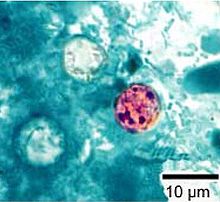
Food Safety News 220px-Cyclospora_cayetanensis_stained

Consumers should not buy, eat, or serve any fresh basil exported by Siga Logistics de RL de CV from Morelos, Mexico to the United States.

The fresh basil from Siga Logistics de RL de CV located in Morelos, Mexico is the subject of a multi-state outbreak investigation of Cyclospora illnesses potentially linked to fresh basil exported by Siga Logistics de RL de CV located in Morelos, Mexico.

As of July 9, health official found 132 illnesses in ten states that are attributed to the outbreak.   Four patients required hospitalization.   Restaurants in Florida, Minnesota, New York and Ohio exposed patrons to the parasite.

Cyclospora is a parasite typically transmitted by contaminated food.    Some areas, such as Massachusetts, are this year experiencing higher Cyclosproa case counts than normal. States with Cyclospora cases associated with the current outbreak are found in CT, FL, IA, MA, MN, NY, OH, RI, SC, and WI.

Australia – Listeria cases among at-risk persons are a timely reminder for food safety

Gov Au

The Australian Government Department of Health in collaboration with jurisdictions is currently investigating three cases of Listeria infections (listeriosis) occurring in Victoria, Queensland and New South Wales. All cases occurred in people aged over 70 years and all had significant underlying health conditions. Unfortunately two people (from NSW and Victoria) have died.

Investigations have implicated smoked salmon as the likely source. This is a timely reminder for people to ensure that food is handled, prepared and stored safely, and that those most at-risk of listeriosis avoid certain foods.

Listeriosis is an illness usually caused by eating food contaminated by the bacterium Listeria monocytogenes. The bacteria are widely distributed in the environment and can grow in food at refrigeration temperatures. Most people who are exposed to Listeria will only develop mild symptoms, though illness can be severe in those most at-risk. Those at increased risk of illness include pregnant women and their unborn babies, newborn babies, the elderly, and people of all ages with immune systems weakened by illness or medication.

If you (or someone in your household) have a weakened immune system or are pregnant, the best way to avoid Listeria is to eat freshly cooked or freshly prepared food.

Try to avoid foods that have a higher risk of Listeria contamination such as:

  • chilled seafood such as raw oysters, sashimi and sushi, smoked ready-to-eat seafood and cooked ready-to-eat prawns
  • cold meats from delicatessen counters and sandwich bars, and packaged, sliced ready-to-eat meats
  • cold cooked ready-to-eat chicken (whole, portions, or diced)
  • rockmelon
  • pre-prepared or pre-packaged fruit or vegetable salads, including those from buffets and salad bars
  • soft, semi-soft and surface-ripened cheeses such as brie, camembert, ricotta, blue and feta
  • refrigerated paté or meat spreads
  • soft serve ice cream
  • unpasteurised dairy products.

You can further reduce your risk by:

  • avoiding food that is past its best before or use by date
  • refrigerating leftovers promptly and using them within 24 hours, or freezing them
  • cooking food thoroughly
  • reheating food until it is steaming hot.

Listeria infection starts with flu-like symptoms such as fever, chills, muscle aches, nausea, and sometimes diarrhoea.

People can start experiencing symptoms within a few days, but symptoms can take a number of weeks to appear after eating a contaminated product.

For information on listeria and food visit the Food Standards Australia New Zealand website.

For more information see the Listeria fact sheet.

For information on foods to eat or avoid when pregnant visit the NSW Food Authority website.

For further information on the investigation into the cases of listeriosis please contact the relevant state health departments.