Category Archives: food contamination

USA – Clio Strawberry Granola & Yogurt Parfait Bar – Listeria monocytogenes – Enforcement Report

FDA

Product Description:

Clio Strawberry Granola & Yogurt Parfait Bar Net Wt. 1.94 OZ (55g ) UPC: 854021008152 Packaged in a cardboard box.

Reason for Recall: Possible contamination with Listeria monocytogenes

Product Quantity: 581 cases of 10 single units

Recall Number: F-0697-2023

Code Information: 048C2023 Expiration date:4/30/2023

Initial Firm Notification of Consignee or Public:

Two or more of the following: Email, Fax, Letter, Press Release, Telephone, Visit

Status: Ongoing

Distribution Pattern: Product distributed to distribution centers in IL, SC, MO, WA, GA, MN, FL, NC, ME, and CA. Then further distributed to retail stores in IA, IL, VA, WI, and NC.

Recalling Firm:

Clio LLC
141 Ethel Rd W
Piscataway, NJ 08854-5928
United States

Press Release URL(s):

03/14/2023

Recall Initiation Date: 3/7/2023

Center Classification Date: 4/6/2023

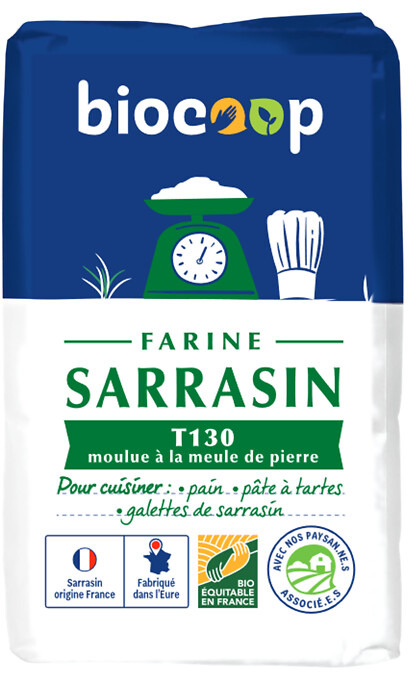
France – Buckwheat flour T130 1kg – Ochratoxin A

Gov france

Identification information of the recalled product

  • Product category Feed
  • Product subcategory Cereals and baked goods
  • Product brand name Biocoop
  • Model names or references Buckwheat flour T130 1kg
  • Identification of products
    GTIN Batch Date
    3558630113005 130323FSAT130 Date of minimum durability 13/03/2024
  • Products List Poster_withdrawal_reminder_BR0216_-_Buckwheat_flour_T130_1kg.pdf Attachment
  • Packaging1kg package
  • Marketing start/end date From 03/24/2023 to 04/14/2023
  • Storage temperature Product to be stored at room temperature
  • Geographic area of ​​sale Whole France
  • Distributors Biocoop

Practical information regarding the recall

  • Reason for recall Following analysis, the level of ochratoxin A (OTA) is higher than the regulations in force.

Research – Physical Treatments to Control Clostridium botulinum Hazards in Food

MDPI

Abstract

Clostridium botulinum produces Botulinum neurotoxins (BoNTs), causing a rare but potentially deadly type of food poisoning called foodborne botulism. This review aims to provide information on the bacterium, spores, toxins, and botulisms, and describe the use of physical treatments (e.g., heating, pressure, irradiation, and other emerging technologies) to control this biological hazard in food. As the spores of this bacterium can resist various harsh environmental conditions, such as high temperatures, the thermal inactivation of 12-log of C. botulinum type A spores remains the standard for the commercial sterilization of food products. However, recent advancements in non-thermal physical treatments present an alternative to thermal sterilization with some limitations. Low- (<2 kGy) and medium (3–5 kGy)-dose ionizing irradiations are effective for a log reduction of vegetative cells and spores, respectively; however, very high doses (>10 kGy) are required to inactivate BoNTs. High-pressure processing (HPP), even at 1.5 GPa, does not inactivate the spores and requires heat combination to achieve its goal. Other emerging technologies have also shown some promise against vegetative cells and spores; however, their application to C. botulinum is very limited. Various factors related to bacteria (e.g., vegetative stage, growth conditions, injury status, type of bacteria, etc.) food matrix (e.g., compositions, state, pH, temperature, aw, etc.), and the method (e.g., power, energy, frequency, distance from the source to target, etc.) influence the efficacy of these treatments against C. botulinum. Moreover, the mode of action of different physical technologies is different, which provides an opportunity to combine different physical treatment methods in order to achieve additive and/or synergistic effects. This review is intended to guide the decision-makers, researchers, and educators in using physical treatments to control C. botulinum hazards.

Ireland – Recall of a batch of Guastalla Green and Black Pitted Olives due to the presence of Listeria monocytogenes

FSAI

Thursday, 13 April 2023

Summary
Category 1: For Action
Alert Notification: 2023.08
Product: Guastalla Green and Black Pitted Olives; pack size: 100g; approval number: IE 4071 EC
Batch Code: Use by date: 25.04.2023
Country Of Origin: Ireland

Message:

Italicatessen is recalling the above batch of Guastalla Green and Black Pitted Olives due to the presence of Listeria monocytogenes.

Recall notices will be displayed at point-of-sale.

Nature Of Danger:

Symptoms of Listeria monocytogenes infection can include mild flu-like symptoms, or gastrointestinal symptoms such as nausea, vomiting and diarrhoea. In rare cases, the infection can be more severe, causing serious complications. Some people are more vulnerable to Listeria monocytogenes infections, including pregnant women, babies, and people with weakened immune systems, including the elderly. The incubation period (time between initial infection and first symptoms appearing) is on average 3 weeks but can range between 3 and 70 days.

Action Required:

Manufacturers, wholesalers, distributors, caterers & retailers:

Retailers are requested to remove the implicated batch from sale and display recall notices at point- of-sale.

Consumers:

Consumers are advised not to eat the implicated batch.

Guastalla Green and Black Pitted Olives

RASFF Alerts – Aflatoxin – Pistachios and Hazelnuts

RASFF

Aflatoxin in Pistachio from Turkey in Italy

RASFF

Aflatoxins in hazelnuts from Georgia in Germany and Bulgaria

RASFF Alert- Norovirus – French Oysters

RASFF

Norovirus in oysters from France in Belgium

RASFF Alert -STEC E.coli – Minced Meat

RASFF

STEC (stx+;eae+) in minced meat from Belgium in France and the Netherlands

RASFF Alert – Listeria monocytogenes – Cheese – Chorizo – Dairy Products

RASFF

Detection of Listeria monocytogenes on cheese from France in Belgium and Luxembourg

RASFF

Detection of listeria monocytogenes in chorizo from Spain in France

RASFF

Presence of listeria monocytogenes in dairy products from Italy in Malta, Slovenia, France

RASFF Alerts – Salmonella – Sesame Seeds – Polish Chicken – Chicken Sausages – Chicken Breast – Turkey Meat –

RASFF

Salmonella Enteritidis in cream cake from Slovenia in Austria

RASFF

Salmonella in chicken sausages from Belgium in the Netherlands

RASFF

Detection of Salmonella enteritidis on chicken legs from Poland in France

RASFF

Salmonella in frozen roasted chicken breast from Ukraine in France, Germany and Netherlands

RASFF

Salmonella Typhimurium in turkey meat from Poland  in  Belgium, Czech Republic, Denmark, Germany, Hungary, Romania, Slovakia, Sweden.

RASFF

Salmonella spp in sesame seeds from Nigeria in Greece and Switzerland

RASFF

Salmonella spp in sesame seeds from Nigeria in Greece and Switzerland

RASFF

Salmonella spp in sesame seeds from Nigeria in Greece and Switzerland

RASFF

Salmonella spp in sesame seeds from Nigeria in Greece

RASFF

Salmonella spp. in sesame seeds from Nigeria in Greece

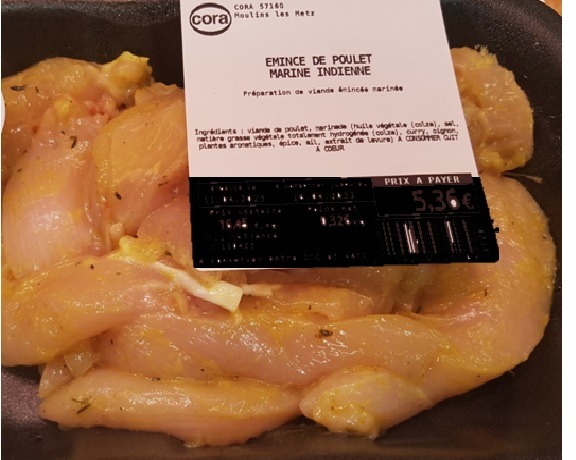
France – Indian marinated chicken mince – Salmonella

Gov france

Identification information of the recalled product

  • Product category Feed
  • Product subcategory Meats
  • Product brand name prepared by the store
  • Model names or references Indian marinated chicken mince
  • Identification of products
    GTIN Batch Date
    2054234000000 packed on 03/31/2023 Use-by date 05/04/2023
  • Packaging variable weight tray
  • Marketing start/end date From 31/03/2023 to 05/04/2023
  • Storage temperature Product to be stored in the refrigerator
  • Health mark/
  • Geographic area of ​​sale cora Moulins les Metz (57)
  • Distributor scora store Moulins les Metz

Practical information regarding the recall

  • Reason for recall presence of salmonella
  • Risks incurred by the consumer Salmonella spp (causative agent of salmonellosis)