Category Archives: food bourne outbreak

Ireland – Three Salmonella outbreaks revealed in Ireland

Food Safety News

Irish public health officials have reported three Salmonella outbreaks that have affected at least 34 people.

Two of the three outbreaks were caused by Salmonella Enteritidis and one by Salmonella Mikawasima. Two of the incidents remain unsolved while the third has been linked to chicken products.

Twenty three of the infections have been laboratory confirmed, according to the Health Protection Surveillance Centre (HPSC), Ireland’s agency for surveillance of communicable diseases and part of the Health Service Executive (HSE).

Six people were sickened in the first Salmonella Enteritidis outbreak. Four women and two men had illness onset dates ranging from early June to Oct. 21. Two patients were aged 1 to 2 years old, one was 15-19 years old and three were over the age of 25.

HSE officials told Food Safety News that an investigation has not identified any potential method of transmission including foodborne or source including food.

France – Mostly children sick in French Salmonella outbreak

Food Safety News

Mainly children are sick in a Salmonella outbreak in France linked to a type of dried sausage.

There have been 26 cases of salmonellosis, 17 of which concern children, identified by the National Reference Center for Salmonella at Institut Pasteur and Santé publique France in October and November. Those interviewed fell ill from Sept. 22 and ate dry sausages bought in the same store.

The link between Salmonella Bovismorbificans illness and consumption of dry cold meats manufactured by France Salaison was confirmed earlier this month by the Directorate General for Food (DGAL), the Directorate General for Health and Santé publique France. The company is based in Saint-Symphorien-sur-Coise in the Rhone region of France.

Potentially contaminated product has also been sent to Belgium, Luxembourg, Poland, Portugal and Slovenia.

Research – Attributing Human Foodborne Diseases to Food Sources and Water in Japan Using Analysis of Outbreak Surveillance Data

Journal of Food Protection

ABSTRACT

In Japan, strategies for ensuring food safety have been developed without reliable scientific evidence on the relationship between foodborne diseases and food sources. This study aimed to provide information on the proportions of foodborne diseases caused by seven major causative pathogens (Campylobacter spp., Salmonella, enterohemorrhagic Escherichia coli [EHEC], Vibrio parahaemolyticus, Clostridium perfringens, Staphylococcus aureus, and norovirus) attributed to foods and to explore factors affecting changes in these source attribution proportions over time using analysis of outbreak surveillance data. For the calculation of the number of outbreaks attributed to each source, simple-food outbreaks were assigned to the single-food category in question, and complex-food outbreaks were classified under each category proportional to the estimated probability. During 2007 to 2018, 8,730 outbreaks of foodborne diseases caused by seven pathogens were reported, of which 6,690 (76.6%) were of unknown source. We estimated the following source attribution proportions of foodborne diseases: chicken products (80.3%, 95% uncertainty interval [UI] 80.1 to 80.4) for Campylobacter spp.; beef products (50.1%, UI 47.0 to 51.5) and vegetables (42.3%, UI 40.9 to 45.5) for EHEC; eggs (34.6%, UI 27.8 to 41.4) and vegetables (34.4%, UI 27.8 to 40.8) for Salmonella; finfish (50.3%, UI 33.3 to 66.7) and shellfish (49.7%, UI 33.3 to 66.7) for V. parahaemolyticus; grains and beans (57.8%, UI 49.7 to 64.9) for S. aureus; vegetables (63.6%, UI 48.5 to 74.6), chicken products (12.7%, UI 4.6 to 21.5), and beef products (11.1%, UI 8.5 to 13.1) for C. perfringens; and shellfish (75.5%, UI 74.7 to 76.2) for norovirus. In this study, we provide the best available evidence-based information to evaluate the link between foodborne diseases and foods. Our results on source attribution for Campylobacter spp. and EHEC suggest that the strict health regulations for raw beef were reflected in the proportions of these diseases attributed to this food.

HIGHLIGHTS
  • Source attribution proportions of foodborne diseases in Japan were estimated.
  • Source attribution was useful to guide interventions and evaluate their effect.
  • Strict health regulations for raw beef affected source attribution proportions.

Research – Characterization and Source Investigation of Multidrug-Resistant Salmonella Anatum from a Sustained Outbreak, Taiwan

CDC

kswfoodworld salmonella

Abstract

An ongoing outbreak of multidrug-resistant Salmonella enterica serovar Anatum began in Taiwan in 2015. Pork and poultry were identified as vehicles for transmission. Contaminated meat contributed to the high rate of infections among children. Nearly identical Salmonella Anatum strains have been identified in the United Kingdom, the United States, and the Philippines.

Nontyphoidal Salmonella (NTS) is a major cause for foodborne diseases worldwide. In Taiwan, the ambient climate and flourishing pig-raising industry makes NTS infections rampant. As in other countries, salmonellosis was primarily caused by Salmonella enterica serovars Enteritidis and Typhimurium in Taiwan (1), but rare serovars such as Salmonella Goldcoast have appeared in recent years (2). Recommended antimicrobial treatment options for salmonellosis include fluoroquinolones and extended-spectrum cephalosporins (1). However, resistance to these antibiotics has been emerging in many countries, leading to increased disease prevalence, disease severity, and death and the requirement of last-line antimicrobial drugs (e.g., carbapenems) (35).

Since 2015, northern Taiwan has seen an increase in Salmonella infections, caused by previously rare Salmonella Anatum. The infections were also reported in central Taiwan, indicating that this outbreak had already prevailed throughout the entire island (6). Co-resistance to ceftriaxone and ciprofloxacin are the main feature of the outbreak clone. Evidence from epidemiologic, laboratory, and supply-chain investigations identified raw pork and poultry as the vehicle for spread of this strain. More important, genomic comparisons against the global public database indicated that this clone has appeared in Europe, Asia, and America. Given the increasing globalization of foodstuffs, these findings prompt an urgent global sharing of whole-genome sequencing (WGS) data to facilitate disease surveillance and early recognition of international foodborne outbreaks (7,8).

USA – FDA CORE Outbreak Investigation Table Updated

FDA

The link above has a list of outbreaks investigations being managed by FDA’s CORE Response Teams. The investigations are in a variety of stages, meaning that some outbreaks have limited information, and others may be near completion.

public health advisory will be issued for outbreak investigations that have resulted in specific, actionable steps for consumers to take to protect themselves. Please direct your attention to those pages for the most up to date information on the investigation and for consumer protection information.

Outbreaks of Foodborne Illness

Note: Not all recalls and alerts result in an outbreak of foodborne illness. Check recent Food Recalls and Safety Alerts.

Outbreak investigations that do not result in specific, actionable steps for consumers may or may not conclusively identify a source or reveal any contributing factors. If a source and/or contributing factors are identified that could inform future prevention, FDA commits to providing a summary of those findings.

Kyrgyzstan – reports 28 botulism cases in first 10 months of 2020

Outbreak News Today

kswfoodworld

Image CDC

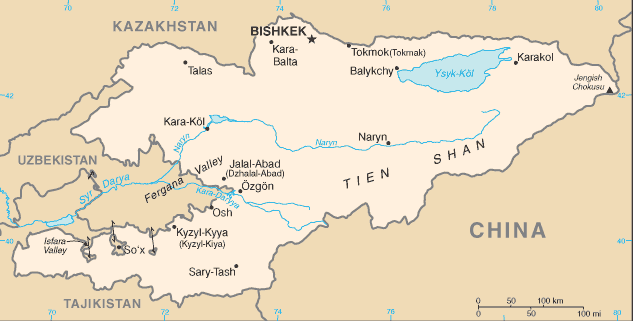
Health officials in Kyrgyzstan are reporting 28 foodborne botulism cases through Oct. 2020, prompting a warning for the public.

Of the 28 cases, 19 were reported in the Osh region.

In most cases, botulism begins acutely. It can manifest itself in people who ate canned salads or cucumbers, mushrooms, eggplants, other vegetables and meat products the day before.

USA/Canada – Cyclospora sucks: 1060 North Americans sickened in summer Fresh Express outbreak

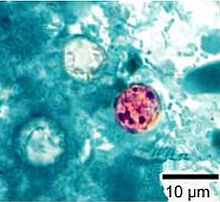
220px-Cyclospora_cayetanensis_stained

Barf Blog

The parasite, Cyclospora, continues to provide illness and intrigue.

Florida-based Southeastern Grocers has issued a voluntary recall for its “SE Grocers Naturally Better Organic Fresh Cut Basil” following the detection of Cyclospora.

The company says the product was delivered through all of its distribution centers and sold in all its stores, including Winn-Dixie, BI-LO, Fresco y Más and Harveys Supermarkets. The basil comes in a 0.5-ounce container with UPC code 6-07880-20230-4.

The latest recall follows a summer outbreak of Cyclospora in the U.S. linked to Fresh Express and private label brand salad products produced at its Streamwood, IL facility that contain iceberg lettuce, red cabbage, and/or carrots.

690 people with laboratory-confirmed Cyclospora infections and who reported eating bagged salad mix before getting sick weren reported from 13 states (Georgia, Illinois, Iowa, Kansas, Massachusetts, Minnesota, Missouri, Nebraska, North Dakota, Ohio, Pennsylvania, South Dakota, and Wisconsin).

Illnesses started on dates ranging from May 11, 2020 to July 20, 2020.

37 people were hospitalized. No deaths were reported.

Canadians in several provinces were also sickened.

USA – Outbreak of E. coli Infections – Unknown Source 2 – Update

CDC

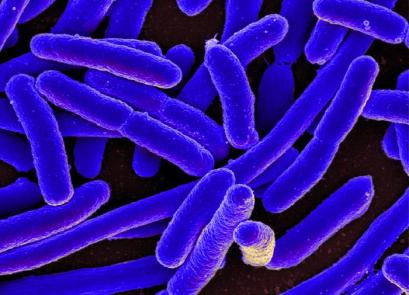
CDC E.coli

CDC, public health and regulatory officials in several states, and the U.S. Food and Drug Administration (FDA) are investigating several multistate outbreaks of E. coli O157:H7 infections. This outbreak is different from two other E. coli O157:H7 outbreaks CDC is currently investigating (E. coli outbreak with unknown source 1 and E. coli outbreak with unknown source 3).

At A Glance
  • Since the last update on October 28, 2020, 16 ill people were added to this investigation.
  • CDC is not advising people avoid any particular food at this time.
  • Investigators are working to collect different types of data to identify the source of this outbreak.
  • CDC will provide updates as they become available.

Take action if you have symptoms of an E. coli infection:

  • Talk to your healthcare provider.
  • Write down what you ate in the week before you got sick.
  • Report your illness to your local or state health department.
  • Help us solve the outbreak by answering public health officials’ questions about your illness.

Follow these general ways to prevent getting sick from E. coli:

  • Wash your hands after using the restroom or changing diapers, before and after preparing or eating food, and after contact with animals.
  • Cook meats thoroughly. Use a food thermometer to check that the meat has reached a safe internal temperatureexternal icon.
  • Don’t cross-contaminate food preparation areas. Thoroughly wash hands, counters, cutting boards, and utensils after touching raw meat.
  • Wash fruits and vegetables before eating, unless the package says the contents have been washed.
  • Avoid raw milk, other unpasteurized dairy products, and unpasteurized juices.
  • People usually get sick from Shiga toxin-producing E. coli (STEC) 2 to 8 days (average of 3 to 4 days) after swallowing the germ.
  • Symptoms often include severe stomach cramps, diarrhea (often bloody), and vomiting. Some people may have a fever, which usually is not very high (less than 101˚F/38.5˚C).
  • Some people with a STEC infection may get a type of kidney failure called hemolytic uremic syndrome (HUS).
  • Antibiotics are not recommended for patients with suspected E. coli infections until diagnostic testing can be performed and E. coli infection is ruled out. Some studies have shown that administering antibiotics to patients with E. coli infections might increase their risk of developing HUS, and a benefit of treatment has not been clearly demonstrated.
  • For more information, see Symptoms of E. coli Infection.
Investigation Details

November 23, 2020

Since the last update on October 28, 2020, 16 ill people were added to this investigation.

As of November 19, 2020, a total of 39 people infected with the outbreak strain of E. coli O157:H7 have been reported from 18 states. A list of the states and the number of cases in each can be found on the Map of Reported Cases page.

Illnesses started on dates ranging from August 10, 2020, to October 23, 2020. Ill people range in age from 1 to 85 years, with a median age of 38 years, and 62% are female. Of 30 ill people with information available, 19 people were hospitalized and 4 people developed hemolytic uremic syndrome (HUS), a type of kidney failure. No deaths have been reported.

Illnesses might not yet be reported due to the time it takes between when a person becomes ill and when the illness is reported. This takes an average of 2 to 4 weeks. Please see the Timeline for Reporting Cases of E. coli O157 Infection for more details.

Investigation of the Outbreak

Investigators are continuing to collect different types of data to identify the source of this outbreak.

State and local public health officials are interviewing ill people to determine what they ate and other exposures in the week before they got sick. Of the 22 ill people interviewed to date, all reported eating a variety of leafy greens, like spinach (16), romaine lettuce (15), iceberg lettuce (12), and mixed bag lettuce (8). No single type or brand of leafy greens or other food item has been identified as the source of this outbreak. CDC is not advising people avoid any particular food at this time.

This investigation is ongoing, and CDC will provide more information as it becomes available.

USA – FDA – Investigations of Foodborne Illness Outbreaks

FDA

The following is a list of outbreaks investigations being managed by FDA’s CORE Response Teams. The investigations are in a variety of stages, meaning that some outbreaks have limited information, and others may be near completion.

public health advisory will be issued for outbreak investigations that have resulted in specific, actionable steps for consumers to take to protect themselves. Please direct your attention to those pages for the most up to date information on the investigation and for consumer protection information.

RASFF Alert – Foodborne Outbreak suspected Salmonella Dry Sausage

European Food Alerts

RASFF

foodborne outbreak suspected (Salmonella Bovismorbificans) to be caused by dry sausage from France in France