Category Archives: E.coli

Research – Inactivating foodborne pathogens in apple juice by combined treatment with fumaric acid and ultraviolet-A light, and mechanisms of their synergistic bactericidal action

Science Direct

We evaluated the bactericidal efficacy of the simultaneous application of ultraviolet-A (UV-A) irradiation and fumaric acid (FA) against Escherichia coli O157:H7, Salmonella enterica serovar Typhimurium, and Listeria monocytogenes in apple juice and as well as investigated the effects of this treatment on product quality. Further, we elucidated the mechanisms underlying their synergistic bactericidal action. Simultaneous UV-A light irradiation and 0.1% FA treatment for 30 min resulted in 6.65-, 6.27-, and 6.49-log CFU/ml reductions in E. coli O157:H7, S. Typhimurium, and L. monocytogenes, respectively, which involved 3.15, 2.21, and 3.43 log CFU reductions, respectively, and these were attributed to the synergistic action of the combined treatments. Mechanistic investigations suggested that the combined UVA-FA treatment resulted in significantly greater bacterial cell membrane damage and intracellular reactive oxygen species (ROS) generation. UVA-FA treatment for 30 min did not cause significant changes to the color, nonenzymatic browning index, pH, and total phenolic content of apple juice. These results suggest that combined UVA-FA treatment can be effectively used to control foodborne pathogens in apple juice without affecting its quality.

Research – Antibacterial mechanism of Tetrapleura tetraptera extract against Escherichia coli and Staphylococcus aureus and its application in pork

Wiley Online

Abstract

The antibacterial activity and the mechanism of Tetrapleura tetraptera root extract against Escherichia coli and Staphylococcus aureus were investigated. The mechanism of action of T. tetraptera on tested bacterial species was predominantly characterized by the study of transmission electron microscopy, which revealed severe damage on the primary target which affected the cell integrity and cell membrane permeability. The loss of soluble proteins studied by bacterial protein sodium dodecyl sulfate–polyacrylamide gel electrophoresis analysis and the decreased adenosine triphosphate and DNA contents confirmed the leakage of cell wall. In addition, the studies revealed that the root extract of T. tetraptera could also disrupt the respiratory metabolism by inhibiting the bacteria through the Embden–Meyerhof–Parnas and the hexose monophosphate pathways. T. tetraptera extract possessed a high level of antimicrobial activity in pork, which significantly reduced total viable bacterial population. This study clearly indicates that the T. tetraptera could be a potential source of new antimicrobial agent which has proven effective activity against antibiotic‐resistant strains of pathogens.

Practical Applications

Tetrapleura tetraptera is a flowering plant native to Africa with a wide range of applicability in local cuisines and traditional medicine. The T. tetraptera root extract possesses high antimicrobial activity against both gram‐positive and gram‐negative bacteria. This study could contribute to the better understanding of antibacterial mechanism of T. tetraptera. As a natural food preservative, it has broad prospect to be utilized in the meat industry.

USA – Ohio Romaine Outbreak Sickens 12 with E. coli O157:H7 Infections

Food Poisoning Bulletin

The Ohio romaine outbreak has sickened 12 people with E. coli O157:H7 infections, making it the state with the second most illnesses after Wisconsin, with 33 cases as of December 9, 2019. Overall, at least 102 people are sick across the country, with 58 hospitalized and 10 who have developed hemolytic uremic syndrome (HUS), a type of kidney failure.

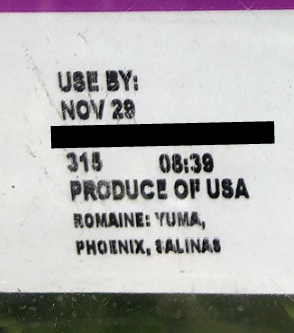
Most romaine products, including baby romaine, chopped romaine, organic romaine, hearts of romaine, romaine in salad wraps, salad bowl kits, sandwiches, packages of precut lettuce, and salad mixes that contain romaine, may be marked with the growing region. This is a voluntary policy put into place after last year’s two romaine E. coli O157:H7 HUS outbreaks. If the label says “Salinas” anywhere, or if the package is unmarked, don’t eat the romaine.

The CDC and FDA have stated that there is one grower associated with all three E. coli O157:H7 romaine outbreaks that are ongoing, but that grower has not been named. Officials have inspected three farms in the Salinas region, but has not named those.

Research – Shiga toxin-producing Escherichia coli (STEC) and food: attribution, characterization, and monitoring

WHO

Strains of pathogenic Escherichia coli that are characterized by their ability to
produce Shiga toxins are referred to as Shiga toxin-producing E. coli (STEC). STEC
are an important cause of foodborne disease and infections have been associated with a wide range of human clinical illnesses ranging from mild non-bloody
diarrhoea to bloody diarrhoea (BD) and haemolytic uraemic syndrome (HUS)
which often includes kidney failure. A high proportion of patients are hospitalized,
some develop end-stage renal disease (ESRD) and some die.
The Codex Committee on Food Hygiene (CCFH) has discussed the issue of STEC
in foods since its 45th Session, and at the 47th Session, in November 2015, it was
agreed that it was an important issue to be addressed (REP 16/FH, 2015)2
. To
commence this work, the CCFH requested the Food and Agriculture Organization
(FAO) and the World Health Organization (WHO) to develop a report compiling
and synthesizing available relevant information, using existing reviews where
possible, on STEC. The CCFH noted that further work on STEC in food, including
the commodities to be focused on, would be determined based on the outputs of
the FAO/WHO consultation.
The information requested by CCFH is divided into three main areas: the global
burden of disease and source attribution; hazard identification and characterization; and monitoring, including the status of the currently available analytical
methods. This report provides an overview of the work undertaken in response to
the request from the CCFH and provides the conclusions and advice of the Expert
Group based on the currently available information.

Research – Simultaneous Effects of UV-A and UV-B Irradiation on the Survival of Escherichia coli O157:H7, Salmonella Typhimurium, and Listeria monocytogenes in Buffer Solution and Apple Juice

Journal of Food Protection

ABSTRACT

The objective of this study was to evaluate the efficacy of simultaneous UV-A and UV-B irradiation (UV-A+B) for inactivating Escherichia coli O157:H7, Salmonella Typhimurium, and Listeria monocytogenes in both phosphate-buffered saline (PBS) and apple juice. A cocktail of the three pathogens was inoculated into PBS and apple juice, and then the suspensions were irradiated with UV lamps of 356 nm (UV-A) and 307 nm (UV-B). Significant (P < 0.05) log reductions of the three pathogens in PBS and apple juice were observed after a maximum dose of UV-B alone or the UV-A+B treatment, but few reductions were observed upon UV-A treatment alone. At all irradiation times, antagonistic effects were observed for the application of UV-A+B against in E. coli O157:H7, Salmonella Typhimurium, and L. monocytogenes in PBS and apple juice. The degree of antagonistic effect in apple juice was greater than that in PBS. The results of this study suggest that the combined treatment of commercial UV-A and UV-B lamps would be impractical for disinfecting juice products.

HIGHLIGHTS
  • Antimicrobial effect of UV-A+B irradiation in PBS and apple juice was investigated.

  • UV-A+B irradiation was antagonistic for inactivating pathogens in the PBS and juice.

  • The degree of antagonistic effect in apple juice was greater than that in PBS.

USA -Investigation of E. coli O157:H7 Outbreak Linked to Romaine from Salinas, California, November 2019

FDA

December 12, 2019

Case Counts

Total Illnesses: 102
Hospitalizations: 58
Deaths: 0
Last illness onset: November 18, 2019
States with Cases:  AZ (3), CA (4), CO (6), FL (1), IA (1), ID (3), IL (1), MD (4), MI (1), MN (3), MT (1), NE (1), NJ (7), NC (1), NM (2), OH (12), OR (1), PA (8), SD (1), TX (4), VA (4), WA (2), WI (31)

Recommendation

FDA, CDC, and state health authorities are investigating an outbreak of illnesses caused by E. coli O157:H7 in the United States. Epidemiologic, laboratory, and traceback evidence indicates that romaine lettuce from the Salinas, California growing region is a likely source of this outbreak. According to CDC, there have been 102 cases reported in 23 states.  The latest date that one of these patients reports becoming ill was on November 18, 2019.

Romaine from Salinas, California Label Enjoy By December 2, 2019


Romaine from Salinas, California Label Use By November 29, 2019

Consumers: Consumers should not eat romaine lettuce harvested from Salinas, California. Additionally, consumers should not eat products identified in the recall announced by the USDA on November 21, 2019.

Romaine lettuce may be voluntarily labeled with a harvest region. If this voluntary label indicates that the romaine lettuce was grown in “Salinas” (whether alone or with the name of another location) do not eat it. Throw it away or return it to the place of purchase.  If romaine lettuce does not have information about harvest region or does not indicate that it has been grown indoors (i.e., hydroponically- and greenhouse-grown), throw it away or return it to the place of purchase. Consumers ordering salad containing romaine at a restaurant or at a salad bar should ask the staff whether the romaine came from Salinas.  If it did, or they do not know, do not eat it.

At this time, romaine lettuce that was harvested outside of the Salinas region has not been implicated in this outbreak investigation. Hydroponically- and greenhouse-grown romaine, which is voluntarily labeled as “indoor grown,” from any region does not appear to be related to the current outbreak. There is no recommendation for consumers to avoid using romaine harvested from these other sources.

Restaurants and Retailers: Restaurants and retailers should not serve or sell romaine harvested from Salinas, California.  If you do not know the source of your romaine lettuce, and if you cannot obtain that information from your supplier, you should not serve, nor sell it.

Suppliers and Distributors: Suppliers, distributors and others in the supply chain should not ship or sell romaine harvested in Salinas, California. If the source of the romaine lettuce is unknown, you should not ship, nor sell the product.

For Restaurants, Retailers, Suppliers and Distributors: Currently, the FDA does not have enough traceback information to identify the specific source of the contamination that would allow us to request a targeted recall from specific growers.

FDA requested that industry voluntarily withdraw romaine grown in Salinas from the market and is requesting that industry withhold distribution of Salinas romaine for the remainder of the growing season in Salinas. Without more specific traceback information, this was the most efficient way to ensure that contaminated romaine was off the market.

At this time, romaine lettuce that was harvested outside of the Salinas region has not been implicated in this outbreak investigation. Hydroponically- and greenhouse-grown romaine, which is voluntarily labeled as “indoor grown,” from any region does not appear to be related to the current outbreak. There is no recommendation for consumers or retailers to avoid using romaine harvested from these other sources.

Update

Based on the information indicating that ill people in Maryland were exposed to romaine lettuce harvested in Salinas, California, FDA, with the assistance of staff from the California Department of Public Health and the California Department of Food and Agriculture, immediately deployed investigators to three farms in the Salinas area that were identified based on the traceback investigation.

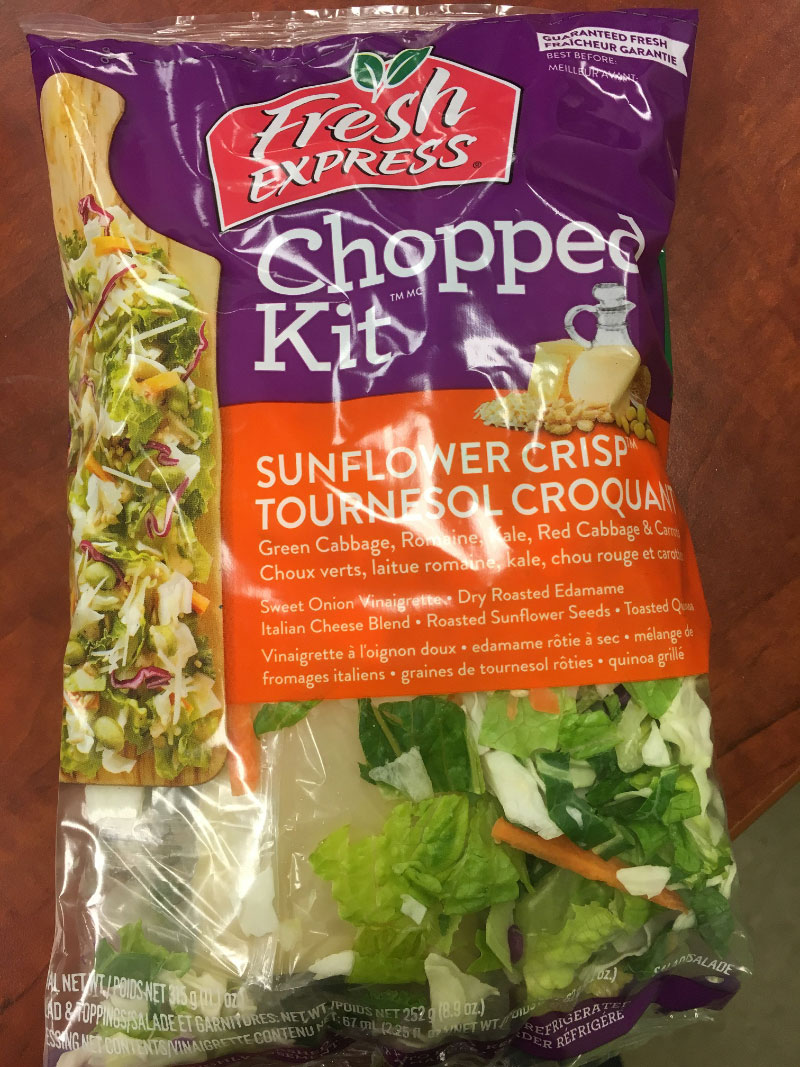
FDA continues to actively investigate the cause of this outbreak. Additionally, FDA is investigating two other E. coli outbreaks, each caused by strains that are different from each other and different from the larger outbreak. One of the additional outbreaks, in Washington state, is linked to romaine lettuce, and the other outbreak, with cases in the U.S. and Canada, is linked to Fresh Express Sunflower Crisp Chopped Salad Kits. As part of these investigations, FDA and state partners are conducting traceback investigations to trace romaine exposures to the source.

Currently, the tracebacks on all three outbreaks have identified a common grower in Salinas. FDA, CDC, and California partners are deploying a team to conduct new investigations at several ranches used by this grower as we try to identify the source of the contamination.

Europe – Salmonella the most common cause of foodborne outbreaks in the European Union

ECDC

Nearly one in three foodborne outbreaks in the EU in 2018 were caused by Salmonella. This is one of the main findings of the annual report on trends and sources of zoonoses published today by the European Food Safety Authority (EFSA) and the European Centre for Disease Prevention and Control (ECDC).

In 2018, EU Member States reported 5 146 foodborne outbreaks affecting 48 365 people. A foodborne disease outbreak is an incident during which at least two people contract the same illness from the same contaminated food or drink.

Slovakia, Spain and Poland accounted for 67% of the 1 581 Salmonella outbreaks. These outbreaks were mainly linked to eggs.

 “Findings from our latest Eurobarometer show that less than one third of European citizens rank food poisoning from bacteria among their top five concerns when it comes to food safety. The number of reported outbreaks suggests that there’s room for raising awareness among consumers as many foodborne illnesses are preventable by improving hygiene measures when handling and preparing food” said EFSA’s chief scientist Marta Hugas.

Salmonellosis was the second most commonly reported gastrointestinal infection in humans in the EU (91 857 cases reported), after campylobacteriosis (246 571).

Shiga toxin-producing E. coli (STEC) has become the third most common cause of foodborne zoonotic disease with 8 161 reported cases – replacing yersiniosis with a 37% increase compared to 2017. This may be partly explained by the growing use of new laboratory technologies, making the detection of sporadic cases easier.

Of the zoonotic diseases covered by the report, listeriosis accounts for the highest proportion of hospitalised cases (97%) and highest number of deaths (229), making it one of the most serious foodborne diseases.

The number of people affected by listeriosis in 2018 is similar to 2017 (2 549 in 2018 against 2 480 the previous year). However, the trend has been upward over the past ten years.

The report also includes data on Mycobacterium bovisBrucellaYersiniaTrichinellaEchinococcusToxoplasma, rabies, Coxiella burnetii (Q fever), and tularaemia.

Read the report

Publication

The European Union One Health 2018 Zoonoses Report

Surveillance report  

This report of the European Food Safety Authority and the European Centre for Disease Prevention and Control presents the results of zoonoses monitoring activities carried out in 2018 in 36 European countries (28 Member States (MS) and 8 non-MS).

e.

Canada – Updated Food Recall Warning – Fresh Express brand Sunflower Crisp Chopped Kit recalled due to E. coli O157:H7

CFIA

Recall details

Ottawa, December 12, 2019 – The food recall warning issued on December 8, 2019 has been updated to include additional distribution information. This additional information was identified during the Canadian Food Inspection Agency’s (CFIA) food safety investigation.

The CFIA is warning consumers not to consume the recalled product described below. This product is not likely to be available at retail stores, but may still be in consumer’s homes.

Recalled product

Brand Product Size UPC Codes
Fresh Express Sunflower Crisp
Chopped Kit
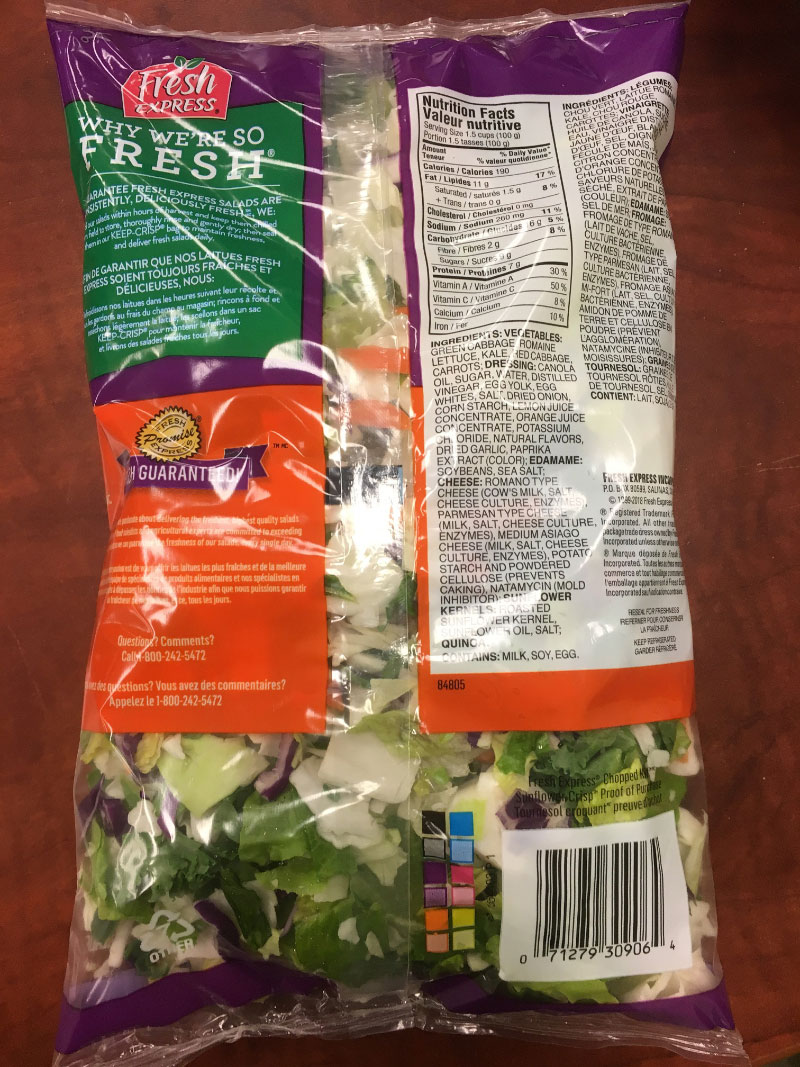
315 g 0 71279 30906 4 All packages bearing a Best Before date up to and including 07DE19, and a lot code beginning with “Z”, and indicating “Salinas” as a source of Romaine lettuce

Illnesses

The Public Health Agency of Canada is investigating an outbreak of human illness. Please refer to the Public Health Notice for further details on this active outbreak investigation.

Product photos

Printer ready version of photos

  • Sunflower Crisp Front
  • Sunflower Crisp Back

USA/Canada – Salinas Romaine sickens 2 in Canada with E. coli O157and 102 in the United States

Food Poison Journal

Since November 22, 2019, the Public Health Agency of Canada (PHAC) has identified one additional E. coli illness in Canada with a similar genetic fingerprint to illnesses reported in the ongoing United States (U.S.) E. coli outbreak linked to romaine lettuce harvested in Salinas, California which has sickened at least 102 people in 23 states

As of December 6, 2019, there are two illnesses related to the U.S. outbreak that have been identified in Canada: Manitoba (1) and Alberta (1). These individuals became ill in mid-October and early November 2019. One individual was hospitalized. No deaths have been reported.

PHAC has engaged federal and provincial public health partners and continues to work with U.S. health officials to determine the source of contamination affecting consumers.

Consumers are still advised to not eat, and retailers and food service establishments to not sell or serve, any romaine lettuce harvested from the Salinas, California growing region in the U.S. Romaine lettuce harvested in Canada is not affected by this advice.

Canada – Food Recall Warning – Fresh Express brand Sunflower Crisp Chopped Kit recalled due to E. coli O157:H7

CFIA

Recall details

Ottawa, December 8, 2019 – The Canadian Food Inspection Agency (CFIA) is warning consumers not to consume the recalled product described below. This product is not likely to be available at retail stores, but may still be in consumer’s homes.

Recalled product

Brand Product Size UPC Codes
Fresh Express Sunflower Crisp Chopped Kit 315 g 0 71279 30906 4 All packages bearing a Best Before dates up to and including 07DE19,  and a lot code beginning with “Z”, and indicating “Salinas” as a source of Romaine lettuce

Illnesses

The Public Health Agency of Canada is investigating an outbreak of human illness. Please refer to the Public Health Notice (www.canada.ca/en/public-health/services/public-health-notices/2019/outbreak-e-coli-salad-kits.html) for further details on this active outbreak investigation.

Product photos

Printer ready version of photos

  • Sunflower Crisp Front
  • Sunflower Crisp Back