Category Archives: E.coli

RASFF Alert – E.coli – Chilled Clams

RASFF-Logo

RASFF – Escherichia coli (1.3 to 4.5 MPN/100g) in chilled clams (Chamelea gallina) from Italy in Spain

Research – Inactivation kinetics of inoculated Escherichia coli and Listeria innocua in fresh‐cut Chinese cabbage using sweeping frequency ultrasound

Wiley Online

Abstract

Sweeping frequency ultrasound washing is a recent technology of applying varying ultrasound frequencies in the decontamination of fresh produce. Ultrasound inactivation of Escherichia coli and Listeria innocua inoculated on fresh‐cut Chinese cabbage was investigated at sweeping frequencies of 28 ± 2 to 68 ± 2 kHz for washing time of 5–40 min. The survival ratio of Ecoli and Linnocua decreased with the time of exposure to ultrasound washing and varying frequencies. Ecoli were more sensitive to ultrasound washing than Linnocua, achieving >3.0 log reductions after 10 min of washing with 40 ± 2 kHz. A nonlinear Weibull model was used to describe the experimental data, and the fitness of the model was evaluated by the coefficient of determination (R2) and the root mean square error (RMSE). The model used provided a good fit with R2 ≥ .98 for both bacteria and RMSE values in the range of 0.03–0.21 and 0.02–0.32 for E. coli and L. innocua, respectively.

Practical Application

Ultrasound decontamination is an alternative nonthermal technology that has been applied in recent years to improve the microbial safety of fresh produce. The bacterial inactivation is predominantly attributed to cavitation, an occurrence that interrupts cellular arrangement and function. With the known significance of sanitization in the processing of vegetables, it is imperative to develop and appraise novel approaches that contribute to the microbial safety of these fresh produce. Largely, the results of our study could guide the design of new ultrasonic fresh produce wash systems in addition to current industrial practice related to frequency selection and use of ultrasound during fresh produce sanitation.

USA – Investigation of E. coli O157:H7 Outbreak Linked to Romaine from Salinas, California, November 2019

FDA

kswfoodworld E.coli O157

Image CDC


Recommendation

FDA, CDC, and state health authorities are investigating an outbreak of illnesses caused by E. coli O157:H7 in the United States. Epidemiologic, laboratory, and traceback evidence indicates that romaine lettuce from the Salinas, California growing region is a likely source of this outbreak. According to CDC, there have been 102 cases reported in 23 states.  The latest date that one of these patients reports becoming ill was on November 18, 2019.

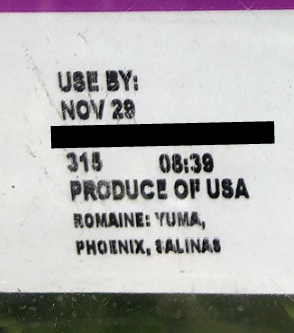
Romaine from Salinas, California Label Enjoy By December 2, 2019


Romaine from Salinas, California Label Use By November 29, 2019

Consumers: Consumers should not eat romaine lettuce harvested from Salinas, California. Additionally, consumers should not eat products identified in the recall announced by the USDA on November 21, 2019.

Romaine lettuce may be voluntarily labeled with a harvest region. If this voluntary label indicates that the romaine lettuce was grown in “Salinas” (whether alone or with the name of another location) do not eat it. Throw it away or return it to the place of purchase.  If romaine lettuce does not have information about harvest region or does not indicate that it has been grown indoors (i.e., hydroponically- and greenhouse-grown), throw it away or return it to the place of purchase. Consumers ordering salad containing romaine at a restaurant or at a salad bar should ask the staff whether the romaine came from Salinas.  If it did, or they do not know, do not eat it.

At this time, romaine lettuce that was harvested outside of the Salinas region has not been implicated in this outbreak investigation. Hydroponically- and greenhouse-grown romaine, which is voluntarily labeled as “indoor grown,” from any region does not appear to be related to the current outbreak. There is no recommendation for consumers to avoid using romaine harvested from these other sources.

Restaurants and Retailers: Restaurants and retailers should not serve or sell romaine harvested from Salinas, California.  If you do not know the source of your romaine lettuce, and if you cannot obtain that information from your supplier, you should not serve, nor sell it.

Suppliers and Distributors: Suppliers, distributors and others in the supply chain should not ship or sell romaine harvested in Salinas, California. If the source of the romaine lettuce is unknown, you should not ship, nor sell the product.

For Restaurants, Retailers, Suppliers and Distributors: Currently, the FDA does not have enough traceback information to identify the specific source of the contamination that would allow us to request a targeted recall from specific growers.

FDA requested that industry voluntarily withdraw romaine grown in Salinas from the market and is requesting that industry withhold distribution of Salinas romaine for the remainder of the growing season in Salinas. Without more specific traceback information, this was the most efficient way to ensure that contaminated romaine was off the market.

At this time, romaine lettuce that was harvested outside of the Salinas region has not been implicated in this outbreak investigation. Hydroponically- and greenhouse-grown romaine, which is voluntarily labeled as “indoor grown,” from any region does not appear to be related to the current outbreak. There is no recommendation for consumers or retailers to avoid using romaine harvested from these other sources.

Update

According to the CDC, as of December 2, 2019, 102 people infected with the outbreak strain of E. coli O157:H7 have been reported from 23 states. The case patients report that illnesses started on dates ranging from September 24, 2019 to November 18, 2019. Illness onset dates reported to date are prior to the public warning issued on November 22.

Based on available traceback data, FDA requested that industry voluntarily withdraw romaine grown in Salinas from the market and is requesting that industry  withhold distribution of Salinas romaine for the remainder of the growing season in Salinas. This was the most efficient way to ensure that contaminated romaine was off the market.

Products that were part of the U.S. Department of Agriculture’s Food Safety and Inspection Service (FSIS) announced recall related to this outbreak investigation had a “Best By” of Nov. 1 or earlier, more than one month ago, and should no longer be on the market.

FDA continues to actively investigate the cause of this outbreak. FDA, with the assistance of staff from the California Department of Public Health and the California Department of Food and Agriculture, immediately deployed investigators to three farms in the Salinas area that were identified based on the traceback investigation. On the farms, investigators sampled soil and animal droppings, compost, water, and other potential environmental sources. The samples and information collected during the farm investigations are currently being analyzed. Investigators are attempting to identify any factors that could have led to contamination. Additionally, state partners are testing romaine lettuce samples for E. coli that they have collected from stores and from case patients’ homes.

The FDA and state partners are conducting a traceback investigation to determine whether a common supplier or source of contamination can be identified.  This investigation involves collecting and analyzing potentially hundreds of distribution records to trace the romaine that may have been available at points of exposure reported by ill people to their source. We are continuing to collect these records.

This remains an evolving and fluid situation. Information about our findings will be forthcoming as the investigation proceeds.

The Salinas region as defined by the United Fresh Produce Association and the Produce Marketing Association Romaine Taskforce ReportExternal Link Disclaimer includes: Santa Cruz, Santa Clara, San Benito, and Monterey counties in California.

Case Counts

Total Illnesses: 102
Hospitalizations: 58
Deaths: 0
Last illness onset: November 18, 2019
States with Cases:  AZ (3), CA (4), CO (6), FL (1), IA (1), ID (3), IL (1), MD (4), MI (1), MN (3), MT (1), NE (1), NJ (7), NC (1), NM (2), OH (12), OR (1), PA (8), SD (1), TX (4), VA (4), WA (2), WI (31)

New Zealand – MPI puts consumer health first – directs unregistered raw (unpasteurised) drinking milk producers to stop selling

MPI Raw Milk Food Safety KSW Foodworld

The Ministry for Primary Industries (MPI) has directed unregistered raw (unpasteurised) drinking milk suppliers across the country to stop selling their product until they comply with the legal requirements for sale.

MPI compliance staff yesterday executed search warrants at non-compliant raw drinking milk suppliers in Auckland, Hawkes Bay, Manawatu, Horowhenua, Nelson, and Southland following a year-long operation.

MPI’s manager of food compliance Melinda Sando says the purpose of the coordinated site visits was to gather evidence of the offending and to allow further investigation of non-compliant sales.

“We believe that the suppliers we visited today are operating outside of the regulatory framework. By not adhering to the rules for selling raw drinking milk, they are putting consumer health at risk.

“There have been multiple instances in the past of people getting sick after drinking raw milk from some of these suppliers. We can’t let this continue.

“Raw unpasteurised milk is a risky product as it hasn’t been heat-treated (pasteurised) to remove illness-causing bacteria including E. coli, listeria and Campylobacter.

“These types of bacteria most commonly cause severe diarrhoea and vomiting, but occasionally some have been linked with more serious complications that include miscarriage, paralysis, meningitis, and serious kidney problems in children. Raw milk may also be a source of tuberculosis (Tb).

UK – Dairy recalls milk and cream products due to potential E. coli infection

HPS

03 December 2019

Article: 53/4806

Darwin’s Dairy, located in Barnsley, South Yorkshire, has recalled all of its milk and cream products, as they may not have been effectively pasteurised. This means that these products may contain harmful bacteria such as E. coli.

Details of the products affected can be found on the Food Standards Agency (FSA) website. Point-of-sale notices will be displayed in all retail stores selling the products. The notices explain to customers why the products are being recalled and what to do if they have bought the products.

The dairy has also contacted delivery customers to advise them of the product recall.

Source: FSA, 27 November 2019

Research – Evaluation of Bactericidal Effects of Phenyllactic Acid on Escherichia coli O157:H7 and Salmonella Typhimurium on Beef Meat

Journal of Food Protection

ABSTRACT

Bactericidal effects of various concentrations of phenyllactic acid on Shiga toxin–producing Escherichia coli (STEC), including E. coli O157:H7, O26:H11, O103:H2, and O121:H19, and on Salmonella Typhimurium DT104 in pure culture and microplates assays were studied. Beef cuts were surface sprayed with phenyllactic acid or lactic acid for inactivation of E. coli O157:H7 and Salmonella Typhimurium. The 1.5% phenyllactic acid inactivated all inoculated E. coli O157:H7, O26:H11, O103:H2, and O121:H19 and Salmonella Typhimurium DT104 (>6-log reduction) within 1 min of contact at 21°C, whereas 1.5% lactic acid did not result in microbial reduction. Microplate assays (for STEC and Salmonella Typhimurium DT104 at 10 to 100 CFU per well) indicated that concentrations of 0.25% phenyllactic acid or 0.25% lactic acid inhibited the growth of STEC and Salmonella Typhimurium DT104 incubated at 37°C for 24 h. Treatment of beef with 1.5% lactic acid or 1.5% phenyllactic acid reduced E. coli O157:H7 by 0.22 and 0.38 log CFU/cm2, respectively, within 5 min and reduced Salmonella Typhimurium DT104 by 0.12 and 0.86 log CFU/cm2, respectively. When meat treated with 1.5% phenyllactic acid was frozen at −20°C, inactivation of E. coli O157 and Salmonella Typhimurium DT104 was enhanced by 1.06 and 1.46 log CFU/cm2, respectively. Thus, treatment of beef with 1.5% phenyllactic acid significantly reduced the population of E. coli O157:H7 and Salmonella.

HIGHLIGHTS
  • Phenyllactic acid at 1.5% killed STEC and Salmonella (>6-log reduction) within 1 min.

  • The MIC of lactic and phenyllactic acids was 0.25%.

  • The bactericidal effect of phenyllactic acid on beef was enhanced by freezing.

Research -Shiga toxin-producing Escherichia coli survives storage in wheat flour for two years

Science Direct

Abstract

Wheat flour has recently been recognised as an exposure vehicle for the foodborne pathogen Shiga toxin-producing Escherichia coli (STEC). Wheat flour milled on two sequential production days in October 2016, and implicated in a Canada wide outbreak of STEC O121:H19, was analysed for the presence of STEC in November 2018. Stored in sealed containers at ambient temperature, the water activity of individual flour samples was below 0.5 at 6 months post-milling and remained static or decreased slightly in individual samples during 18 months of additional storage. STEC O121 was isolated, with the same genotype (stx2aeaehlyA) and core genome multilocus sequence type as previous flour and clinical isolates associated with the outbreak. The result of this analysis demonstrates the potential for STEC to persist in wheat flour at levels associated with outbreak infections for periods of up to two years. This has implications for the potential for STEC to survive in other foods with low water activity.

USA – UNFI Voluntarily Recalls Wild Harvest® Organic All-Purpose Flour, Unbleached – E.coli

FDA

UNFI announced today a voluntary national recall of five-pound bags of its Wild Harvest® Organic All-Purpose Flour, Unbleached, with a Code of AA BEST IF USED BY 010820 CC 15:58 and UPC Code 711535509158. The recall is being issued for the potential presence of E. coli. During routine FDA sampling of the five-pound bag product, results were found to be positive for E.coli.

E. coli can cause serious and sometimes life-threatening infections in infants, older people, pregnant women, and people with weakened immune systems. The most common symptoms of E. coli are diarrhea, abdominal cramps, nausea and vomiting, which develop within three or four days of eating contaminated food. The illness usually lasts about a week and most people recover without treatment. Guidance from FDA and the Centers for Disease Control (CDC) continues to warn that consumers should refrain from consuming any raw products made with flour and that all surfaces, hands and utensils should be properly cleaned after contact with flour or dough.

To date, UNFI has not received any direct consumer reports of confirmed illnesses related to this product. This recall is being issued out of an abundance of care.

This recall only affects the following code date of Wild Harvest® Organic All-Purpose Flour, Unbleached five-pound bags currently in stores or consumers’ pantries. No other types of Wild Harvest® Flour are affected by this recall.

Wild Harvest® Organic All-Purpose Flour, Unbleached (sample label below) Package UPC: 711535509158 Best if Used by Date: 010820 CC 15:58 (can be found on top of the product, see sample below)

Consumers are asked to check their pantries and dispose of the product affected by this recall. Consumers with questions may contact UNFI at 855-423-2630 (customer support is available seven days-a-week between 8:00 AM to 8:00 PM CST). Any consumers concerned about an illness should contact a physician.

USA -Hodgson Mill Issues Voluntary Recall of Unbleached All-Purpose White Wheat Flour Due to Potential Presence of Pathogenic E.coli

FDA

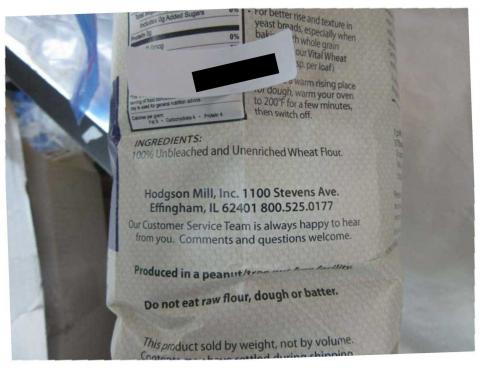
Hodgson Mill of Effingham, IL, announced today a voluntary national recall of specific lots of its Unbleached All-Purpose White Wheat Flour (5 lb.)

We are taking this voluntary precautionary step because of the potential presence of pathogenic E. coli which was discovered through sampling raw uncooked flour. Hodgson Mill has not received any confirmed reports of illnesses related to this product.

The only product affected by this voluntary recall is:

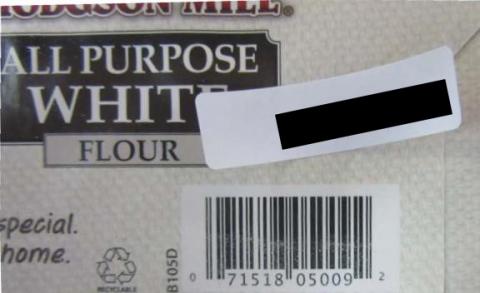
Unbleached All-Purpose White Wheat Flour (5 lb.) UPC 0-71518-05009-2
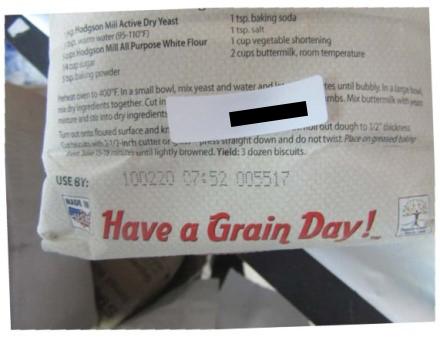
Best By Date 10-01-2020 and 10-02-2020 with lot codes listed Lot# 001042 & 005517

Use By and Lot Code information can be found on the bottom back panel of the 5 lb. Bag. Used By date and Lot Code, along with their location on the bag, must all match in order to represent flour affected by this recall.

Consumer safety is our top priority. Hodgson Mill package states “do not eat raw flour, dough or batter”. The Centers for Disease Control (CDC) warns consumers to not consume raw flour or uncooked raw dough.

E. coli is killed by heat through baking, frying, sautéing, or boiling products made with flour. For more information, refer to the following: https://www.cdc.gov/features/no-raw-dough/index.html. Symptoms of pathogenic E. coli illness include acute, often bloody diarrheal illness and abdominal cramps. Most people recover within a week. However, children, the elderly, and immunosuppressed individuals may develop hemolytic uremic syndrome (HUS), a severe illness which may cause the kidneys to fail.

Consumers are reminded to wash their hands, work surfaces, and utensils thoroughly after contact with raw dough products or flour, and to never eat raw dough or batter.

This lot of flour was milled at an ADM Milling Facility in St Louis, MO and repacked at Hodgson Mill, Inc. facility in Effingham, IL and was distributed by Hodgson Mill through retailers and distribution nationwide and sold through our website www.hodgsonmill.comExternal Link Disclaimer.

Consumers who have purchased 5 lb packages of Unbleached All-Purpose White Wheat Flour with specific lot codes are urged to stop using the product immediately and return them to the place of purchase for a full refund. Consumers with questions may contact the company customer service M-F 9am to 3pm at 1-888-417-9343 x 1.

Any consumers concerned about an illness should contact a physician.

Bakers have trusted Hodgson Mill flour products in their kitchens for many years and because of that trust we have issued this voluntary recall. We remain committed to providing our consumers safe and superior products.


Company Contact Information

Consumers:
 888-417-9343

Product Photos

RASFF Alert – E.coli – Live Scallops

RASFF-Logo

RASFF – too high count of Escherichia coli in live scallops from France in the Netherlands