Category Archives: E.coli

Research – Petition Asks FSIS to Declare 31 Salmonella Strains as Adulterants in Meat and Poultry

Food Safety Magazine

Marler Clark LLP filed a petition on behalf of several individuals and consumer groups on January 18, 2020, asking the U.S. Department of Agriculture Food Safety and Inspection Service (USDA FSIS) to issue an interpretive rule declaring 31 Salmonella strains as per se adulterants in meat and poultry products. These strains include four antibiotic-resistant serovars—Salmonella enterica Hadar, Heidelberg, Newport, and Typhimurium—as well as Dublin, Enteritidis, and Infantis. In support of its request, the petition relies heavily on its interpretation of precedent established following the 1993 Escherichia coli outbreak, when USDA declared E. coli O157:H7 a per se adulterant in raw ground beef through interpretive rulemaking.

The petition argues that FSIS has the authority to declare the 31 Salmonella serovars per se adulterants through interpretive rulemaking because the proposed rule would meet the criteria set out in Texas Food Industry Ass’n v. Espy, 870 F. Supp. 143, 147-48 (W.D. Tex. 1994). More specifically, the petition argues that because the Federal Meat Inspection Act does not require USDA to engage in substantive rulemaking to determine whether a particular substance is an adulterant, the agency has “the discretion to proceed through case-by-case adjudication and interpretive orders, rather than through the rulemaking process.” Espy, 870 F. Supp. at 147. The petition also argues that the issuance of such a rule would not be arbitrary or capricious or not in accordance with law.
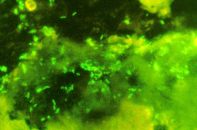

Research – Risk of E. coli in hydroponic and aquaponic systems may be greater than once thought

Phys Org

ecoli

Image CDC

A spate of foodborne illnesses in leafy greens and other produce in recent years has sickened consumers and disrupted growers and supply chains. It’s been thought that hydroponic and aquaponic systems could reduce these issues since there is little opportunity for pathogens like E. coli to contaminate the edible parts of plants.

A Purdue University study, however, has found the presence of Shiga toxin-producing E. coli (STEC) – the same bacteria that have made consumers of several produce products ill—in hydroponic and aquaponic growing systems. Hye-Ji Kim, an assistant professor of horticulture and the study’s corresponding author, said the findings suggest growers using these systems should be careful in handling and harvesting to avoid contamination.

Information – Common Symptoms of All of the Food Poisoning Pathogens

Food Poisoning Bulletin

Food poisoning outbreaks occur every year in the United States. These outbreaks can be caused by bacteria such as E. coli, Salmonella, Listeria Monocytogenes, Clostridium botulinum, Campylobacter, Shigella, Staphylococcus aureus, Brucella, Vibrio, and Bacillus cereus; and viruses such as norovirus and hepatitis A. At least 48,000,000 Americans are sickened with food poisoning every year. Do you know the common symptoms of all of the food poisoning pathogens? Follow the link above to find out.


Research – Why health experts aren’t warning about Coronavirus in food

Wbay

Chicken with Salmonella can make you sick. So can romaine lettuce with E. coli and buffets with lurking Norovirus. So why aren’t health officials warning people about eating food contaminated with the new Coronavirus?

The answer has to do with the varying paths organisms take to make people sick.

Respiratory viruses like the new Coronavirus generally attach to cells in places like the lungs. Germs like Norovirus and Salmonella can survive the acid in stomachs, then multiply after attaching to cells inside people’s guts.

“Specializing in what tissues to attach to is typically part of the disease’s strategy to cause illness,” according to the U.S. Centers for Disease Control and Prevention.

The CDC and other experts note that the virus is new and still being studied. But they say there’s no evidence yet that COVID-19 sickens people through their digestive systems, though the virus has been detected in the faeces of infected people.

How these germs spread also differs.

Respiratory viruses like the flu and the new Coronavirus spread mainly through person-to-person contact and air droplets from coughing, sneezing or other flying saliva.

RASFF Alert – STEC E.coli – Frozen Sausages

RASFF-Logo

RASFF – shigatoxin-producing Escherichia coli (stx2+) in and absence of labelling (UBD missing) on frozen sausages from the United Kingdom in Germany

Research – Hemolytic Uremic Syndrome

Pediatrics in Review

Thrombotic microangiopathy (TMA) was described by Moschcowitz in 1924, and the term hemolytic uremic syndrome (HUS) appeared by 1955 to describe a series of patients with small-vessel renal thrombi, thrombocytopenia, and hemolytic anemia. During the 1970s an association was noted between enteric Escherichia coli infections and HUS, and in 1983 the specific trigger of Shiga toxin–producing E coli (STEC) was recognized. This recognition led to classification of HUS as “diarrhea positive” or “diarrhea negative,” although this terminology is no longer popular. Other secondary forms of HUS are known, including HUS associated with invasive pneumococcal infection, human immunodeficiency virus, systemic lupus erythematosus, or uncommon reactions to medications such as cyclosporine. More recently, the term atypical HUS (aHUS) has been used to describe a rare form of HUS occurring in susceptible individuals, most often from defects in regulation of the alternative pathway of complement, whereas typical HUS largely refers to STEC-HUS or pneumococcal HUS.

In patients with bloody diarrhea, it is imperative that front-line providers understand the importance of testing for STEC. In many parts of the world STEC O157:H7 is the most common pathogen leading to HUS, but it certainly is not the only one as many other organisms besides E coli have been causally implicated with HUS. Testing for STEC is evolving quickly. Stool culture, various assays for the Shiga toxin, and most recently DNA testing of stool are all being used, each method with its own strengths and limitations. The most crucial issue is timeliness because the window of opportunity …

USA – Chicago Indoor Garden Recall on Products that Include Red Clover Sprouts: E. Coli 0103 Detected in Multi-State E. coli Outbreak

Food Poisoning News

hicago Indoor Garden Recall on Products that Include Red Clover Sprouts: E. Coli 0103 Detected in Multi-State E. coli Outbreak

Chicago Indoor Garden is voluntarily recalling all of their packaged products that include red clover sprouts for the detection of E. coli 0103. The U.S. Food and Drug Administration (FDA) notified the company, Chicago Indoor Garden, of the E. col 0103 after quality testing procedures. The red clover sprouts products included in the recall are the 4-ounce Red Clover clamshell, boxes of 2-pound Red Clover, the 6-ounce Sprout Salad clamshell, the 4-ounce Mixed Greens clamshell, and the 6-ounce Spring Salad clamshell. All of the recalled items have a “Best by” date of December 1, 2019 through March 12, 2020. These packaged items were distributed throughout the Midwest to Whole Foods, Coosemans Chicago Inc., Battaglia Distributing, and Liver Waters Farms.

Sweden – First recorded EIEC outbreak in Sweden linked to leafy greens – E.coli

Food Safety News

Researchers have shed more light on the first recorded enteroinvasive E. coli (EIEC) outbreak in Sweden.

The outbreak in the county of Halland in 2017 had 83 self-reported infections and one secondary case attributed to household transmission, based on a study published in the journal Eurosurveillance.

Leafy greens were suspected to be behind the outbreak as this item was in a number of dishes associated with illnesses. There was no microbiological evidence to identify the source or vehicle of infection, but contaminated salad greens have been linked to previous EIEC outbreaks.

All five staff members at the conference and hotel venue that met the case definition had symptom onset at least one day after the first reported case among venue visitors.

Research- Effect of cultivars and irrigation waters on persistence of indicator bacteria on lettuce grown in high tunnel

Wiley Online

Abstract

Effect of irrigation with groundwater (GW), primary‐treated wastewater (PTWW), secondary‐treated wastewater (STWW), and roof‐collected rainwater (RCR) on the microbial quality of lettuce cultivars “Annapolis,” “Celinet,” and “Coastline” grown in high tunnel was investigated. Lettuce plants were spray irrigated with irrigation waters once a week for 2 weeks and analyzed for indicator and pathogenic bacteria. PTWW irrigation resulted in the highest Escherichia coli recovery on the lettuce plants (4.7 log MPN/g) as compared to irrigation with other three waters on 0 day post irrigation (dpi). Lettuce cultivars affected the bacterial die‐off rate, where E. coli populations reduced the most by 1.5 log MPN/g on “Annapolis” lettuce on 2 dpi. The STWW and RCR irrigation did not significantly influence indicator bacterial populations on lettuce as compared to GW irrigation. The STWW and RCR containing low populations of indicator bacteria may be suitable for lettuce irrigation in Mid‐Atlantic area without affecting its microbial quality.

Research – Scotland – WHOLE GENOME SEQUENCE TYPING AND ANALYSIS OF NON-O157 STEC

Click to access WGS_Typing_and_Analysis_of_Non-O157_STEC_-_Jan_2020_v3.pdf