Category Archives: E.coli

USA – Clover Sprouts E. coli O103 Outbreak Updated: 39 Sick, 2 Hospitalized

Food Poisoning Bulletin

The Centers for Disease Control and Prevention (CDC) has updated the clover sprouts E. coli O103 outbreak that is associated with Jimmy John’s restaurants and Chicago Indoor Garden raw clover sprouts. Since the last update on February 26, 2020, 25 more patients who live in two states have been identified. Twenty-four of the new patients live in Utah, and Florida has been added to the state count.

RASFF Alert- STEC E.coli – Chilled Boneless Beef VP

RASFF-Logo

RASFF – shigatoxin-producing Escherichia coli in chilled boneless beef vacuum packed from Argentina in Germany


RASFF Alert – E.coli – Raw Cows Milk

RASFF-Logo

RASFF – too high count of Escherichia coli (50000 to 440000 CFU /g) in raw cow’s milk cheese from France in France

Research – Biofilm formation by South African non-O157 Shiga toxigenic Escherichia coli on stainless steel coupons

NRC

This study examined the biofilm-forming ability of six non-O157 Shiga-toxin-producing Escherichia coli (STEC) strains: O116:H21, wzx-Onovel5:H19, O129:H21, O129:H23, O26:H11, and O154:H10 on stainless steel coupons after 24, 48, and 72 h of incubation at 22 °C and after 168 h at 10 °C. The results of crystal violet staining revealed that strains O129:H23 and O154:H10 were able to form biofilms on both the submerged surface and the air–liquid interface of coupons, whereas strains O116:H21, wzx-Onovel5:H19, O129:H21, and O26:H11 formed biofilm only at the air–liquid interface. Viable cell counts and scanning electron microscopy showed that biofilm formation increased (p < 0.05) over time. The biofilm-forming ability of non-O157 STEC was strongest (p < 0.05) at 22 °C after 48 h of incubation. The strongest biofilm former regardless of temperature was O129:H23. Generally, at 10 °C, weak to no biofilm was observed for isolates O154:H10, O116:H21, wzx-Onovel5:H19, O26:H11, and O129:H21 after 168 h. This study found that temperature affected the biofilm-forming ability of non-O157 STEC strains. Overall, our data indicate a high potential for biofilm formation by the isolates at 22 °C, suggesting that non-O157 STEC strains could colonize stainless steel within food-processing facilities. This could serve as a potential source of adulteration and promote the dissemination of these potential pathogens in food.

USA – Outbreak Investigation of E. coli O103: Clover Sprouts (February 2020)

FDA

March 17, 2020

Recommendation

Chicago Indoor Garden is recalling all products containing Red Clover sprouts. FDA is recommending that consumers not eat the following recalled items with “Best By” dates between 12/1/2019 and 3/12/2020 that were distributed to Whole Foods throughout the Midwest, Coosemans Chicago Inc., Battaglia Distributing, and Living Waters Farms:

  • Red Clover 4oz. clamshell
  • Red Clover 2lb. boxes
  • Sprout Salad 6oz. clamshell
  • Mixed Greens 4oz. clamshell
  • Spring Salad 6oz. clamshell
Sample Labels of Chicago Indoor Garden Sprout Products

(PDF: 849 KB)

The FDA’s analysis of a sample of this firm’s product identified the presence of E. coli O103. Whole Genome Sequencing of this bacteria showed that it matches the outbreak strain.

Generally, it is recommended that children, the elderly, pregnant women, and persons with weakened immune systems should avoid eating raw sprouts of any kind.

Background

FDA, along with CDC and state and local partners, are investigating an outbreak of 14 illnesses caused by E. coli O103 in Iowa, Illinois, Missouri, Texas and Utah likely linked to clover sprouts.

As the outbreak investigation progresses, the FDA will continue in its traceback investigation to determine where implicated sprouts have been distributed and will continue monitoring for additional illnesses associated with this outbreak.


USA – Outbreak Investigation of E. coli O103: Clover Sprouts (February 2020)

FDA

Recommendation

FDA is recommending that consumers not eat the following sprout-containing items from Chicago Indoor Garden, Chicago, IL, with Best By dates between December 1, 2019 and March 12, 2020: red clover (with and without non-GMO labels), sprout salad, mixed greens, and spring salad. Labels of the products are below.

Sample Labels of Chicago Indoor Garden Sprout Products

(PDF: 849 KB)

The FDA’s analysis of a sample of this firm’s product identified the presence of E. coli O103. Whole Genome Sequencing of this bacteria showed that it matches the outbreak strain.

Generally, it is recommended that children, the elderly, pregnant women, and persons with weakened immune systems should avoid eating raw sprouts of any kind.

Background

FDA, along with CDC and state and local partners, are investigating an outbreak of 14 illnesses caused by E. coli O103 in Iowa, Illinois, Missouri, Texas and Utah likely linked to clover sprouts.

As the outbreak investigation progresses, the FDA will continue in its traceback investigation to determine where implicated sprouts have been distributed and will continue monitoring for additional illnesses associated with this outbreak.

Research – Inactivation of Shiga Toxin-Producing Escherichia coli and Listeria monocytogenes Within Plant Versus Beef Burgers in Response to High Pressure Processing

JFP

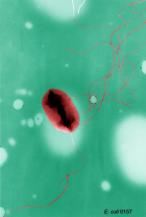
kswfoodworld E.coli O157

Image CDC

We evaluated high pressure processing to lower levels of Shiga toxin-producing Escherichia coli (STEC) and Listeria monocytogenes inoculated into samples of plant or beef burgers. Multi-strain cocktails of STEC and L. monocytogenes were separately inoculated (ca. 7.0 log CFU/g) into plant burgers or ground beef. Refrigerated (i.e., 4°C) or frozen (i.e., -20°C) samples (25-g each) were subsequently exposed to 350 MPa for up to 9 or 18 min or 600 MPa for up to 4.5 or 12 min, respectively. When refrigerated plant or beef burger samples were treated at 350 MPa for up to 9 min, levels of STEC were reduced by ca. 0.7 to 1.3 log CFU/g. However, when refrigerated plant or beef burger samples were treated at 350 MPa for up to 9 min, levels of L. monocytogenes remained relatively unchanged (ca. ≤0.3 log CFU/g decrease) in plant burger samples, but were reduced by ca. 0.3 to 2.0 log CFU/g in ground beef. When refrigerated plant or beef burger samples were treated at 600 MPa for up to 4.5 min, levels of STEC and L. monocytogenes were reduced by ca. 0.7 to 4.1 and ca. 0.3 to 5.6 log CFU/g, respectively. Similarly, when frozen plant and beef burger samples were treated at 350 MPa up to 18 min, reductions of ca. 1.7 to 3.6 and ca. 0.6 to 3.6 log CFU/g in STEC and L. monocytogenes numbers, respectively, were observed. Exposure of frozen plant or beef burger samples to 600 MPa for up to 12 min resulted in reductions of ca. 2.4 to 4.4 log and ca. 1.8 to 3.4 log CFU/g in levels of STEC and L. monocytogenes, respectively. Via empirical observation, pressurization did not adversely affect the color of plant burger samples, whereas appreciable changes in color were observed in pressurized ground beef. These data confirm that time and pressure levels already validated for control of STEC and L. monocytogenes in ground beef will likely be equally effective towards these same pathogens in plant burgers without causing untoward effects on product color.

Research – Some E. coli Strains May Be Linked to Development of Bowel Cancer

Food Poisoning Bulletin

CDC E.coli

Image CDC

According to a new study in the journal Nature, E. coli infections may be linked to bowel cancer. Some species of the intestinal microbiota, which is the collection of bacteria and viruses that live in the human gut, have been associated with colorectal cancer, but a direct role hasn’t been proven.

As it turns out, E. coli bacteria carry what is called a pathogenicity island pks, that creates enzymes that synthesize a compound called colibactin. Colibactin causes double-strand breaks in cultured cells. This damage can lead to cancer over time. Colibactin is found more often in fecal samples of people who do have bowel cancer than healthy people.

RASFF Alerts – E.coli – Chilled Cheese – Live Mussels

RASFF-Logo

RASFF – too high count of Escherichia coli (110000 CFU/g) in chilled cheese from France in France

RASFF – high count of Escherichia coli (up to 1100 MPN/100g) in live mussels (Mytilus galloprovincialis) from Italy, with raw material from Spain in Italy

Canada – Luigi Guffanti 1876 brand Taleggio DOP a Latte Crudo incarto verde (cheese) recalled due to pathogenic E. coli

Canada Gov

Recall details

Ottawa, March 10, 2020 – Taste for Luxury is recalling Guffanti brand Taleggio DOP a Latte crudo incarto verde (cheese) from the marketplace due to possible contamination with pathogenic E. coli. Consumers should not consume the recalled product described below.

The following product has been sold in Ontario. This product may have been sold clerk-served from counters with or without a label or coding. Consumers who are unsure if they have purchased the affected product are advised to contact their retailer.

Recalled product

Brand Product Size UPC Codes
Luigi Guffanti 1876 Taleggio DOP a Latte crudo incarto verde (cheese) variable variable Lot: 134/20
BB: 13/04/2020

What you should do

If you think you became sick from consuming a recalled product, call your doctor.

Check to see if you have the recalled product in your home. Recalled products should be thrown out or returned to the store where they were purchased.

Food contaminated with pathogenic E. coli may not look or smell spoiled but can still make you sick. Symptoms can include nausea, vomiting, mild to severe abdominal cramps and watery to bloody diarrhea. In severe cases of illness, some people may have seizures or strokes, need blood transfusions and kidney dialysis or live with permanent kidney damage. In severe cases of illness, people may die.

Background

This recall was triggered by a recall in another country. The Canadian Food Inspection Agency (CFIA) is conducting a food safety investigation, which may lead to the recall of other products. If other high-risk products are recalled, the CFIA will notify the public through updated Food Recall Warnings.

The CFIA is verifying that industry is removing the recalled product from the marketplace.

Illnesses

There have been no reported illnesses associated with the consumption of this product.