Category Archives: E.coli O157:H7

USA – FDA Core Investigation Table Update

FDA

What’s New

  • For the investigation with a reference number 1064, the total adverse event reports have increased to 446.
  • For the Listeria monocytogenes outbreak in a not yet identified food (reference #1040), the case count has increased to 19 cases.
  • The investigation has closed for the Salmonella Saintpaul outbreak in an unidentified food.
  • For the Listeria monocytogenes outbreak in a not yet identified food (reference #1057), the case count has increased to 17 cases.
Date
Posted
Ref Pathogen or
Cause of Illness

Product(s)
Linked to
Illnesses

(if any)
Total
Case Count

Status
Outbreak
Status
4/20/

2022

1064 Not Yet
Identified
Dry Cereal 446

adverse
event

reports

Active Ongoing
See Advice
4/13/

2022

1057 Listeria
monocytogenes
Not Yet
Identified
17 Active Ongoing
See Advice
4/6/

2022

Not App Norovirus* Raw Oysters See
CDC Alert
Active Ongoing
See
Safety Alert
3/30/

2022

1060 Not Yet
Identified
Meal Replace

ment
Drink

6

adverse
event

reports

Active Ongoing
See Advice
3/16/

2022

1055 Salmonella
Saintpaul
Not Identified 60 Closed Ended
See Advice
2/17/

2022

1056 Cronobacter
sakazakii
Powdered
Infant
Formula
See
Advisory
Active Ongoing
See
Advisory
2/9/

2022

1040 Listeria
monocytogenes
Not Yet
Identified
19 Active Ongoing
See Advice
2/2/

2022

1054 Enteroinvasive
E. coli
O143:H26
Not
Identified
16 Closed Ended
See Advice
1/10/

2022

1050 E. coli
O121:H19
Romaine 4 Closed Ended
12/29/

2021

1052 E. coli
O157:H7
Packaged
Salad
See Outbreak
Advisory
Closed Ended
See Outbreak
Advisory
12/20/

2021

1039 Listeria
monocytogenes
Packaged
Salad
See Outbreak
Advisory
Closed Ended
See Outbreak
Advisory
12/15/

2021

1048 Listeria
monocytogenes
Packaged
Salad
See Outbreak
Advisory
Closed Ended
See Outbreak
Advisory

*Outbreaks associated with shellfish are managed by the FDA Division of Seafood Safety, not CORE Response Teams. This outbreak is included here for the convenience of the consumer and will be removed once the outbreak is over and the investigation is closed.

Research – Shiga toxin-producing Escherichia coli (STEC) data: 2019

UKSHA

Main points for 2019

The main points of the 2019 report are:

1. A total of 539 confirmed cases of Shiga toxin-producing Echerichia coli (STEC) O157 were reported in England and Wales in 2019.

2. The lowest incidence of STEC O157 was in the East Midlands region (0.56 per 100,000 population) and the highest in the Yorkshire and Humber region (1.51 per 100,000 population).

3. Children aged 1 to 4 years had the highest incidence of infection (3.28 per 100,000 population, CI 95% 2.63–4.04).

4. Nearly one-third of confirmed STEC O157 cases in England were hospitalised and 3% were reported to have developed haemolytic ureamic syndrome (HUS).

5. In England and Wales, detection of non-O157 STEC increased in line with the growing number of NHS labs implementing gastrointestinal (GI) diagnostics using polymerase chain reaction (PCR); in 2019, 768 culture-positive non-O157 STEC cases (655 in England, 113 in Wales) were reported.

6. A further 347 specimens in England and 66 in Wales were positive for Shiga toxins (stx) genes on PCR at the Gastrointestinal Bacteria Reference Unit (GBRU) but an organism was not cultured.

7. The most commonly isolated non-O157 STEC serogroup was STEC O26 (England: n=109/655, 17% and Wales: n=28/113, 25%).

8. Five outbreaks of STEC involving 65 cases in England were investigated in 2019.

Cases of STEC in England and Wales in 2019

In 2019, 1,720 confirmed cases of STEC were reported in England and Wales; these comprised 539 culture-confirmed cases of STEC serogroup O157 (515 cases in England and 24 in Wales) and 768 cases (655 in England, 113 in Wales) where a serogroup other than O157 was isolated (non-O157). For a further 413 cases, samples were confirmed as STEC by testing positive by PCR for stx genes, but STEC was not cultured (347 in England, 66 in Wales).

Five confirmed cases were infected with multiple serogroups:

  • O157 and O26
  • O26 and O103
  • O76 and O113
  • O91 and O128ab
  • O146 and O91

There were 13 probable cases with serological evidence of STEC infection, with antibodies detected to O157 lipopolysaccharides in 11 cases (England: 10, Wales: 1), for O111 lipopolysaccharides in one case, and for O26 lipopolysaccharides in another case.

The crude incidence rate of confirmed STEC O157 in England and Wales was 0.91 per 100,000 cases (95% CI 0.83–0.99), continuing the downward trend observed since 2015 (Figure 1). It is the lowest number of cases reported annually since 1996, when testing began in England for STEC O157 on all faecal specimens from patients with suspected gastrointestinal infection (7).

Non-O157 STEC cases in England and Wales
Historically, cases of non-O157 STEC have been under ascertained, with 89 cases of STEC non-O157 reported between 2009 and 2013, prior to PCR being implemented.

Following the increase in recent years in frontline laboratories using PCR, there has been a significant increase in the detection of non-O157 STEC in England. It is not possible to estimate a denominator for incidence calculations for non-O157 STEC because details of contract arrangements for referral of samples from primary care and catchment areas of each diagnostic laboratory using PCR are not known.

In 2019, of 5,760 samples received at GBRU for STEC testing, 1,002 non-O157 STEC cases were confirmed in England. Of the 1,002 non-O157 cases, 655 culture positive cases of 72 different serogroups were confirmed. For 21 isolates, a serotype could not be identified as the genes encoding the somatic O antigen did not match any known sequence in the database. Specimens for a further 347 cases in England were positive for stx genes on PCR at GBRU but an organism was not cultured (PCR positive-culture negative).

In Wales, 113 non-O157 cases of 40 different serotypes were confirmed and a further 66 were PCR positive-culture negative. The most common non-O157 serogroups isolated in 2019 were O26 (28/113, 25%), O146 (15/113, 13%), O128ab (10/113, 9%) and O91 (8/113, 7%) followed by O111 (4/113, 4%), O113 (4/113, 4%) and O156 (4/113, 4%).

USA – Alabama warms of E. coli and Rotavirus cases in children

Food Poison Journal

The Alabama Department of Public Health (ADPH) is investigating four cases of E. coli O157:H7 and two cases of Rotavirus in younger children in Northeastern Alabama. ADPH regularly investigates clusters and outbreaks of communicable diseases as required by Notifiable Disease Rules in Alabama.

In 2021, ADPH investigated 113 cases of E. coli, shiga toxin-producing illness (includes O157:H7). People of any age can become infected with this germ, but very young children and the elderly are more likely to develop severe illness and kidney problems than others.

Research – Fall Seasonal Effects Connected to E. coli Outbreaks in Bagged Romaine

USDA

Agricultural Research Service scientists have begun to uncover details underlying a pattern of seasonal E. coli O157:H7 outbreaks linked to bagged romaine lettuce.

That E. coli O157:H7 infection outbreaks connected to romaine are more frequently associated with lettuce commercially grown and harvested at the end of the growing seasons in California and Arizona has been recognized for several years. Although contamination of lettuce products is rare, between 1998 and 2019, 36 outbreaks that traced back to lettuce were recorded by the Centers for Disease Control and Prevention. Most of these outbreaks involved romaine lettuce harvested in the fall on the California Central Coast such as in Salinas, and in late winter in Southern California and Arizona. These two states are the major lettuce growing areas in the United States with farm production valued at nearly $2.7 billion in 2021.

“To begin unravelling the causes of these seasonal outbreaks, our research team looked at various factors to identify conditions that may increase E. coli survival on fresh-cut lettuce that we grew in Salinas, and processed and cold-stored in modified atmosphere packaging as is done commercially,” said ARS microbiologist Maria Brandl, with the Produce Safety and Microbiology Research Unit of the ARS Western Regional Research Center in Albany, California, and leader of the study.

One of the most significant findings of this study is that E. coli survived on average 5.6 times better in cold-stored packaged romaine harvested in the fall than on the same varieties harvested in late spring.

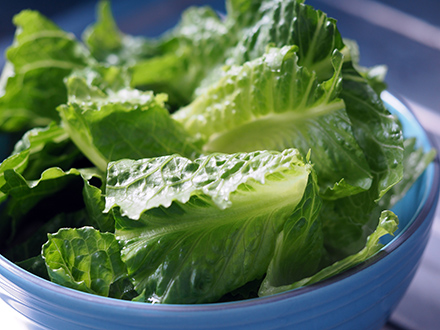
Romaine lettuce

ARS scientists have begun to unravel details that may underly a pattern of fall E. coli O157:H7 outbreaks linked to bagged romaine lettuce. (Photo courtesy of Getty Images)

“We also found that among romaine varieties with longer and shorter shelf life in this study, the deterioration rate of the variety with long shelf life was significantly greater when harvested in the fall than in spring. I have observed this in previous studies as well but the significance to E. coli on lettuce had not been tested. Here we showed that greater deterioration in the fall lettuce was associated with better pathogen survival,” explained study co-author ARS geneticist Ivan Simko, with the Crop Improvement and Protection Research Unit in Salinas, California.

In addition, the research team, which included biologist Susan Leonard and others at the U.S. Food and Drug Administration, demonstrated that the bacterial community present on bagged romaine differed by season, lettuce deterioration state, and whether survival of E. coli on the lettuce was high or low. This suggests a potential for using the microbiome as an indicator of the microbial quality of fresh-cut bagged lettuce.

The researchers were a little surprised to find such differences in E. coli survival in fall harvested-lettuces compared to spring-harvested ones because many current hypotheses about the seasonality of outbreaks linked to lettuce focus on differences in the prevalence of the E. coli pathogen in the environment.

“While prevalence may also be involved, our results strongly indicate that fall-harvested romaine and the microbe communities it harbors have intrinsic characteristics that make them a better place for E. coli to survive in fresh-cut product. These are the next areas we want to work on. For example, is this something we could try to manipulate in the long run through plant physiology and breeding, and microbiome engineering? And would this trend also be observed for E. coli survival in the field? Our observations definitely open an entire new branch of inquiry about outbreak seasonality,” Brandl said.

USA – E. coli infections from unknown source under investigation in Alabama

Food Safety News

The Alabama Department of Public Health is investigating four cases of E. coli O157:H7 and two cases of Rotavirus in younger children in Northeastern Alabama. 

As of today the department had not reported what the possible sources of the pathogens might be. It is unknown if the sources involve foods or beverages, although food is the usual source of E. Coli infections.

The department regularly investigates clusters and outbreaks of communicable diseases as required by Notifiable Disease Rules in Alabama.

In 2021, ADPH investigated 113 cases of E. coli, shiga toxin-producing illness including O157:H7.

Research – The epidemiology of Shiga toxin-producing Escherichia coli serogroup O157 in England, 2009–2019

Cambridge Org

Shiga toxin-producing Escherichia coli (STEC) serogroup O157 is a zoonotic, foodborne gastrointestinal pathogen of major public health concern. We describe the epidemiology of STEC O157 infection in England by exploring the microbiological and clinical characteristics, the demographic and geographical distribution of cases, and examining changes in environmental exposures over 11 years of enhanced surveillance. Enhanced surveillance data including microbiological subtyping, clinical presentations and exposures were extracted for all cases resident in England with evidence of STEC O157 infection, either due to faecal culture or serology detection. Incidence rates were calculated based on mid-year population estimates from the Office of National Statistics (ONS). Demographics, geography, severity and environmental exposures were compared across the time periods 2009–2014 and 2015–2019. The number of cases reported to national surveillance decreased, with the mean cases per year dropping from 887 for the period 2009–2014 to 595 for the period 2015–2019. The decline in STEC O157 infections appears to be mirrored by the decrease in cases infected with phage type 21/28. Although the percentage of cases that developed HUS decreased, the percentage of cases reporting bloody diarrhoea and hospitalisation remained stable. The number of outbreaks declined over time, although more refined typing methods linked more cases to each outbreak. Integration of epidemiological data with microbiological typing data is essential to understanding the changes in the burden of STEC infection, assessment of the risks to public health, and the prediction and mitigation of emerging threats.

Research – Development of Desiccation-Tolerant Probiotic Biofilms Inhibitory for Growth of Foodborne Pathogens on Stainless Steel Surfaces

MDPI

Lactic acid bacteria biofilms can be used to reduce foodborne pathogen contamination in the food industry. However, studies on growth inhibition of foodborne pathogens by inducing biofilm formation of antagonistic microorganisms on abiotic surfaces are rare. We developed a desiccation-tolerant antimicrobial probiotic biofilm. Lactobacillus sakei M129-1 and Pediococcus pentosaceus M132-2 isolated from fermented Korean foods were found to exhibit broad-spectrum antibacterial activity against Bacillus cereusEscherichia coli O157:H7, Staphylococcus aureusListeria monocytogenes, and Salmonella enterica. Their biofilm levels were significantly (p < 0.05) higher on stainless steel than on polyethylene or ceramic. Biofilms of both isolates showed significantly (p < 0.05) enhanced resistance against desiccation (exposure to 43% atmospheric relative humidity) as compared with the isolates not in the biofilm form. The antimicrobial activity of the isolates was sustained in dried biofilms on stainless steel surface; the initial number of foodborne pathogens (average 7.0 log CFU/mL), inoculated on stainless steel chips containing L. sakei M129-1 or P. pentosaceus M132-2 biofilm decreased to less than 1.0 log CFU within 48 h. The lactic acid bacteria antibacterial biofilms developed in this study may be applied to desiccated environmental surfaces in food-related environments to improve microbiological food safety. View Full-Text

USA – CDC – Lettuce, Other Leafy Greens, and Food Safety

CDC

Leafy greens arranged on a white background

Vegetables are an important part of a healthy diet. Leafy vegetables (called leafy greens on this page), such as lettuce, spinach, cabbage, kale, and bok choy, provide nutrients that help protect you from heart diseasestroke, and some cancers.

But leafy greens, like other vegetables and fruits, are sometimes contaminated with harmful germs. Washing leafy greens does not remove all germs. That’s because germs can stick to the surface of leaves and even get inside them. If you eat contaminated leafy greens without cooking them first, such as in a salad or on a sandwich, you might get sick.

Although anyone can get a foodborne illness, sometimes called food poisoning, some groups of people are more likely to get one and to have a serious illness. These groups include:

  • Adults aged 65 and older
  • Children younger than 5 years
  • People who have health problems or take medicines that lower the body’s ability to fight germs and sickness (a weakened immune system)external icon
  • Pregnant people

Eating Leafy Greens

Are leafy greens safe to eat?

Millions of servings of leafy greens are eaten safely every day in the United States. But leafy greens are occasionally contaminated enough to make people sick. To reduce your chance of getting sick, always follow the steps for safely handling and preparing leafy greens before eating or serving them.

Are leafy greens safe for my pet to eat?

Some animals can get sick from some germs that also make people sick. Always follow the steps for safely handling and preparing leafy greens before feeding them to pets and other animals. Never feed recalled food to pets or other animals.

Safely Handling and Preparing Leafy Greens

Do I need to wash all leafy greens?

Prewashed greens don’t need to be washed again. If the label on a leafy greens package says any of the following, you don’t need to wash the greens:

  • Ready-to-eat
  • Triple washed
  • No washing necessary

Prewashed greens sometimes cause illness. But the commercial washing process removes most of the contamination that can be removed by washing.

All other leafy greens should be thoroughly washed before eating, cutting, or cooking.

What is the best way to wash leafy greens?

The best way to wash leafy greens is by rinsing them under running water. Studies show that this step removes some of the germs and dirt on leafy greens and other vegetables and fruits. But no washing method can remove all germs.

Follow these steps to wash leafy greens that you plan to eat raw:

  • Wash your hands for 20 seconds with soap and water before and after preparing leafy greens.
  • Get rid of any torn or bruised leaves. Also, get rid of the outer leaves of cabbages and lettuce heads.
  • Rinse the remaining leaves under running water. Use your hands to gently rub them to help get rid of germs and dirt.
  • Dry leafy greens with a clean cloth or paper towel.

Should I soak leafy greens before washing them?

No. Do not soak leafy greens. If you soak them in a sink, germs in the sink can contaminate the greens. If you soak them in a bowl, germs on one leaf can spread to the other leaves. Rinsing leafy greens under running water is the best way to wash them.

Should I wash leafy greens with vinegar, lemon juice, soap, detergent, or produce wash?

Use plain running water to wash leafy greens and other produce. Kitchen vinegar and lemon juice may be used, but CDC is not aware of studies that show vinegar or lemon juice are any better than plain running water.

Do not wash leafy greens or other produce with soap, detergent, or produce wash. Do not use a bleach solution or other disinfectant to wash produce.

What other food safety steps should I keep in mind when I select, store, and prepare leafy greens and other produce?

  • Select leafy greens and other vegetables and fruits that aren’t bruised or damaged.
  • Make sure pre-cut produce, such as bagged salad or cut fruits and vegetables, is refrigerated or on ice at the store.
  • Separate produce from raw meat, poultry, seafood, and eggs in your shopping cart, grocery bags, and refrigerator.
  • Store leafy greens, salads, and all pre-cut and packaged produce in a clean refrigerator with the temperature set to 40°F or colder.
  • Use separate cutting boards and utensils for produce and for raw meat, poultry, seafood, and eggs. If that isn’t an option, prepare produce before working with raw meat.
  • Wash utensils, cutting boards, and kitchen surfaces with hot, soapy water after each use.
  • Cook thoroughly or throw away any produce that touches raw meat, poultry, seafood or their juices.
  • Refrigerate cooked or cut produce, including salads, within 2 hours (1 hour if the food is exposed to temperatures above 90°F, like a hot car or picnic).

Germs, Outbreaks, and Recalls

How do leafy greens get contaminated with germs?

Germs that make people sick can be found in many places, including in the soil, in the feces or poop of animals, in refrigerators, and on kitchen surfaces.

Germs can contaminate leafy greens at many points before they reach your plate. For example, germs from animal poop can get in irrigation water or fields where theexternal icon vegetables grow. Germs can also get on leafy greens in packing and processing facilities, in trucks used for shipping, from the unwashed hands of food handlers, and in the kitchen. To prevent contamination, leafy greens should be grown and handled safely at all points from farm to fork.

Read a study by CDC and partners on what we have learned from 10 years of investigating E. coli outbreaks linked to leafy greens.

How common are outbreaks linked to leafy greens?

In 2014–2018, a total of 51 foodborne disease outbreaks linked to leafy greens (mainly lettuce) were reported to CDC. Five of the 51 were multistate outbreaks that led CDC to warn the public. Among those five outbreaks, two were linked to packaged salads, two were linked to romaine lettuce, and one could not be linked to a specific type of leafy greens.

Most recently, in 2019–2021, CDC investigated and warned the public about nine multistate outbreaks linked to leafy greens. Among those outbreaks, six were linked to packaged salads, one was linked to romaine lettuce, one was linked to baby spinach, and one could not be linked to a specific type of leafy greens. Learn about these outbreaks.

Most foodborne illnesses are not part of a recognized outbreak. The nearly 2,000 illnesses reported in 2014–2020 outbreaks linked to leafy greens represent only a small part of illnesses caused by contaminated leafy greens during those years.

Does CDC warn the public about every foodborne disease outbreak?

No. CDC does not warn the public about every foodborne outbreak—including ones linked to leafy greens. Some reasons for this include:

  • Most sources of foodborne outbreaks are never identified.
  • By the time a source is identified, it might no longer be in stores, restaurants, or homes. This can happen with foods that are perishable (foods that spoil or go bad quickly), such as leafy greens.
  • Most outbreaks affect people in only one state, so local or state health departments lead the work to identify, investigate, and communicate about those outbreaks. CDC typically communicates only about outbreaks that affect people in more than one state.

Investigating outbreaks linked to leafy greensexternal icon can be especially challenging. These outbreaks often go unidentified or unsolved.

What should I do with leafy greens that are part of a recall?

  • Never eat, serve, or sell food that has been recalled, even if some of it was eaten and no one got sick.
  • Return the recalled food to the store or throw it away at home.
    • Throw out the recalled food and any other foods stored with it or that touched it.
    • Put it in a sealed bag in an outside garbage can with a tight lid (so animals cannot get to it).
    • If the recalled food was stored in a reusable container, wash the container in the dishwasher or with hot, soapy water.
  • Follow CDC’s instructions for cleaning your refrigerator after a food recall.

Organic, Hydroponic, and Home-Grown Leafy Greens

Are organic leafy greens less likely to be contaminated than non-organic ones?

All kinds of produce, including organic leafy greens, can be contaminated with harmful germs at any point from farm to fork. CDC is not aware of any evidence that organic greens are safer.

Learn about some outbreaks linked to organic foodsexternal icon.

Are hydroponic or greenhouse-grown leafy greens less likely to be contaminated?

Leafy greens grown using these methods also can be contaminated with harmful germs at any point from farm to fork.

Learn about an outbreak linked to greenhouse-grown leafy greens.

How do I keep leafy greens in my garden safe to eat?

Home gardens can be an excellent source of fruits and vegetables. Follow these tips to help prevent food poisoning:

  • Plant your garden away from animal pens, compost bins, and manure piles.
  • Water your garden with clean, drinkable water.
  • Keep dirty water, including storm runoff, away from the parts of plants you will eat.

Learn about raised bed gardening pdf icon[PDF – 1 page].

Looking to the Future

What steps are industry and the government taking to make leafy greens safer?

CDC is collaborating with FDA, academia, and industry to investigate the factors that contribute to leafy greens contamination.

The leafy greens industry, FDA, and state regulatory authorities have been implementing provisions of the Produce Safety Ruleexternal icon as part of the FDA Food Safety Modernization Act (FSMA).external icon They are considering what further measures can be taken. FDA’s 2020 Leafy Greens STEC Action Planexternal icon describes the agency’s plans to work with partners to make leafy greens safer.

USA – FDA Core Investigation Table Update

FDA

Date
Posted
REF Pathogen
Total
Case Count

Status
3/16/

2022

1055 Salmonella
Saintpaul
Not Yet
Identified
60 Active
2/17/

2022

1056 Cronobacter
sakazakii
Powdered
Infant
Formula
See
Advisory
Active
2/9/

2022

1040 Listeria
monocytogenes
Not Yet
Identified
16 Active
2/2/

2022

1054 Enteroinvasive
E. coli
O143:H26
Not
Identified
16 Closed
1/10/

2022

1050 E. coli
O121:H19
Romaine 4 Closed
12/29/

2021

1052 E. coli
O157:H7
Packaged
Salad
See Outbreak
Advisory
Closed
12/20/2

021

1039 Listeria
monocytogenes
Packaged
Salad
See Outbreak
Advisory
Closed
12/15/2021 1048 Listeria
monocytogenes
Packaged
Salad
See Outbreak
Advisory
Active

USA – Core Investigation Table Update – Salmonella Saintpaul Outbreak

FDA

The FDA has launched a Traceback Investigation to identify the source of the outbreak. 59 cases have been reported so far, no Public Health Advisory has been issued yet. Salmonella Saintpaul has been identified as the strain causing the illnesses.

Date
Posted
Ref Pathogen
Product
Linked to
Illnesses

(if any)
Case Count
Status
3/16/

2022

1055 Salmonella
Saintpaul
Not Yet
Identified
59 Active
2/17/

2022

1056 Cronobacter
sakazakii
Powdered
Infant
Formula
See
Advisory
Active
2/9/

2022

1040 Listeria
monocytogenes
Not Yet
Identified
16 Active
2/2/

2022

1054 Enteroinvasive
E. coli
O143:H26
Not
Identified
16 Closed
1/10/

2022

1050 E. coli
O121:H19
Romaine 4 Closed
12/29/

2021

1052 E. coli
O157:H7
Packaged
Salad
See Outbreak
Advisory
Closed
12/20/

2021

1039 Listeria
monocytogenes
Packaged
Salad
See Outbreak
Advisory
Closed
12/15/2021 1048 Listeria
monocytogenes
Packaged
Salad
See Outbreak
Advisory
Active