Category Archives: E.coli O157:H7

USA – FSIS Issues Public Health Alert for Ground Beef Due to Possible E. Coli O103 Contamination

FSIS USDA

WASHINGTON, October 13, 2022 – The U.S. Department of Agriculture’s Food Safety and Inspection Service (FSIS) is issuing a public health alert due to concerns that a specific ground beef product may be contaminated with E. coli O103. A recall was not requested because the products are no longer available for purchase.

The raw ground beef items were produced on October 4, 2022. The following product is subject to the public health alert view labels:

  • 1-lb. plastic vacuum-packed packages containing “FRANK’S BUTCHER SHOP GROUND BEEF” with “PACKED ON” dates of 10-07-2022 and 10-09-2022 on the label.

The establishment’s retail store location in Hudson, Wyoming sold the affected product directly to consumers. FBS Hudson is actively attempting to contact consumers who may have purchased 14 packages of ground beef product subject to the public health alert.

The problem was discovered when FBS Hudson alerted FSIS that its routine microbial testing results found Shiga toxin-producing E. coli (STEC) O103 in a sample of the ground beef. There have been no confirmed reports of illness due to consumption of these products.

Many clinical laboratories do not test for non-O157 STEC, such as O103 because it is harder to identify than STEC O157:H7. People can become ill from STECs 2-8 days (average of 3-4 days) after consuming the organism.

Most people infected with STEC O103 develop diarrhea (often bloody) and vomiting. Some illnesses last longer and can be more severe. Infection is usually diagnosed by testing of a stool sample. Vigorous rehydration and other supportive care is the usual treatment; antibiotic treatment is generally not recommended. Most people recover within a week, but, rarely, some develop a more severe infection. Hemolytic uremic syndrome (HUS), a type of kidney failure, is uncommon with STEC O103 infection. HUS can occur in people of any age but is most common in children under 5 years old, older adults and persons with weakened immune systems. It is marked by easy bruising, pallor and decreased urine output. Persons who experience these symptoms should seek emergency medical care immediately.
USA – CDC says outbreak linked to Wendy’s sandwiches is over with more than 100 sick

Food Safety News

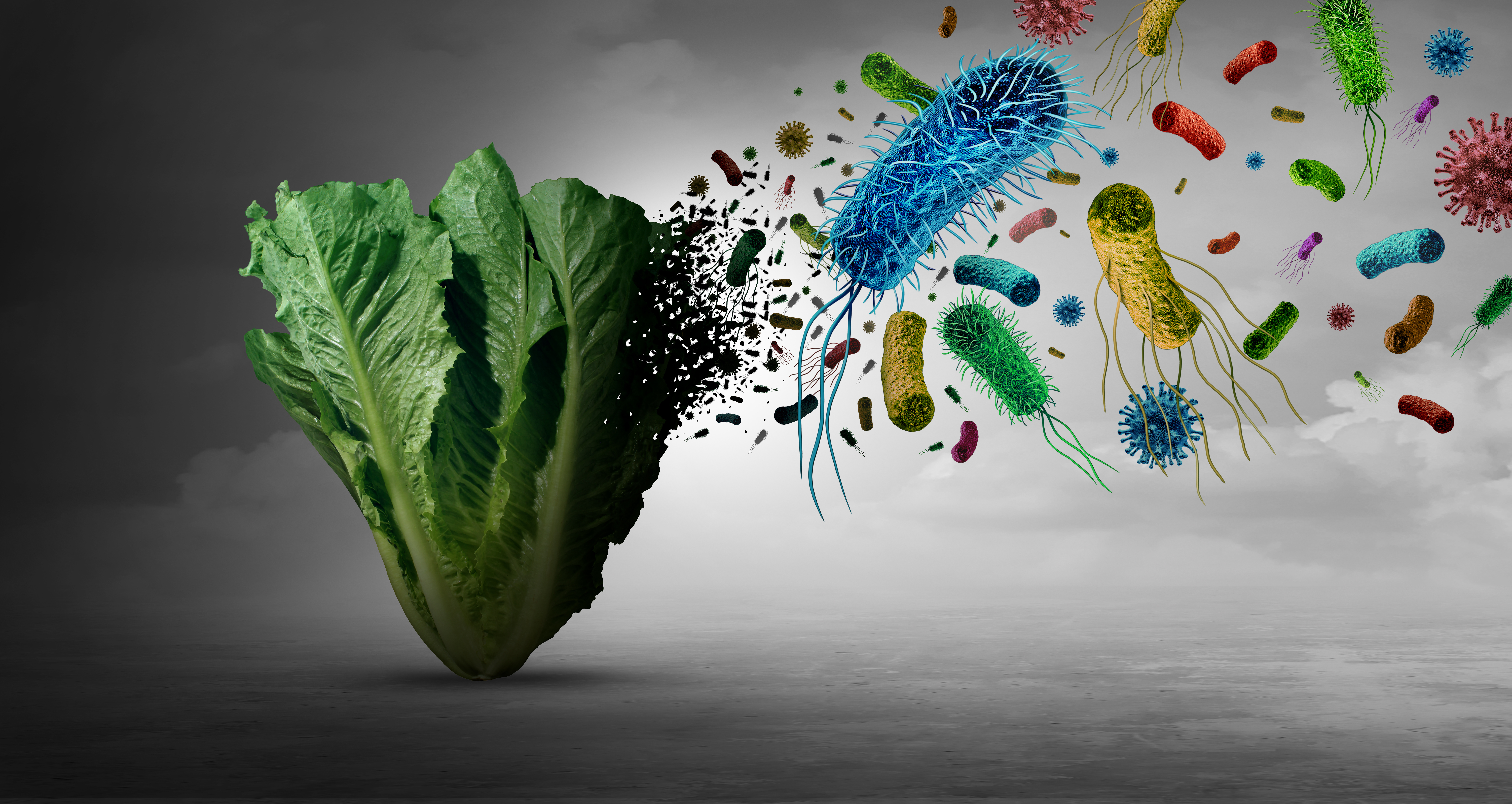
Federal officials have declared that an outbreak of E. coli O157:H7 infections related to romaine lettuce on Wendy’s sandwiches has ended.

The Centers for Disease Control and Prevention is reporting that the total number of confirmed patients is 109, up from the 97 reported in its most recent update on Sept. 1. About half — 52 — of the patients have been so sick they had to be admitted to hospitals. Thirteen of the patients developed hemolytic uremic syndrome (HUS), a serious often life-threatening condition that can cause kidney failure. No one had died as of this evening.

As of the report tonight from the CDC the specific source of the E. coli could not be 100 percent confirmed. However, 83 percent of 82 patients for whom the information was available reported eating at Wendy’s before becoming ill.

“The true number of sick people in this outbreak is likely much higher than the number reported, and the outbreak may not have been limited to the states with known illnesses. This is because many people recover without medical care and are not tested for E. coli,” according to the CDC statement.

Research – Collective food poisoning (TIAC) ​​with E. coli O157 producing Shiga toxins, associated with the consumption of raw cucumbers

Sante Publique

On September 9, 2021, the Regional Health Agency (ARS) of Hauts-de-France was informed of a suspicion of collective food poisoning (TIAC) ​​affecting half-board students, educated in several schools in a municipality. of the Lille metropolis. On September 13, 2021, two cases of hemolytic and uremic syndrome (HUS) were diagnosed in two hospitalized children attending school in this town. Public Health France Hauts-de-France was asked by the Hauts-de-France ARS to provide support for the investigations and management of this TIAC. A total of 35 cases of gastroenteritis, with bloody diarrhea and fever (>38°C) in half of the cases, were identified. Ten cases were hospitalized and two children developed HUS. The cases identified were half-board students in four school groups (29 cases), a parent of a student and elderly people benefiting from the municipality’s home meal delivery service (5 cases). The case canteens were all supplied by the central municipal kitchen. The shape of the epidemic curve was in favor of a common and point source of contamination during meals on September 2 or 3, 2021. The case-control survey, carried out in schools, concluded that only the consumption of cucumbers in salad, served with the meal on September 2, was statistically and significantly associated with the occurrence of the disease. A strain of E. highly pathogenic Shiga toxin-producing (STEC) O157 coli was isolated from the stool cultures of eight cases, including the two children who developed HUS and in the offending cucumber salad. Genomic analysis of the strains confirmed the genetic clustering of clinical and food strains that belonged to the same genomic cluster. The veterinary investigation revealed that a failure in the decontamination process, associated with incomplete peeling of the contaminated cucumbers, contributed to the occurrence of this TIAC. The cucumbers in question came from Belgium and the Belgian health authorities were informed via the dedicated European alert circuits. No other episodes of clusters of STEC infection related to this TIAC have been reported to the ARS over the period while cucumbers from the same batch had been widely distributed in communities and commercial catering services in the Hauts-de-France region. The food vehicle, incriminated in this TIAC, is part of the plants at risk because of its raw mode of consumption. It is important to remind vulnerable populations and collective catering services that preventing the risk of STEC infection, linked to the consumption of raw vegetables, requires washing, disinfection and peeling.

USA – Could the Wendy’s E. coli Outbreak have sickened over 2,600?

Food Poison Journal

According to the CDC, as of September 1, 2022, a total of 97 people infected with the outbreak strain of E. coli O157:H7 have been reported from six states – Indiana 11, Kentucky 1, Michigan 58, New York 1, Ohio 24, and Pennsylvania 2.  It is expected, according to the NCBI database, that the actual numbers of ill will be 115 or more shortly.  Interestingly, according to the CDC, for E. coli O157:H7, there is an underreporting rate of 26.1 – meaning for everyone 1 person counted by the CDC another 26.1 were actually sickened.

UK – Nearly 200 sick in UK E. coli O157 outbreak.

Food Safety News

Public health officials in the United Kingdom are investigating an outbreak of E. coli O157 that has sickened almost 200 people in a month.

Since early September, 192 genetically linked cases of Shiga toxin-producing E. coli (STEC) O157 have been identified in England, Scotland, Northern Ireland and Wales.

The majority of people sick are adults but there have been no deaths linked to the incident.

No source for the rise in infections has yet been identified but patients are being interviewed to help find the vehicle of infection.

There have also been no cases of hemolytic uremic syndrome (HUS) reported. HUS is a type of kidney failure associated with E. coli infections that can result in lifelong, serious health problems and death.

Dr. Lesley Larkin, head of surveillance, gastrointestinal infections and food safety at the UK Health Security Agency (UKHSA), said a rise in E. coli cases notified to public health surveillance systems had been seen in recent weeks.

Japan – Escherichia coli O157 outbreak in Kyoto Prefecture, Japan.

Minyu

Kyoto Prefecture announced on the 15th that a woman in her 90s who complained of diarrhea and abdominal pain after eating beef yukhoe sold by MEAT & FRESH TAKAMI, a meat dealer in Uji City, Kyoto Prefecture, died. Enterohemorrhagic E. coli O157 was detected in the woman’s stool.

In addition, 22 men and women between the ages of 9 and 87 who ate yukhoe and roast beef at this restaurant complained of similar symptoms, and O157 was detected in 12 people including asymptomatic people. The prefectural government determined that these foods were the cause of the food poisoning.

 On August 27, the deceased woman ate yukhoe sold as “rare steak” at home, and developed symptoms on September 2. She died in hospital on the 15th. Twenty-two ate from August 21-26.

USA – FSIS Issues Public Health Alert For Specific Ground Beef In HelloFresh Meal Kits Due to Possible E. Coli O157:H7 Contamination

FSIS USDA

The U.S. Department of Agriculture’s Food Safety and Inspection Service (FSIS) is issuing a public health alert due to concerns that ground beef products in HelloFresh meal kits may be associated with Escherichia coli (E. coli) O157:H7 illness. A recall was not requested because the products are no longer available for purchase.

The meal kits containing ground beef for this public health alert were shipped to consumers from July 2-21, 2022. The following products are subject to the public health alert [view label]:

  • 10-oz. plastic vacuum-packed packages containing “GROUND BEEF 85% LEAN/15% FAT” with codes “EST#46481 L1 22 155” or “EST#46481 L5 22 155” on the side of the packaging.

The ground beef packages bear “EST.46841” inside the USDA mark of inspection and on the plastic ground beef package.

FSIS, the Centers for Disease Control and Prevention, and state public health partners are investigating an outbreak of E. coli O157:H7 and raw ground beef is the probable source of the reported illnesses. Traceback information identified that multiple case-patients received ground beef produced at establishment M46841 and distributed by HelloFresh in meal kits from July 2-21, 2022. Traceback of materials used to produce the ground beef is ongoing and FSIS continues to work with suppliers and public health partners on the investigation.

FSIS is concerned that some product may be in consumers’ freezers. Consumers who have purchased these products are urged not to consume them. These products should be thrown away.

FSIS advises all consumers to safely prepare their raw meat products, including fresh and frozen, and only consume ground beef that has been cooked to a temperature of 160 F. The only way to confirm that ground beef is cooked to a temperature high enough to kill harmful bacteria is to use a food thermometer that measures internal temperature, https://www.fsis.usda.gov/safetempchart.

Media and consumers with questions regarding the public health alert can contact hello@hellofresh.com or by live chat.

Consumers with food safety questions can call the toll-free USDA Meat and Poultry Hotline at 888-MPHotline (888-674-6854) or live chat via Ask USDA from 10 a.m. to 6 p.m. (Eastern Time) Monday through Friday. Consumers can also browse food safety messages at Ask USDA or send a question via email to MPHotline@usda.gov. For consumers that need to report a problem with a meat, poultry, or egg product, the online Electronic Consumer Complaint Monitoring System can be accessed 24 hours a day at https://foodcomplaint.fsis.usda.gov/eCCF/.

Product Images

Company Contact Information

COMPANY MEDIA CONTACT
Company Media Contact

Research Paper Sunlight Parameters Influence the Survival and Decline of Salmonella and Escherichia coli in Water

Journal of Food Protection

The effect of variations in temperature, ultraviolet (UV) radiation, and sunlight intensity on generic Escherichia coli , E. coli O157:H7, Salmonella Newport and antibiotic resistant (ABR) variants of E. coli O157:H7 and S . Newport exposed to sunlight was evaluated. Bacterial strains suspended in sterile deionized water at a concentration of 8 log CFU/ml were exposed to sunlight on three different days for 180 min; control treatments were stored in the dark. The mean temperature of 30.08 and 26.57℃ on day 1 and 3 were significantly different (p<0.05). The UV intensity was significantly different on all three days and sunlight intensity significantly differed on day 3 (p<0.05). Bacterial population decline positively correlated with temperature, sunlight and UV intensity. Differences in bacterial population declines differed among specie, antibiotic resistance (ABR) profile and day of exposure. (p<0.05). On days 1 and 2, the populations of generic E. coli dropped below the limit of detection (1 log CFU/ml) while the % of live cells was 67% and 6.6% respectively. The artificial neural network model developed to predict bacterial survival under different environmental conditions suggested that Salmonella cells were more resistant than E. coli . The ABR strains had significantly higher viable cells after sunlight exposure (p<0.05). Sunlight exposed cells resuscitated in TSB varied in maximum population density and maximum growth rate based on bacterial species and presence of antibiotic resistance. Morphological changes such as viable but non-culturable (VBNC) state transition and filament formation was detected in sub-populations of sunlight exposed bacteria. Daily fluctuations in UV and sunlight intensity can result in significant variations in bacterial decline and recovery.

USA – Leafy Greens STEC Action Plan

FDA

Leafy greens are among the most widely consumed vegetables and an important part of an overall healthy diet. However, while millions of servings are consumed safely every day, leafy greens have been repeatedly associated with illnesses caused by Shiga toxin-producing E. coli (STEC), the most common of which is E. coli O157:H7. FDA is committed to breaking this cycle of reoccurring outbreaks.

Over the last several years the FDA and partners in the public and private sectors have worked to enhance the safety of leafy greens through the development and implementation of the Leafy Greens STEC Action Plan (LGAP). This work includes prioritized inspections, focused sampling, stakeholder engagement and collaboration, data sharing, root cause investigations, and advancements in the science of detection and prevention.

Collectively, this work has expanded our body of knowledge about how and why outbreaks linked to leafy greens have occurred, which has guided and informed the evolution of the action plan over the years. Still, we know that we cannot fix the issue of leafy green contamination on our own. Industry leadership, along with collaboration among growers, processors, retailers, state partners, and the broader agricultural community, is critical to establishing needed prevention measures and preventing foodborne illness.

The following table provides the approaches for three priority areas: Prevention, Response, and Addressing Knowledge Gaps, as well as accomplishments that have been made since the action plan launched in March 2020.

Research – Outbreak Investigation of E. coli O157:H7: Unknown Food (Fall 2020)

Food Poisoning News

The FDA and CDC, in collaboration with state and local partners, have completed the investigation on two of three multistate outbreak of E. coli O157:H7 infections in the U.S. this fall.

One of these investigations, Outbreak Unknown Source 3, identified 18 reported illnesses in nine states: California, Colorado, Illinois, Michigan, New York, Ohio, Pennsylvania, Virginia, Washington.

FDA completed a traceback investigation of several potential food vehicles identified in patient interviews and although no single farm was identified as a common source of the outbreak, FDA and state partners also conducted on-site investigations on farms of interest. However, information and samples collected in these inspections did not link these farms to the outbreak. The investigation of a farm does not mean that the farm is linked to an outbreak. The results of an investigation into a farm may well lead to that firm being ruled out of the investigation. On 12/18/2020, the CDC announced that this outbreak had ended.

The other completed outbreak investigation, Outbreak Unknown Source 1, identified 32 reported illnesses in 12 states: California, Illinois, Louisiana, Maryland, Michigan, Montana, New Jersey, Ohio, Utah, Virginia, Washington, Wisconsin. This strain of E. coli is genetically similar to a strain linked to a romaine outbreak that occurred in the spring of 2018, though a food was not linked to the current outbreak. FDA completed a traceback investigation and was unable to determine a common source of the outbreak. FDA and state partners also conducted on-site inspections on farms of interest, though information collected in these inspections did not link these farms to the outbreak. On 12/18/2020, the CDC announced that this outbreak had ended.

Investigations of a third E. coli outbreak of Unknown Source 2 continue.