Category Archives: E.coli O157:H7

USA – Dean & Peeler Meatworks, LLC, Recalls Fresh Ground Beef Products Due to Possible E. Coli O157:H7 Contamination

FSIS USDA

WASHINGTON, Aug. 29, 2023 – Dean & Peeler Meatworks, LLC, a Poth, Texas establishment, is recalling approximately 1,835 pounds of fresh ground beef products that may be contaminated with E. coli O157:H7, the U.S. Department of Agriculture’s Food Safety and Inspection Service (FSIS) announced today.

The fresh ground beef products were produced on August 22, 2023. The following products are subject to recall [view labels]:

  • 1-lb., 5-lb., and 10-lb. vacuum-sealed plastic bags containing “Peeler Farms WAGYU BEEF GROUND BEEF” with lot code 17836 represented on the label.
  • 5-lb. vacuum-sealed plastic bags containing “R-C RANCH TEXAS CRAFT MEATS WAGYU RC13610 STEAKHOUSE BLEND – GROUND BEEF 5 lb” with lot code 17816 represented on the label.
  • 8-oz. vacuum-sealed plastic bags containing “R-C RANCH TEXAS CRAFT MEATS WAGYU RC13603 – GROUND BEEF PATTIES 8 oz” with lot code 17816 represented on the label.

The products subject to recall bear establishment number “EST. 51283” inside the USDA mark of inspection. These items were shipped to restaurant locations in the greater San Antonio, Texas, area.

The issue was reported to FSIS after the ground beef product was submitted to a third-party laboratory for microbiological analysis and the sample tested presumptive positive for E. coli O157:H7. There have been no confirmed reports of adverse reactions due to consumption of these products.

Anyone concerned about an injury or illness should contact a healthcare provider. E. coli O157:H7 is a potentially deadly bacterium that can cause dehydration, bloody diarrhea and abdominal cramps 2-8 days (3-4 days, on average) after exposure the organism. While most people recover within a week, some develop a type of kidney failure called hemolytic uremic syndrome (HUS). This condition can occur among persons of any age but is most common in children under 5-years old and older adults. It is marked by easy bruising, pallor, and decreased urine output. Persons who experience these symptoms should seek emergency medical care immediately.

FSIS is concerned that some product may be in restaurant refrigerators or freezers. Restaurants are urged not to serve these products. These products should be thrown away or returned to the place of purchase.

CDC Research – Reoccurring Escherichia coli O157:H7 Strain Linked to Leafy Greens–Associated Outbreaks, 2016–2019

CDC

Abstract

Genomic characterization of an Escherichia coli O157:H7 strain linked to leafy greens–associated outbreaks dates its emergence to late 2015. One clade has notable accessory genomic content and a previously described mutation putatively associated with increased arsenic tolerance. This strain is a reoccurring, emerging, or persistent strain causing illness over an extended period.

Escherichia coli O157:H7 is estimated to cause ≈63,000 domestically acquired foodborne illnesses and 20 deaths in the United States each year (1). E. coli O157:H7 infections are typically associated with abdominal cramps, bloody diarrhea, and vomiting; however, a rare but serious condition called hemolytic uremic syndrome can develop, resulting in anemia and acute renal failure. Healthy cattle serve as the main reservoir for E. coli O157:H7, and contaminated food, water, and environmental sources, as well as contact with animals, have been the source of outbreaks of E. coli O157:H7 infections.

More recently, contaminated leafy greens have been recognized as a major source of E. coli O157:H7 illnesses and outbreaks. In foodborne illness attribution estimates for 2020 based on outbreak data, 58.1% of E. coli O157:H7 illnesses were attributed to vegetable row crops, a category that includes leafy greens (https://www.cdc.gov/foodsafety/ifsac/annual-reports.html). During 2009–2018, a total of 32 confirmed or suspected outbreaks of E. coli O157:H7 infections linked to contaminated leafy greens occurred in the United States and Canada (5).

A large E. coli outbreak in late 2019, hereafter referred to as outbreak A, caused 167 cases, hospitalized 85 persons from 27 states, and was associated with the consumption of romaine lettuce from Salinas Valley, California, USA (https://www.cdc.gov/ecoli/2019/o157h7-11-19/index.html). We characterized isolates from outbreak A and highly related isolates by using a variety of molecular methods.

Research – Effectiveness of Ultra-High Irradiance Blue Light-Emitting Diodes in Inactivating Escherichia coli O157:H7 on Dry Stainless Steel and Cast-Iron Surfaces

MDPI

Abstract

The use of blue light-emitting diodes (LEDs) is emerging as a promising dry decontamination method. In the present study, LEDs emitting ultra-high irradiance (UHI) density at 405 nm (842 mW/cm2) and 460 nm (615 mW/cm2) were used to deliver high-intensity photoinactivation treatments ranging from 221 to 1107 J/cm2. The efficacy of these treatments to inactivate E. coli O157:H7 dry cells was evaluated on clean and soiled stainless steel and cast-iron surfaces. On clean metal surfaces, the 405 and 460 nm LED treatment with a 221 J/cm2 dose resulted in E. coli reductions ranging from 2.0 to 4.1 log CFU/cm2. Increasing the treatment energy dose to 665 J/cm2 caused further significant reductions (>8 log CFU/cm2) in the E. coli population. LED treatments triggered a significant production of intracellular reactive oxygen species (ROS) in E. coli cells, as well as a significant temperature increase on metal surfaces. In the presence of organic matter, intracellular ROS generation in E. coli cells dropped significantly, and treatments with higher energy doses (>700 J/cm2) were required to uphold antimicrobial effectiveness. The mechanism of the bactericidal effect of UHI blue LED treatments is likely to be a combination of photothermal and photochemical effects. This study showed that LEDs emitting monochromatic blue light at UHI levels may serve as a viable and time-effective method for surface decontamination in dry food processing environments.

USA – Lehi E. coli Outbreak now stands at 12

Food Poison Journal

An ongoing investigation into recent E. coli cases in Lehi led to the detection of E. coli O157 in samples collected from pressurized irrigation (PI) water sources in Lehi. Samples were taken from a PI reservoir and nine exposure sites on Monday, August 14. E. coli O157 was found in the sediment of the tested reservoir and at five of the exposure sites.

The investigation linked the source of the outbreak to using pressurized irrigation for drinking and recreation, such as running through sprinklers or playing on slip-n-slides. Currently, the Utah County Health Department has reported a total of 12 cases of E. coli. Pressurized irrigation water, unlike culinary water, is not treated, leaving it susceptible to contamination by harmful bacteria, including E. coli. The effects of E. coli can be severe, leading to a range of health issues. Pressurized irrigation water is not connected to the city culinary drinking water system. Using culinary water to water the lawn should not be used as an alternative water source.

Spain sees E. coli and Listeria infections rise in 2022

Food Safety News

Spain recorded an increase in E. coli and Listeria infections in 2022, according to recently released figures.

In 2022, 633 Shiga toxin-producing E. coli (STEC) infections were reported, as well as eight imported cases. This includes 620 confirmed and 13 probable cases. The number rose from 426 cases in 2021.

The highest incidences in 2022 were observed in children younger than 5 years of age, being higher in girls than in boys, according to data from the National Epidemiological Surveillance Network (RENAVE).

A total of 134 hospitalizations were reported and six people developed hemolytic uremic syndrome (HUS). HUS is a severe complication associated with E. coli infections that causes kidney failure. Four of these were younger than the age of 3, one was 10 years old, and the other was an 84-year-old adult.

Three deaths were recorded: one child younger than 3 years old who had HUS, and two adults aged 65 and 93.

For imported cases, two were younger than 10 years of age, and the rest were aged between 22 and 60.

Information on serogroup causing infection was available in 80 cases of which 67 corresponded to O157. One was O107, another was O128 and 11 were recorded as non-O157.

USA – CDC isolates specific strain of E. coli that is of great concern O157

Food Safety News

The Centers for Disease Control and Prevention has identified a strain of E. coli bacteria that it considers persistent and causing illnesses over a long period.

An article in the September issue of the publication Emerging Infectious Diseases describes a strain of E. coli O157:H7 that caused a large outbreak in late 2019. The outbreak included 167 patients and hospitalized 85 people from 27 states. The outbreak was associated with consuming romaine lettuce from Salinas Valley, CA.

“Researchers at CDC sought to characterize E. coli from this outbreak and other closely related strains. This strain is estimated to have emerged in late 2015, causing multiple outbreaks from 2016-2019,” according to the article.

“An additional outbreak associated with this strain was detected in late 2020 after the conclusion of this study in which a reported 40 infections occurred in 19 states; 20 people were hospitalized, and four developed hemolytic uremic syndrome. CDC defined this strain as a reoccurring, emerging, or persistent strain causing illness over an extended time.”

USA – FDA – Core Investigation Table

FDA

What’s New

  • A new outbreak of Listeria monocytogenes (ref #1172) in a not yet identified product has been added to the table. There are two cases in this outbreak. FDA has initiated traceback.
  • For the outbreak of Cyclospora cayetanensis (ref #1171), the case count has increased from 47 to 55 cases.
  • For the outbreak of E. coli O157:H7 (ref #1166), the outbreak has ended and FDA’s investigation has closed.
  • For the outbreak of Salmonella Paratyphi B var. L(+) tartrate+ (ref #1157), the case count has increased from 36 to 37 cases.

Canadian Food Safety Agency implements temporary measures to address U.S. romaine lettuce – E.coli O157

Food Safety News

To mitigate the risk associated with E. coli O157:H7 in romaine lettuce from the United States, the Canadian Food Inspection Agency (CFIA) has announced the implementation of temporary Safe Food for Canadians (SFC) license conditions.

The measures will be in effect from Sept. 28 to Dec. 20.

According to the CFIA, this action was taken to address the recurring outbreaks of foodborne illnesses related to E. coli O157:H7 in romaine lettuce imported from the United States. Investigations by U.S. authorities have traced the source of the outbreaks to the California Salinas Valley counties of Santa Cruz, Santa Clara, San Benito, and Monterey.

During the designated period, importers of romaine lettuce and salad mixes containing romaine lettuce from the U.S. must adhere to one of the following requirements:

  • Declare that the product does not originate from the Salinas Valley counties of California mentioned above, or
  • Submit an attestation form and Certificates of Analysis for each shipment, confirming that the romaine lettuce is free from detectable levels of E. coli O157:H7.

France – Chopped steak – E.coli O157

Gov france

Identification information of the recalled product

  • Product category Feed
  • Product subcategory Meats
  • Product brand name Without
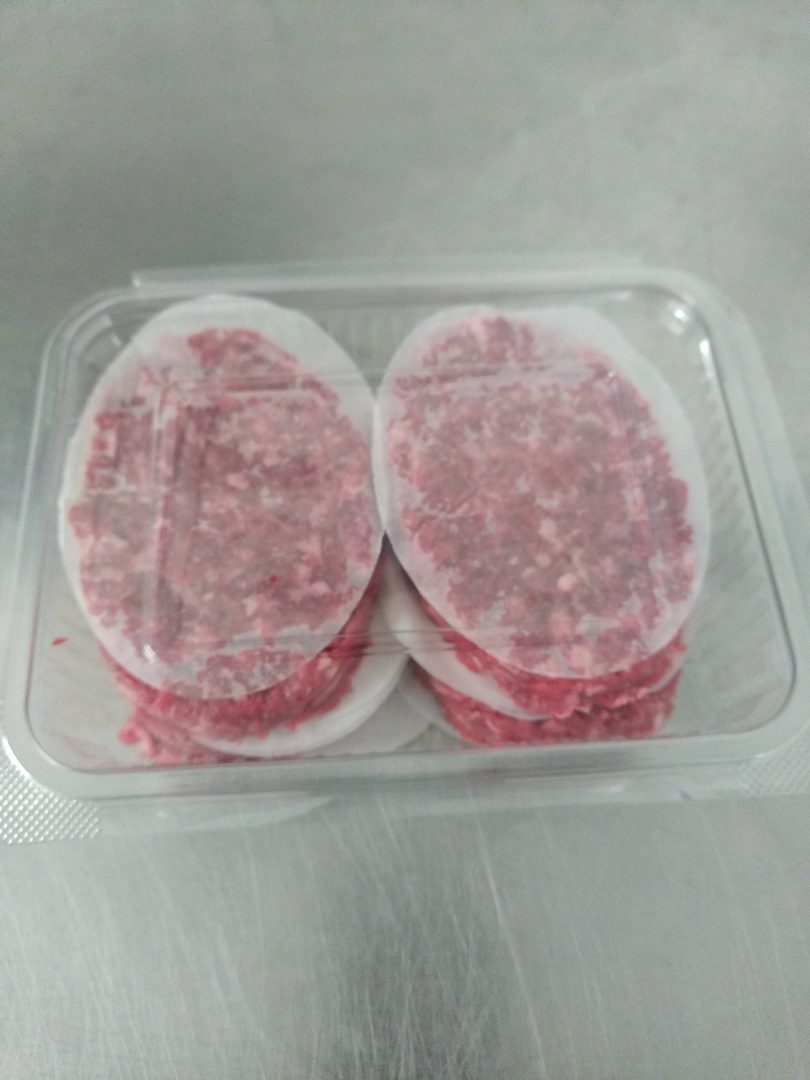
  • Model names or references 4 Ground beef tray 500g
  • Identification of products
    Batch Date
    2307SH101/2307DB403 Use-by date 07/22/2023
  • Products List list_of_products_affected_by_the_recall.pdfAttachment
  • Packaging tray x4 minced steak
  • Marketing start/end date From 07/20/2023 to 07/21/2023
  • Storage temperature Product to be stored in the refrigerator
  • Health mark EN 45.315.112.EC
  • Geographic area of ​​sale Regions: Centre-Val de Loire
  • Distributors EARL DE LA BLOUZE locality La Blouze 58330 JAILLY

France – Chopped Steak 5% MG and 15% MG – STEC E.coli O157

Gov france

Identification information of the recalled product

  • Product category Feed
  • Product subcategory Meats
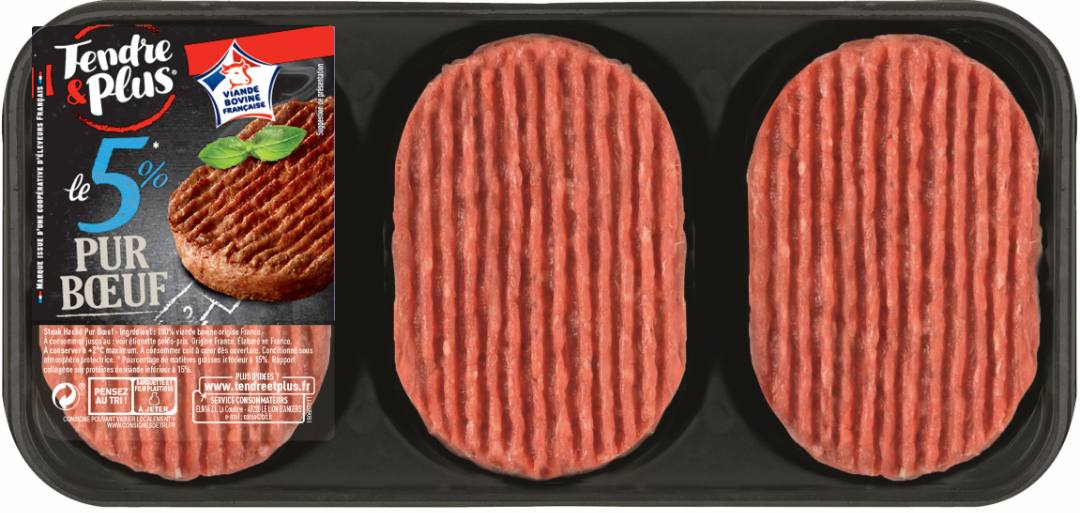
  • Product brand name Tender and More
  • Model names or references Chopped steak 5% fat 6x100g Chopped steak 15% fat 3x125g
  • Identification of products
    GTIN Batch Date
    3265980125908 Chopped Steak 5% fat 6x100g lot B18990300 Use-by date 07/15/2023
    3265980125908 Chopped Steak 5% fat 6x100g lot B18990300 Use-by date 07/17/2023
    3265980123553 Chopped steak 15% fat 3x125g lot B18990300 Use-by date 07/17/2023
  • Products List 2023-07-21_Displays_stores_Leclerc_v2.pdfAttachment
  • Packaging 6x100g for Ground Steak 5% fat 3x125g for Ground Steak 15% fat
  • Marketing start/end date From 07/10/2023 to 07/17/2023
  • Storage temperature Product to be stored in the refrigerator
  • Health mark EN 38.051.001 CE
  • Further information Only lot B18990300 is affected
  • Geographic area of ​​sale Departments: AIN (01), ALLIER (03), DROME (26), ISERE (38), LOIRE (42), NIEVRE (58), RHONE (69), SAONE-ET-LOIRE (71), SAVOIE (73), HAUTE-SAVOIE (74), VAUCLUSE (84)
  • Distributors LECLERC