Category Archives: Decontamination Microbial

Research – IFST – Building biofilm knowhow.

IFST

Mark Richardson outlines the aims and activities of the National Biofilms Innovation Centre (NBIC) and explains why the occurrence of foodborne pathogens in biofilms is a major concern.

The National Biofilms Innovation Centre (NBIC) is still a relatively young organisation but we are proud of what we have achieved since our formation in late 2017. We were funded through UKRI (UK Research and Innovation) by BBSRC (Biotechnology and Biological Sciences Research Council), Innovate UK and the Hartree Centre as an Innovation Knowledge Centre (IKC) to support and connect the biofilm community in industry and academia.

Foodborne pathogens within biofilms

Biofilms are communities of microorganisms (often multiple species) within an extracellular matrix associated with a surface; this allows them to communicate and collectively behave very differently to individual organisms. Biofilms have a role to play across multiple industrial sectors in terms of both the problems they present and opportunities they offer. In respect to human health and food they can, for example, potentiate the emergence of bacterial resistance to antibiotics, antiseptics and disinfectants. From farm to fork they have a role to play in the health of soils, plants and animals; in addition they impact on food processing and then subsequently on supply chain safety (particularly for ready to eat or chilled produce).

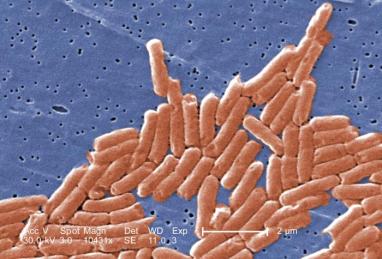
For example, Listeria monocytogenes, a pathogenic bacterium found in moist environments, soil, water, decaying vegetation and animals, can survive and even grow under refrigeration and other food preservation measures. It can cause food poisoning if ingested and due to the severity of infection and high case fatality rate, listeriosis is an important public health concern. A high level of vigilance is maintained in food manufacturing environments for the occurrence of this organism. There were 142 cases of food borne listeriosis in the UK in 2019 resulting in 23 deaths plus eight miscarriages or stillbirths.

Listeria monocytogenes typifies the problems that biofilm modality imparts to organisms in that when it grows within a biofilm, it is very difficult to detect, remove and destroy. When measures relating to its control go wrong, this can lead to significant human health issues, adverse impacts on the food sector’s reputation and significant economic costs. As recently as July 2021, Tyson Foods in the USA recalled nationally almost 4100 tonnes of ready-to-eat chicken products after finding they may have been contaminated with Listeria. The US Department of Agriculture announced the recall a month after two consumers reported falling ill with listeriosis. Further investigation revealed one death.

South Africa – At least 109 pupils treated for suspected food poisoning

Herald live

At least 109 pupils from Ikamva Lesizwe Public School in Kenton-on-Sea received medical treatment on Monday afternoon for suspected food poisoning, believed to have been caused by the umphokoqo (maize meal with sour milk) they ate for lunch.

The pupils started vomiting and experiencing diarrhoea allegedly after eating the meal served at their school during the lunch break as part of the school nutrition programme.

Provincial Education Spokesperson, Malibongwe Mtima says they are investigating the incident.

Australia/New Zealand – Call for comment on new food safety management standards 

FSANZ

Food Standards Australia New Zealand (FSANZ) is seeking public comment on proposed new food safety management standards for food service and retail businesses.

Interim FSANZ CEO Dr Sandra Cuthbert said the proposed amendments to the Australia New Zealand Food Standards Code (the Code) were designed to strengthen food safety management practices and introduce nationally consistent, risk-proportionate standards to reduce rates of foodborne illness.

“The food services sector is vitally important to the Australian economy and our way of life,” Dr Cuthbert said.

“The majority of businesses do an excellent job in providing Australians with safe food, however our assessment of food safety management practices in the sector has found a need for strengthened standards to ensure greater consistency and reduce rates of foodborne illness.

“The proposed changes will help food businesses enhance their food safety management practices, delivering safer food to consumers and supporting improved business and consumer confidence. The food service sector has demonstrated their responsiveness to enhancing safety throughout the COVID-19 pandemic, with food businesses and handlers rising to the challenge of meeting COVID health and safety requirements.”

FSANZ considered three specific food safety measures to reduce rates of foodborne illness – having a food safety supervisor on staff, training food handlers and ensuring businesses can provide evidence to substantiate food safety management.

Risk-proportionate regulation is proposed, with targeted measures to apply to businesses based on their level of food safety risk.

“Businesses will fall into one of three categories, with those associated with high food safety risks required to apply more food safety measures than those with lower risks,” Dr Cuthbert said.

“FSANZ considers these requirements are appropriate and practical, can be readily implemented in the relevant sector, and are able to be maintained over time.

“Regulatory measures would be supported by food safety culture initiatives and an education campaign for businesses and environmental health officers.

“This approach aims to provide the greatest impact on reducing foodborne illness in Australian food service and retail settings without unnecessary regulatory burden.”

FSANZ invites comments from interested parties on the proposed measures by 6pm (Canberra time) 11 April 2022.

FSANZ will consider all submissions before making a final decision. All FSANZ decisions on proposals to develop or update standards are notified to the ministers responsible for food regulation in Australia and New Zealand. They can ask for a review or agree that the standard should become law.

More information

Media contact:

  • 0401 714 265 (Australia)
  • +61 401 714 265 (New Zealand)

Research – Spain – Report of the Scientific Committee of the Spanish Agency for Food Safety and Nutrition (AESAN) on the safety of foods air-dried outdoors that are produced by traditional methods and which require an adjustment of the hygiene requirements that must be fulfilled

AESAN

Abstract
The European Union recognises that traditional methods of food production are a valuable and irreplaceable heritage that must be preserved over time. Therefore, Regulation (EC) No. 852/2004 permits a degree of flexibility in its application provided food hygiene goals are not compromised. For decades, both plant and animal-based foods have been produced in Spain which are air-dried outdoors until reaching a low water activity (aw) that enables their preservation at room temperature. These foods include, raisins, dried apricots, dried figs, ñora peppers, dried fish or octopus that are at least partially air-dried, among others.
The Scientific Committee of the Spanish Agency for Food Safety and Nutrition (AESAN) is of the opinion that the processing of naturally dried foods leads to their correct preservation, provided they reach an aw that inhibits the proliferation of pathogenic microorganisms and the production of toxins in them. Some of the stages in the process may cause microbial inactivation.
Above all, it is necessary to ensure the absence of the formation of toxins, with aflatoxins being the ones that have been most frequently identified. Thus, it is considered that the drying should be conducted in the least time possible, ensuring a decrease of aw within the first 2-3 days of below 0.90 to inhibit the development of aflatoxins, and this drying should be continued until aw levels lower than 0.70 are reached, preventing the growth of pathogenic microorganisms that cause spoilage. It is necessary to guarantee suitable hygienic conditions during processing in order to prevent contamination by pathogens and/or toxins.
Although they cannot proliferate in the stated preservation conditions, they can remain viable in the final product, therefore they may pose a risk to consumer health. Microorganisms with a low infective dose and those that have been identified in dried products (such as S. aureus and Salmonella) and microbial toxins are especially relevant. Autonomous Communities must monitor compliance with the requirements to ensure that they do not pose a risk in these products.
Although these types of products have a low aw, within the range of 0.6 to 0.8 according to avail-able literature, given that this information is not available for each assessed product, the level of safety reached cannot be established on an individual basis. Additionally, the diverse factors used in some of them (additives and preservatives, pasteurisation processes, etc.) require individual assessment once all the necessary information is available. Therefore, the drying must reach aw levels below 0.70 in the least time possible for these types of products to be considered stable, as given these conditions, there is no scientific evidence that shows that the safety and stability of the dried products are compromised, provided good hygiene practices are maintained during their preservation and storage.
For final levels of aw that are higher, correct preservation may be achieved through a combination of factors which proves that it is effective throughout the shelf life of the product, maintaining the aforementioned appropriate hygiene practices.

Research – How do Time, Tannin and Moisture Content Influence on Toxicogenic Fungal Populations during the Storage of Sorghum Grains?

Journal of Food Protection

Cereal grains are usually ensiled to improve their nutritional value and are one of the main sources of feed for dairy cattle. However, during storage, grains can be contaminated with toxicogenic fungi. Sorghum is one of the most economically important cereals in the world. Therefore, the aim of this work was to evaluate the influence of storage duration and tannin and moisture contents on toxicogenic fungal populations in sorghum grain storage. Samples were prepared with variety high in tannins (genotypes Morgan 108 and ACA 558, >5g/kg DM) and with variety low tannin content (genotypes Flash 10 and ACA 546, <1g/kg DM) were collected and manually compacted in experimental laboratory silos where they received different moisture content treatments, namely low (15-25%), medium (26-32%) and high (33-42%). Freshly harvest grains were analyzed at time 0 and storage grains were analyzed at different times (30, 90 and 180 days). Fungal isolation and identification were performed following conventional mycological methods. Penicillium citrinum (34%), Aspergillus flavus (60%) and Fusarium nygamai (68%) were the most abundant species. Rapid detection of aflatoxins and fumonisins in each sample was performed by ELISA according to the AOAC method, and the quantification of aflatoxin B 1 was performed by HPLC. Aflatoxins were detected in four samples with levels of 6.7-28.8 µg/kg and aflatoxin B 1 with a level of 2-14 µg/kg in pre- and post-storage grains . Fumonisins were only detected in two freshly harvested samples with levels of 500-900 µg/kg . In general, the storage time favored the increase of Penicillium population, instead the Aspergillus and Fusarium are reduced. Conversely the abundance of the three population was not affected by the moisture content. The results of this study show that fungal population must be analyzed at different times.

Research – Antagonistic Effects of Conjugated Linoleic Acids of Lactobacillus casei Against Foodborne Enterohemorrhagic Escherichia coli 

Journal of Food Protection

Probiotics in fermented foods or commercially available supplements benefit the host by providing metabolites/peptides. The production of these metabolites varies with available substrates/prebiotic present in the system and their concentration. In this study, 0.5% peanut flour (PF) was used to stimulate the growth and production of metabolites of wild-type Lactobacillus casei (LC wt ) and compare with an engineered L. casei (LC CLA ) capable of converting a higher amount of conjugated linoleic acid (CLA). The total extracellular metabolites present in the cell-free cultural supernatant (CFCS) of LC wt (without peanut), LC wt+PF (with peanut), and LC CLA were collected after 24 h and 48 h of incubation, and their antagonistic activities against enterohemorrhagic Escherichia coli (EHEC EDL933) growth and pathogenesis were evaluated. All the collected metabolites exhibited varying efficiency in restraining EDL933 growth while supplementing low concentration of CLA to the 48-h CFCS from LC wt showed augmented antagonism toward EDL933. A downregulation of key virulence genes was observed from metabolites collected at 48-h time point. These observations indicate that the presence of metabolites in CFCSs including CLA, produced by Lactobacillus , which was further identified by gas chromatography-mass spectrometry; plays a critical role. This study demonstrates the potential applicability of Lactobacillus -originated CLA in the prevention of EDL933 mediated illnesses.

Research – Bacterial Antagonistic Species of the Pathogenic Genus Legionella Isolated from Cooling Tower

MDPI

Legionella pneumophila is the causative agent of Legionnaires’ disease, a severe pneumonia. Cooling towers are a major source of large outbreaks of the disease. The growth of L. pneumophila in these habitats is influenced by the resident microbiota. Consequently, the aim of this study was to isolate and characterize bacterial species from cooling towers capable of inhibiting several strains of L. pneumophila and one strain of L. quinlivanii. Two cooling towers were sampled to isolate inhibiting bacterial species. Seven inhibitory isolates were isolated, through serial dilution plating and streaking on agar plates, belonging to seven distinct species. The genomes of these isolates were sequenced to identify potential genetic elements that could explain the inhibitory effect. The results showed that the bacterial isolates were taxonomically diverse and that one of the isolates may be a novel species. Genome analysis showed a high diversity of antimicrobial gene products identified in the genomes of the bacterial isolates. Finally, testing different strains of Legionella demonstrated varying degrees of susceptibility to the antimicrobial activity of the antagonistic species. This may be due to genetic variability between the Legionella strains. The results demonstrate that though cooling towers are breeding grounds for L. pneumophila, the bacteria must contend with various antagonistic species. Potentially, these species could be used to create an inhospitable environment for L. pneumophila, and thus decrease the probability of outbreaks occurring. View Full-Text

Research – Comparative efficiency of carbohydrates on the biofilm-forming ability of enteroaggregative Escherichia coli

Wiley Online

The biofilm-forming ability of microbes is often correlated with drug resistance; however, this association among enteroaggregative Escherichia coli (EAEC) strains remains naïve. Moreover, the investigations exploring uptake and assimilation of sugars either qualitatively or quantitatively by the biofilm-forming EAEC strains have not yet been documented. Hence, this study investigated the role of various categories of sugars (monosaccharides, disaccharides, and polysaccharide) on the biofilm-forming ability of three each of multi-drug-resistant (MDR) as well as non-MDR typical EAEC strains. The EAEC strains exhibited black colonies on congo red agar (CRA) with monosaccharides and disaccharides, whereas all the strains exhibited red colonies on CRA with the polysaccharide. Although significant (p < 0.001) biofilm-forming ability was observed by all the EAEC strains in sugar-dependent microtiter plate assay, color change from pink to orange and yellow was noticed in presence of monosaccharides and disaccharide, while absent in polysaccharides. Besides, significantly higher bacterial counts were observed in presence of monosaccharides and disaccharides (p < 0.01); however, such significant bacterial counts were not noticed with the polysaccharide. Further, the real-time PCR data exhibited comparatively higher relative expression of biofilm-associated fis gene among EAEC strains grown in presence of monosaccharides, followed by disaccharide and polysaccharide, respectively that concurred with the flow cytometry data. No significant (p > 0.05) difference was observed in the biofilm-forming ability between MDR- and non-MDR EAEC strains. This study illustrated the role of carbohydrates on the biofilm-forming ability of EAEC and warranted utmost attention concerning the usage of carbohydrates in food processing industries, for its incorporation as functional food additives.

Research – Effect of hydrophobic/hydrophilic characteristics of B. cereus spores on their resistance to detergents

Journal of Food Protection

Bacillus cereus spores have the ability to adhere to solid surfaces, including stainless steel, a material widely used in food industries. Adhesion of spores allows for recontamination during food processing, and the cleaning and disinfection are largely used by industries to control them. Hence, this study aims to assess the detachment capacity (or removing activity) of sodium hydroxide, nitric acid, phosphoric acid-based detergent, chlorine-based detergent; against two adhered Bacillus cereus spores (hydrophobic strain and hydrophilic strain) to stainless steel surfaces. Microorganism adhesion on the surfaces reached 5.5 log CFU/cm² the two strain studied. Two protocols composed of combinations of chemical compounds concentration, temperature, and contact time were tested. The inactivation kinetics shapes were convex and were modelled by the Weibull model. The effect of temperature and biocide concentration were quantified using a Bigelow like model. The temperature applied during of treatment of the cleaning in place is an important factor acting on the speed of inactivation or detachment of Bacillus cereus spores. However, this efficiency depends on the hydrophobic characteristics of Bacillus cereus spores. The concentration of detergent and acid also affects the inactivation rate. The inactivation rate, whereas the character of hydrophobic does not intervene for the chlorine alkaline treatments.

Research – Multistate Outbreak Investigation of Salmonella Infections Linked to Kratom: A Focus on Traceback, Laboratory, and Regulatory Activities

Journal of Food Protection

kswfoodworld.com

During the spring of 2018, the U.S. Food and Drug Administration (FDA), U.S. Centers for Disease Control and Prevention (CDC), states and local public health agencies responded to a multistate outbreak of gastrointestinal illnesses caused by multiple   Salmonella   serovars and associated with consumption of kratom, a product harvested from a tropical tree native to Southeast Asia. The outbreak included 199 case-patients reported by 41 U.S. states, with illness onset dates ranging from January 11, 2017 to May 8, 2018, leading to 54 hospitalizations, and no deaths. Case-patients reported purchasing kratom products from physical and online retail points of service (POS). Products distributed to 16 POS where 24 case-patients from 17 states purchased kratom were selected for traceback investigation. Traceback revealed that the kratom was imported from several countries, the most common being Indonesia. Local and state officials collected product samples from case-patients and retail POS. The FDA collected 76 product samples from POS and distributors, of which 42 (55%) tested positive for   Salmonella  . The positive samples exhibited a wide range of pulsed field gel electrophoresis (PFGE) patterns and whole genome sequence (WGS) genetic heterogeneity, and a total 25 of 42 (60%) yielded at least one isolate indistinguishable from one or more outbreak-related clinical isolates. While it does not exclude a possibility of a single contamination source, the extent of genetic diversity exhibited by the   Salmonella   isolates recovered from product samples and a lack of traceback convergence, suggested that kratom was widely contaminated across multiple sites from which it was grown, harvested, and packaged. As a result of the contamination, kratom products were recalled by numerous firms (both voluntarily and mandatory). Epidemiologic, traceback, and laboratory evidence supported the conclusion that kratom products were associated with illnesses.