Category Archives: Bacterial Toxin

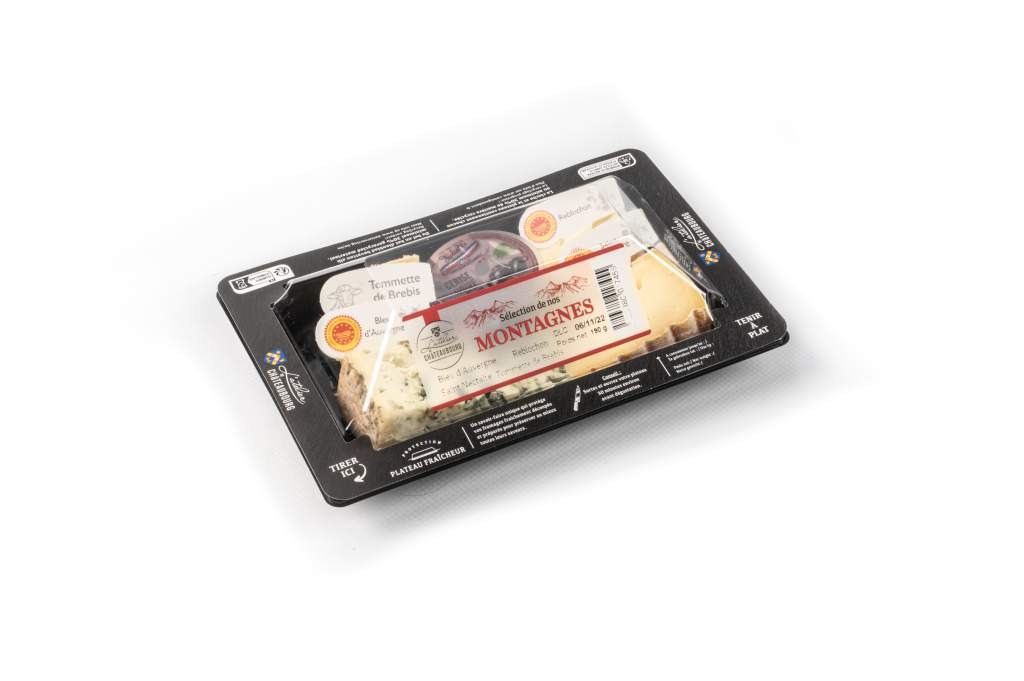
France – Cheese selections – Staphylococcal Enterotoxins

Gov France

Product category
Food
Product subcategory
Milk and dairy products
Product brand name
The CHATEAUBOURG Workshop
Model names or references
Savoie Dauphiné Selection
Product identification
GTIN Batch Date
3529380012450 001379892 Use-by date 12/31/2023
3529380012450 001381855 Use-by date 05/01/2024
3529380012450 001381899 Use-by date 06/01/2024
3529380012450 001383025 Use-by date 01/08/2024
3529380012450 001383706 Use-by date 01/11/2024
3529380012450 001383647 Use-by date 01/10/2024
Start/end date of marketing
Of 05/12/2023 At 16/12/2023
Storage temperature
Product to keep in the refrigerator
Health mark
FR 35.068.004 CE
Geographical sales area
Whole France
Distributors
AUCHAN, CARREFOUR, CASINO, GOOD EATING, INTERMARCHE, LECLERC, SYSTEM U
Gov France

Product category
Food
Product subcategory
Milk and dairy products
Product brand name
The CHATEAUBOURG Workshop
Model names or references
Selection of our Mountains
Product identification
GTIN Batch Date
3529380017455 001379845 Use-by date 12/30/2023
3529380017455 001379884 Use-by date 12/31/2023
Start/end date of marketing
Of 05/12/2023 At 12/12/2023
Storage temperature
Product to keep in the refrigerator
Health mark
FR 35.068.004 CE
Geographical sales area
Whole France
Distributors
AUCHAN, CARREFOUR, INTERMARCHE, LECLERC, SYSTEM U
RASFF Alert- Toxin Producing Bacillus cereus –

RASFF

Toxin-producing Bacillus cereus in sprouted organic broccoli seeds from Germany, packaged in Romania in  Austria, Bulgaria, Germany, Netherlands, Portugal, Romania, Switzerland.

Iceland – Bacillus cereus in prepared sauces

MAST

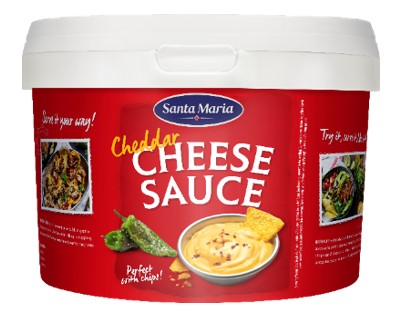
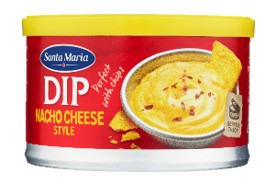
The FDA warns against consuming certain Best before dates of Santa Maria’s Dip Nacho Cheese Style and Cheddar Cheese Sauce because of Bacillus cereus microorganisms, which were detected in the company’s own monitoring of one production batch. Bacillus cereus food poisoning can cause vomiting or diarrhea. There have been no reports of people getting sick from the product. The Swedish Food Agency received information about the product through the RASFF European rapid alert system for food and feed.

The distribution companies in cooperation with the Reykjavík Health Authority and the Suðurnesja Health Authority have stopped distribution and recalled the product, which only applies to the following production batches:

  • Product name: Santa Maria Dip Nacho Cheese Style
  • Weight: 250 g
  • Barcode: 7311312007223
  • Best for dates: are in the format year-month-day on packaging
    01/06/2025 to 31/08/2025
  • Country of manufacture: The Netherlands
  • Distribution:
    Supplies: All stores Bonus and Hagkaup
    Samkaup: The product was not distributed.
  • Product name: Santa Maria Cheddar Cheese Sauce 
  • Weight: 3 kg
  • Best for dates: 01/06/2024 to 31/08/2024
  • Country of manufacture: The Netherlands
  • Distribution:
    OJ&K-ÍSAM ehf: Several large kitchens.

Consumers are advised not to consume the product and can return it for a refund to the store where it was purchased.

RASFF Alert – Staphylococcal Enterotoxin in Raw milk Cheese

RASFF

Staphylococcal enterotoxin in raw milk cheese from Switzerland in Germany

Research – First Report of Food Poisoning Due to Staphylococcal Enterotoxin Type B in Döner Kebab (Italy)

MDPI

Abstract

Staphylococcal food poisoning results from the consumption of food contaminated by staphylococcal enterotoxins. In July 2022, the Turin local health board was notified of a suspected foodborne outbreak involving six children who had consumed döner kebab purchased from a takeaway restaurant. The symptoms (vomiting and nausea) were observed 2–3 h later. A microbiological analysis of the food samples revealed high levels (1.5 × 10⁷ CFU/g) of coagulase-positive staphylococci (CPS). The immunoassay detected a contamination with staphylococcal enterotoxins type B (SEB). The whole genome sequencing of isolates from the food matrix confirmed the staphylococcal enterotoxin genes encoding for type B, which was in line with the SEB detected in the food. This toxin is rarely reported in staphylococcal food poisoning, however, because there is no specific commercial method of detection. The involvement of enterotoxin type P (SEP) was not confirmed, though the corresponding gene (sep) was detected in the isolates. Nasal swabs from the restaurant food handlers tested positive for CPS, linking them to the likely source of the food contamination.

Research – Foodborne Botulism, Canada, 2006–2021

cdc

kswfoodworld

Abstract

During 2006–2021, Canada had 55 laboratory-confirmed outbreaks of foodborne botulism, involving 67 cases. The mean annual incidence was 0.01 case/100,000 population. Foodborne botulism in Indigenous communities accounted for 46% of all cases, which is down from 85% of all cases during 1990–2005. Among all cases, 52% were caused by botulinum neurotoxin type E, but types A (24%), B (16%), F (3%), and AB (1%) also occurred; 3% were caused by undetermined serotypes. Four outbreaks resulted from commercial products, including a 2006 international outbreak caused by carrot juice. Hospital data indicated that 78% of patients were transferred to special care units and 70% required mechanical ventilation; 7 deaths were reported. Botulinum neurotoxin type A was associated with much longer hospital stays and more time spent in special care than types B or E. Foodborne botulism often is misdiagnosed. Increased clinician awareness can improve diagnosis, which can aid epidemiologic investigations and patient treatment.

USA – Five people hospitalized in E. coli O157 outbreak at the University of Arkansas

The Washington Post

Health officials are investigating an outbreak of E. coli food poisoning among students at the University of Arkansas, with dozens reporting symptoms and five people needing treatment in the hospital.

Among those affected are two 19-year-old sorority members who developed a serious complication that can lead to kidney failure after being infected with the E. coli strain O157:H7. That’s according to Bill Marler, a Seattle food safety lawyer who said he reviewed the patients’ medical records after being contacted by the families.

Ghana – Food Poisoning Hits Abutia Senior High School: 23 Students Rushed To Hospital After Eating Rice Meal

YEN

23 students of Abutia SHS were rushed to the hospital on Friday after eating a rice meal on campus suspected to have been contaminated All 23 students showed classic symptoms of food poisoning – abdominal pains, vomiting and diarrhoea – and said they started after eating fried rice from the school’s canteen The school has not responded to the matter but the public health unit of the hospital where the students were admitted has launched an investigation

Catalonia – Information on cases of botulism

ACSA

4 cases of botulism have been confirmed and 2 probable with a common link of consumption in the previous days of packaged potato omelet purchased from different supermarkets. The cases have occurred in several autonomous communities.

The public health services of the communities and autonomous cities are informed to strengthen early detection in the event of the appearance of new cases with suspicion of botulism should they occur.

The Spanish Food Safety Agency (AESAN) has transferred all the available information to the contact points of the autonomous communities so that they can carry out the relevant investigations in relation to the products that could have been consumed in some of the cases.

In at least three of the confirmed cases and one of the probable ones, the company that makes the tortillas is the same. To date, no evidence has been established, neither in the products nor in the processes, that relate cause and effect. However, investigations are continuing with the collaboration of the production company.

Investigations are being carried out in relation to the possibility that there is any product on the market that is not safe or if there are deviations in the processes of production, distribution, storage or transport that justify the existence of this risk.

It is public knowledge that some distribution chain, applying the precautionary principle and in the face of the lack of certainties, has decided to withdraw from sale the products to which the epidemiological surveys have pointed, while waiting for the investigations to progress.

In any case, we want to remind consumers of the importance, especially at this time of year due to the heat, of preserving food products at the storage temperatures indicated on the labeling and following the instructions for use indicated by the manufacturers, already which guarantee the safety of products for which an expiration date is established.

The case of packaged potato tortillas is particularly important, as one can get the false impression that they are like canned foods, which have thermal stability, and keeping them unrefrigerated at the current room temperature can lead to health problems after consumption

When new information becomes available in relation to this matter, this news will be updated.

Research – Dynamic Modelling to Describe the Effect of Plant Extracts and Customised Starter Culture on Staphylococcus aureus Survival in Goat’s Raw Milk Soft Cheese

MDPI

Abstract

This study characterises the effect of a customised starter culture (CSC) and plant extracts (lemon balm, sage, and spearmint) on Staphylococcus aureus (SA) and lactic acid bacteria (LAB) kinetics in goat’s raw milk soft cheeses. Raw milk cheeses were produced with and without the CSC and plant extracts, and analysed for pH, SA, and LAB counts throughout ripening. The pH change over maturation was described by an empirical decay function. To assess the effect of each bio-preservative on SA, dynamic Bigelow-type models were adjusted, while their effect on LAB was evaluated by classical Huang models and dynamic Huang–Cardinal models. The models showed that the bio-preservatives decreased the time necessary for a one-log reduction but generally affected the cheese pH drop and SA decay rates (logDref = 0.621–1.190 days; controls: 0.796–0.996 days). Spearmint and sage extracts affected the LAB specific growth rate (0.503 and 1.749 ln CFU/g day−1; corresponding controls: 1.421 and 0.806 ln CFU/g day−1), while lemon balm showed no impact (p > 0.05). The Huang–Cardinal models uncovered different optimum specific growth rates of indigenous LAB (1.560–1.705 ln CFU/g day−1) and LAB of cheeses with CSC (0.979–1.198 ln CFU/g day−1). The models produced validate the potential of the tested bio-preservatives to reduce SA, while identifying the impact of such strategies on the fermentation process.