Monthly Archives: September 2023

UK – Report on Botulinum Neurotoxin-Producing Clostridia

ACMSF

Executive Summary

In 1992 a working group of the UK Advisory Committee on the Microbiological Safety of Food presented a report on Vacuum Packaging and Associated Processes regarding the microbiological safety of chilled foods. The report supported subsequent guidance provided by the UK Food Standards Agency for the safe manufacture of vacuum packed and modified atmosphere packed chilled foods. In 2021 the ACMSF requested that a new subgroup should update and build on the 1992 report as well as considering, in addition to chilled foods, some foods that are intended to be stored at ambient temperatures. The new subgroup agreed a scope that includes the conditions that support growth and/or neurotoxin formation by C. botulinum, and other clostridia, as well as identification of limiting conditions that provide control. Other foodborne pathogens that need to be considered separately and some foods including raw beef, pork and lamb were explicitly excluded.

The subgroup considered the taxonomy, detection, epidemiology, occurrence, growth, survival and risks associated with C. botulinum and other neurotoxin-forming clostridia. There has been no significant change in the nature of foodborne botulism in recent decades except for the identification of rare cases caused by neurotoxigenic C. butyricum, C. baratii and C. sporogenes. Currently evidence indicates that non-clostridia do not pose a risk in relation to foodborne botulism.

The subgroup has compiled lists of incidents and outbreaks of botulism, reported in the UK and worldwide, and have reviewed published information concerning growth parameters and control factors in relation to proteolytic C. botulinum, non-proteolytic C. botulinum and the other neurotoxigenic clostridia.

The subgroup concluded that the frequency of occurrence of foodborne botulism is very low (very rare but cannot be excluded) with high severity (severe illness: causing life threatening or substantial sequelae or long-term illness). Uncertainty associated with the assessment of the frequency of occurrence, and with the assessment of severity, of foodborne botulism is low (solid and complete data; strong evidence in multiple sources).  The vast majority of reported botulism outbreaks, for chilled or ambient stored foods, are identified with proteolytic C. botulinum and temperature abuse is the single most common cause. In the last 30 years, in the UK and worldwide where a cause can be identified, there is evidence that known controls, combined with the correct storage, would have prevented the reported incidents of foodborne botulism.

The subgroup recommends that foods should continue to be formulated to control C. botulinum, and other botulinum neurotoxin-producing clostridia, in accordance with the known factors. With regard to these controls, the subgroup recommends some changes to the FSA guidelines that reflect improved information about using combinations of controls, the z-value used to establish equivalent thermal processes and the variable efficacy associated with some controls such as herbs and spices. Current information does not facilitate revision of the current reference process, heating at 90°C for 10 minutes, but there is strong evidence that this provides a lethality that exceeds the target 6 order of magnitude reduction in population size that is widely attributed to the process and the subgroup includes a recommendation that the FSA considers this issue.

Early detection and connection of cases and rapid, effective coordinated responses to very rare incidents are identified as crucial elements for reducing risks from foodborne botulism. The subgroup recommends that the FSA works closely with other agencies to establish clear and validated preparedness in relation to potential major incidents of foodborne botulism in the UK.

Recommendations

USA- FDA -Core Investigation Table

FDA

What’s New

  • For the outbreak of Salmonella Newport (ref #1179) in a not yet identified product, the case count has increased from 8 to 10 cases.
  • For the outbreak of hepatitis A virus (ref #1143) linked to frozen strawberries, the outbreak is over and FDA’s investigation has ended.
Date
Ref Pathogen
or
Cause of
Illness
Product(s)
Linked to
Illnesses

(if any)
Total
Case
Count

Status
8/30/2023 1179 Salmonella
Newport
Not Yet
Identified
10 Active
8/30/2023 1174 Cryptosporidium Not Yet
Identified
11 Active
8/9/2023 1172 Listeria
monocytogenes
Ice Cream See
Advisory
Active
7/6/2023 1163 Cyclospora
cayetanensis
Not Yet
Identified
140 Active
6/14/2023 1159 Cyclospora
cayetanensis
Not Yet
Identified
72 Active

World Health Organisation – Botulism – France

WHO

Situation at a glance

On 12 September 2023, local public health authorities in France identified a cluster of 10 cases with suspected botulism, including one death. As of 14 September 2023, the National IHR Focal Point for France has notified WHO of a total of 15 cases of suspected botulism, including one death, reported in Bordeaux and Ile-de-France.

The epidemiological investigations indicated that the source of infection is the consumption of homemade preserved sardines , on different dates, at the same restaurant in Bordeaux during the week of 4–10 September 2023. The food item was made at the restaurant for consumption on premises.

Due to the incubation period of up to eight days and the restaurant attracting international visitors during the Rugby World Cup, there is a possibility that additional cases among international visitors may be reported in France, or possibly outside France as travellers returned home, until 18 September.

Description of the situation

On 12 September 2023, local public health authorities in France identified a cluster of 10 cases with suspected botulism, including one death.

As of 14 September 2023, the National IHR Focal Point for France has notified a total of 15 cases of suspected botulism, including one death, reported in Bordeaux and Ile-de-France. Of these 15 cases, 10 have been hospitalised, with eight patients being admitted to an Intensive Care Unit. Fourteen out of the 15 cases are reported among foreign citizens identified from six countries in addition to France. These include Canada, Germany, Greece, Ireland, the United Kingdom of Great Britain and Northern Ireland, and the United States of America. All suspected cases consumed the same product (sardines in jars) on different dates at the same restaurant in Bordeaux during the week of 4–10 September 2023. The epidemiological investigations indicated that the source of infection is the consumption of homemade preserved sardines. The food item was produced and served at the restaurant.

Epidemiology of the Botulism

Botulism is a serious neurological condition caused by a very potent toxin produced by the bacterium  Clostridium botulinum . It develops particularly in poorly preserved foods. Human botulism may refer to foodborne botulism, infant botulism, wound botulism, and inhalation botulism or other types of intoxication.

Foodborne botulism is a serious, potentially fatal disease. It is an intoxication caused by ingestion of potent neurotoxins—the botulinum toxins—formed in contaminated foods. Person-to-person transmission of botulism does not occur. The manifestations, or symptoms, of intoxication can vary, and  is characterized by descending, flaccid paralysis that can cause respiratory failure. Early symptoms include marked fatigue, weakness and vertigo, usually followed by blurred vision, dry mouth and difficulty in swallowing and speaking. Vomiting, diarrhoea, constipation and abdominal swelling may also occur. The disease can progress to weakness in the neck and arms, after which the respiratory muscles and muscles of the lower body are affected. There is no fever and no loss of consciousness. Symptoms usually appear from several hours up to 8 days following consumption of contaminated food.

Although botulism outbreaks are relatively rare, they are considered public health emergencies that require rapid recognition to identify the disease source, distinguish outbreak types (between natural, accidental or deliberate), prevent additional cases and effectively administer treatment to affected patients. Successful treatment depends significantly on early diagnosis and the rapid administration of the botulinum antitoxin and intensive respiratory care.

Incidence of botulism is low, but the mortality rate is high if prompt diagnosis and appropriate, immediate treatment is not given. The disease can be fatal in 5% to 10% of cases.

Public health response

  • On 11 September, food and serum samples were shipped to the French National Reference Center for Anaerobic Bacteria and Botulism, Institute Pasteur, Paris , and botulinum toxin was confirmed in serum samples and in a food sample (sardines) on 14 September 2023.
  • The local health authorities inspected the restaurant and all products prepared by the restaurant have been recalled. On 13 September, the local health authorities held a press conference and informed the local healthcare professionals.
  • The national health authorities have issued risk communication advice to sensitize the health care workers about the symptomatology and treatment.
  • Information on cases reported among citizens from foreign countries have been shared with the relevant health authorities in those countries.

WHO risk assessment

Local investigations have identified an estimated 25 persons through credit card receipts who have been exposed (i.e., who likely consumed the suspect food item). The exposure occurred at local level and measures have been implemented to eliminate the source of infection including the removal of the suspected food item, which was not distributed outside the venue. However, given the ranging incubation period of botulism—up to eight days—and that not all customers of the restaurant in Bordeaux may have been identified despite efforts, further cases linked to this event may still occur. This outbreak has occurred at the same time as the Rugby World Cup held from the week of 4 September 2023 attracting followers and rugby teams from all over the world.

Due to the incubation period up to eight days and the restaurant attracting international visitors, there is a possibility that additional cases among international visitors may be reported either from France or outside of France until 18 September.

WHO advice

Prevention of foodborne botulism is based on good practice in food preparation particularly during heating/sterilization and hygiene. Foodborne botulism may be prevented by the inactivation of the bacterium and its spores in heat-sterilized (for example, retorted) or canned products, or by inhibiting bacterial growth and toxin production in other products. The vegetative forms of bacteria can be destroyed by boiling, but the spores can remain viable after boiling even for several hours. However, the spores can be killed by very high temperature treatments such as (commercial) canning.

Commercial heat pasteurization (including vacuum packed pasteurized products and hot smoked products) may not be sufficient to kill all spores and therefore the safety of these products must be based on preventing bacterial growth and toxin production. Refrigeration temperatures combined with salt content and/or acidic conditions will prevent the growth of the bacteria and formation of toxin.

The neurotoxins themselves are heat-labile and will be destroyed within minutes at temperatures above 80°C; consequently, only foods improperly processed in which the bacteria or the spores survive, pose a risk.

The WHO five keys to safer food serve as the basis for educational programmes to train food handlers and educate the consumers. They are especially important in preventing food poisoning.

The five keys are:

  • keep clean
  • separate raw and cooked
  • cook thoroughly
  • keep food at safe temperatures
  • use safe water and raw materials.

Norway – Foodtrade AS withdraws “Oslo Bakeri Organic Brazil Nuts” – Aflatoxin

Matportalen

Oslo Bakeri Organic Brazil nuts 400 g and 5 kg cartons, with a best before date of 31.12.24, are being recalled due to the discovery of aflatoxins above the limit value. Brazil nuts are labeled as originating in Bolivia, imported from a producer in Brazil.

The product is sold at independent grocery stores in Eastern Norway, and in specialist stores Oslo Bakeriet AS and Carl Heftye.

Consumers are asked not to eat the nuts, and return them to the store where they were purchased.

There have been findings of the mold-related aflatoxin above the limit value in the products. Aflatoxins are carcinogenic and can damage the genetic material (DNA). You can read more about mold reporting on Matportalen

Contact Foodtrade AS:
Managing Director Manuel Lozano, phone number: 95 94 70 45

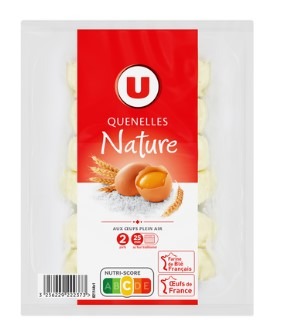
France – QUELLEL NATURE U X6 240G – Listeria monocytogenes

Gov france

  • Product category Food
  • Product subcategory Others
  • Product brand name u
  • Model names or references QUELLEL NATURE U X6 240G
  • Product identification
    GTIN Batch Date
    3256229222373 L32560S Use-by date 05/10/2023
  • Packaging 240g
  • Storage temperature Product to keep in the refrigerator
  • Health mark69-273-J
  • Geographical sales area Whole France
  • Distributors U BRAND

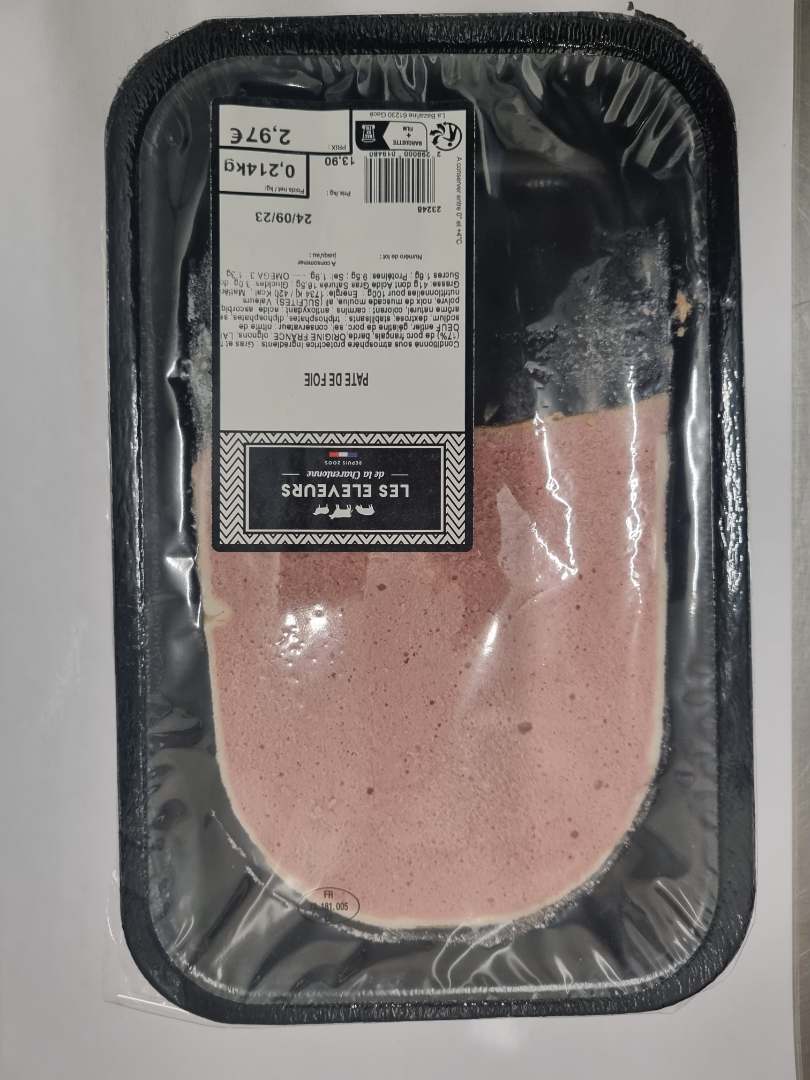
France – LIVER PASTE 250 gr S/ATM – Listeria monocytogenes

Gov france

  • Product category Food
  • Product subcategory Meats
  • Product brand name CHARENTONNE BREEDERS
  • Model names or references 250 gr slice
  • Product identification
    Batch Date
    23248 Use-by date 09/24/2023
  • Start/end date of marketing Since 05/09/2023
  • Storage temperature Product to keep in the refrigerator
  • Health mark FR 72.181.005 CE
  • Geographical sales area Whole France
  • Distributors AIGLE BESOIN-COCCIMARKET LE SAP-COCCINELLE EXPRESS ST HILAIRE -COCCINELLE VIMOUTIERS-EPICURE LAFAYETTE -EVREUX BESOIN-FOUGERES BESOIN-HONFLEUR BESOIN-LA MAISON DE L’ORBIQUET-LAVAL BESOIN-LE HAVRE BESOIN-LE NEUBOURG BESOIN-LISIEUX BESOIN-MALIA DISTRIB
  • List of points of salePDF_List_of_customers_liver_pâté_Contaminated_with_number_of_trays_delivered.pdf

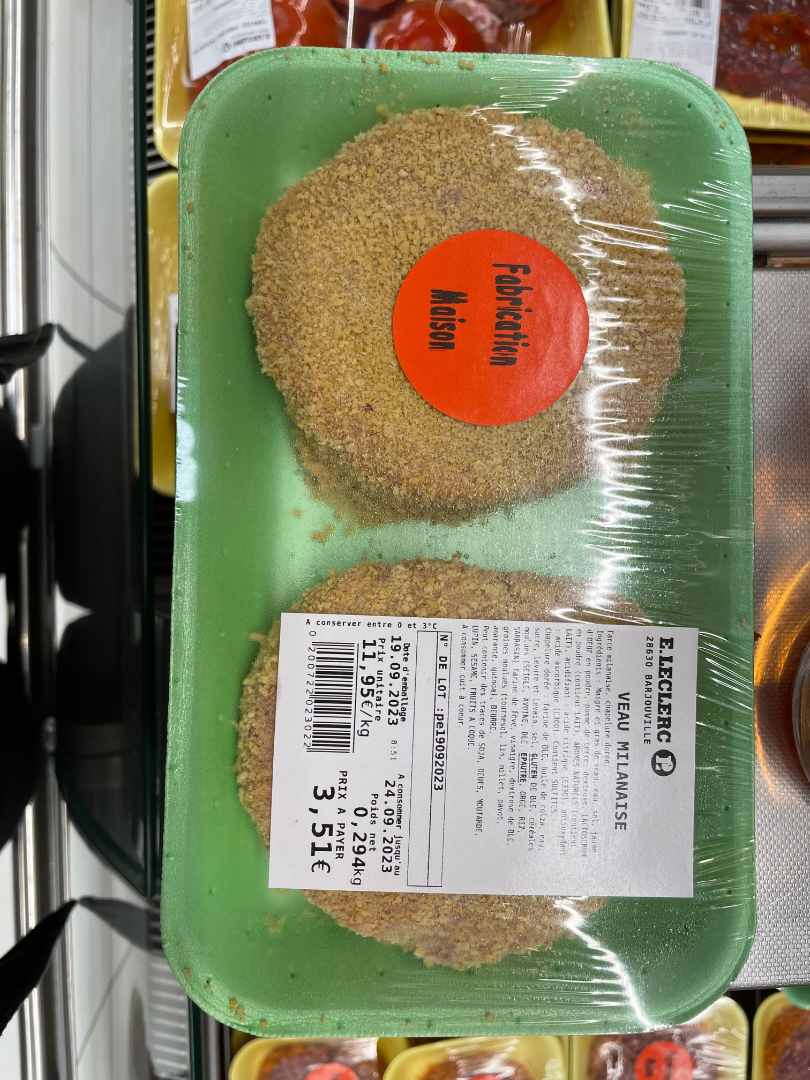
France – Veal Milanese – Salmonella

Gov france

  • Product category Food
  • Product subcategory Meats
  • Product brand name developed in our laboratories
  • Model names or references veal Milanese sold in the traditional section and veal Milanese x2 sold in the self-service butcher section
  • Product identification
    GTIN Batch Date
    0200722017717 Milanaise x2 Lot number: pe 09.09.23 Milanaise sold in the traditional department 09/09/23 Use-by date between 09/09/2023 and 09/14/2023
  • Packaging Green tray sold in the self-service butcher section (red colored dot on the plastic film indicating in-house manufacturing
  • Start/end date of marketing From 09/09/2023 to 09/11/2023
  • Storage temperature Product to keep in the refrigerator
  • Geographical sales area Regions: Centre-Val de Loire
  • Distributors Hypermarket: Center E. Leclerc ZAC de la Torche 1 Rue des Orvilles 28630 Barjouville

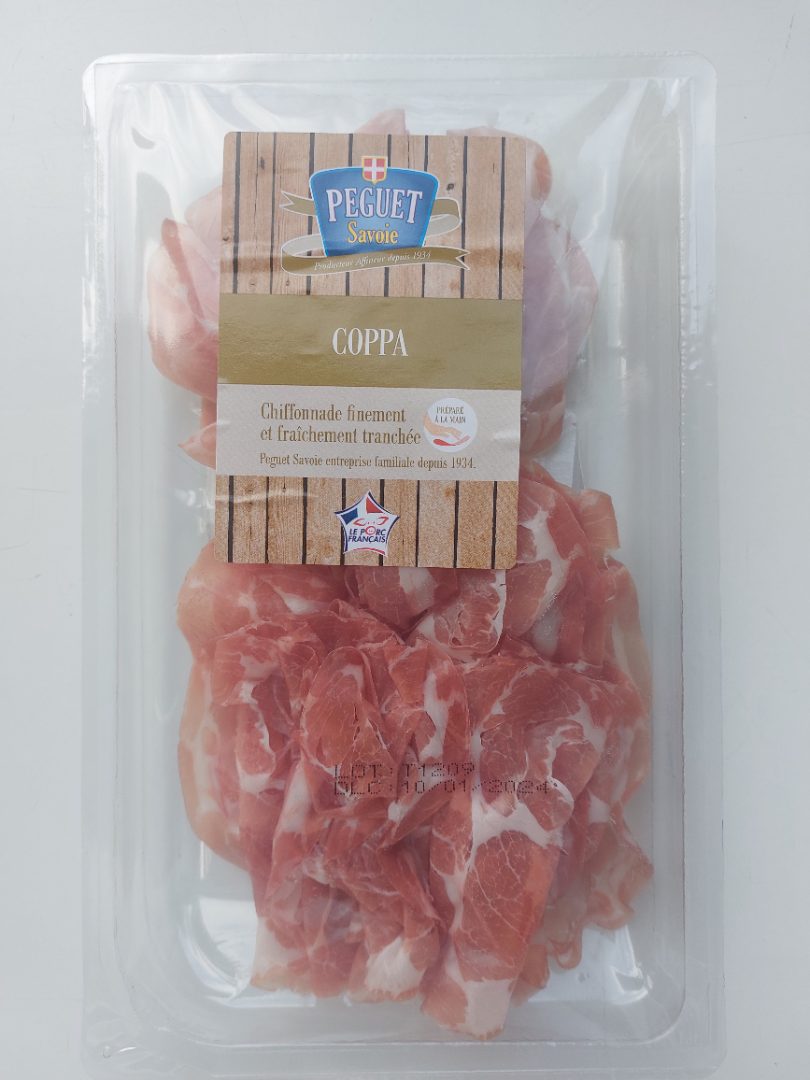
France – COPPA CHIFFONNADE 100 G – Listeria monocytogenes

Gov france

  • Product category Food
  • Product subcategory Meats
  • Product brand name PEGUET
  • Model names or references COPPA CHIFFONNADE 100 G
  • Product identification
    GTIN Batch
    3034910605052 see product list in attachment
  • Products List Lots_DLC_Chiffonnade_Coppa.pdfAttachment
  • Packaging Box of 12 pieces
  • Start/end date of marketing From 08/29/2023 to 09/16/2023
  • Storage temperature Product to keep in the refrigerator
  • Health mark 38.190.003
  • Geographical sales area Whole France
  • Distributors CASINO AUCHAN CARREFOUR SYSTEM U

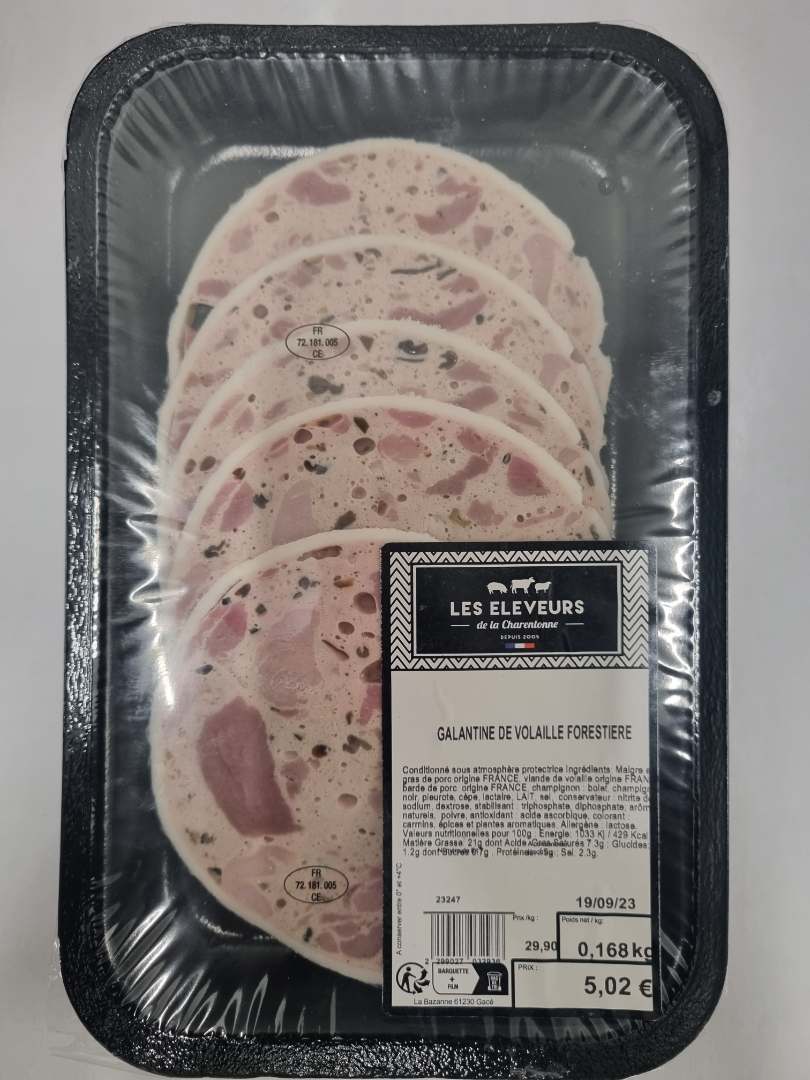
France – FOREST POULTRY GALANTINE X5 – Listeria monocytogenes

Gov france

  • Product category Food
  • Product subcategory Meats
  • Product brand name CHARENTONNE BREEDERS
  • Model names or references Slices x5
  • Product identification
    Batch Date
    23247 Use-by date 09/19/2023
  • Start/end date of marketing Since 04/09/2023
  • Storage temperature Product to keep in the refrigerator
  • Health mark FR 72.181.005 CE
  • Geographical sales area Whole France
  • Distributors VOG GRIOTTE ET CLEMENTINES SARL 8 A 8 – LASSAY AUBIGNY SUR NERE NEED BONNY NEED C . RENARD NEED CARREFOUR EXPRESS COURTOMER CHATEAU GONTIER NEED COCCIMARKET BRETEUIL SUR ITON COCCINELLE EXPRESS ST HILAR COCCINELLE VIMOUTIER
  • List of points of sale PDF_List_of_clients_delivered_for_la_Galantine_de_Volaille_forestière_X5.pdf

USA – New York raw milk tests positive for Campylobacter; public warning issued

Food Safety News

New York’s Agriculture Commissioner Richard Ball warns people against drinking raw milk from a Schuyler County dairy because it is contaminated.

Testing has shown that raw milk from Sunset View Creamer LLC is contaminated with Campylobacter jejuni. The dairy is at 4970 County Road 14, Odessa, NY.

As of the posting of the warning today, no illnesses have been confirmed about the implicated milk.