Monthly Archives: February 2022

USA – FDA Core Investigation Table Update

FDA

Date
Posted
Reference
#
Pathogen
Product(s)
Linked to
Illnesses

(if any)
Investigation
Status
2/2/

2022

1054 Enteroinvasive E. coli
O143:H26
Not Yet Identified Active
1/10/

2022

1050 E. coli
O121:H19
Romaine Active
12/29/

2021

1052 E. coli
O157:H7
Packaged Salad Active
12/20/

2021

1039 Listeria
monocytogenes
Packaged Salad Active
12/15/

2021

1048 Listeria
monocytogenes
Packaged Salad Active

Research – The Risk of Salt Reduction in Dry-Cured Sausage Assessed by the Influence on Water Activity and the Survival of Salmonella

MDPI

kswfoodworld Salmonella

Water activity (aw) is the main hurdle for microbial control in dry-cured sausages. The aw can be influenced by drying or adding electrolytes or humectants. Dry-cured meat products are partially dried, which, together with added salt, results in safe aw values. Currently, there is a trend to reduce salt in meat products, which can compromise the preservation process. The present work aims to evaluate the influences of added salt levels (1% or 3%) and the use or omission of phosphates and wine on the aw of a dry-cured sausage, and to evaluate the possibility of estimating the aw from the moisture loss and the behavior of Salmonella during dry-cured sausage (chouriço) processing. There was a strong relationship between moisture and aw, regardless of the salt level and the presence of phosphates or wine. Predicting aw from moisture loss is possible using the Boltzmann sigmoid function. The salt level strongly influences Salmonella behavior, mainly through aw reduction. An increase in aw by 0.01 units reduced the odds of achieving a 5-log reduction in Salmonella counts to half. Increasing added salt from 1% to 3% increased the odds of achieving a 5-log Salmonella reduction 7.5-fold. The current trend to reduce salt in foods must be carefully approached if applied to cured meat products, as it has substantial consequences on aw evolution and Salmonella survival.

Research – Hepatitis E virus defies alcohol-based hand disinfectants

Science Daily

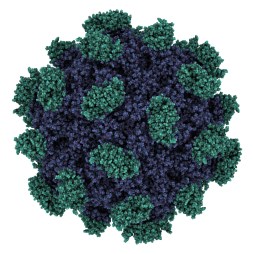
Hepatitis E virus capsid structure. HEV infection causes viral h

The hepatitis E virus (HEV) can cause serious liver inflammation and is the most common cause of acute virus-mediated hepatitis worldwide. Infection can be prevented through appropriate hygiene measures. Scientists from TWINCORE, Centre for Experimental and Clinical Infection Research, the Hannover Medical School (MHH) and the Ruhr Universität Bochum (RUB), together with partners from industry, have investigated the effectiveness of various common hand disinfectants against HEV. They were able to show that most formulations do not completely inactivate the virus.

In Germany and Europe, HEV has its natural reservoir in pigs. The infection can spread from animals to humans, which is called a zoonosis. This often happens through incompletely heated or raw meat products such as minced meat. In tropical regions of the world, infections occur via contaminated water, sometimes causing large outbreaks. “Some of these infections could possibly be prevented with the right hygiene measures,” says Dr. Patrick Behrendt, physician in the Department of Gastroenterology, Hepatology and Endocrinology at the MHH and head of the junior research group “Translational Virology” at TWINCORE. This includes, above all, correct hygienic hand disinfection in everyday clinical practice when dealing with hepatitis E patients and infected animals.

Together with the team of Professor Eike Steinmann, head of the Department of Molecular and Medical Virology at RUB, Behrendt has investigated whether common hand disinfectants can render the virus harmless. “We tested the effect of the alcohols ethanol and propanol, both individually and in the mixing ratios recommended by the WHO, and also commercial hand disinfectants,” says Steinmann. “However, only one product that contained another component was effective.”

Canada – Warning not to consume Nova smoked salmon sold by Kiryas Tosh supermarket

MAPAQ

WARNING TO THE POPULATION

QUEBEC CITY, Feb. 2, 2022 /CNW Telbec/ – The Ministry of Agriculture, Fisheries and Food (MAPAQ), in collaboration with the Kiryas Tosh supermarket , located at 601, chemin de Tash, in Boisbriand , advises the population not to consume the product indicated in the table below, because it has not been packaged in such a way as to ensure its harmlessness.

Product name

Format

Affected lot

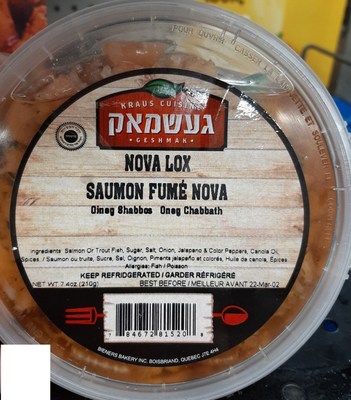
“NOVA smoked salmon”

210g

Units sold until February 2, 2022

The product that is the subject of this warning was offered for sale until February 2, 2022, and only at the establishment mentioned above. The product was packaged in a clear plastic container and was offered refrigerated. The product label bears the words “Kraus Cuisine”.

The operator is voluntarily recalling the product in question. It has agreed with MAPAQ to issue this warning as a precautionary measure. In addition, people who have this product in their possession are advised not to consume it. They must return it to the establishment where they bought it or throw it away. Even if the affected product shows no signs of tampering or suspicious odors, its consumption may represent a health risk. It should be noted that no case of illness associated with the consumption of this food has been reported to MAPAQ to date.

Additional information

The Ministry publishes various information documents concerning food safety. Interested persons can consult them in the “Food Consumption” section of the MAPAQ website: www.mapaq.gouv.qc.ca/consommation . They also have the possibility of registering online, by visiting www.mapaq.gouv.qc.ca/rappelsfoods , to receive, by e-mail, the food recall press releases published by the Ministry. Finally, it is possible to follow “MAPAQfoods” on Twitter at the following address: www.twitter.com/MAPAQfoods .

Nova smoked salmon (CNW Group/Ministry of Agriculture, Fisheries and Food) 

Hazard Classification:  Class 1
Reference Number:  4488

Source:
Media relations
Direction des communications
Ministry of Agriculture, Fisheries
and Food
Tel. : 418 380-2100, extension 3512
www.mapaq.gouv.qc.ca

USA – Outbreak Investigation of Salmonella Oranienburg: Whole, Fresh Onions (October 2021) is Over.

FDA

The FDA, along with CDC, and state and local partners, investigated a multistate outbreak of Salmonella Oranienburg infections linked to whole, fresh onions imported from the State of Chihuahua, Mexico, in cooperation with the Mexican competent authorities. As of February 2, 2022, CDC has declared this outbreak over. CDC reports that there were 1040 illnesses in 39 states, Washington, D.C., and Puerto Rico.

In September 2021, as part of the ongoing investigation to determine the product causing illnesses, the FDA import operations implemented enhanced screening for Salmonella for onions imported into the United States, but no samples were collected because the growing season had ended and onions were no longer being imported from the State of Chihuahua, Mexico.

As a result of this outbreak, the FDA initiated onsite domestic investigations as well as Foreign Supplier Verification Program (FSVP) inspections of domestic firms who imported onions from the State of Chihuahua, Mexico. By inspecting these U.S. importers, FDA can determine if they are in compliance with applicable FSVP requirements, including performing certain risk-based activities to verify that imported foods meet U.S. safety standards.

While the outbreak has ended, FDA continues to work closely with Mexican competent authorities through the established Food Safety Partnership to investigate potential source(s) of contamination within the implicated region and to proactively implement prevention strategies ahead of the next growing season. FDA also intends to consider using additional tools, such as import screening and sampling, for onions grown and harvested in the State of Chihuahua, Mexico during the next growing season.

Recommendation

CDC has announced the outbreak is over. There are no recommendations for consumers, retailers, or suppliers.


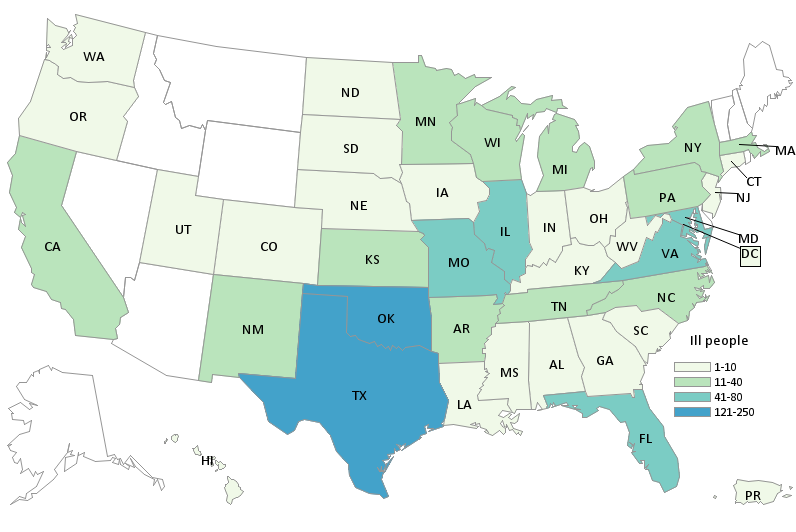
Case Count Map Provided by CDC

Outbreak Investigation of Salmonella Oranienburg in Whole, Fresh Onions: Case Count Map Provided by CDC (February 2, 2022)

Case Counts

Total Illnesses: 1,040
Hospitalizations: 260
Deaths: 0
Last illness onset: January 1, 2022
States with Cases: AL, AR, CA, CO, CT, DC, FL, GA, HI, IA, IL, IN, KS, KY, LA, MA, MD, MI, MN, MO, MS, NC, ND, NE, NJ, NM, NY, OH, OK, OR, PA, PR, SC, SD, TN, TX, UT, VA, WA, WI, WV
Product Distribution: Nationwide

Czech Republic – Italian Meat – Listeria monocytogenes

Potravinynapranyri

Place of inspection:
Hronov ( nám. Čs. Armády 2, 54931 Hronov )
Company ID: 12343196
Unsatisfactory parameter:

Listeria monocytogenes

The pathogenic bacterium Listeria monocytogenes was detected in the product . This bacterium can cause a condition called listeriosis.

Expiration date: 11/26/2021
Producer: Bohuslav blade
Country of origin:  Czechia
Sampling date: Nov 25, 2021
Reference number: 22-000008-SVS-CZ
The sample was found by an official inspection of the State Veterinary Administration.

Czech Republic – Gothic salami – Listeria monocytogenes

Potravinynapranyri

Place of inspection:
Řisuty ( Řisuty 71, 27378 Řisuty )
ID: 40908721
Unsatisfactory parameter:

Listeria monocytogenes

The pathogenic bacterium Listeria monocytogenes was detected in the product . This bacterium can cause a condition called listeriosis.

Expiration date: 10/14/2021
Producer: Stanislav Chvapil
Country of origin:  Czechia
Sampling date: 7. 10. 2021
Reference number: 22-000011-SVS-CZ
The sample was found by an official inspection of the State Veterinary Administration.

USA – Outbreak Investigation of Listeria monocytogenes: Dole Packaged Salad (December 2021)

FDA

FDA, along with CDC and state and local partners, is investigating a multistate outbreak of Listeria monocytogenes infections linked to Dole packaged leafy greens by epidemiologic, laboratory, and traceback data. According to the CDC, as of February 1, 2022, 17 people infected with the outbreak strain of Listeria monocytogenes have been reported from 13 states. Illnesses started on dates ranging from August 16, 2014 to December 30, 2021 (one case occurred in 2014 and the remaining cases occurred between 2018 and 2021). CDC investigated this outbreak in 2019 and 2020 but was unable to gather enough data to identify the source in the past. CDC reopened the investigation in November 2021 after reports of new illnesses.

FDA sent investigators to multiple Dole processing facilities to conduct on-site inspections while at the same time Dole initiated their own investigation. On December 22, 2021, Dole voluntarily recalled all products and brands from their Bessemer City, NC, and Yuma, AZ, facilities. On January 7, 2022, as a result of continued investigations, Dole issued a voluntary recall of additional products after Dole detected the presence of Listeria monocytogenes on equipment used in the harvesting of the raw iceberg lettuce also used in finished products processed in the Dole Springfield, OH, and Soledad, CA, facilities. These products were shipped throughout the United States and several provinces in Canada. FDA analyzed the positive sample collected by Dole from the harvesting equipment. Results from FDA’s WGS analysis showed that the strain of Listeria monocytogenes found on the harvesting equipment matches the strain causing illnesses in this outbreak.

In addition to this outbreak of listeriosis linked to packaged salads produced by Dole, FDA and CDC are currently investigating a separate Listeria outbreak linked to packaged salads produced by Fresh Express. These investigations are ongoing and additional information will be provided as it becomes available.

Recommendation

FDA recommends that anyone who received recalled products use extra vigilance in cleaning and sanitizing any surfaces and containers that may have come in contact with these products to reduce the risk of cross-contamination. Listeria can survive at refrigeration temperatures and can easily spread to other foods and surfaces.

All recalled products are now past their “Best if Used By” dates of November 30, 2021 to January 9, 2022. If consumers have expired recalled Dole salads in their homes, they should throw them away. The initial list of recalled products and the second list of recalled products are available on FDA’s website.


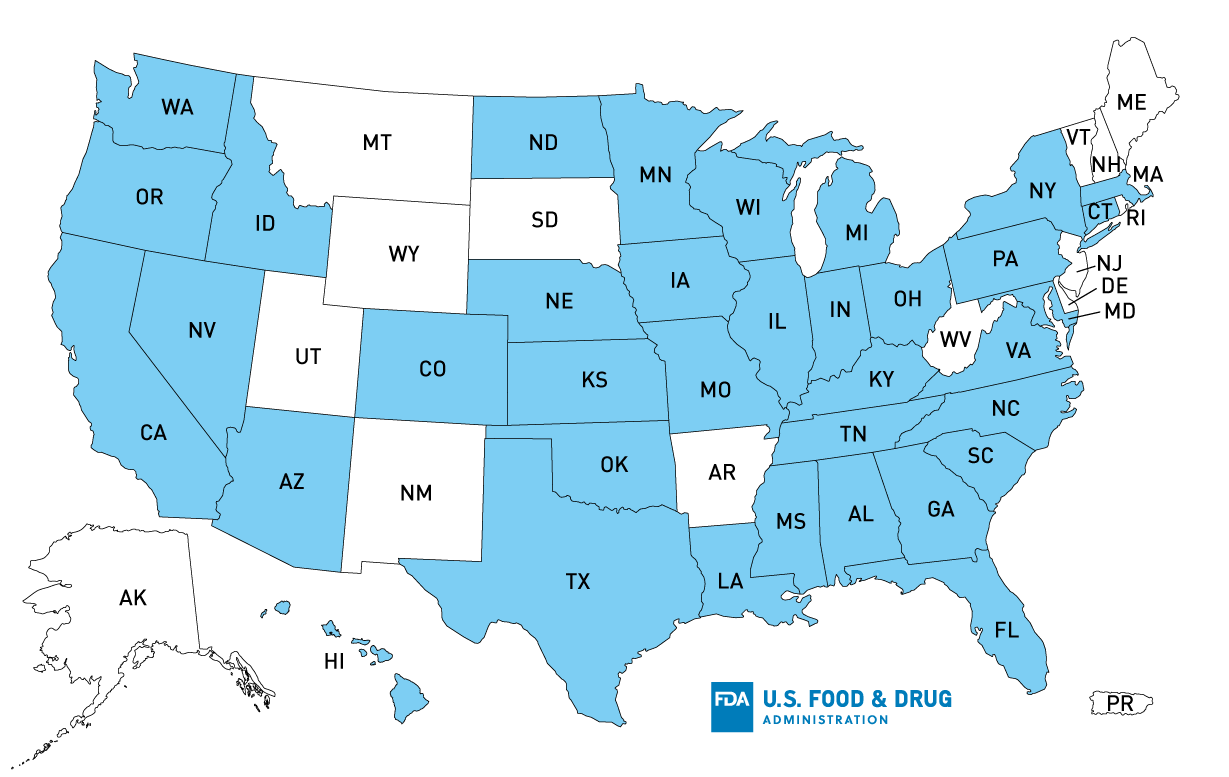
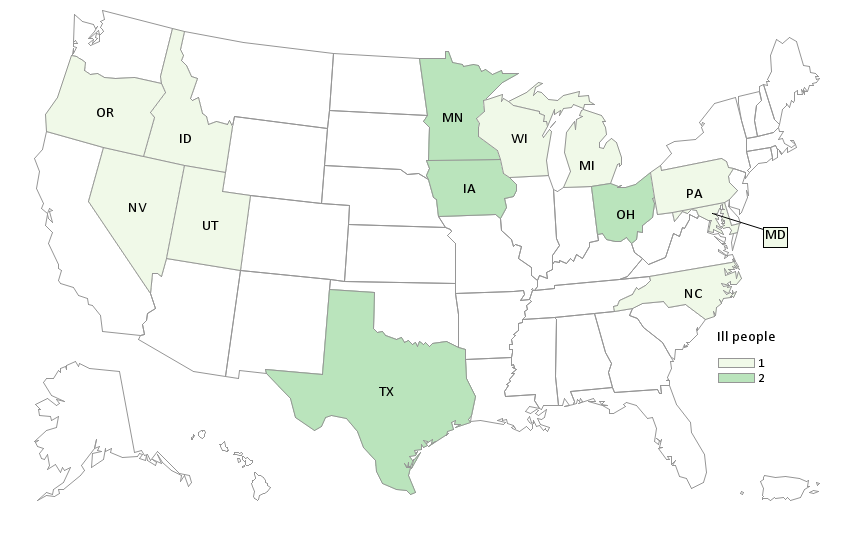
Map of U.S. Distribution of Recalled Packaged Salad

Outbreak Investigation of Listeria monocytogenes from Dole Packaged Salad - Map of U.S. Distribution of Recalled Packaged Salad (February 1, 2022)

Case Count Map Provided by CDC

Outbreak Investigation of Listeria monocytogenes from Dole Packaged Salad - CDC Case Count Map (January 31, 2022)

Case Counts

Total Illnesses: 17
Hospitalizations: 13
Deaths: 2
Last illness onset: December 30, 2021
States with Cases: IA, ID, MD, MI, MN, NC, NV, OH, OR, PA, TX, UT, WI
Product Distribution*: AL, AZ, CA, CO, CT, FL, GA, HI,  IA, ID, IL, IN, KS, KY, LA, MA, MD, MI, MN, MO, MS, NC, ND, NE, NV, NY, OH, OK, OR, PA, SC, TN, TX, VA, WA, WI

*Distribution has been confirmed for states listed, but product could have been distributed further, reaching additional states

Germany – Wild pickled tomatoes POMIDORY – Mold/Mould

LMW

Alert type: Food
Date of first publication: 02/01/2022
Product name:

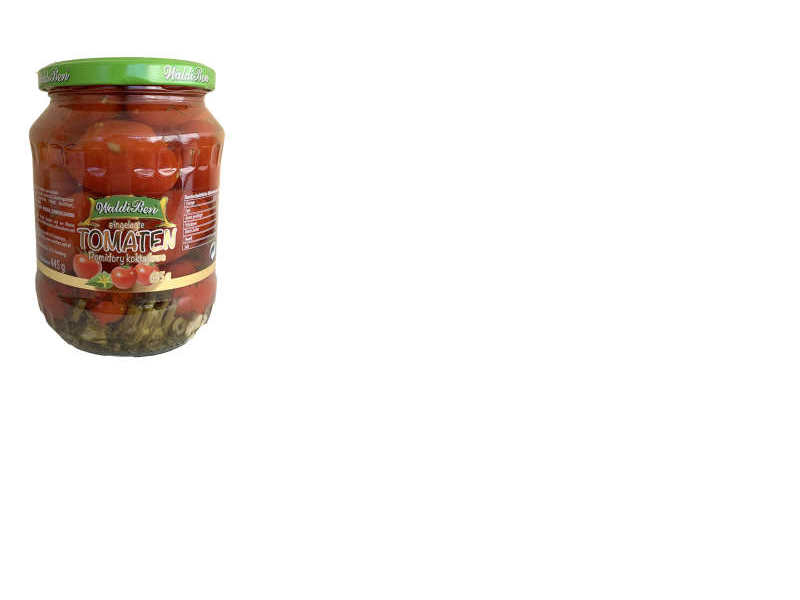
Wild pickled tomatoes POMIDORY

Product images:

image.png

recall

Manufacturer (distributor):

Dovgan GmbH Zinkhüttenweg 6 22113 Hamburg

Reason for warning:

The dill tips processed in this batch were found to have powdery mildew.

Packaging Unit: 695g
Durability: 10/20/2024
Lot identification: 10/20/2024.G

UK – Holland and Barrett recalls Hulled Sesame Seeds because of the presence of Salmonella

FSA

Holland and Barrett is recalling Holland and Barrett Hulled Sesame Seeds because salmonella has been found in the product.

Product details

Holland and Barrett Hulled Sesame Seeds
Pack size 125g
Best before  September 2022

Risk statement

The presence of salmonella in the product listed above.

Symptoms caused by salmonella typically include fever, diarrhoea, and abdominal cramps.

Action taken by the company

Holland and Barrett is recalling the above product. Point of sale notices will be displayed in all retail stores that are selling this product. These notices explain to customers why the product is being recalled and tell them what to do if they have bought the product. Please see the attached notice.

Our advice to consumers

If you have bought any of the above product do not eat it. Instead, return it to the store from where it was bought for a full refund.