Monthly Archives: February 2022

Research – Multidrug resistance of Escherichia coli in fish supply chain: A preliminary investigation

Wiley Online

Abstract

Ninety-five Escherichia coli isolates recovered from different supply points of freshwater fish namely fish pond (W1, n = 16), wholesale fish market (W2, n = 14), retail fish market (R1, n = 29), street fish vending unit (R2, n = 30), and modern fish vending unit (R3, n = 6) were investigated for antimicrobial-resistant profile and prevalence of antibiotic-resistant genes. Overall, multidrug-resistant (MDR) E. coli in the fish supply chain was 21% with higher MDR incidence in the downstream fish supply points. MDR was relatively higher in the tertiary fish supply points viz., retail fish market (45%), street fish vending unit (30%), and modern fish vending unit (15%) compared to the secondary fish supply point, that is, wholesale fish market (5%) and primary fish supply point, that is, fish pond (5%). All the ampicillin-resistant isolates carried ampC gene, whereas only 21% of the β-lactam resistant isolates carried blaCTX-M-gp1. The tetracycline resistance determinant, tetA (89%) was predominant in the tetracycline-resistant isolates compared to tetB and tetD (11%). The trimethoprim resistance gene, dfrA and sulfonamide-resistance gene, Sul1 were detected in 9% of the trimethoprim-resistant isolates and 9% of the sulfonamide-resistant isolates, respectively. Enterobacterial repetitive intergeneric consensus-PCR has delineated the MDR isolates from the different fish supply points into three major clusters but all the MDR isolates from the street fish vending point are grouped into a single cluster. The results indicate an increase in the proportion of MDR E. coli and the occurrence of diverse MDR profiles in the downstream points of the fish supply chain that needs to be addressed to avoid fish-food-borne antimicrobial resistance.
Research – Enhanced antimicrobial activity against Alicyclobacillus acidoterrestris in apple juice by genome shuffling of Lactobacillus acidophilus NX2-6

Wiley Online

Food safety and quality are seriously compromised by the growth of spoilage bacteria in food. Various lactic acid bacteria (LAB) may inhibit the growth of spoilage bacteria in food and animal feed. In our study, the antibacterial activity of Lactobacillus acidophilus NX2-6 was improved by genome shuffling. The starting populations were obtained via 60Coγ-ray, diethyl sulfate mutagenesis, and UV mutagenesis of protoplasts. The optimal conditions for protoplast formation and regeneration were found to be 30 mg/ml of lysozyme at 37°C for 40 min. The protoplasts were inactivated by UV irradiation for 110 s or by heating at 58°C for 30 min. After two rounds of genome shuffling, the inhibitory activity of strain F50 was improved by 5.6-fold compared to the original strain. The shuffled strain has broad-spectrum antibacterial activity and is a promising candidate for bio-preservative. The antibacterial substances produced by L. acidophilus NX2-6 can be applied to the preservation of apple juice. The results showed that the growth of Alicyclobacillus acidoterrestris in apple juice was significantly inhibited by the addition of 0.1% culture supernatant with acidocin NX2-6 at 28°C and 0.2% culture supernatant with acidocin NX2-6 at 45°C for 30 days. The sugar−acid ratio, pH value, clarity, and fruit flavor of apple juice were well maintained during storage. This study showed that genome shuffling was an effective strategy to improve the bacterial inhibitory activity of LAB and that the shuffled LAB and their metabolites are expected to be used as bio-based food protectors for food safety.

USA – Company recalls yeast because of potential Salmonella contamination

Food Safety News

Mitsubishi International Food Ingredients Inc. is recalling a yeast extract because of potential contamination.

The Food and Drug Administration reported today that the Dublin, OH, company has recalled 15-kilogram — 33-pound —  bags of “Yeast Extract Ajirex” packed in boxes because of potential contamination with Salmonella.

There is concern that the product may be in the stream of commerce or in homes or businesses because of the long shelf life, which extends into August this year.

The company reports that the recalled yeast was distributed in Georgia, Illinois, Pennsylvania and Texas.

One customer, GFS, has reported using the yeast in products, but the FDA notice did not report what products.

The recalled yeast can be identified by the following label information: Batch/Lot: AR21B13401 Product Number: 6225796 205 01M Expiration Date: Aug 2, 2022.

UK – Former butcher fined after Listeria outbreak link; his family now running shop

Food Safety News

A former butcher in England was fined this week after his business was linked to a Listeria outbreak. Officials said it was one of the biggest environmental health investigations the authorities have ever had.

Robert Bowring of Bowring Butchers was prohibited from managing any food business during sentencing at Nottingham Crown Court. While he is not allowed to manage food processes and production, he will be able to undertake tasks such as deliveries.

The Mansfield District Council launched an investigation in April 2019 after being told by Public Health England East Midlands, now the UK Health Security Agency (UKHSA), that whole genome sequencing had linked two cases of listeriosis to Bowring. The suspected source was Bowring Butchers and potted beef.

The court was told about the death of Kathleen Ferguson who was admitted to hospital after becoming ill. Listeria was found in a blood sample, confirming listeriosis, although cause of death was recorded as heart disease. Analysis revealed that the bacteria in Ferguson’s blood was from the same source as those in samples taken in Bowring’s premises, where she was a regular customer. Two care homes had also been supplied with meat by Bowring.

Sentencing Judge Nigel Godsmark said although Ferguson died with, rather than of, listeriosis, the consequences could have been serious, particularly for vulnerable and elderly people in care homes.

Research – Emergence of non-choleragenic Vibrio infections in Australia

1 Health

Vibrio_vulnificus_01a

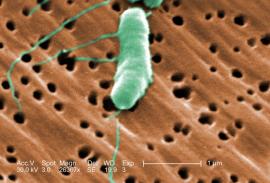
Vibrio infection was rarely reported in Tasmania prior to 2016, when a multistate outbreak of Vibrio parahaemolyticus associated with Tasmanian oysters was identified and 11 people reported ill. Since then, sporadic foodborne cases have been identified following consumption of commercially- and recreationally-harvested oysters. The increases in both foodborne and non-foodborne Vibrio infec-tions in Tasmania are likely associated with increased sea water temperatures. As oyster production increases and climate change raises the sea surface temperature of our coastline, Tasmania expects to see more vibriosis cases. Vibriosis due to oyster consumption has been reported in other Australian states, but the variability in notification requirements between jurisdictions makes case and outbreak detection difficult and potentially hampers any public health response to prevent further illness.

USA – Video – How CDC Investigates Foodborne Outbreaks

You Tube

Have you ever wondered how CDC investigates foodborne outbreaks such as Salmonella? PulseNet USA is a nationwide network used to identify the bacteria making people sick and track it back to the source. In this video you will learn how the general public and CDC scientists can work together to identify foodborne illnesses. This video can also be viewed at https://www.cdc.gov/wcms/video/low-re…

Research – Introduction to the Special Issue: Microbiological Safety and Quality of Foods

MDPI

Recent shifts in food production, processing and distribution, linked to the globalization of the food trade and the need to meet new consumers habits, are continuously challenging global food systems. Every effort is being made to ensure healthy and safe, food that is crucial to guarantee public health and wellbeing.
Despite the advancements in food safety management, foodborne diseases (FBD) still remain an important problem worldwide, with a significant negative impact on human health and countries’ economies and development. It has been determined that food unsafe for consumption causes 600 million cases of FBD every year, and 25% of all foods produced globally are lost due to microbial spoilage. Serious outbreaks have occurred, involving both developing and industrialized countries, showing how food safety is a transnational challenge and that a strong joint commitment between food safety authorities is needed.
Despite this awareness, the full extent of the impact of food contamination is still unknown. Foodborne contaminants are numerous, including viruses and bacteria, parasites, chemicals, toxins and allergens that cause a wide range of conditions. Globally, FBD caused by bacteria are more common than those caused by viruses and parasites. [1]. Moreover, between one-third and one-half of all human infectious diseases have a zoonotic origin. Among bacteria, Campylobacter, followed by Salmonella, are the major etiological agents of FBD, while, among viruses, norovirus is the foremost enteric pathogen of foodborne disease worldwide [2].
The most common foodborne parasites instead are protozoa such as Cryptosporidium spp., Giardia intestinalis and Toxoplasma gondii; roundworms such as Trichinella spp. and Anisakis spp.; and tapeworms such as Diphyllobothrium spp. and Taenia spp. [3]. In particular, Anisakiasis is an emerging zoonosis caused by the fish parasitic nematode Anisakis. Humans are accidental hosts that become infected by eating raw or undercooked fish that contain viable Anisakis spp. larvae.
The major determinants for the incidence of FBD are unsafe raw food, abused temperature, inadequate storage, improper handling, undercooking and cross contamination [4]. Food from animal sources, fresh produce and ready-to-eat (RTE) foods are the most at risk. In particular, RTE foods are an emerging issue concerning food safety. Furthermore, they have been demonstrated to contain antimicrobial-resistant strains. Since these products are consumed without any further treatment, they could serve as a vector for the spread of antibiotic-resistant microorganisms, posing a significant threat to public health [5].
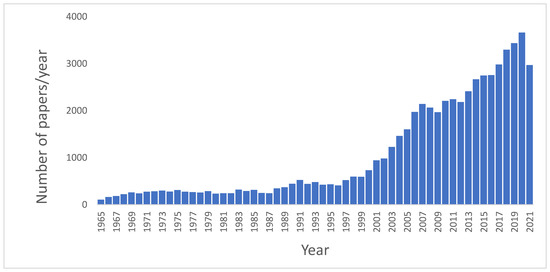
The importance of these topics is documented by the increasing number of papers published related to Food Safety. In a basic search using PubMed database, from 1945 to 2021, selecting as the search topic “Microbiological food safety”, a total of 54,210 results were obtained.
Although the first articles concerning microbiological food safety date from 1946, and since then a dozen articles appear in the following years, it is not until 1965 that a significant number of articles are published every year. Figure 1 shows the evolution of the number of papers per year (from 1965 to 2021) published regarding Microbiological food safety. As can be seen in this figure, approximately 80% of these papers have been published in the last 20 years, and the number continues to rise, revealing an increasing and ever-present interest towards the topic addressed in this Special Issue.
Foods 11 00673 g001 550

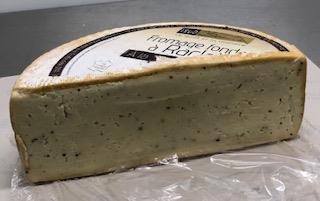
France – Fondant with summer truffle – Listeria monocytogenes

Gov france

Identification information of the recalled product

  • Product category Food
  • Product subcategory Milk and dairy products
  • Product brand name Bachler
  • Model names or references Summer truffle raclette
  • Identification of products
    GTIN Lot Dated
    2313545066300 213655 Date of minimum durability 04/24/2022
  • Packaging Sold in the traditional cheese section
  • Marketing start/end date From 08/02/2022 to 21/02/2022
  • Storage temperature Product to be stored in the refrigerator
  • Health mark EN 47-306-001 EC
  • Geographic area of ​​sale E. Leclerc cheese section 68300
  • Distributors E.Leclerc ALCOBA DISTRIBUTION

Practical information regarding the recall

  • Reason for recall Presence of Listeria Monocytogenes
  • Risks incurred by the consumer Listeria monocytogenes (causative agent of listeriosis)

Sweden – Salmonella in meat sick 15 in Sweden

Europe Cities

Disease In Food

More than a dozen people recently fell ill in Sweden with Salmonella infections after eating poorly cooked burgers.

An outbreak with 15 cases of salmonellosis after a lunch at a hotel restaurant was investigated by the local food authority and the regional public health authority in Jämtland Härjedalen.

The Salmonella Enteritidis outbreak occurred among students and teachers from Fjällgymnasiet high school during a ski competition in northern Sweden.

Based on information from 11 patients, the first date for disease onset was January 28 and the last was February 4. The age range was 17 to 57 years with a median age of 19. Ten of the patients were men and one was female, all were from northern Sweden.

All the sick had a common meal where they ate ground (minced) burgers. Some of those who ate lunch reported that the burgers were clearly poorly cooked.

After finding Salmonella in samples of minced meat, further tracing of the batch of frozen beef and pork involved was carried out by local authorities, revealing that it came from Poland.

Salmonella was found in three of six meat samples but there is no ongoing risk of people getting sick as the batch involved was only distributed to restaurants and has now been withdrawn.

Belgium – “Le Sapin Blanc” goat cheese – Listeria monocytogenes

AFSCA

Recall by Colruyt
Product: “Le Sapin Blanc” goat cheese.
Problem: Presence of the bacterium Listeria monocytogenes.
During microbiological checks, the presence of Listeria monocytogenes was observed in the product Le Sapin Blanc goat cheese 80 g bearing the expiry dates (BBD) 20/2/2022 and 3/3/2022.

Colruyt has therefore decided to withdraw the product concerned from sale.

Customers who have purchased this product are invited not to consume it and to bring it back to the store, where they will be reimbursed. In the meantime, all stores have removed the affected products from the shelves.

Product Description :

Le Sapin Blanc goat cheese Use-by
dates (BBD): 2022/2/20 and 2022/3/3
Sales period: from 2022/1/25 to 2022/2/18 included Article number
: 22567
batch: 15012224
Weight: 80g
Producer: Prolaidis Export

This product has been offered for sale in Colruyt stores in Belgium.

For more information , customers can contact Colruyt Group Customer Service on 0800 99 124.