Monthly Archives: April 2021

USA – Bacteria that causes Legionnaire’s disease found in N.J. prison water

NJ.com

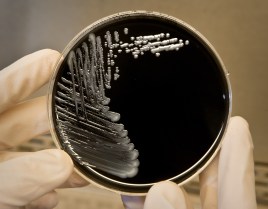
Legionella A

New Jersey officials have found a potentially deadly bacteria in the water at one of New Jersey’s largest prisons, according to a staff memo obtained by NJ Advance Media.

Legionella was detected in a medical building at Northern State Prison in Newark, according to the document, and staff have since moved inmates out of the affected area. The bacteria causes Legionnaire’s disease, a form of pneumonia especially dangerous for people with compromised immune systems,

UK – Asda recall Asda 2 Original Chicken Chargrills because of presence of salmonella

FSA

Asda is recalling Asda 2 Original Chicken Chargrills because salmonella has been found in the product.

Product details

Asda 2 Original Chicken Chargrills
Pack size 170g
Batch code 31120953
Best before 05 September 2022

Risk statement

The presence of salmonella in the product listed above. Symptoms caused by salmonella usually include fever, diarrhoea and abdominal cramps.

Action taken by the company

Asda is recalling the above product. Point of sale notices will be displayed in all retail stores that are selling this/these product. These notices explain to customers why the products are being recalled and tell them what to do if they have bought the product. Please see the attached notice.

Our advice to consumers

If you have bought any of the above product do not eat it. Instead, return it to the store from where it was bought for a full refund.

About product recalls and withdrawals

If there is a problem with a food product that means it should not be sold, then it might be ‘withdrawn’ (taken off the shelves) or ‘recalled’ (when customers are asked to return the product). The FSA issues Product Withdrawal Information Notices and Product Recall Information Notices to let consumers and local authorities know about problems associated with food. In some cases, a ‘Food Alert for Action’ is issued. This provides local authorities with details of specific action to be taken on behalf of consumers.

Ref: FSA-PRIN-23-2021

USA – Salmonella Outbreak Linked to Wild Songbirds

CDC

Fast Facts
  • Illnesses: 19
  • Hospitalizations: 8
  • Deaths: 0
  • States: 8
  • Investigation status: Active

Birds can carry germs like Salmonella while looking healthy and clean. However, there are reportsexternal icon of wild songbirds, such as pine siskins (small, streaked, yellow-tinged songbirds in the finch family) sick with the same strain of Salmonella that is making people sick in this outbreak. Salmonella germs can spread between species of birds, to pets, and to people.

You can get sick when you touch your mouth with unwashed hands after touching wild birds, bird feeders or bird baths, or your pets that have contact with wild birds.

Help keep people and animals healthy around bird feeders and bird baths.

  • Clean and disinfect your bird feeder and bird bath weekly or when they are visibly dirty.
    • Clean feeders outside your house when possible. If you clean it indoors, use a laundry sink or bathtub, and thoroughly clean and disinfect the area right after. Do not clean bird feeders in your kitchen or places where food is prepared or stored.
    • Follow these five steps to clean and disinfect your bird feeder:
      1. Scrub feeder with warm soapy water to remove dirt. Rinse with clean water to remove soap.
      2. Soak in a bleach solution (9 parts water and 1 part bleach) for at least 10 minutes.
      3. Rinse with water to remove any remaining bleach solution.
      4. Let it dry before refilling it.
      5. Wash your hands with soap and water after touching your bird feeder.
    • Clean and refill your bird bath weekly or when it’s visibly dirty.
  • Keep pets away from bird feeders and bird baths and the areas under them.
  • If you find a sick or dead bird in your yard, remove your feeder and bath for two weeks and clean them outdoors.

Do not touch or hand-feed wild birds with your bare hands.

  • If you find a sick bird, call your state wildlife agencyexternal icon or wildlife rehabilitatorexternal icon.
  • If you find a dead bird, check with your state wildlife agencyexternal icon for information about reporting dead birds in your area.
    • Some state and local agencies collect dead birds to test for diseases.
  • If your local officials tell you to throw the dead bird away, wear gloves or place a plastic bag over your hand to pick it up. Place the bird in a plastic bag, tie the bag up, and throw it away, following your local officials’ instructions. Some locations may allow dead birds to be disposed of in your regular trash. Wash your hands with soap and water when you are finished.

Always wash your hands with soap and water:

  • Right after touching your bird feeder or bird bath
  • Right after handling a bird, even if you wore gloves or used a bag
  • Right after touching your pet or pet’s supplies (like food, bowls, and toys)
  • Right after picking up your pet’s feces (poop), even if you used a bag
  • Before you eat or drink

Call your healthcare provider right away if you have any of these severe Salmonella symptoms:

  • Diarrhea and a fever higher than 102°F
  • Diarrhea for more than 3 days that is not improving
  • Bloody diarrhea
  • So much vomiting that you cannot keep liquids down
  • Signs of dehydration, such as:
    • Not urinating (peeing) much
    • Dry mouth and throat
    • Feeling dizzy when standing up
Symptoms of Salmonella
  • Most people infected with Salmonella experience diarrhea, fever, and stomach cramps.
    • Symptoms usually start 6 hours to 6 days after swallowing the bacteria.
    • Most people recover without treatment after 4 to 7 days.
  • Some people—especially children younger than 5 years, adults 65 years and older, and people with weakened immune systems—may experience more severe illnesses that require medical treatment or hospitalization.
  • For more information about Salmonella, see the Salmonella Questions and Answers page.

France – Product recall: Clos Chevrel brand Valençay cheese – Listeria monocytogenes

Oulah

Product recall: Clos Chevrel brand Valençay cheese

ENCOUNTERED PROBLEM

Possible presence of Listeria monocytogenes

PROPOSED SOLUTION

Those in possession of this product are asked not to consume it and to return it to the point of sale where it was purchased.

People who have consumed this product and who present with fever, isolated or accompanied by headaches, are invited to consult their attending physician, notifying him of this consumption.
Pregnant women should pay special attention to these symptoms, as well as immunocompromised people and the elderly. These symptoms may suggest listeriosis, a disease that can be serious and can take up to eight weeks to incubate.

FURTHER INFORMATION

▸ Barcode
3250390398028

▸ Lot
V028

▸ DDM
04/03/2021

▸ Source
https://www.processalimentaire.com/

Canada – Botulism cases in Nunavik linked to walrus meat

Outbreak News Today

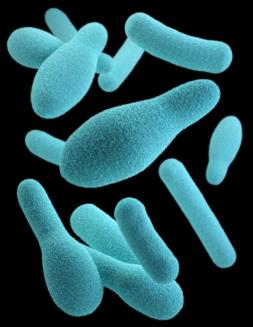
CDC Clost Spore

The Nunavik Regional Board of Health and Social Services  (NRBHSS) announced recently suspected cases of Botulism (qassuniq) in Inukjuak, on March 22.

An investigation revealed that the cases were associated with igunaq (a method of preparing meat, particularly walrus and other marine mammals) consumed during two feasts on March 18th and March 19th.

More than 27 people may have been exposed at the feasts and afterward from food later consumed at home.

There may still be contaminated igunaq in the community and in situations like this, the meat from that source should be destroyed. The best way to destroy the contaminated meat would be to burn it. It’s important to identify all the meat from the suspected igunaq and be sure it’s destroyed.

Before eating walrus meat, people should verify where it came from and make sure that it’s not from the same source that was given at the feasts.

USA – Washington: Campylobacter infections linked to unpasteurized raw milk

Outbreak News Today

campy2

The Washington Department of Health reports five lab-positive campylobacteriosis cases in individuals who consumed Dungeness Valley Creamery raw milk. The raw milk was purchased in Clallam, Skagit, Kitsap, and Clark Counties.

Dungeness Valley Creamery has issued a voluntary recall of all raw milk product with a ‘Best By’ date of April 13, 2021, or earlier. These products may be contaminated with Campylobacter bacteria, which can cause serious illness. The recalled product is bottled in gallon, half-gallon, quart and pint containers. It was sold to customers in western Washington in the on-farm store, outside retail stores and drop-off locations. Health officials urge consumers not to drink any Dungeness Valley Creamery raw milk product with a ‘Best By’ date of April 13, 2021, or earlier, and to discard any leftover product, or return it to the place of purchase.

“Unpasteurized raw milk can carry harmful bacteria and germs. Foodborne illnesses can be caused by many different foods; however, raw milk is one of the riskiest,” said Dr. Scott Lindquist, State Epidemiologist for Communicable Diseases.

Research – Pioneering project describes molecular epidemiology of listeriosis in humans and Listeria monocytogenes in food

ECDC

A collaborative study between ECDC, the European Food Safety Authority (EFSA) and the European Union Reference Laboratory (EURL) for Listeria monocytogenes* found a relatively high degree of dissemination of certain listeriosis bacteria in the food chain and in the human population across the European Union (EU). In particular, there was a strong link with ready-to-eat fish products in several of the listeriosis clusters identified.

Listeriosis is a foodborne disease caused by L. monocytogenes bacteria. After ingestion of L. monocytogenes bacteria via contaminated food, infection can cause severe, life-threatening disease, often manifested as septicaemia and/or meningitis, particularly among elderly and immunocompromised people, as well as complications related to pregnancy.

The collaborative study, called ‘the European Listeria Typing Exercise’ (ELiTE), was initiated in 2010 with the aim of describing with a One Health approach the molecular epidemiology of listeriosis in humans and food in a two-year period. The study connected data about public health and food from 13 and 23 EU Member States, respectively. The study on L. monocytogenes in food was conducted on three categories of ready-to-eat food: packaged hot or cold smoked or ‘gravad’ (cured) fish, soft or semi-soft cheeses, and packaged heat-treated meat products.

The study has utilised molecular typing, which is a way of identifying specific strains of microorganisms, such as bacteria or viruses, by looking at their genetic material. The selected molecular typing method for this project, pulsed field gel electrophoresis (PFGE), was a well-established, standardised molecular typing method in both sectors at the time of the study and was therefore a natural choice.

PFGE as a molecular typing method is gradually phasing out and is being replaced by the state-of-the-art method of whole genome sequencing (WGS). The project has bridged the PFGE method with WGS method by mapping the clustering PFGE types with respective clonal complexes (CCs) characterised by WGS. This offers a unique reference with information from historical PFGE cluster types linked to WGS, thus enabling countries to make use of historical PFGE data to select isolates for further characterisation by WGS. A cluster means that isolates are genetically very similar, i.e. they most likely originate from a common source. If human and food isolates are gathered in the same cluster, it is a strong, but not definite, indication that the food may have caused the infections. Microbiological evidence alone is not sufficient to link the food with human infections, and supportive epidemiological evidence is always required.

There were 78 separate clusters by PFGE profiles, involving 573 (57.7%) L. monocytogenes isolates in the study dataset. Of these, 21 included both human and food L. monocytogenes isolates, 47 included only human, and 10 only food isolates. In the 21 human-food clusters, the majority of food isolates (89.7%) were from fish products, whereas the remaining ones originated from delicatessen meat products (9.3%) and cheese products (1.0%). The amount of Listeria in fish products was generally low, but in 48 fish samples Listeria counts exceeded the microbiological criterion of 100 cfu/g. These high-count fish samples represented 87.3% of all food samples (55) with Listeria counts exceeding 100 cfu/g.

Of 78 clusters by PFGE profiles, 57 (73.1%) were small, up to five L. monocytogenes isolates per cluster. The largest PFGE cluster was made up of L. monocytogenes clone CC8. The cluster involved 30 human and 56 food L. monocytogenes isolates from 15 countries, suggesting a high degree of dissemination of this clone in the food chain in the EU. In contrast, considering the capacity of Listeria to persist in the food chain for years, this clone is likely to eventually cause large cross-border food-borne outbreaks.

The results from this project show that the risk of L. monocytogenes in ready-to-eat fish products requires further attention. A review of the compliance of food business operators with regulatory microbiological criteria could be considered, particularly for fish products. In the EU and the European Economic Area (EEA) there is an increasing proportion of aged populations, and challenges related to assessing exposure in this group. A genetic library of food-derived L. monocytogenes isolates against which any human isolate could be compared could maximise the speed of source identification in outbreak investigations. The data collected in this study and the applied methodology provide a good background for such a library.

*Hosted by the French Agency for Food, Environmental and Occupational Health & Safety, ANSES

France – Product recall: Saint-Nectaire with raw cow’s milk from the FROMAGERIE GUILLAUME brand – Salmonella

Oulah

Product recall: Saint-Nectaire with raw cow's milk from the FROMAGERIE GUILLAUME brand

ENCOUNTERED PROBLEM

Presence of SALMONELLES

PROPOSED SOLUTION

People who may have this product are asked not to consume it and to return it to the point of sale where it was purchased.

Foodborne illness caused by salmonella results in gastrointestinal disturbances, diarrhea, vomiting and abdominal pain, often accompanied by fever; these symptoms may be more severe in young children, immunocompromised individuals and the elderly. The incubation period can range from 6 to 72 hours.
People who have consumed the products mentioned below and who have these symptoms are invited to consult their doctor, notifying him of this consumption.

FURTHER INFORMATION

▸ Barcode

▸ Lot
1AAV6 / 2AAV6

▸ DDM
04/22/2021

▸ Marketing
Since 03/08/2021

▸ Health
stamp FR 63.234.002 CE

▸ Consumer service contact
0473967310

▸ Source
https://rappel.conso.gouv.fr/

RASFF Alerts – Aflatoxin – Dried Figs – Groundnuts- Coated Ravioli and BBQ Flavoured Peanuts – Peanut and Caramel Ice Cream Paste

RASFF

aflatoxins (B1 = 8; Tot. = 9.7 µg/kg – ppb) in coated ravioli and barbeque flavoured peanuts from China in the Netherlands

RASFF

aflatoxins (B1 = 37.6; Tot. = 45.9 µg/kg – ppb) in groundnuts from Egypt in Italy

RASFF

aflatoxins (B1 = 31; Tot. = 34 µg/kg – ppb) in dried figs from Turkey in France

RASFF

aflatoxins (B1 = 68; Tot. = 152 µg/kg – ppb) in dried figs from Turkey in France

RASFF

aflatoxins (B1 = 13.84; Tot. = 15.77 µg/kg – ppb) in organic dried chopped figs from Turkey in Germany

RASFF

aflatoxins (B1 = 15.7; Tot. = 28.0 µg/kg – ppb) in dried figs from Turkey in France

RASFF

aflatoxins (B1 = 3.6; Tot. = 4.3 µg/kg – ppb) in peanut and caramel ice cream paste from Bosnia and Herzegovina in Croatia

RASFF

aflatoxins (B1 = 31; Tot. = 76 µg/kg – ppb) in dried figs from Turkey in France

RASFF

aflatoxins (B1 = 41; Tot. = 140 µg/kg – ppb) in dried figs from Turkey in France

RASFF Alerts – Listeria monocytogenes – Salami – Raw Milk Cheese – Frozen Sweetcorn Kernels – Frozen Poultry Meat – Feta Cheese – Chicken Tandoori Wrap

European Food Alerts

RASFF

Listeria monocytogenes (up to 300 CFU/g) in salami from Spain in the Czech republic

RASFF

Listeria monocytogenes (<10 CFU/g) in chilled raw milk cheese from France in France

RASFF

suspicion of Listeria monocytogenes in and incorrect labelling (not ready-to-eat) on frozen sweetcorn kernels from Hungary in Hungary

RASFF

Listeria monocytogenes (< 10 CFU/g) in frozen poultry meat products from the Netherlands in Belgium

RASFF

Listeria monocytogenes (< 10 CFU/g) in feta cheese from Greece in France

RASFF

Listeria monocytogenes (<10 CFU /g) in wrap chicken tandoori from the Netherlands in the Netherlands