Monthly Archives: February 2021

Research – Experts examine reasons for different Salmonella results

Food Safety News

Wageningen University scientists have looked at why there are discrepancies in Salmonella results between poultry farmers’ and authorities’ tests.

Experts analyzed factors associated with the difference between positive tests from routine initial Salmonella monitoring by poultry farmers and negative results of a retest by the Netherlands Food and Consumer Product Safety Authority (NVWA). Retests are based on suspicions of a false positive result from routine monitoring.

The work, commissioned by the Ministry of Agriculture, Nature and Food Quality (LNV), gave an insight into results during Salmonella surveillance of Dutch adult breeding flocks.

Researchers said there is good reason to make retesting of initial positive results from routine Salmonella monitoring again possible in the EU. This would only involve 10 to 15 cases per year in the Netherlands. The country had to change its approach in early 2020 because of pressure from the European Commission for retests only if there is “reasonable doubt” about a first result.

Research – Antimicrobial resistance and interspecies gene transfer in Campylobacter coli and Campylobacter jejuni isolated from food animals, poultry processing, and retail meat in North Carolina, 2018–2019

PLOS One

CDC Campy

The Center for Disease Control and Prevention identifies antimicrobial resistant (AMR) Campylobacter as a serious threat to U.S. public health due to high community burden, increased transmissibility, and limited treatability. The National Antimicrobial Resistance Monitoring System (NARMS) plays an important role in surveillance of AMR bacterial pathogens in humans, food animals and retail meats. This study investigated Ccoli and Cjejuni from live food animals, poultry carcasses at production, and retail meat in North Carolina between January 2018-December 2019. Whole genome sequencing and bioinformatics were used for phenotypic and genotypic characterization to compare AMR profiles, virulence factors associated with Guillain-Barré Syndrome (GBS) (neuABC and cst-II or cst-III), and phylogenic linkage between 541 Campylobacter isolates (Ccoli n = 343, Cjejuni n = 198). Overall, 90.4% (489/541) Campylobacter isolates tested positive for AMR genes, while 43% (233/541) carried resistance genes for three or more antibiotic classes and were classified molecularly multidrug resistant. AMR gene frequencies were highest against tetracyclines (64.3%), beta-lactams (63.6%), aminoglycosides (38.6%), macrolides (34.8%), quinolones (24.4%), lincosamides (13.5%), and streptothricins (5%). A total of 57.6% (114/198) Cjejuni carried GBS virulence factors, while three Ccoli carried the Cjejuni-like lipooligosaccharide locus, neuABC and cst-II. Further evidence of Ccoli and Cjejuni interspecies genomic exchange was observed in identical multilocus sequence typing, shared sequence type (ST) 7818 clonal complex 828, and identical species-indicator genes mapAceuE, and hipO. There was a significant increase in novel STs from 2018 to 2019 (2 in 2018 and 21 in 2019, p<0.002), illustrating variable Campylobacter genomes within food animal production. Introgression between Ccoli and Cjejuni may aid pathogen adaption, lead to higher AMR and increase Campylobacter persistence in food processing. Future studies should further characterize interspecies gene transfer and evolutionary trends in food animal production to track evolving risks to public health.

Research – Australian breakthrough is the new alternative to milk pasteurisation

Food Safety News

From “down under” comes news that is said to be the biggest breakthrough in dairy safety since pasteurization. It has been accepted as “an alternative treatment to pasteurization of raw milk” by Dairy Food Safety Victoria (DFSV) with financial support from both the Queensland state government putting in $190,000 and the Australian Federal Government $761,700.

Australia-based Naturo plans to roll out its Wholey Milk Co. brand, using the new “Haelen” technology beginning in March and April, serving retail outlets in Queensland during 2021, and then expanding internationally in 2022.

Naturo CEO Jeff Hastings says Haelen is a “gentle alternative technology” that without heat kills pathogens while retaining higher levels of useful vitamins, proteins, and enzymes that under pasteurization are damaged or destroyed.

USA – History of Soft Cheese Linked Listeria Monocytogenes Outbreaks

Food Poisoning Bulletin

With the news that the CDC and FDA have launched an investigation into a possible Hispanic-style soft cheese listeriosis outbreak late last week, the history of soft cheese linked Listeria monocytogenes outbreaks comes into focus. Seven people in four states are sick, including Maryland, Connecticut, New York, and Virginia. This is not the first time a deadly outbreak has been linked to those types of soft and fresh cheeses.

History of Soft Cheese Linked Listeria Monocytogenes Outbreaks

With the news that the CDC and FDA have launched an investigation into a possible Hispanic-style soft cheese listeriosis outbreak late last week, the history of soft cheese linked Listeria monocytogenes outbreaks comes into focus. Seven people in four states are sick, including Maryland, Connecticut, New York, and Virginia. This is not the first time a deadly outbreak has been linked to those types of soft and fresh cheeses.

These types of cheeses have long been a risk for Listeria monocytogenes contamination, according to the CDC. The issue is that many of these soft and fresh cheeses are made with unpasteurized milk. The government estimates that “the risk for listeriosis per serving is estimated to be 50- to 160-fold greater for cheese made from unpasteurized milk than pasteurized milk.”

Research – 10 common food safety mistakes

Safety and Health Magazine

Did I cook that long enough? I’m supposed to rinse off chicken when I take it out of the package, right? Eating raw cookie dough won’t really make me sick.

These are just some of the food safety mistakes people make. Help prevent foodborne illnesses by follow these guidelines from the Centers for Disease Control and Prevention.

  1. Folks older than 65 and younger than 5, pregnant women, and people who have health issues or weakened immune systems are at higher risk of food poisoning. Foods to avoid: undercooked or raw food items, unpasteurized milks and juices, and soft cheeses.
  2. Did you wash your hands? If the answer is “no,” drop that food you’re handling and wash your hands for 20 seconds with soap and hot water. Wash them again once you’ve finished preparing the food.
  3. Don’t wash raw meat, chicken or turkey. This spreads germs to your sink, countertops and other kitchen surfaces. Cooking these foods to the proper temperature will kill any germs.
  4. On the other hand, you should wash fruits and veggies under running water before you cook with them – even if you’re going to peel them. Germs on the skin of these foods can transfer when they’re cut or peeled.
  5. Before you put cooked meat on a plate, ask yourself: Did the same plate hold the raw meat? If so, you risk spreading germs from the raw meat juices to your cooked food. Get a new plate.
  6. Cook food at a high enough temperature to kill all germs:
    • 145° F for beef, pork, veal, lamb, ham and seafood
    • 160° F for ground meats
    • 165° F for poultry, leftovers and casseroles
  7. Help eliminate E. colisalmonella and other bacteria risks by cooking or baking flour and eggs thoroughly.
  8. Not sure if that leftover food is safe to eat? Check a storage time chart to see how long you can safely store food.
  9. If you typically thaw or marinate food items on your kitchen counter, don’t. This can spread germs quickly. Get in the habit of thawing food in the refrigerator, in cold water or in the microwave, and always marinate food in the fridge.
  10. Don’t let food sit out. Germs can grow in perishable foods, so put food in the fridge within two hours or throw it out.

Bangladesh- Over 200 Ansar members treated for food poisoning

New Age BD

Over 200 members of Bangladesh Ansar and VDP were hospitalised after they fell sick eating lunch at their 41st national convention at Ansar-VDP academy in Shafiur, Gazipur.

The victims said that they started feeling sick after eating the lunch they were served on Saturday following their national convention.

The 100-bed hospital inside the academy overflowed with patients by night and doctors rushed to the barracks for treating those, who could not get a place at the hospital.

‘Many Ansar members fell sick because of food poisoning,’ said Mehnaz Tabassum, public relations officer of Ansar.

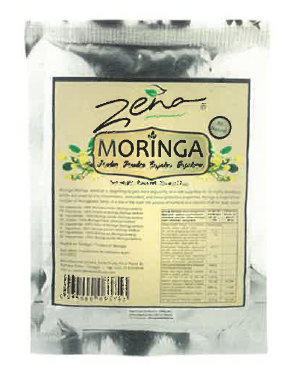
Netherlands – Important Safety Warning Zena Moringa powder from Unidex – Salmonella

NVWA

Zena Moringa powder

Unidex cautions against consuming Zena Moringa powder as salmonella has been found in the product.

It concerns packaging of 100 grams with an expiry date of 31 December 2023.

See also Website Unidex

France – Product recall: Dried, sliced ​​and smoked Duck Breast 90 g of Route des Saveurs brand – Campylobacter

Product recall: Dried, sliced ​​and smoked Duck Breast 90 g of Route des Saveurs brand

ENCOUNTERED PROBLEM

Presence of Campylobacter

PROPOSED SOLUTION

Do not consume and bring back to the place of purchase for reimbursement

People who have consumed the product mentioned above and who present with diarrhea, abdominal cramps, fever, isolated or accompanied by headaches with nausea or vomiting, are invited to consult their attending physician, notifying him of this consumption.

These symptoms may suggest campylobacteriosis, a disease that can be serious and can take up to 10 days to incubate.

Pregnant women should pay special attention to these symptoms, as well as immunosuppressed people and the elderly.

FURTHER INFORMATION

▸ Dried sliced ​​duck breast
• Barcode: 3 250 391 953 097
• Lot and DLC: 421 025 – 05/15/2021

▸ Dried sliced ​​smoked duck breast
• Barcode: 3 250 391 953 066
• Lot and DLC: 421 025 – 05/15/2021, 421 026 – 05/16/2021

▸ Packaging
90 g blister

▸ Health stamp
FR 32 079 030 CE

▸ Source
https://www.60millions-mag.com/
Photo: https://fr.openfoodfacts.org/

Belgium – Marigold – ‘GROUND EGUSI’ melon seeds (80g, 160g and 500g) – Aflatoxin

AFSCA

Recall of Marigold
Product: ‘GROUND EGUSI’ melon seeds (80g, 160g and 500g) of the MARIGOLD brand.
Problem: too high aflatoxin content.
In agreement with the AFSCA, MARIGOLD is withdrawing from sale the ‘GROUND EGUSI’ melon seeds (80g, 160g and 500g) of the MARIGOLD brand and is recalling this product to consumers because of an excessively high aflatoxin content.

MARIGOLD asks its customers not to consume this product and to return it to the point of sale where it was purchased, where they will be reimbursed.

Product description

• Product name: GROUND EGUSI (melon seeds)
• Brand: MARIGOLD
• Expiry date (DDM): 12/2021
• Lots: 280520/01 – 231020/02 – 230920/02 – 231120/03
• Packaging : transparent plastic jar
• Weight: 80g, 160g and 500g

For any further information, contact MARIGOLD: emmajufo@gmail.com

Belgium – ALL FOODS – Chefs Prepared Products – Salmonella

AFSCA

Recall of ALL FOODS
Product: Prepared by the chef.
Problem: possible presence of Salmonella.In agreement with the AFSCA, ALL FOODS is withdrawing the “Chef’s Prepared” product from sale and is recalling it to consumers following the possible presence of Salmonella.

ALL FOODS asks its customers not to consume this product.

Product description Product
name: Prepared by the chef
Brand: ALL FOODS Use by
date (DLC): 27/02/2021
Batch number: 21-05-04
Sales period: from 08/02/2021 to 12/02 / 2021
Packaging: plastic jar with lid
Weight: 150g – 0.5kg – 1 kg

The product was sold via:
– Huan – Aarschotsesteenweg 571, 3300 Tienen
– Roomcentrale Driesen – Aarschotsesteenweg 1, 3130 Betekom
– Minako – Rode Kruisplein 12, 3940 Hechtel
– Proxy Bolderberg – St. Jobstraat 123, 3550 Zolder
– Hoegaards Broodje – Bogaardenstraat 36, 3000 Leuven
– Diego bvba – Mgr. Bremstraat 15, 3272 Testelt
– Frituur B&W – Westelsebaan 184, 3271 Averbode
– Hageland Zuivel – Aarschotsesteenweg 136, 3130 Betekom

For any further information , contact:
Michel Ceusters
Tel .: 016/63 59 51
info@all-foods.be