Hotel in Budva Closed after Food Poisoning Outbreak, 12 Croatians Sick

Total Croatia News

ZAGREB, 28 August, 2022 – Montenegrin inspectors on Sunday closed the Loza Hotel in Budva after about 100 guests staying at the hotel on Saturday sought medical help due to symptoms of food poisoning.

Among the tourists, most of whom are from European countries, are 12 Croatians who were admitted to the “Danilo I” hospital in Cetinje.

The public RTCG broadcaster said on Sunday that their condition is good and that they should be released later in the day.

Inspection Directorate head Ana Vujošević said that this was the eighth time in the past few months that the Loza Hotel was being closed, noting that the hotel had reopened illegally on the previous seven occasions, which qualifies as a criminal offence.

The Montenegrin Public Health Institute said earlier that samples had been taken in all hotel areas to determine the cause of poisoning.

Most of the guests staying at the hotel have been transferred to other hotels in Budva, with the Montenegrin Ministry of Economy and Tourism covering the cost of their stay there.

Local officials late on Saturday night confirmed that around 100 tourists, most of whom were from Poland, Slovakia, Slovenia, and Croatia, had sought medical assistance in hospitals in Kotor, Bar, and Cetinje due to gastrointestinal problems.

Health Minister Dragoslav Šćekić said in a Twitter post that Montenegrin health institutions had promptly provided the patients with the necessary medical care.
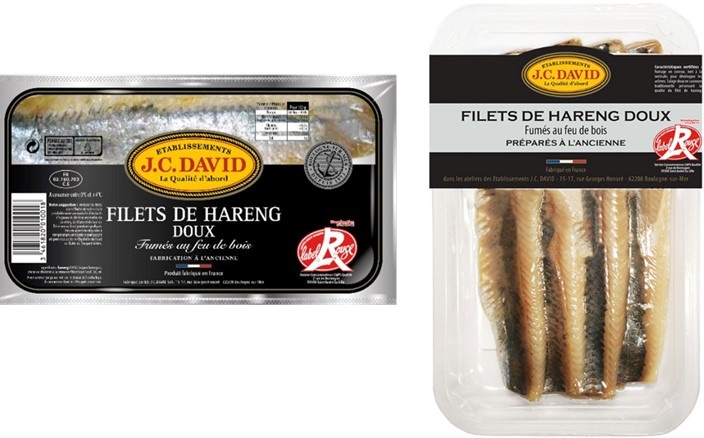

Hong Kong – CFS urges public not to consume a batch of prepackaged French smoked herring fillets suspected to be contaminated with Listeria moncytogenes

CFS

Issue Date 26.8.2022
Source of Information Rapid Alert System for Food and Feed of the European Commission
Food Product Prepackaged French smoked herring fillets
Product Name and Description Product name: FILET HARENG DOUX SV 1KG
Brand: J.C DAVID
Place of origin: France
Importer: Classic Fine Foods (Hong Kong) Limited
Net weight: 1 kilogram
Best-before date: August 26, 2022
Reason For Issuing Alert
  • The Centre for Food Safety (CFS) received a notification from the Rapid Alert System for Food and Feed of the European Commission that the above-mentioned batch of product might have been contaminated with Listeria monocytogenes and was being recalled.
  • Listeria monocytogenes can be easily destroyed by cooking but can survive and multiply at refrigerator temperature. Most healthy individuals do not develop symptoms or only have mild symptoms like fever, muscle pain, headache, nausea, vomiting or diarrhoea when infected. However, severe complications such as septicaemia, meningitis or even death may occur in newborns, the elderly and those with a weaker immune system. Although infected pregnant women may just experience mild symptoms generally, the infection of Listeria monocytogenes may cause miscarriage, infant death, preterm birth, or severe infection in newborns.
Action Taken by the Centre for Food Safety
  • Upon learning of the incident, the CFS immediately contacted the local importer for follow-up. A preliminary investigation found that the above-mentioned importer had imported into Hong Kong the affected batch of the product concerned.
  • The importer concerned has stopped sales, has removed the affected product from shelves and has initiated a recall according to the CFS’s instructions.
  • The CFS has alerted the trade to the incident, and will continue to follow up on the incident and take appropriate action. An investigation is ongoing.
Advice to the Trade
  • Stop using or selling the product concerned immediately if they possess it.
Advice to Consumers
  • Not to consume the affected batch of the product if they have bought any.
Further Information The CFS press

Enquiries about the recall can be made to the importer’s hotline at 2612 2066 during office hours.

Photos for reference only. Source of the photos: https://rappel.conso.gouv.fr/fiche-rappel/7968/Interne

UK – Ardo NV recalls Ardo Fruitberry mix because Hepatitis A has been found in the product.

FSA

Ardo NV is recalling Ardo Fruitberry mix because Hepatitis A has been found in the product, which makes the product unsafe to eat.

Product details

Ardo Fruitberry mix
Pack size 1kg
Lot number 58622130
Best before November 2024
Ardo Fruitberry mix
Pack size 1kg
Lot number 58622131
Best before November 2024
Ardo Fruitberry mix
Pack size 2.5kg
Lot number 58622131
Best before May 2024

Risk statement

This product is contaminated with Hepatitis A. Symptoms caused by Hepatitis A usually include fever, nausea, abdominal cramps, diarrhoea, dark-coloured urine and jaundice (a yellowing of the skin).

Action taken by the company

Ardo is recalling the above product. Point of sale notices will be displayed in all retail stores that are selling this product. These notices explain to customers why the product is being recalled and tell them what to do if they have bought the product. Please see the attached notice.

Our advice to consumers

If you have bought this product do not eat it. Instead, return it to the store from where it was bought for a full refund.

UK – Morrisons recalls ready to eat mango products because the products might contain Salmonella

FSA

Morrisons has taken the precautionary step of recalling Morrisons Mango and Morrisons Mango Fingers because they might contain Salmonella.

Product details

Morrisons Mango
Pack size 240g
Use by 23 August 2022
Morrisons Mango fingers
Pack size 410g
Use by 22 August 2022

Risk statement

The presence of Salmonella in the products listed above.

Symptoms caused by Salmonella usually include fever, diarrhoea and abdominal cramps.

Action taken by the company

Morrisons is recalling the above products. Point of sale notices will be displayed in retail stores that are selling these products. These notices explain to customers why the products are being recalled and tell customers what to do if they have bought the products. Please see the attached notice.

Our advice to consumers

If you have bought any of the above products do not eat it. Instead, return it to the nearest Morrisons store for a full refund.

Holiday :)

Hi All

You will have noticed a lack of posts last week, I was on holiday. You will get a few more posts than usual today and some will obviously be back dated. I will post them anyway as the blog is a good information depository for the future. Please stay with me. 🙂

Research – Listeria monocytogenes Illness and Deaths Associated With Ongoing Contamination of a Multi-Regional Brand of Ice Cream Products, United States, 2010–2015 

Academia Edu

Abstract

Background

Frozen foods have rarely been linked to Listeria monocytogenes illness. We describe an outbreak investigation prompted both by hospital clustering of illnesses and product testing.

Methods

We identified outbreak-associated listeriosis cases using whole-genome sequencing (WGS), product testing results, and epidemiologic linkage to cases in the same Kansas hospital. We reviewed hospital medical and dietary records, product invoices, and molecular subtyping results. Federal and state officials tested product and environmental samples for L. monocytogenes.

Results

Kansas officials were investigating five cases of listeriosis at a single hospital when, simultaneously, unrelated sampling for a study in South Carolina identified L. monocytogenes in Company A ice cream products made in Texas. Isolates from four patients and Company A products were closely related by WGS, and the four patients with known exposures had consumed milkshakes made with Company A ice cream while hospitalized. Further testing identified L. monocytogenes in ice cream produced in a second Company A production facility in Oklahoma; these isolates were closely related by WGS to those from five patients in three other states. These ten illnesses, involving three deaths, occurred from 2010 through 2015. Company A ultimately recalled all products.

Conclusion

In this U.S. outbreak of listeriosis linked to a widely distributed brand of ice cream, WGS and product sampling helped link cases spanning five years to two production facilities, indicating longstanding contamination. Comprehensive sanitation controls and environmental and product testing for L. monocytogenes, with regulatory over

Research – New FSIS Webpage: Reducing Salmonella in Poultry

Food Safety Magazine

The U.S. Department of Agriculture (USDA) Food Safety and Inspection Service (FSIS) recently introduced a new webpage to help reduce Salmonella in poultry. The webpage was created as part of an effort by FSIS to reduce Salmonella illnesses by 25 percent nationwide.

FSIS is continuously gathering the data and information necessary to support future action. The new webpage will offer updated news, information, and resources on Salmonella in poultry as it is collected. Along with the webpage, FSIS opened a dedicated email address for all inquiries related to Salmonella in poultry: salmonella@usda.gov.

Research – A Critical Look at Reducing the Risk of Salmonella from Poultry—Part 1

Food Safety Magazine

Salmonella Campylobacter

Poultry meat consumption has significantly increased over the past three decades in the U.S., and it is currently the most consumed meat protein compared to beef and pork. This increase has occurred gradually due to significant scientific research and advances in genetics, nutrition, and bird management and husbandry, resulting in reduced processing costs and, eventually, decreased meat costs for the consumer. This increase in consumption has come at a cost to the consumer, as well—the risk of salmonellosis related to higher consumption. The U.S. Centers for Disease Control and Prevention has reported that the incidence of salmonellosis has not declined, despite a reduction in Salmonella prevalence in poultry and poultry products. This may be related to several other foods being sources of Salmonella—for example, produce.

Research -Strategies to Reduce Clostridium botulinum Risk in Fresh-Cut Produce

Food Safety Magazine

kswfoodworld

The risks associated with Clostridium botulinum and low-acid canned foods, meats, seafood, and temperature-abused foods are generally well-established. However, there has been increasing consideration toward C. botulinum and its potential as a pathogen of concern for fresh-cut vegetables, fruits, and mushrooms.

For an industry segment beleaguered by recent outbreaks of Shiga toxin-producing Escherichia coli, Salmonella enterica, and Listeria monocytogenes, consideration of a bacterial pathogen with vastly different growth characteristics—one that is less traditionally associated with fresh produce—may seem burdensome. However, recent incidences of C. botulinum in packaged mushrooms,1 increased characterization of the growth conditions required by nonproteolytic C. botulinum, widespread industry adoption of modified atmosphere packaging (MAP), and even increasing fuel costs may necessitate a second look at this pathogen’s association with fresh produce.

Research – Control Measurements of Escherichia coli Biofilm: A Review

MDPI

Escherichia coli (E. coli) is a common pathogen that causes diarrhea in humans and animals. In particular, E. coli can easily form biofilm on the surface of living or non-living carriers, which can lead to the cross-contamination of food. This review mainly summarizes the formation process of E. coli biofilm, the prevalence of biofilm in the food industry, and inhibition methods of E. coli biofilm, including chemical and physical methods, and inhibition by bioactive extracts from plants and animals. This review aims to provide a basis for the prevention and control of E. coli biofilm in the food industry. View Full-Text