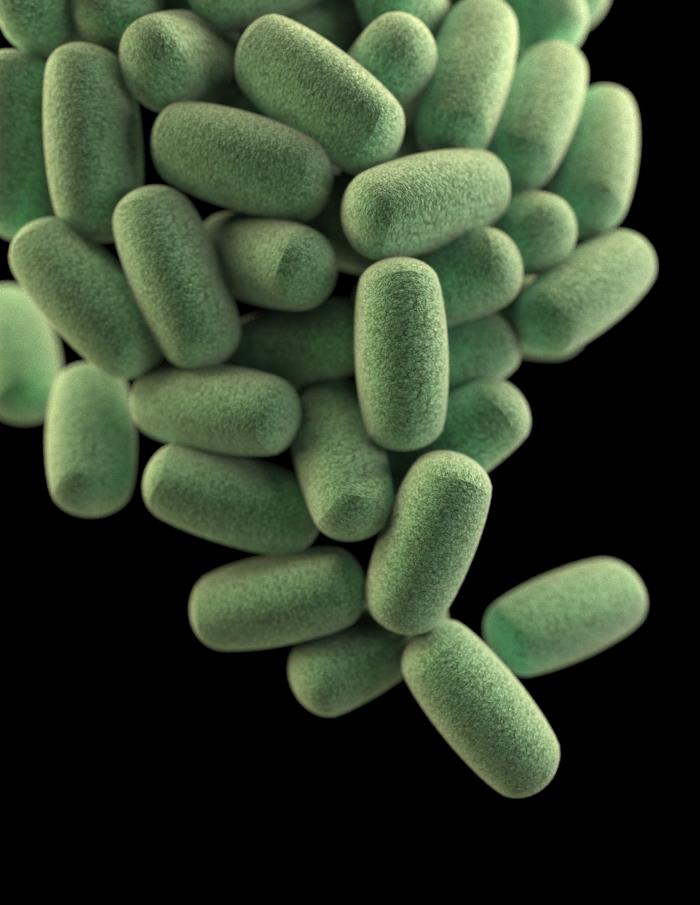
RASFF Alert – Rotavirus – Oysters

RASFF

Rotavirus in oysters from France in the Netherlands

RASFF Alert – Animal Feed – Moulds/Mold – Bran

RASFF

Wheat bran infested with moulds from Ukraine in Poland

RASFF Alerts – Animal Feed – Salmonella – Dog Chews

RASFF

Salmonella in dog chews from South Africa in the Netherlands and Belgium

Spain – Presence of Listeria monocytogenes in liver sausage

ACSA

Product affected by the alert

Product affected by the alert

In relation to the alert for the presence of Listeria monocytogenes in liver sausage, communicated on September 30, it is reported that the product involved, in addition to being marketed under the CHACINAS EL BOSQUE brand, has been marketed under the brands HERMANOS GOMEZ JIMENEZ DE VILLAMARTIN and THE IBERIAN BACKSTAGE. In all cases, the affected lot is 120922 and the best-before date is 12/03/2023.

The updated data for the products involved are:

  • Name of the product on the label: EMBUTIDO DE HÍGADO MORCILLA EL BOSQUE
  • Brand: CHACINAS EL BOSC 
  • Authorization number: 10.024902/CA
  • Lot numbers: 120922
  • Best before date: 12/03/2023.
  • Product name on the label: MORCILLA HÍGADO
  • Brand: HERMANOS GOMEZ JIMENEZ DE VILLAMARTIN
  • Authorization number: 10.024902/CA
  • Lot numbers: 120922
  • Best before date: 12/03/2023  
  • Product name on the label: MORCILLA HÍGADO
  • Brand: LA TRASTIENDA IBÉRICA
  • Authorization number: 10.024902/CA
  • Lot numbers: 120922
  • Best before date: 12/03/2023

The distribution of the product has been made in certain locations in Andalusia and in an establishment in Barcelona.

As a precautionary measure,  people who have the above product at home are advised to refrain from consuming it and gnaw it at the point of sale.

If you have consumed this product from the affected batch and have symptoms compatible with listeriosis (fever, headache, vomiting or diarrhoea), it is recommended to go to a health centre.

Canada – Certain Nature’s Best brand and Zavat Chalav brand cheese products recalled due to Listeria monocytogenes

CFIA

Nature's Best Shredded Cheddar

Nature's Best Shredded Cheddar Mozzarella

Nature's Best Sliced Cheddar

Zavat Chalav Shredded Mozzarella 1

Zavat Chalav Shredded Mozzarella 2

Zavat Chalav Shredded Cheddar & Mozz 1

Zavat Chalav Shredded Cheddar & Mozz 2

Zavat Chalav Cheddar Thins

Issue

The affected products are being recalled from the marketplace due to possible Listeria monocytogenes contamination.

The recalled products have been sold in Ontario and Quebec and may have been distributed in other provinces and territories.

What you should do

  • If you think you became sick from consuming a recalled product, contact your healthcare provider
  • Check to see if you have recalled products
  • Do not consume, serve, use, sell, or distribute recalled products
  • Recalled products should be thrown out or returned to the location where they were purchased

Food contaminated with Listeria monocytogenes may not look or smell spoiled but can still make you sick. Symptoms can include vomiting, nausea, persistent fever, muscle aches, severe headache and neck stiffness. Pregnant women, the elderly and people with weakened immune systems are particularly at risk. Although infected pregnant women may experience only mild, flu-like symptoms, the infection can lead to premature delivery, infection of the newborn or even stillbirth. In severe cases of illness, people may die.

Japan – Clostridium perfringens food poisoning linked to dozens of illnesses in Yamaguchi Prefecture

Outbreak News Today

Yamaguchi Prefecture announced on 26 Sep 2022 that 46 residents of 2 elderly facilities run by the social welfare corporation Midoriyamakai in Furukawa-cho, Kudamatsu City developed foodborne illness caused by Clostridium perfringens. They complained of diarrhea and abdominal pain, but all but one with a chronic illness have recovered.

According to the prefecture, the 2 facilities are Gran Terrace Kudamatsu Chuo, a care house, and Hoshi Terrace, a special nursing home for the elderly. On 17 Sep 2022, a total of 109 residents and staff of the 2 facilities were served breakfast prepared by the Midoriyamakai-run school lunch facility. It is said that 46 people developed symptoms from the evening of the same day to 18 Sep 2022.

The prefectural government determined that the simmered food was the source of the illness, as Clostridium perfringens was detected in the simmered komatsuna (Japanese mustard spinach) and deep-fried fish cakes served for breakfast.

France – Uncle’s dry-cured ham without bone- Listeria monocytogenes

Gov france

Identification information of the recalled product

  • Product category Feed
  • Product subcategory Others
  • Product brand name GUASCH
  • Model names or references Uncle’s dry-cured ham without bone
  • Identification of products
    GTIN Batch Date
    662130002 T21274 Best before date 06/30/2023
  • Marketing start/end date From 09/15/2022 to 09/23/2022
  • Storage temperature Product to be stored in the refrigerator
  • Further information Cut ham
  • Geographic area of ​​sale Montpellier
  • Distributors Super U

Practical information regarding the recall

  • Reason for recall Possible presence of Listeria
  • Risks incurred by the consumer Listeria monocytogenes (causative agent of listeriosis)

Czech Republic – Cavalier with cheese – Mold/Mould

Potravinynapranyri

Illustrative photo #2

Place of inspection:
Vratimov ( Na Vyhlídka 813, 739 32 Vratimov )
ID: 19014325
Food group: Meat and meat products / Durable meat products

Cavalier with cheese
Category: Dangerous foods
Invalid parameter:

fungi visible to the eye

There were colonies of mold on the surface of the food. Food is not considered safe if it shows signs of spoilage.

The sample was taken from the loaded package. Unsuitable storage temperatures of this product were not detected during the inspection. The food did not have an expired minimum durability date.

Batch: L0852029538
Best before date: 07/08/2022
Producer: MP Krásno as, Hranická 34, Valašské Meziříčí
Country of origin:  Czechia
Date of sample collection: 29/07/2022
Reference number: 22-000437-SZPI-CZ
The sample was detected by the official control of the State Agricultural and Food Inspection.

Research – Quantitative Determination Of Campylobacter On Broilers Along 22 UK Processing Lines, To Identify Potential Process Control Points and Cross-contamination From Colonized To Uncolonized Flocks

Journal of Food Protection

As part of a program to reduce numbers of the human pathogen Campylobacter on retail chickens twenty-two broiler processing lines, representing over 90% of United Kingdom (UK) production, were characterized by enumerating Campylobacter on pooled neck skins after the exsanguination, scalding, defeathering, evisceration, crop removal, inside-outside washing, and air-chilling stages of processing.  Sixteen of the processing lines investigated showed significant (p<0.05) reductions in Campylobacter numbers because of carcass scalding.  However, in all these lines, the following defeathering stage caused a significant increase in Campylobacter contamination that effectively negated the reductions caused by scalding.  On four processing lines, primary chilling also caused a significant reduction in numbers of Campylobacter.  On three lines, there was a significant microbiological benefit from inside-outside (I/O) washing.  The stages where Campylobacter numbers were reduced require further investigations to determine the specific mechanisms responsible so that the observed pathogen reductions can be optimized, and more widely implemented. The transfer of up to 4 log cfu Campylobacter per gram of neck skin from a colonized flock to a following uncolonized flock was observed.  The cross contamination was substantial and still detectable after 5,000 carcasses from an uncolonized flock had been processed.  The numbers of Campylobacter recovered from the uncolonized flocks were highest on the first of the uncolonized birds to pass along the line and, in general, numbers fell as more uncolonized birds were processed.  Air sampling recovered low numbers at the processing stages monitored, indicating that airborne transmission was unlikely to be the primary transfer mechanism operating for cross-contamination between flocks.

Research -The annual cost of foodborne illness in Australia

FSANZ

Executive summary
Foodborne illness causes a significant health burden in Australia. Estimates of both the extent of foodborne illness and the costs arising from illness are essential for measuring the impact on the population.
In 2010 it was estimated that Australians experience almost 16million episodes of gastroenteritis each year, with about one quarter of these due to contaminated food. This report updates these numbers to circa 2019 and estimates the associated costs to individuals and the health system. As foodborne disease interventions are often targeted at specific causes of illness, costs are also provided for ten high-priority pathogens.
We estimate that foodborne illness and its sequelae costs Australia AUD 2.44billion each year. The largest component of this cost is lost productivity due to non-fatal illness, followed by premature mortality and direct costs (including hospitalisations and other health care use).
While costs due to lost productivity are lower under the more conservative friction cost model, it remains the largest component cost for foodborne illness due to all causes. The pathogen with the highest individual cost is Campylobacter (AUD 365millionper year), while norovirus, other pathogenic E. coli, and Salmonella are all estimated to cost Australians over AUD 100 million each year. Lost productivity is the largest component cost for most pathogens, although premature mortality is the largest cost for pathogens that typically cause more severe illness, such as Listeria monocytogenes, Shiga toxin-producing Escherichia Coli, and Salmonella.
Significant advances in this report include the incorporation of estimated willingness to pay to avoid pain and suffering based on a discrete choice experiment from another FSANZ commissioned study, and the use of a simulation approach to estimating costs which provides uncertainty intervals on all estimates. A costing tool is provided with this report to allow estimates to be updated in the future.
Costs associated with surveillance for foodborne pathogens and related to outbreak investigations are considered separately to the model. Likewise, industry costs due to outbreaks such as lost sales, disposal of products, recall costs, enforcement related costs and potential business costs are not included in the costing model. Key limitations in this work include the lack of data on the long-term burden and health care usage associated with sequelae or ongoing illness due to toxoplasmosis and listeriosis. These costs are not included in this report due to unavailability of data. Costs of pain and suffering, which we approximate using willingness to pay to avoid pain and suffering, are relatively low compared to those estimated for other countries, which may represent differences in underlying preferences across countries and could suggest that greater international standardisation of methods and data collection may be required.

This report demonstrates that foodborne illness results in a substantial cost to Australia and that interventions to improve food safety across industry, retail, and consumers are needed to improve public health. Pathogen-specific costing estimates allow policy makers to target such interventions at individual pathogens, with the end goal of reducing the burden due to foodborne illness.