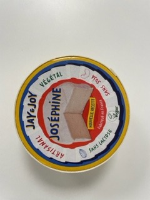
France – DRY SAUSAGE WITH MUSHROOMS – Salmonella

Gov france

Identification information of the recalled product

  • Product category Feed
  • Product subcategory Meats
  • Product brand name THE LITTLE LANDREEN
  • Model names or references DRY SAUSAGE WITH CEPES 200G LE PETIT LANGREEN
  • Identification of products
    GTIN Batch Date
    3252851381204 1331202491 Use-by date between 04/03/2023 and 13/03/2023
  • Marketing start/end date From 03/01/2023 to 12/01/2023
  • Storage temperature Product to be stored at room temperature
  • Geographic area of ​​sale Whole France
  • Distributors BODET-BUTCHERY DES PASTURES- CAVASEB-MERZOUGHI – COCHON SANS FRONTIERES – BBT VENDOME – LA MINUTE BLONDE AURIAC AND MINUTE BLONDE POITIERS -PAPILLES PAPILLOTES VERTOU – SARL SAVEURS DU JARDIN – SARL VERGERS CHALLANS – SARL VERGERS – VITO DISTRIBUTION

Practical information regarding the recall

  • Reason for recall NON-COMPLIANT BACTERIOLOGICAL ANALYSIS: PRESENCE OF SALMONELLA
  • Risks incurred by the consumer Salmonella spp (causative agent of salmonellosis)

Germany – Vegetable specialties with almond milk and cashew nuts – Listeria monocytogenes

LMW

Alert type:

Food

Date of first publication:

01/20/2023

Product name:

Vegetable specialties with almond milk and cashew nuts: Jil, Joséphine, Jeanne, Jean Jacque, Joie gras, Jeta frais, Joy Prairie, Joy Râpé, Parmi Joy, Joy Montagnard Nature, Joy Montagnard Fumé, Joy Montagnard Poivre, Jil Vrac, Joséphine Vrac, Jeanne Vrac , Jean Jacquevrac, Joy Bloc, Jeta Bloc

Product images:

91f975aa-673a-43a1-814b-532b2c45f068.jpg
b355104e-b34c-4caf-9d56-fa2575e59e9a.jpg
c580b597-6a0f-4a4e-b439-54b40032639b.jpg
da6bacaf-2de0-4144-b4f5-c62818fc2b94.jpg
f02047ee-414a-4b24-bdf4-2a12135dbcff.jpg
Manufacturer (distributor):

JAY&JOY 5 rue Paul Bert 75011, Paris

Reason for warning:

suspected listeria

Durability:

between 14/01/2023 and 30/03/2023

Further information:

Listeria
A listeria disease usually manifests itself within 14 days after infection with diarrhea and fever. Pregnant women, the elderly and people with a weakened immune system in particular can develop more severe illnesses with blood poisoning and meningitis. In pregnant women, even without symptoms, the unborn child can be harmed.
Anyone who has eaten this food and develops severe or persistent symptoms should seek medical attention and report possible Listeria infection.
Pregnant women who have eaten this food should seek medical treatment and advice even if they have no symptoms. For other people without symptoms, this is not useful.

Click to access Productrecall-1.pdf

France Cases of listeriosis: withdrawal-recall of vegetable specialties with almond milk and cashew nuts Jay & Joy (vegetable alternatives to cheese and foie gras)

Sante Publique

The health authorities have been informed of the occurrence in France of 5 serious cases of listeriosis, including 4 in pregnant women who have presented premature deliveries. These 5 people, infected with the same strain of Listeria, reported symptoms between April and December 2022. 

The investigations conducted jointly by Public Health France (SpFrance), the National Reference Center (CNR) Listeria, the Directorate General for Food (DGAl), the Directorate General for Competition, Consumer Affairs and Fraud Prevention ( DGCCRF), and in coordination with the General Directorate of Health (DGS), identified that the cases reported on the national territory had consumed in the weeks preceding their listeriosis plant specialties (cheese alternatives) with almond and walnut milk cashew nuts manufactured and marketed under the Jay & Joy brand.

These investigations revealed irregularities in the company, in particular concerning the control of the risk of microbiological contamination of the products manufactured within the factory. Consequently, a prefectural order, aimed at suspending the marketing of all products stored and manufactured in the factory, was issued on January 16, 2023.

JAY&JOY proceeded to the withdrawal-recall of all the products manufactured by the company on January 14, 2023.

The details of the products concerned by the withdrawal-recall are available on rappel.conso.gouv.fr. People holding these products are asked not to consume them and to return them to the point of sale where they purchased them.

Australia – Watson Family Produce Pasture Raised Free Range Eggs 350g and 700g – Salmonella

FSANZ

Product information

Watson Family Produce Pty Ltd is conducting a recall of Watson Family Produce Pasture Raised Free Range Eggs 350g and 700g​. The product has been available for sale at Harris Farms in West End, Clayfield and Surfers Paradise QLD; independent food retailers including IGA in QLD; and Woolworths in QLD.

Date markings

Best Before: All best before dates up to and including 25 Feb 2023.

Watson Family Produce Pasture Raised Free Range Eggs 350g and 700g

Problem

The recall is due to potential microbial (Salmonella) contamination.

Food safety hazard

Food products contaminated with Salmonella may cause illness if consumed.

Country of origin

Australia

What to do​

Consumers should not eat these products and should return the products to the place of purchase for a full refund. Any consumers concerned about their health should seek medical advice.

For further information please contact:

Watson Family Produce Pty Ltd

0422 700 405 or 0425 295 942

http://www.watsonfamilyproduce.com​

​

Related links:

Austria – TANN Bacon 250g – Bacterial Contamination

AGES

AGES informs about a recall of the company SPAR. On January 20th, 2023, the company recalled the product TANN Jausenspeck 250g:
recall reason
Possible bacterial contamination
Marketed by
SAVE
Manufacturer
TANN
Expiry Date
02/23/2023
Batch number
6125040509, 6125110509, 6130121732, 6130141732, 6130342298

As a precaution, SPAR is recalling “TANN Jausenspeck 250g” in Vienna, Lower Austria and northern Burgenland

A possible bacterial contamination was found in the product “TANN Jausenspeck 250g” during a routine quality control.
The batches affected are:

  • 6125040509 – MHD: 01/19/2023
  • 6125110509 – MHD: 01/23/2023
  • 6130121732 – MHD: 07.02.2023
  • 6130141732 – MHD: 09.02.2023
  • 6130342298 – MHD: 02/23/2023

For this reason, SPAR is recalling the product with the stated best before dates. The bacon was only delivered in Lower Austria, Vienna and northern Burgenland. Other regions and batches are not affected.

SPAR asks customers not to consume the “TANN Jausenspeck 250g” with the batch numbers mentioned. All other TANN products are not affected by this recall.

All customers who have bought one of the products that may be affected can of course return it to the nearest SPAR, EUROSPAR or INTERSPAR store or Maximarkt. Customers are reimbursed the purchase price even without proof of purchase.

Customers who have questions about this are welcome to contact customer service at  office@spar.at  or call the free phone number 0800 / 22 11 20 .

original recall

Research – Isolation of Listeria monocytogenes from poultry red mite (Dermanyssus gallinae) infesting a backyard chicken farm in Greece

Nature.com

The poultry red mite (PRM), Dermanyssus gallinae, is arguably the most harmful, ubiquitous haematophagous ectoparasite infesting egg-laying hens. PRM is a vector of various microorganisms, with some being important for food microbiology and public health. The present study aimed to investigate the presence of specific pathogens, including Escherichia coli, Salmonella spp. and Listeria spp., carried by PRM infesting a chicken farm in Greece. Mites were caught using cardboard traps (Avivet), and 100 unwashed PRM were homogenized and used for microbiological cultures. Microbiological cultures were carried out on general and selective substrates to detect the above-mentioned bacteria. Specifically for Listeria spp., DNA was extracted from bacteria grown in Tryptone Soya Yeast Extract Agar using a commercial kit. The hly gene encoding the Listeriolysin O protein was amplified by PCR. Mites were identified as D. gallinae using morphological keys as well as by COI DNA barcoding. Microbiological cultures and PCR assays were positive for Listeria monocytogenes. No other bacteria were detected. The current study constitutes the first molecular isolation of L. monocytogenes from D. gallinae, confirming that PRM can carry this food-borne pathogen. PRM control measures and hygiene practices should be applied to minimize any possible contamination risk of poultry products with L. monocytogenes and safeguard public health.

Research – An outbreak of Hepatitis A virus infection in a secondary school in England with no undetected asymptomatic transmission among students

Cambridge Org

Abstract

In June 2019 the Health Protection Team in Yorkshire and Humber, England, was notified of cases of hepatitis A virus (HAV) infection in staff at a secondary school. Investigation revealed that an earlier case worked as a food handler in the school kitchen. Indirect transmission through food from the canteen was considered the most likely route of transmission. Cases were described according to setting of exposure. Oral fluid was obtained from students for serological testing. Environmental investigations were undertaken at settings where food handling was considered a potential transmission risk. Thirty-three confirmed cases were linked to the outbreak. All of those tested (n = 31) shared the same sequence with a HAV IB genotype. The first three cases were a household cluster and included the index case for the school. A further 19 cases (16 students, 3 staff) were associated with the school and consistent with indirect exposure to the food handler. One late onset case could not be ruled out as a secondary case within the school and resulted in vaccination of the school population. Five cases were linked to a bakery where a case from the initial household cluster worked as a food server. No concerns about hygiene standards were noted at either the school or the bakery. Oral fluid samples taken at the time of vaccination from asymptomatic students (n = 219, 11–16 years-old) showed no evidence of recent or current infection. This outbreak included household and foodborne transmission but limited (and possibly zero) person-to-person transmission among secondary school students. Where adequate hygiene exists, secondary transmission within older students may not occur.

Research – Smartphone-Based Quantitative Detection of Ochratoxin A in Wheat via a Lateral Flow Assay

MDPI

Abstract

Ochratoxin A (OTA) poses a severe health risk to livestock along the food chain. Moreover, according to the International Agency for Research on Cancer, it is also categorized as being possibly carcinogenic to humans. The lack of intelligent point-of-care test (POCT) methods restricts its early detection and prevention. This work establishes a smartphone-enabled point-of-care test for OTA detection via a fluorescent lateral flow assay within 6 min. By using a smartphone and portable reader, the assay allows for the recording and sharing of the detection results in a cloud database. This intelligent POCT provided (iPOCT) a linearity range of 0.1–3.0 ng/mL and a limit of detection (LOD) of 0.02 ng/mL (0.32 µg/kg in wheat). By spiking OTA in blank wheat samples, the recoveries were 89.1–120.4%, with a relative standard deviation (RSD) between 3.9–9.1%. The repeatability and reproducibility were 94.2–101.7% and 94.6–103.4%, respectively. This work provides a promising intelligent POCT method for food safety.

Research – Study reveals Botulism impact in Italy

Food Safety News

kswfoodworld

Italian researchers have looked at botulism trends over two decades including a large outbreak in 2020.

Italy has one of the highest botulism rates in Europe with one factor being a strong home canning tradition in the country. From 1986 to September 2022, 406 botulism incidents involving 599 people were laboratory confirmed.

The study described the surveillance system as well as information on botulism cases reported by local health services and those from hospital discharge forms from 2001 to 2020.

Botulism is a rare but life-threatening condition caused by toxins produced by Clostridium botulinum bacteria. In foodborne botulism, symptoms generally begin 18 to 36 hours after eating a contaminated food. However, they can start as soon as six hours after or as long as 10 days later.

Symptoms can include general weakness, dizziness, double-vision, and trouble speaking or swallowing. It paralyzes respiratory muscles so most patients must be placed on life support. Difficulty breathing, weakness of other muscles, abdominal distention and constipation may also occur. People experiencing these problems should seek immediate medical attention.

Singapore introduces industry standard to guide sales of food products on online platforms to ensure food safety

SFA

gapore Standard (SS) 687: 2022 (Guidelines for food e-commerce) was launched at the Singapore Manufacturing Federation’s Singapore Innovation and Productivity Institute (SIPI) Food Tech 2023 event today to provide guidance to e-commerce players on their roles and responsibilities related to food safety and providing information to consumers. Announced by Ms. Grace Fu, Minister for Sustainability and the Environment, the standard covers key stages, best practices, and activities critical for the food e-commerce industry to ensure the safety of food products sold via online platforms.

SS 687 on Guidelines for food e-commerce can be purchased from the Singapore Standards eShop at http://www.singaporestandardseshop.sg