USA -FDA – Investigations of Foodborne Illness Outbreaks

FDA

What’s New

  • A new outbreak of Listeria monocytogenes (ref #1205) in a not yet identified food has been added to the table.
  • For the outbreak of Salmonella Sundsvall (ref #1203) linked to cantaloupe, the recall was expanded to include additional retailers and wholesalers who received the recalled melons. Additionally, the Oranienburg strain of Salmonella was added to this outbreak. See the Outbreak Advisory for additional information.
  • For the outbreak of Listeria monocytogenes (ref #989) linked to peaches, plums, and nectarines, the advisory was updated to include international distribution of the recalled fruit to Canada, Mexico, and Taiwan.
  • For the investigation of elevated lead levels in Cinnamon Applesauce Pouches (ref # 1198) the advisory was updated to include additional adverse event reports and Investigation updates.
  • For the outbreak of Salmonella Newport (ref# 1201) in a not yet identified food, the case count has increased from 42 to 43 cases.
  • For the outbreak of E. coli O121 (ref#1195) in a not yet identified food, an on-site inspection was initiated and sample collection and analysis was initiated.
  • For the outbreak of E. coli O103 (ref# 1192) in a not identified product, the investigation is complete and the outbreak has ended.

USA – Garland Ventures Recalls Ready-to-Eat Chicken Fried Rice Products due to Possible Listeria Contamination

FSIS USDA

FSIS Announcement

EDITOR’S NOTE: Dec. 6, 2023 – Details of this recall were updated to reflect the correct lot code for the product implicated in the recall.

WASHINGTON, Dec. 6, 2023 – Garland Ventures, a Garland, Texas, establishment, is recalling approximately 13,842 pounds of ready-to-eat (RTE) chicken fried rice products that may be adulterated with Listeria monocytogenes, the U.S. Department of Agriculture’s Food Safety and Inspection Service (FSIS) announced today.

The RTE chicken fried rice product was produced on November 10, 2023. The following product is subject to recall [view labels]:

  • 12-oz. trays containing Freshness Guaranteed brand “CHICKEN FRIED RICE DICED CHICKEN MEAT WITH VEGETABLES AND RICE IN A SAVORY SOY SAUCE” with lot code WK10CFR and a best if used by date of 11/10/2024 represented on the label.

The products subject to recall bear establishment number “EST. P-31993” inside the USDA mark of inspection. These items were shipped to retail locations nationwide.

The problem was discovered by FSIS during review of testing results, which showed the product tested positive for L. monocytogenes.

There have been no confirmed reports of adverse reactions due to consumption of these products. Anyone concerned about an injury or illness should contact a healthcare provider.

Consumption of food contaminated with L. monocytogenes can cause listeriosis, a serious infection that primarily affects older adults, persons with weakened immune systems, and pregnant women and their newborns. Less commonly, persons outside these risk groups are affected.

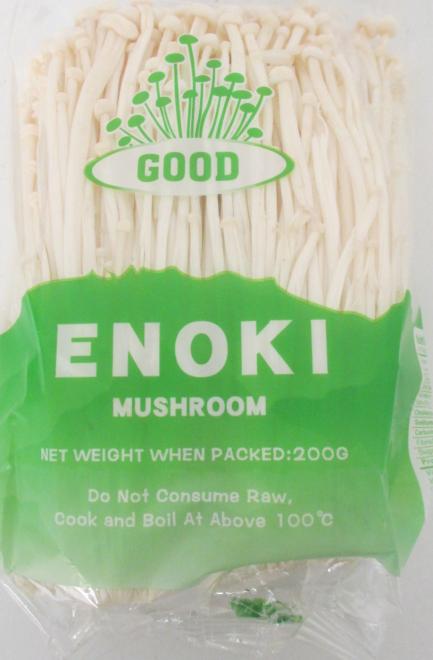
Canada – Good brand Enoki Mushroom recalled due to Listeria monocytogenes

CFIA

Good - Enoki Mushroom - 200 g - Front

Product
Enoki Mushroom
Issue
Food – Microbial Contamination – Listeria
What to do

Do not consume, use, sell, serve, or distribute recalled products

Distribution
Ontario

The affected product is being recalled from the marketplace due to possible Listeria monocytogenes contamination.

UK – FSA alerts consumers on Salmonella and Polish poultry

FSA

Following a rise in cases of Salmonella linked to poultry products imported from Poland, the FSA is reminding consumers of its safe handling and cooking advice.

The Food Standards Agency (FSA) along with Food Standards Scotland (Opens in a new window) (FSS) and the UK Health Security Agency (Opens in a new window) (UKHSA) is reminding consumers to take care when handling and cooking poultry products at home, including chilled and frozen chicken and turkey drumsticks, breasts, thighs and chicken pieces. This is because of a recent rise in cases of food poisoning caused by Salmonella Enteritidis linked to poultry products imported from Poland.

Our advice is to:

  • Follow cooking and storage instructions on the product label, including the cooking time and temperature – this is important to ensure that the food is safe when consumed
  • Use or freeze products by their use-by date
  • Wash hands thoroughly after handling raw poultry products
  • Never wash raw poultry products
  • Clean all surfaces and utensils with hot soapy water after contact with raw poultry
  • Only reheat cooked and frozen meat once

An investigation is ongoing into multiple strains of Salmonella linked to poultry products imported to the UK from Poland. There have been over 200 human cases of salmonellosis caused by specific genetic strains of Salmonella Enteritidis that have been linked to poultry products such as meat and eggs, this year.

The FSA is in discussion with officials in Poland and the EU to ensure all necessary steps are taken to improve the safety of poultry and eggs imported from Poland. The forthcoming import controls on food and feed coming into the UK from the EU will also allow us to check these controls are in place and help to uphold the UK’s high food and feed standards and to protect public health.

Our advice is to always take care when storing, handling, and cooking poultry products such as chicken, turkey and duck to help reduce the risk of food poisoning to you and your family.

You should always check the cooking instructions on food packaging, as different brands of the same type of product might have different instructions. Cooking food at the right temperature and for the correct length of time will ensure that any harmful bacteria are killed. At the same time, make sure that any surfaces and equipment that come into contact with food are clean to avoid risks from cross contamination and always wash your hands before and after handling food.

A number of the cases have involved the consumption of eggs produced in Poland and used in meals in restaurants and cafes. We are therefore asking local authorities to remind food businesses about the importance of good hygiene practices.

Tina Potter, Head of Incidents – Food Standards Agency

Salmonella is a type of stomach bug that causes stomach pain, vomiting and diarrhoea. Symptoms typically resolve themselves within a few days, however, they can be more severe with fever and dehydration, especially in young children, those who are pregnant and those with weakened immune systems.

Salmonella can be spread from person to person as well as from food, so anyone affected should follow good hygiene practices, such as washing hands thoroughly after using the bathroom and avoiding handling food for others where possible, if you have symptoms.

Lesley Larkin, Deputy Director for Gastrointestinal Infections – UKHSA

Salmonella is a common bacteria that can cause food poisoning. Salmonella can be found in a variety of different foods but raw meat (processed and unprocessed), undercooked poultry, eggs and unpasteurised milk are the most commonly reported foods causing salmonellosis. Inadequate cooking and cross-contamination in the kitchen during food preparation can lead to salmonellosis. The bacteria can also spread from person to person.

Babies, children, pregnant women, and older people should only eat runny or raw eggs if they have a British Lion mark (Opens in a new window) or are produced under the Laid in Britain egg assurance scheme (Opens in a new window). This advice does not apply to individuals who are severely immunocompromised.

Please see our Salmonella guidance and the NHS Choices page on food poisoning (Opens in a new window) for more information on this foodborne disease. Our Home food fact checker also has advice on how to store, cook and reheat food at home.

New Zealand – Kawhia- Shellfish Toxin Alert – PSP

MPI

Reason for alert Paralytic Shellfish Poisoning (PSP)

Date warning issued Media release: 6 December 2023
Affected area The warning extends from Papanui Point, just south of Raglan, to Tirua Point, which is just south of Marokopa. The warning also includes Kawhia and Aotea harbours.
Shellfish affected Mussels, oysters, tuatua, pipi, toheroa, cockles and scallops, as well as pūpū (cat’s eyes), Cook’s turban and kina (sea urchin).

Note, cooking shellfish does not remove the toxin.

Pāua, crab and crayfish may still be eaten if the gut has been completely removed prior to cooking, as toxins accumulate in the gut. If the gut is not removed its contents could contaminate the meat during the cooking process. Finfish are not affected by this warning.

Luxembourg – LS MIXING Chopped Beef – AX from the COBOLUX brand – Salmonella

SAP

The following product is recalled in Luxembourg:


Name

LS MIXING AX

Brand

COBOLUX

Use-by date (DLC)

11/20/2023

Batch

20231114

UK – Campylobacter project finds labs can do better.

Food Safety News

According to a report, only one laboratory got a top score as part of a Campylobacter testing exercise, suggesting there is room for improvement.

In 2018, the Food Standards Agency (FSA) commissioned the UK Health Security Agency (UKHSA) to provide an external quality assessment (EQA) scheme for the detection and enumeration of Campylobacter from a simulated matrix representing uncooked chicken.

It was available to 20 laboratories in the UK that provided an accredited test for Campylobacter in foods. At the time, there was no reliable test to identify the pathogen.

The EQA ran from March 2019 to November 2021, due to COVID-19 disruption. A total of 39 samples were sent; 26 for enumerating the levels of Campylobacter, if detected, and 13 for detection of the organism.

An EQA provides labs with an independent external assessment of their performance. Regular participation is part of quality procedures and helps to ensure that results of tests are accurate. It also gives assurance for clients.

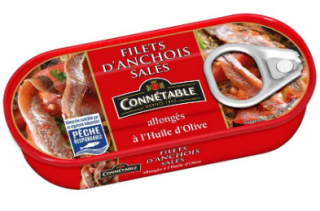
Luxembourg – Salted anchovy fillets from the Connétable brand – Histamine

SAP

The following product is recalled in Luxembourg:

Consumption reminder
Name Salted anchovy fillets
Brand Constable
Unit 50g
Barcode 3 263670 008395
Use-by date (DLC) 05/05/2024
Batch All lots

USA – Flour Is a Raw Food and Other Safety Facts

FDA

You may not realize it, but most flour is a raw food. And it hasn’t been treated to kill any bacteria (germs) it may contain. Cooking and baking is what kills any bacteria in flour, as well as in raw eggs that are often used with it.

To stay safe, don’t eat or taste raw (uncooked) flour, dough or batter. Also, don’t let children use raw dough for crafts or “play clay.” Even if children don’t eat the dough, they may put their hands in their mouth after handling it.

USA – Public Health looking into Salmonella outbreak associated with Seattle church

Kiro 7

SEATTLE — King County Public Health is looking into a salmonella outbreak connected to the Hope International Church in Seattle.

Public Health said it interviewed people who got sick after eating homemade dishes served at the church potluck.

So far, seven people from five different households have been reported sick and one person has been hospitalized.