Category Archives: Uncategorized

RASFF Alerts – Animal Feed – Bacillus subtilis – Vitamin B2

RASFF-Logo

RASFF – unauthorised genetically modified (Bacillus subtilis) bacteria in vitamine B2 80% from China in Lithuania


Scotland – Scottish cheesemakers challenge guidance on raw milk in their products

Food Safety News

Five Scottish companies have launched a fundraising campaign for legal fees to challenge new inspection and enforcement guidance, including food safety measures, regarding raw milk cheese.

The guidance will effectively make production in Scotland unviable, according to the cheesemakers who specialise raw milk cheese.

It is focused on controlling microbiological risks in the production of artisan cheeses made from raw, unpasteurized milk such as Shiga toxin-producing E. coli (STEC) including E. coli O157 and applies to all sites producing cheese made from unpasteurized milk from cows, goats, sheep and buffalo.

The document was produced by a working group of the Scottish Food Enforcement Liaison Committee (SFELC) and is to be used during inspection and enforcement of food safety controls by cheesemakers making product from unpasteurised milk.

Selina Cairns from Errington Cheese told Food Safety News that to satisfy the cheesemakers the guidance needs to be removed or re-written in consultation with industry and individual cheesemakers.

India – Food poisoning: One dead, 9 serious

The Daily Pioneer

A person died and nine others were taken ill reportedly due to food poisoning at Nuagaon village under Patana block of Keonjhar district on Tuesday night.

The victims complained of uneasiness after having their dinner, following which they were initially admitted to the District Headquarters Hospital and later shifted to the SCB Medical College Hospital in Cuttack. However, one of them died on the way to Cuttack. The deceased was identified as 22-year-old Manas Nayak of the village.

Sources said eight of the victims had been engaged in decoration work of a wedding ceremony in a family, which was scheduled to take place on Wednesday. Three members of the concerned family are also undergoing treatment at the hospital after consuming the food. Police started investigation into the matter.

USA – Months after Chipotle food-born illnesses, restaurant still has violations

ABC 6

The outbreak of food-born illnesses from a Delaware County restaurant made national headlines and led Chipotle to retrain its entire staff, but still the Powell restaurant had three critical violations on its latest inspection by the Delaware General Health District. Clostridium perfringens

Research – Occurrence, serotypes, and characteristics of Listeria monocytogenes in meat and meat products in South Africa between 2014 and 2016

Wiley Online

Abstract

Listeria monocytogenes is an intracellular pathogen that causes life‐threatening disease called listeriosis. However, in South Africa (SA), there is a dearth of information concerning the potential role of meat and meat products as potential sources for human listeriosis. The aim of the study was to determine the occurrence and level of L. monocytogenes found in meat and meat products in SA and to characterize L. monocytogenes strains according to serogroups, antimicrobial resistance profiles and virulence genes. A total of 2,017 samples from imported and locally produced raw, processed and ready to eat meat were collected from 2014 to 2016 across nine provinces of SA. The samples for L. monocytogenes were isolated using microbiological techniques and real‐time polymerase chain reaction (PCR). Antimicrobial resistance profiles of the isolates were determined by testing 19 antimicrobial impregnated discs using Kirby–Bauer disc diffusion method. Characterization in terms of serogroup typing and virulence profiling was done using conventional PCR. The overall occurrence of L. monocytogeneswas 14.7% (296/2,017), which varied between meat collected on the domestic market (15.0%; 264/1,758) and directly at the three ports of entries (12.4%; 32/259). The contamination level of the positive samples ranged from 1 to 3.7 log CFU/g and 1 to 4.1 log CFU/g for samples collected from the domestic and imported meat, respectively. All positive isolates were serotyped by multiplex PCR, of which majority of the isolates belonged to molecular serogroup ½a‐3a (45.5%), followed by 4b‐4d‐4e (24.2%), and ½c‐3c (15.2%). Most of the isolates harbored the inlJ (98.7%) and ipa (95.6%) genes. However, at least one of the other internalin genes (inlB, inlC, and inlA) was present in most of the isolates. All the tested isolates showed resistance to at least 3 of the 19 antibiotics, with 5 (1.7%) of them displaying resistance to 13 of the 19 antibiotics. Resistance to streptomycin (99.0%), clindamycin (97.3%), fusidic acids (95.6%), nitrofurantoin (79.7%), and gentamycin (74.4%) was observed while high rates of sensitivity were observed for ampicillin (85.6%), kanamycin (84.6%), amikacin (77.6%), vancomycin (74.2%), and tetracycline (62.5%). The presence of L. monocytogenes in various meat products in SA pose a risk to human health. Therefore, the present research provides valuable baseline information that will help in the development of policies and regulations for monitoring of L. monocytogenes in meat and meat products in SA.

Practical applications

This study is extensive and involved analysis of meat and meat products from all the nine provinces of South Africa. Furthermore, the study involved analysis of imported meat (from the three major ports of entry) that was destined for the South African market. The findings that were obtained are significant from academic, policy, and practical points of view. The findings provide empirical evidence of the contamination of a proportion of raw intact, raw processed, and ready‐to‐eat meat and products that are available on the South African market. Furthermore, our findings illustrate the levels of contamination, which is important for providing guidelines with respect to L. monocytogenescontamination of meats. Information of the predominant L. monocytogenes serotypes from this study provide important epidemiological data of the strains that are circulating in meat and meat products. The antimicrobial resistance results are important for contributing to guidelines on antimicrobial use.


USA – Campylobacteriosis Outbreak Associated with Contaminated Municipal Water Supply — Nebraska, 2017

CDC

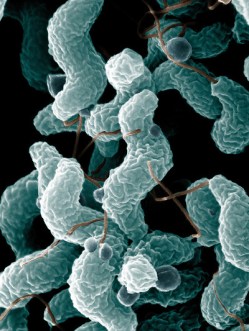
Campylobacter

Image CDC

In March 2017, the Nebraska Department of Health and Human Services (NDHHS) and the Southwest Nebraska Public Health Department were notified of an apparent cluster of Campylobacter jejuni infections in city A and initiated an investigation. Overall, 39 cases were investigated, including six confirmed and 33 probable. Untreated, unboiled city A tap water (i.e., well water) was the only exposure significantly associated with illness (odds ratio [OR] = 7.84; 95% confidence interval [CI] = 1.69–36.36). City A is served by four untreated wells and an interconnected distribution system. Onsite investigations identified that a center pivot irrigation system intended to pump livestock wastewater from a nearby concentrated animal feeding operation onto adjacent farmland had malfunctioned, allowing excessive runoff to collect in a road ditch near two wells that supplied water to the city. These wells were promptly removed from service, after which no subsequent cases occurred. This coordinated response rapidly identified an important risk to city A’s municipal water supply and provided the evidence needed to decommission the affected wells, with plans to build a new well to safely serve this community.

USA – YMCA Hot Tub in Waco, Texas Investigated In Legionnaires’ Disease Outbreak

Outbreak News Today

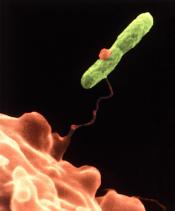
legionellac

Image CDC


Two people in Waco have been diagnosed with Legionnaires’ disease after using a local YMCA’s hot tub. The Waco-McClennan County Health District is investigating the Waco Family YMCA located at 6800 Harvey Rd., Waco, Texas. The hot tub is expected to be closed for the next few weeks, while the water undergoes testing for Legionella bacteria.

Rodney Martin, CEO of YMCA of Central Texas, stated, “Exposure to the Legionella bacteria may have occurred at the Waco Family YMCA.  Hot tubs specifically are a potential source and in both instances there was exposure in the hot tub area.”

UK – The Condiment Company recalls Hunter & Gather Avocado Oil Mayonnaise due to a lack of microbiological controls – Clostridium botulinum

FSA

The Condiment Company Ltd is recalling Hunter & Gather Avocado Oil Mayonnaise because of concerns over the company’s procedures in place to control Clostridium botulinum.

Product details

Hunter & Gather Avocado Oil Mayonnaise

Pack size 250g
Batch code 25/09/19
Best before 25 September 2019

No other The Condiment Company products are known to be affected.

Risk statement

Manufacturing controls that could potentially affect the safety of the product listed above could not be demonstrated satisfactorily by the company. The issue relates to controlling factors to prevent the growth and toxin production of Clostridium botulinum.

Botulinum toxin may cause a serious form of food poisoning called botulism and can be fatal.

A recall from customers is being carried out as a precautionary measure.

Action taken by the company

The Condiment Company Ltd is recalling the above product. Point of sale notices will be displayed in all retail stores that are selling this product. These notices explain to customers why the product is being recalled and tell them what to do if they have bought the product. Please see the attached notice.

Our advice to consumers

If you have bought any of the above product do not eat it. Instead, return it to the store from where it was bought for a full refund.

Research – Antifungal Effect of Camellia Seed Cake Extract on Aspergillus flavus

Journal of Food Protection

Aspergillus flavus is a well-known, widespread fungus that contaminates a great number of crops used for human and animal consumption, but previous study showed that camellia seed cake was not susceptible to A. flavus. This study was designed to evaluate the antifungal effect of the active substance in camellia seed cake on the growth and production of aflatoxins of A. flavus. Eighty percent methanol extracts of camellia seed cake showed greater activity than that of 80% ethanol, ethyl acetate, and pure water against A. flavus. The filtrate from the 80% methanol extract was extracted with ethyl acetate and saturated n-butanol; among the extracts, the n-butanol phase exhibited strong inhibitory activity against A. flavus. The inhibitory zone diameter increased from 15.25 mm at 25 mg/mL concentration up to 22.00 mm at 100 mg/mL concentration. The mycelial dry weight was reduced significantly from 0.16 g at 25 mg/mL to 0.11 g at 100 mg/mL, whereas the aqueous and ethyl acetate phases exhibited weak antifungal activity and no activity, respectively. In addition, the n-Butanol phase inhibited the production of aflatoxin B1 effectively, caused mycelia deformity, and reduced the production of conidia. n-Butanol extract of camellia seed cake exhibited apparent antagonistic effect on the growth and aflatoxin production of A. flavus. The concentration of 100 mg/mL worked best. This study provides a scientific basis for further study of its inhibiting mechanism.

USA – Southern Specialties Voluntarily Recalls Bagged Green Beans and Butternut Squash Distributed in Southeast because of Possible Health Risk – Listeria monocytogenes

FDA

Southern Specialties Inc. of Pompano Beach, Florida is voluntarily recalling select bags of Marketside brand green beans and butternut squash because they have the potential to be contaminated with Listeria monocytogenes, an organism which can cause serious and sometimes fatal infections in young children, frail or elderly people, and others with weakened immune systems. Although healthy individuals may suffer only short-term symptoms such as high fever, severe headache, stiffness, nausea, abdominal pain and diarrhea, Listeria infection can cause miscarriages and stillbirths among pregnant women.

The company shipped the recalled product to one retail distribution center. Although most of the product was retrieved before distribution to retail stores, some product shipped on February 17th may have reached select stores in Alabama, Florida, Georgia, Kentucky, Mississippi, North Carolina, South Carolina, Tennessee and Virginia. So, in an abundance of caution, we are issuing this public announcement.

To date, Southern Specialties has not been informed of any illnesses associated with this recall.

This recall was voluntarily issued after a raw material supplier notified the company that it was issuing a recall after a routine test of a food contact surface tested positive for the bacterium. As a precautionary measure, Southern Specialties is recalling all products that were repacked at its facility on the same repacking line as the supplier’s product. None of the products have tested positive.

The company is carrying out this recall with the knowledge of the U.S. Food & Drug Administration.